Posts Tagged ‘Tom Peters’

January 25, 2013

“The New Certainties”: Minimalism, Motivational Speakers & Looking For New Stuff To Believe In etc.

Send to Kindle

U6mtJlIakq

[The “Hugh­train” car­toon, 2004]

I’ve been seeing a pat­tern emer­ging. Here are some of the main ingredients:

1. That Marfa, Texas, one of the great Mini­ma­list shri­nes in Ame­rica is now a popu­lar hips­ter des­ti­na­tion spot.

2. One of my my favo­rite movies of recent years, Jiro Dreams of Sushi, which I’ve been raving about for months, is a big hit in the docu­men­tary world. It’s also a fil­mic love poem to Mini­ma­lism (Hey, the direc­tor used Phi­lip Glass and Max Rich­ter for the film score, I rest my case).

3. Blogs about sim­ple living and Mini­ma­lism seem to be really trendy these days, mini­ma­list blog­gers like Zen Habits con­que­ring the world.

4. “The Mini­ma­list” is one of the most popu­lar the­mes on Tumblr.

5. The con­ti­nuing rise of Wes­ter­ni­zed Eas­tern thought: Buddhism, medi­ta­tion, Yoga, Zen etc (I’m a big Alan Watts fan, but that’s another story).

6. The other thing I’ve noti­ced is “Per­so­nal Coaches” and “Moti­va­tio­nal Spea­kers” seem to be everywhere. Whether we’re tal­king Anthony Rob­bins or Bren­don Burchard… or the new job title out there, “spea­ke­rauthor” (Peo­ple known mostly for wri­ting books, but make most of their money doing public spea­king: Tom Peters, Mal­colm Glad­well etc.) Then you also need all the more tech­noc­ra­tic, busi­nesss­peak con­sul­tant man­da­rin types out there as well… Like I said, they’re everywhere, it seems to be an inc­rea­singly boo­ming industry.

7. That there seem to be more TED spea­kers tal­king about how won­der­ful Atheism is, than there are TED spea­kers telling peo­ple how won­der­ful Chris­tia­nity or Judaism or Islam is.

8. The gro­wing idea that the Inter­net is now a reli­gion.

9. The gro­wing idea that “Jedi” is now a religion.

10. The gro­wing idea that Apple is a religion.

11. The finan­cial and poli­ti­cal implosion/impasse/dog’s din­ner that is Wes­tern Europe/The Euro/The E.U..

12. U.S. Fis­cal Cliffs.

13. Envi­ron­men­tal and ani­mal rights activists.

14. Bur­ning Man.

15. Kicks­tar­ter.

16. Cha­rity Water.

I could go on.…

What does this tell me?

That we’re loo­king for new stuff to believe in.

That though the world is get­ting more and more com­plex, the old ans­wers (Do what you’re told, buy a lot of stuff, obsess about THESE cele­bri­ties, worship THESE gods/THIS God, watch this trashy Rea­lity TV, watch these crappy movies, read these crappy bes­tse­llers, lis­ten to this crappy music, believe these poli­ti­cians etc.) aren’t wor­king for us as well as they used to.

So we’re sim­plif­ying. We’re rene­wing. We’re clea­ring the decks. We’re doing a bit of spi­ri­tual Spring clea­ning. We’re loo­king for new stuff to believe in. We’re loo­king for NEW CERTAINTIES.

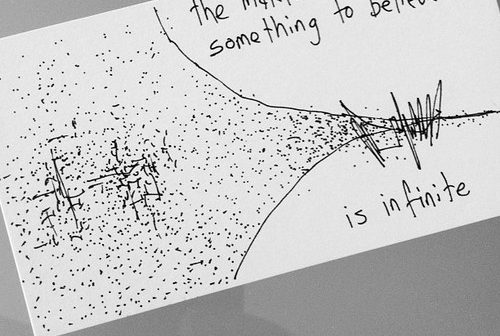
Just like the “Hugh­train” car­toon above implies, we have an infi­nite need for it.

Sure, we like our old cer­tain­ties (Mom’s coo­king, a favo­rite pair of old jeans, small-town folksy ways, old school good man­ners, Ronald Rea­gan, old Jimmy Ste­wart movies at Christ­mas time etc), we are gene­ti­cally pro­gram­med to seek out not only the new, but the NEW CERTAINTIES.

So I guess the next the ques­tion is, what “New Cer­tain­ties” is your work brin­ging to the world?

If you don’t know, maybe best to find out… it’s where the real fun and action is to be found these days.

Enhanced by Zemanta

March 24, 2011

does your schtick have a good creation myth? if not, maybe it needs one?

Send to Kindle

1. Sili­con Valley was born in 1939, when Mes­sieurs Hew­lett & Pac­kard star­ted their com­pany in a small garage in Paulo Alto.

2. In his book, “Deli­ve­ring Hap­pi­ness”, Zap­pos CEO Tony Hsieh speaks of  in great length about “The Loft”, a place where all his friends used to hang out and party, and how this sense of “mea­ning­ful gathe­ring” went on to inform the core values of his now-famous shoe company.

3. A very dated-looking pho­to­graph from 1978. Ele­ven young, goofy-looking techies. They turn out to be the foun­ding mem­bers of Mic­ro­soft, inc­lu­ding Bill Gates.

4. Michael Dell foun­ding his com­pu­ter empire in his dorm room at the Uni­ver­sity of Texas.

5. Ben & Jerry’s star­ted making ice cream in a con­ver­ted gas sta­tion in Vermont.

6. The busi­ness guru, Tom Peters often wri­tes about how his time as a young man ser­ving in the US Navy hel­ped evolve his now-famous worldview.

7. Rock star phy­si­cists, Brian Cox talks pas­sio­na­tely about the Big Bang Theory.

8. How a des­pon­dent, burned-out, second-rate adver­ti­sing copyw­ri­ter FINALLY got his groove when he star­ted dra­wing car­toons on the back of busi­ness cards.

9. The Beat­les pla­ying those early gigs at The Cavern Club in Liverpool.

10. The famous tech blog­ger, Robert Sco­ble tal­king about his job wor­king in a dis­count camera store, back when he was a kid.

11. How a bunch of young, angry social mis­fits start a small nightc­lub, the Caba­ret Vol­taire, in 1916 Zurich [at the height of World War One] and in the pro­cess invent Dada, one of the 20th Century’s most influen­tial art movements.

12. Abe Lin­coln was born in a log cabin.

So… What do these all have in common?

They’re all Crea­tion Myths. That’s right; just like The Gar­den of Eden.

We humans seem to need them, somehow. They manage to arti­cu­late who we really are, somehow. The help explain our core values, somehow.

And for wha­te­ver rea­son, REALLY suc­cess­ful peo­ple are even more likely to have them, even more likely to need them, somehow.

Does your sch­tick have a good crea­tion myth? If not, maybe it needs one?

Think about it.

February 14, 2011

“the product doesn’t get to be kick-ass until the user kicks ass first”

Send to Kindle

[The “Into­xi­ca­ted” print.]

I remem­ber the day, back in the early 1990s, when I first came across the great busi­ness wri­ter, Tom Peters. Most TV shows are for­got­ten within hours of watching, but this one still stays with me, two deca­des later.

Tom was doing a PBS pro­gram on the Mit­tels­tand, those ama­zingly plucky, medium-sized Ger­man com­pa­nies that somehow manage to com­pete suc­cess­fully on a glo­bal level, in spite of their rela­ti­vely small size.

Tom was inter­vie­wing Horst Brandstät­ter, the owner and CEO of Play­mo­bil, the famous Ger­man toy company.

And this is the part I REALLY remem­ber– to paraphrase:

TOM: Hmmm… These Play­mo­bil toys of yours… they do ama­zingly well, all over the world. So what’s their sec­ret? What do they do that’s so interesting?

HORST: It’s not what the toy does that’s inte­res­ting. It’s what the child does with the toy that’s interesting.

BOOM! A moment of cla­rity. One that sticks with me, like I said, twenty years later.

When I was doing that car­toon work for Intel last month- “A pro­ces­sor is an expres­sion of human poten­tial”, I was still thin­king about what Horst had said, all those years ago. Very much so.

What Horst said is true, whether you’re run­ning a small mom n’ pop cheese empo­rium in Green­wich Village, or a mul­ti­bi­llion titan like Intel: To borrow hea­vily from Kathy Sie­rra, the pro­duct doesn’t get to be kick-ass until the user kicks ass first.

Don’t talk about your­self. Talk about something else. Aim for something higher. Talk about the user. Remem­ber Play­mo­bil. Never for­get the child pla­ying with it.

I know I like to yack on end­lessly about “It’s all about human poten­tial.” I know its cliche, but then again, I’m not wrong, either. This is why we exist. To find out.

Thanks, Tom…

June 4, 2010

daily bizcard 033: scott belsky

Send to Kindle

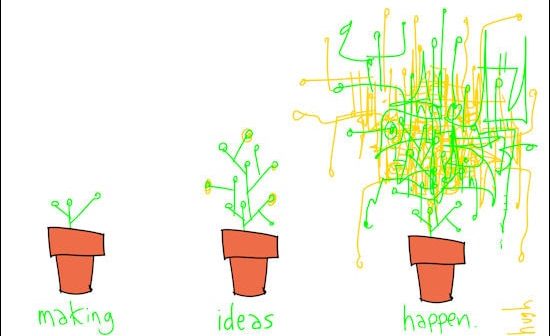
Today’s “Daily Biz­card”, “Making Ideas Hap­pen”, goes to author and entre­pre­neur, Scott Belsky.

Mark’s per­so­nal catchph­rase is “Making Ideas Hap­pen”, which is what I used for the base of the cartoon.

And as it turns out, it’s also the title of his new book, which came out in April. [Disc­lo­sure: The book is also published by the same publishers I have i.e. Port­fo­lio Imprint, Pen­guin Books.]

Besi­des wri­ting books, Scott has two other busi­nes­ses up his sleeve, The Behance Net­work and Action Method, so he’s a busy guy. Another one of those very bright peo­ple, like Tom Peters or Seth Godin, where the job tit­les “Author” and “Entre­pre­neur” get inc­rea­singly blurry. A  qua­lity that makes their books far more inte­res­ting in the long run, I would say.

[Daily Biz­card archive]

[Hire Hugh]

[Scott, we’ll be in touch soon via gapingvoidbizcard@gmail.com to collect your details for the back of the card, so we can ship a free box of 100 to you etc. Thanks!]

June 25, 2009

my next book: “evil plans”

Send to Kindle

Pre-order the book here:

Ama­zon.

Bar­nes & Noble.

Bor­ders.

800-CEO-READ. (great for bulk buys)

[Below is a small taste of the first draft of my upco­ming book, “EVIL PLANS”. Published by Penguin/Portfolio, the same peo­ple who published my first book, “IGNORE EVERYBODY”. It launches­Fe­bruary 17th, 2011.]

INTRODUCTION: EVERYBODY NEEDS AN EVIL PLAN

Every­body needs an EVIL PLAN. Every­body needs that crazy, out-there idea that allows them to ACTUALLY start doing something they love, doing something that mat­ters. Every­body needs an EVIL PLAN that gets them the hell out of the Rat Race, away from lousy bos­ses, away from boring, dead-end jobs that they hate. Life is short.

Every per­son who ever mana­ged to do this, every per­son who man­ged to escape the cubi­cal farm and start doing something inte­res­ting and mea­ning­ful, star­ted off with their own EVIL PLAN. And yeah, pretty much ever­yone around them– friends, family, collea­gues– thought they were nuts.

Thanks to the Inter­net, it has never been easier to have an EVIL PLAN, to make a great living, doing what you love, doing something that mat­ters. My inten­tion is that by the time you’ve finished rea­ding this book, you will com­ple­tely con­cur. More impor­tantly, you’ll actually feel com­pe­lled enough to go and do something about it your­self, if you haven’t already.

“TO UNIFY WORK AND LOVE”

Sig­mund Freud once said that in order to be truly happy in life, a human being nee­ded to acquire two things: The capa­city to work, and the capa­city to love.

An EVIL PLAN is really about being able to do both at the same time.

At time of wri­ting, this is my tenth year blog­ging at gapingvoid.com. I’ve done a lot of stuff with it since I star­ted. Published car­toons, sold wine, sold suits, pim­ped Mic­ro­soft, pim­ped Dell, sold art, “built my per­so­nal brand”, writ­ten e-books, ran­ted on end­lessly about mar­ke­ting, new media and all sorts…

But loo­king back, I rea­lize it all ser­ved a ser­ved a com­mon pur­pose: to unify work and love. I was wri­ting about what inte­res­ting and impor­tant to me, and trying to turn it into a career somehow.

Then I noti­ced, the peo­ple who read my blog the most avidly, and the blog­gers I tend to read most avidly, hell yeah, they’re mostly trying to do the same thing too, in their own way. It’s a defi­nite pattern.

To unify work and love. Are you one of these peo­ple? If not, don’t you think you should be? I mean, after friends and family, what the hell is there?

1. THE MARKET FOR SOMETHING TO BELIEVE IN IS INFINITE

hughtrain777.jpg

THE HUGHTRAIN MANIFESTO: “THE MARKET FOR SOMETHING TO BELIEVE IN IS INFINITE.”

We are here to find mea­ning. We are here to help other peo­ple do the same. Everything else is secondary.

We humans want to believe in our own spe­cies. And we want peo­ple, com­pa­nies and pro­ducts in our lives that make it easier to do so. That is human nature.

Pro­duct bene­fit doesn’t excite us. Belief in huma­nity and human poten­tial exci­tes us.

Think less about what your pro­duct does, and think more about human potential.

What sta­te­ment about huma­nity does your pro­duct make?

The big­ger the sta­te­ment, the big­ger the idea, the big­ger your brand will become.

It’s no lon­ger just enough for peo­ple to believe that your pro­duct does what it says on the label. They want to believe in you and what you do. And they’ll go elsewhere if they don’t.

It’s not enough for the cus­to­mer to love your pro­duct. They have to love your pro­cess as well.

Peo­ple are not just get­ting more deman­ding as con­su­mers, they are get­ting more deman­ding as spi­ri­tual enti­ties. Bran­ding beco­mes a spi­ri­tual exercise.

Either get with the pro­gram or hire a con­sul­tant in Extinc­tion Mana­ge­ment. No vision, no busi­ness. Your life from now on pivots squa­rely on your vision of human potential.

The pri­mary job of an adver­ti­ser is not to com­mu­ni­cate bene­fit, but to com­mu­ni­cate conviction.

Bene­fit is secon­dary. Bene­fit is a pro­duct of con­vic­tion, not vice versa.

Wha­te­ver you manu­fac­ture, some­body can make it bet­ter, fas­ter and chea­per than you.

You do not own the mole­cu­les. They are star­dust. They belong to God. What you do own is your soul. Nobody can take that away from you. And it is your soul that informs the brand.

It is your soul, and the pur­pose and beliefs that embo­dies, that peo­ple will buy into.

Ergo, great bran­ding is a spi­ri­tual exercise.

Why is your brand great? Why does your brand mat­ter? Seriously. If you don’t know, then nobody else can– no adver­ti­ser, no buyer, and cer­tainly no customer.

It’s not about merit. It’s about faith. Belief. Con­vic­tion. Courage.

It’s about why you’re on this pla­net. To make a dent in the universe.

I don’t want to know why your brand is good, or very good, or even great. I want to know why your brand is totally fric­kin’ amazing.

Once you tell me, I can the world.

And then they will know.


2004 was the year that I drew the car­toon above, which I ended up calling “The Hugh­train”. It appea­red in my last book, “Ignore Every­body”, which came out five years later.

Why is it called The Hugh­train? Soon after I drew the car­toon, I wrote a little mani­festo on my blog, trying to explain the car­toon in more depth. I called it “The Hugh­train Mani­festo”, a pun on a book that had made a big impact on me around that time, “The Clue­train Manifesto”.

Here’s the point of The Hugh­train: Wha­te­ver you’re selling isn’t just a pro­duct of capi­tal, it’s also a pro­duct of a belief sys­tem– your own. And unders­tan­ding your belief sys­tem is cru­cial. As my friend and men­tor, the great mar­ke­ting author, Seth Godin once told me in an inter­view I did for him:

You can’t drink any more bott­led water than you already do. Or buy more wine. Or more tea. You can’t wear more than one pair of shoes at a time. You can’t get two mas­sa­ges at once…

So, what grows? What do mar­ke­ters sell that scales?

I’ll tell you what: Belief. Belon­ging. Mat­te­ring. Making a dif­fe­rence. Tri­bes. We have an unli­mi­ted need for this.

Another friend of mine, the film direc­tor, David Mac­ken­zie once quip­ped, “A film is only as good as the rea­sons for making it”.

What is true for Holly­wood, is also true for pro­ducts and busi­nes­ses. It’s not what you make, it’s what you believe in. That is what peo­ple res­pond to. That is where your enter­prise lives or dies.

The Hugh­train was me trying to arti­cu­late my coming to grips with this.

2. WELCOME TO THE HUNGER.

hunger333.jpg

The Hun­ger to do something creative.

The Hun­ger to do something amazing.

The Hun­ger to change the world.

The Hun­ger to make a difference.

The Hun­ger to enjoy one’s work.

The Hun­ger to be able to look back and say, Yeah, cool, I did that.

The Hun­ger to make the most of this utterly brief blip of time Crea­tion has given us.

The Hun­ger to dream the good dreams.

The Hun­ger to have ama­zing peo­ple in our lives.

The Hun­ger to have the synap­ses con­ti­nually fired up on overdrive.

The Hun­ger to expe­rience beauty.

The Hun­ger to tell the truth.

The Hun­ger to be part of something big­ger than yourself.

The Hun­ger to have good sto­ries to tell.

The Hun­ger to stay the course, des­pite of the odds.

The Hun­ger to feel passion.

The Hun­ger to know and express Love.

The Hun­ger to know and express Joy.

The Hun­ger to chan­nel The Divine.

The Hun­ger to actually feel alive.

The Hun­ger will give you everything. And it will take from you, everything. It will cost you your life, and there’s not a damn thing you can do about it.

But kno­wing this, of course, is what ulti­ma­tely sets you free.

3. THE GLOBAL MICROBRAND.

[I first published “The Glo­bal Mic­ro­brand Rant” on my blog back in 2005. Here it is again:]

Since I first coi­ned the term in 2004, I have been totally besot­ted with the idea of “The Glo­bal Microbrand”.

A small, tiny brand, that “sells” all over the world.

The Glo­bal Mic­ro­brand is nothing new; they’ve exis­ted for a while, long before the Inter­net was inven­ted. Ima­gine a well-known author or pain­ter, selling his work all over the world. Or a small whisky dis­ti­llery in Scot­land. Or a small cheese maker in rural France, whose pro­duce is expor­ted to Paris, Lon­don, Tokyo etc. Ditto with a vio­lin maker in Italy. A clas­si­cal gui­tar maker in Spain. Or a small English firm making $50,000 shotguns.

With the inter­net, of course, a Glo­bal Mic­ro­brand is easier to create than ever before. A com­mer­cial sign maker in New England. Or a small sheet metal entre­pre­neur in the U.K. All using the Inter­net, blogs, social media and what­not to spread the word, to talk to peo­ple from all over.

And with the advent of blogs in the early years of this Cen­tury this was no lon­ger just limi­ted to peo­ple who made pro­ducts. We saw that any ser­vice pro­fes­sio­nal with a bit of talent and something to say could spread their mes­sage far and wide beyond their imme­diate client base and local mar­ket, without nee­ding a high-profile name or the good­will of the mains­tream media. Law­yers, IT con­sul­tants, mar­ke­ting folk, you name it.

But it’s not just limi­ted to cot­tage indus­tries. In the 1990’s, the great busi­ness guru, Tom Peters tal­ked about “Brand You”, a per­so­nal brand that trans­cends your orga­ni­za­tion or job desc­rip­tion. The grand-daddy of this space is pro­bably Robert Sco­ble, who wor­ked full-time for Mic­ro­soft, but whose brand became much, much lar­ger than any job desc­rip­tion they could give him; that’s was worth far more than anything they ever paid him.

Once I crea­ted my own fled­gling glo­bal mic­ro­brand (i.e. via my weblog) I star­ted hel­ping other peo­ple do the same. A bes­poke English tai­lor. A small winery in South Africa. It was something I really wan­ted to know about. It was pro­fes­sio­nally the most com­pe­lling idea I had ever come come across. I was hooked.

Of course, “The Glo­bal Mic­ro­brand” is not con­cep­tual roc­ket science. You don’t need a Nobel Prize in order to unders­tand the idea. What exci­tes me about it is the fact that I now live in a small adobe in the Far West Texas desert, and career­wise I’m get­ting a lot more done than when I lived in a large apart­ment in New York or Lon­don, for a fifth of the overheads. For one fif­tieth of the stress levels.

My job allows me to tra­vel a lot– New York, Miami, San Fran­cisco etc. After three or four days away I start fee­ling really stres­sed out. For years I thought it was just me. No, actually, ever­yone in the big city seems really stres­sed out. It’s just con­si­de­red normal.

I was tal­king to a friend on the phone about this.

“There’s only two ways to deal with life in the big city,” he says. “Alcohol and high pri­ces. Immer­sing your­self in high rent, luxury items, trendy, over­pri­ced cock­tail bars, flashy res­tau­rants, tall leggy blon­des who don’t give a damn about you, just to act as a buf­fer zone bet­ween you and the abyss.”

“Which you pay a lot for,” I say.

“Which you pay a hell of a lot for,” he says.

It seems to me a lot of peo­ple of my gene­ra­tion are loc­ked into this high-priced cor­po­rate, urban tread­mill. Sure, they get paid a lot, but their overheads are also off the scale. The minute they stop tap­dan­cing as fast as they can is the minute they are crushed under the wheels of commerce.

You know what? It’s not sustainable.

Howe­ver, the Glo­bal Mic­ro­brand is sus­tai­na­ble. With it you are not behol­den to one boss, one com­pany, one cus­to­mer, one local eco­nomy or even one industry. Your brand deve­lops rela­tionships in enough dif­fe­rent pla­ces to where your per­ma­nent address beco­mes almost irrelavant.

Frankly, it beats the hell out of com­mu­ting every mor­ning to the cor­po­rate glass box in the big city, something I did for many years. Just so I could make enough money to help me for­get that I have to com­mute every mor­ning to the cor­po­rate glass box in the big city.

There are thou­sands of rea­sons why peo­ple write blogs or spend a lot of time buil­ding their online equity. But it seems to me the big­gest rea­son that dri­ves the blog­gers I read the most is, we’re all loo­king for our own per­so­nal Glo­bal Mic­ro­brand. That is the prize. That is the tic­ket off the cor­po­rate tread­mill. And I don’t think it’s a bad one to aim for.

4. THE MAGIC NUMBER.

mediocrity%200905-thumb.gif

Ten Thou­sand is my magic number.

The first few years of this cen­tury were tough ones for me. My career in adver­ti­sing pretty much tan­ked around the same time as the dot­com crash, and I found myself unem­plo­yed, broke, living in the boo­nies, scra­ping a mea­gre living wri­ting free­lance brochure copy. Then 9 – 11 came along and made it even worse. Not fun or nice.

Up until that point, I had spent my entire wor­king career “cha­sing gigs”. Whether we’re tal­king full-time sala­ried posi­tions, or three-day free­lance oppor­tu­ni­ties, I had spent well over a decade cha­sing that ever-elusive island of secu­rity in a swe­lling ocean of advertising-industry chaos. And these gigs would never last, they would always end even­tually, for wha­te­ver rea­son. Reces­sions, layoffs, down­si­zing, incom­pe­tence on my part, incom­pe­tence on the boss’ part, wha­te­ver. And usually the timing was bad, of course it was.

Chase, chase, chase…. And I was sick of it. Really, REALLY sick of it. Over a decade of wor­king my butt off, and those islands of secu­rity were no less elu­sive than before. And I wasn’t as young as I used to be. The hams­ter wheel was star­ting to do me in.

Then, in these dar­kest of days, I had a sud­den flash of life-changing insight. Like I told my fellow burnout-advertising drin­king buddy that eve­ning, as we com­mi­se­ra­ted at the bar about our sad lot in life:

“I don’t want to be cha­sing gigs anymore.”

“What do you want, then?” asked my buddy.

“I just want ten thou­sand peo­ple giving me money every year.”

“Where are you going to find these peo­ple?” he asked.

“The Inter­net,” I replied.

“What do you plan on doing there?”

“I think I’ll start by publishing my car­toons online… on a blog.”

“What’s a ‘blog’?”

The rest, as they say, is history…

There was nothing magi­cal about the ten thou­sand num­ber. I just rec­ko­ned that, as a car­too­nist, if I was making t-shirts, books, wha­te­ver– and ten thou­sand peo­ple were buying pro­duct every year, with me making a few bucks pro­fit off each unit, well, it wouldn’t make me a billio­naire, but at least I’d be able to feed myself.

Also, ten thou­sand peo­ple sup­por­ting me see­med like a good way of sprea­ding my bets eco­no­mi­cally. If one per­son drops out, and all you lose is a t-shirt sale, with 9,999 other peo­ple still on board you can easily reco­ver. But in the world of cha­sing adver­ti­sing gigs, if the one per­son you lose hap­pens to be your jac­kass boss, you’re dead meat.

There’s nothing spe­cial abut the ten thou­sand num­ber. It all depends on what you’re selling. If you’re selling hand-built motorcyc­les, your magic num­ber will be less. If you’re selling 5-dollar jars of hot Cajun chi­lli sauce, your num­ber will be lar­ger. Wha­te­ver that num­ber will be, I hope you find it one day. I hope you find THOSE PEOPLE one day.

5. WELCOME TO THE OVER-EXTENDED CLASS.

angel319A-thumb.jpg

“If ever there was a time to be ove­rex­ten­ded, this is it.” – Chris Ander­son, Editor-In-Chief, Wired Magazine.

Back in August, 2009 I inter­vie­wed Chris Ander­son for my blog:

Hugh: You’ve got your Edi­tor job, you’ve got your book deals, you’ve got your blog, you do a lot of spea­king gigs… As your name gets more and more known, are you having trou­ble kee­ping up with everything? What’s your coping mecha­nism? How do you find the balance?

Chris: Plus the five little kids, the two star­tup com­pa­nies on the side, etc. Obviously, balance is a dis­tant goal. In the mean­time, I dele­gate, work all the time, hardly sleep, totally ignore poli­tics, sports and pop cul­ture, neglect my family too much and pro­bably don’t do any ofmy jobs as well as I could. But these are exci­ting days, and if ever there was a time to be ove­rex­ten­ded, this is it.

I agree with him com­ple­tely. I know what it means to be over-extended all too well. Recently I made a list of all the pro­jects I’m currently wor­king on. The next book. The road trip. The prints. Blog­ging. Con­sul­ting. Dra­wing car­toons. The list goes on…

All in all, it came down to ten items. Ten. Each one inte­res­ting and poten­tially luc­ra­tive enough to be taken on as a full-time job. Ten.

Ouch. Even for me, that see­med like WAY too much.

The other day, a friend of mine was kvetching about having to hold down three jobs. “Three?” I quip­ped. “Try hol­ding down ten…”

My friend loo­ked at me funny. He was pro­bably right to do so.

Since about 1991, it’s been like that for me. From the moment I woke up till the moment I went to bed, I was wor­king on something. The day job or the car­toons or something else. Sure, I’d have girl­friends come and go, but the girl­friends never las­ted too long, and I also ended up inven­ting, in 1997, an art form that would allow me to carry on wor­king WHEN I was going out to the bars i.e. the “car­toons drawn on the back of busi­ness cards”.

I’ve not had a pro­per vaca­tion in ten years, either. Nor am I plan­ning one.

Call Chris and myself, and pro­bably over 50% of the peo­ple who are rea­ding this book, mem­bers of “The Ove­rex­ten­ded Class.

You know who you are. And you know what? In terms of per­cen­tage of the popu­la­tion, there were less of us twenty years ago. And there’ll be more of us in two decades.

Our parents and grand­pa­rents spent their “Cog­ni­tive Sur­plus” watching tele­vi­sion. That’s a thing of the past… a his­to­ri­cal acci­dent of the old factory-worker age mee­ting the modern mass-media age. Of course it wouldn’t last fore­ver. We humans as a spe­cies were desig­ned to com­pete, not to sit around on our asses.

Wel­come to the Ove­rex­ten­ded Class, Peo­ple. You may opt out of it if you want, but over time it’s going to get har­der and har­der to make ends meet, let alone be suc­cess­ful, if you do.

Choi­ces.

6. A WORLD-CLASS PRODUCT.

everybodysick%20of%20A.jpg

“The curious story of an English Savile Row tai­lor and an under-employed cartoonist.”

In late 2004, things were still rough for me. I was still broke, unem­plo­yed and won­de­ring what the hell I was going to do next. The ans­wer came from a direc­tion I would never have predicted.

At the time, I was living in Cum­bria, in a cot­tage in the Northern English boon­docks, not far from the famous Lake Dis­trict. I was just lying low, scra­ping a living doing free­lance, trying to save money. It was a bleak and mise­ra­ble time for me, frankly.

In the local village pub, I got friendly with a local fellow named Tho­mas Mahon. We were about the same age, and his busi­ness wasn’t going very well, either.

Tho­mas was a tai­lor. He made suits. And not just any kind of suits. He made the best of the best. $5000, hand-made suits. He’d been trai­ned down on Savile Row in Lon­don, the legen­dary English home of tai­lo­ring. Some say they make the best suits in the world, there. He had made suits for rock stars, royalty, famous desig­ners and… you name it. He really was that good. The man who trai­ned him, Den­nis Hal­berry, was head cut­ter for Ander­son & Shep­pard, one of the most estee­med tai­lo­ring firms in the world.

A few years pre­viously, Tho­mas had got sick of wor­king on Savile Row, deci­ded he mis­sed his belo­ved Cum­bria, and deci­ded to move back home and set up shop in the village he grew up in.

Ever­yone told him he was mad, but he paid no attention.

Though he was one of the most res­pec­ted tai­lors on Savile Row, it turns out he wasn’t very good at get­ting the word out about his work. His cus­to­mers loved him, but they didn’t like to tell other peo­ple about him. They wan­ted him all to them­sel­ves. So in spite of his for­mi­da­ble talent, Tho­mas wasn’t get­ting one-fitth the busi­ness he deserved.

So there we were, Christ­mas approaching, and in spite of us both fee­ling a wee bit gloomy about our current eco­no­mic sta­tu­ses, we were chee­rily sit­ting in the local pub one eve­ning, with Tho­mas telling me all these won­der­ful sto­ries about the peo­ple and expe­rien­ces of wor­king on Savile Row.

Finally I inte­rrup­ted him.

“Tom”, I said, “these Savile Row sto­ries are terri­fic. You should blog about them.”

“What’s a blog?”

By this time I had been blog­ging for about three years, and knew all about how it wor­ked. That night, we came up with an EVIL PLAN. I would show Tom how to blog, he would make the suits, I would figure out a way to spread the word online.

EnglishCut.com was born.

Ins­tead of using the blog to hard-sell his suits, Tho­mas just wrote these great little blog posts about the world he knew and loved– the com­mu­nity of Savile Row tai­lors. He’d write about it all– his friends on the Row, the pubs they drank in, the other busi­nes­ses on the Row. He just wrote about it honestly, with great pas­sion and affec­tion. He prai­sed the other shops, his com­pe­ti­tion. Why not? They were all good peo­ple, with second-to-none skills.

A few years later, he would con­fide in me that he never thought anyone would ever find what he wrote about that inte­res­ting, so not expec­ting any­body to read it, he just wrote it his way. If he had thought a lot of peo­ple would be inte­res­ted in it, he would have writ­ten it dif­fe­rently. More uptight. Less transparent.

And boy, was he wrong in the end. Peo­ple LOVED his blog. They ADORED the trans­pa­rency and Tho­mas’ easy­going, unpre­ten­tious man­ner. So much so that, within no time at all, he had gone from under-employed tai­lor, to having a two-year wai­ting list, just to get a first appointment.

If you go online and Goo­gle Tho­mas or English Cut, you’ll find a lot to read about. The story got a got of atten­tion in the blo­gopsphere back then, simply because in 2005, an English Savile Row tai­lor was pro­bably the per­son you’d least expect to start a blog. But it wor­ked. It wor­ked AMAZINGLY well.

We wor­ked together for about two more years, before ami­cably going our sepa­rate ways. It was one of the most rewar­ding career moves I ever made. And I think Tho­mas would say the same.

My father once remar­ked to me, “I bet you had no idea in the begin­ning that the blog would work as well as it did, eh?”

True, I had no idea. But loo­king back, we had a few things going for us.

i. A great pro­duct. Tho­mas is one of the best tai­lors in the world. His suits REALLY ARE that good. If we were just selling com­mo­di­fied drek, I doubt if anyone would’ve paid much attention.

ii. A uni­que story. When he star­ted, Tho­mas was the only Savile Row tai­lor wri­ting a blog, and this gave him a uni­que voice in the blo­gosphere. This fue­lled the inte­rest. Had mas­ses of tai­lors already been blog­ging, it would’ve been much har­der for his own uni­que “idea-virus” to spread. The first-mover advan­tage rule still applies.

iii. Pas­sion & Autho­rity. Tho­mas has both in spa­des. That’s what kept peo­ple coming back. That’s what built up trust. That’s what tur­ned his rea­ders into cus­to­mers. Which is why “Share what you love” is the best advice there is.

iv. Con­ti­nuity. He kept at it. He didn’t expect the blog to trans­form his for­tu­nes over­night. As I’m fond of saying, “Blogs don’t write them­sel­ves”. Based on our expe­rience, if you want blogs to trans­form your busi­ness, I’d say give your­self at least a year.

v. Focus. It was always about the suits. It was never about what he had for break­fast, Goo­gle traf­fic, or frothy gos­sip about other bloggers.

vi. Tho­mas spoke in his own voice. Tho­mas is a straight­for­ward, affa­ble fellow, and the voice on the blog is the same as the voice you meet in real life. He never tried to mis­re­pre­sent him­self on his blog, nor try to create some over-glamorized image of his pro­fes­sion. He just told it like it is. And peo­ple res­pon­ded well to that. As he once put it, “We’re so lucky we don’t have to create the brand out of thin air. We just tell the truth and the brand builds itself.”

vii. Sove­reignty. The only peo­ple we had to please were the two of us. No bos­ses or outside inves­tors to keep happy. Bos­ses and inves­tors like gua­ran­tees, but there aren’t any.

viii. We were both broke when we star­ted. Had we had mas­ses of money at the begin­ning, we would have had a lot more options on how to get the word out. In all like­lihood, these options would have been a lot more expen­sive and not nearly as effec­tive. Some­ti­mes lack of capi­tal is a defi­nite advantage.

A blog is a great way to build one’s own per­so­nal “glo­bal mic­ro­brand”. As the Job-For-Life no lon­ger exists, as the value of the social “posi­tion” ero­des and the value of the “pro­ject” takes its place, per­so­nal brand deve­lop­ment beco­mes far more impor­tant to one’s career. Blogs are a good place to start.

Hey, if a Savile Row tai­lor can do it, what’s your excuse?

7. FILL IN THE NARRATIVE GAPS.

I%20want%20the%20world111.jpg

If peo­ple like buying your pro­duct, it’s because its story helps fill in the narra­tive gaps in their own lives.

Human beings need to tell sto­ries. His­to­ri­cally, it’s the quic­kest way we have for trans­mit­ting use­ful infor­ma­tion to other mem­bers of our spe­cies. Sto­ries are not just nice things to have, they are essen­tial sur­vi­val tools.

And yes, the sto­ries we tell our­sel­ves are just as impor­tant than the sto­ries we tell other people.

Ergo, The Glo­bal Mic­ro­brand is not about selling per se. It’s more about figu­ring out where your pro­duct stands in rela­tion to per­so­nal narrative.

So where does your pro­duct fit into other people’s narra­tive? How does telling your story become a sur­vi­val tool for other peo­ple? If you don’t know, you have a mar­ke­ting problem.

Narra­tive gaps. It’s all about the narra­tive gaps.

8. AVOID DINOSAURSPEAK.

dinosaur001jpeg800-thumb.jpg

Gaping­void is the per­fect web­site to get your daily blog­ging fix. Filled to the brim with hila­rious car­toons, it also offers timely and insight­ful com­men­tary on the new rea­li­ties of adver­ti­sing and mar­ke­ting. Indeed, some peo­ple would say it’s just not the blo­gosphere without gaping­void to enhance their qua­lity blog­ging expe­rience. Start your day the switched on way– subsc­ribe to get gaping­void on your RSS fee­der today!

I wrote the pre­ce­ding para­graph to illus­trate the inte­llec­tual ban­kruptcy of what I call “Dino­saurs­peak”. That rather socio­pathic com­bi­na­tion of being com­ple­tely focu­sed on cus­to­mer bene­fit and yet com­ple­tely sel­fish at the same time.

And yeah, if it doesn’t work with my shtick, it ain’t going to work with your pro­duct, either.

What is inte­res­ting to me is that this style of lan­guage was pretty uni­ver­sal only a few years ago. Sure, you had a few mave­ricks out there sti­rring things up, but most exter­nal busi­ness com­mu­ni­ca­tion was pretty much stuck in firehose mode.

But when mar­kets become smar­ter and fas­ter than the com­pa­nies ser­vi­cing said mar­kets, thanks to the Inter­net, lan­guage chan­ges. Of course it does.

So your lan­guage you use has be on the cut­ting edge, or at least, well ahead of the curve. Other­wise you’re just going to sound like ever­yone else, and peo­ple will ignore you.

9. WHO ARE YOU, REALLY?

whitepebbleJPEG2.jpg

There’s a won­der­ful metaphor in the Bible [Reve­la­tion 2:17] about “a white pebble”.

“Let the one who has an ear hear what the spi­rit says to the con­gre­ga­tions: To him that con­quers I will give some of the hid­den manna, and I will give him a white peb­ble, and upon the peb­ble a new name writ­ten which no one knows except the one recei­ving it.”

The metaphor was once explai­ned to me by a Catho­lic monk. To paraphrase:

“You have three sel­ves: The per­son that you think you are, the per­son that other peo­ple think you are, and the per­son that God thinks you are. The white peb­ble repre­sents the lat­ter. And of the three, it is by far the most important.”

He then gave me some good advice, something I’ve always kept with me:

“When life gets really tough, just remem­ber the white peb­ble. Just remem­ber who you really are. Just remem­ber the per­son that only God can see.”

Wha­te­ver your thoughts on God or Reli­gion may be, posi­tive or nega­tive, the white peb­ble is a very sim­ple metaphor that auda­ciously asks the ques­tion: “Who are you, really?”

Yes, why are you here, exactly? Who are you here for? Your­self? Other peo­ple? God? Or maybe some other cause? You tell me…

It’s one of those ques­tions that never gets old. Unlike the poor body that hou­ses us.

10. THE COMPLEXITY WAR i.e. “SUCCESS IS MORE COMPLEX THAN FAILURE”.

complicated128.jpg

Rud­yard Kipling once desc­ri­bed Triumph and Disas­ter as “Impos­tors, Both”. The lon­ger I stay in the wor­king world, the more I start to get what he means.

It’s funny how you can have two guys sit­ting next to each other in an office, both doing the same job. Both using the same com­pu­ters and pho­nes. Both with the same aca­de­mic qua­li­fi­ca­tions. Both with a simi­lar IQ. Both wor­king the same amount of hours. But why does one guy take home five times more sales com­mis­sion than the other guy? What’s going on? Is it luck? Skill? Jus­tice? Injustice?

The ques­tion of what sepa­ra­tes suc­cess from fai­lure, is something I’ve always liked to pon­der on. Sud­denly this week, out of nowhere, the follo­wing line hit me:

“Suc­cess is more com­plex than Failure.”

Think about it. Being a fai­lure is a no-brainer. All you have to do is sleep till noon, get out of bed, scratch your crotch, have your mor­ning visit to the bath­room, turn on the Star Trek re-runs, help your­self to some break­fast [Lef­to­ver pizza and a bottle of Jack Daniels, Hurrah!], light up your first joint of they day, down­load some porn, and already you’re well on your way. Sure, a few incon­ve­nient varia­bles may enter the pic­ture here and there, to com­pli­cate an other­wise per­fect day of FAIL, e.g. what you’re going have to say to your brother in order to con­vince him to lend you that $300, so you can pay off the telephone bill, that kinda thing. But for the most part, the day-to-day modus ope­randi of your “Ave­rage Total Fai­lure” is quite straightforward.

Being suc­cess­ful, howe­ver, is a whole dif­fe­rent ball game. Break­fast mee­tings at 7.00am. Con­fe­rence calls at mid­night. Visi­ting twelve cities in five days. Fiel­ding ques­tion from a swarm of hos­tile jour­na­lists. Dea­ling suc­cess­fully with an enra­ged, multi-million dollar cus­to­mer who’s screa­ming bloody mur­der over something rather tri­vial in the grand scheme of things. Dea­ling suc­cess­fully with an enra­ged, multi-million dollar inves­tor who’s screa­ming bloody mur­der over something rather tri­vial in the grand scheme of things. Making sure there’s enough money in the account to meet the pay­roll of all your legions of highly-paid, highly-effective, highly-talented emplo­yees. All these hun­dreds of unre­len­ting issues to deal with, all day, every day. You get the picture.

And as always, what’s inva­riably true of peo­ple is also inva­riably true for busi­nes­ses. So when I see a small but insanely-successful busi­ness sud­denly implode over­night [it seems to hap­pen quite a lot in Sili­con Valley], I’m gues­sing chan­ces are it wasn’t ina­bi­lity to manage growth per se that des­tro­yed the busi­ness [a favo­rite rea­son cited by those wri­ting busi­ness obi­tua­ries], but the ina­bi­lity for the busi­ness to manage com­ple­xity. Com­ple­xity inc­rea­ses expo­nen­tially with growth, most small com­pa­nies can cul­tu­rally only handle inc­re­men­tal inc­rea­ses in com­ple­xity. As I’m fond of saying, “Human beings don’t scale”.

Which is why wal­king around the hall­ways of large, suc­cess­ful com­pa­nies can often seem so oppres­sive to some­body new to it. All that cul­tu­ral regi­men­ta­tion is there for one rea­son only: To fight “The Com­ple­xity War”. Sure, it might feel a bit ghastly to the more idea­list and free-spirited among us, but until some­body can come up with a bet­ter way to win this Com­ple­xity War at a Fortune-500 level, I don’t see it ever going away.

11. TREAT IT LIKE AN ADVENTURE. AN ADVENTURE WORTH SHARING.

intoxicated5722.jpg

January 6, 2008

hughtrain revisited: finding meaning in marketing

Send to Kindle

zzzzzz765410555.jpg
In June, 2004 I drew the car­toon above, which ended up being called “The Hugh­train”, affec­tio­na­tely named after The Clue­train, of course.
I’ve re-published it here on this blog more times than I’d care to admit, but what the heck, there’s something about it, some sort of mar­ke­ting ideal that con­ti­nues to inform my thin­king.
It was drawn the month I read The Clue­train for the first time. It was also the month I read Mark Earl’s “Death of Mar­ke­ting” and Tom Peters’ “Re-imagine!” for the first time.
Need­less to say, all three books chan­ged my life somewhat [espe­cially Mark’s, as it tur­ned out]. One eve­ning after work, sit­ting at the bar, ins­pi­red by all the ideas inside these books, I cran­ked out the car­toon. And just to make sure peo­ple knew what the heck I was tal­king about, I cran­ked out what then became known as “The Hugh­train Mani­festo”.

We are here to find mea­ning. We are here to help other peo­ple do the same. Everything else is secon­dary.
We humans want to believe in our own spe­cies. And we want peo­ple, com­pa­nies and pro­ducts in our lives that make it easier to do so. That is human nature.

Some peo­ple find the whole “Mar­ke­ting as Reli­gion” angle a bit squea­mish. Some peo­ple much pre­fer the straight-talking “This is what you get, this is how much it costs” way of doing busi­ness. I don’t see anything wrong with that, if it’s wor­king for them.
But one thing I’ve noti­ced over time is, the search for per­so­nal mea­ning is a never-ending jour­ney. It’s something that all nor­mal, healthy peo­ple share. And the way said mea­ning is found is mostly through Love. And Love is found not just in the into­xi­ca­ting blur of roman­tic, sexual love, but in an end­less myriad of ways. Most of them pretty ordi­nary and every­day.
But the ordi­nary and every­day is full of sur­pri­ses. As a wise old preacher once told me when I was a kid, “Whe­re­ver God is, Love is. And God is Everywhere.“
A few years after rea­ding it, I am still moved by Anil Dash re-telling the words of his new father-in-law, told on the day Anil and his wife, Alaina got married.

Among the many things that were said, some of the words that my father-in-law sha­red with us struck me as the best les­son I lear­ned in get­ting married. And like I said, it could seem sim­ple, even obvious, when you read it on a screen, because it’s so uni­ver­sal. But when you live it and make a public com­mit­ment to it, it beco­mes down­right pro­found.
What he told us is that, in the end, only love mat­ters. Suc­cess and fame and wealth and even health all fade in time, and in the end all you have is love. And love is what mat­ters. I hope ever­yone in the world gets the chance to dis­co­ver that in the way that I have. I love you, Alaina.

If I have suc­cee­ded in mar­ke­ting in the past, the more I think about it, the more I rea­lize that it was not some form of mar­ke­ting genius on my part. It was simply because, on some level, I gave a damn. On some level, I cared about the pro­duct, I cared about the peo­ple making and selling it, and I cared about the peo­ple using it. And as I found out, pas­sion is sur­pri­singly easy to share, even with folk you don’t know. But it has to be there in the first place, and it’s devi­lishly hard to fake.
Using a “social object” to tap into one’s sha­red huma­nity with other peo­ple, whether it’s in the guise of a com­mer­cial pro­duct or not, is both a great plea­sure and a great honor. It’s why we’re here, after all. To Love.
And that’s all mar­ke­ting really needs to be in the end. An act of Love. An act of the uni­ver­sal human lon­ging– the lon­ging to bring the infi­nite into the realm of the finite. Four years later, The Hugh­train car­toon remains as rele­vant to me as ever.
[Bonus Link: The pod­cast I made with Mark Earls and John­nie Moore over the wee­kend is now up on Johnnie’s blog..]


October 27, 2007

thoughts on de-commodification

Send to Kindle

ddbcartoon554.jpg
Some ran­dom thoughts on “De-Commodification”, in no par­ti­cu­lar order:
1. Last year I did the above t-shirt design for an adver­ti­sing buddy of mine in Chi­cago. He’s no lon­ger at DDB, but what the heck.
2. Being in the $10 wine busi­ness, “De-commodification” is a sub­ject dear to my heart. One thing the world is not short of is… vast lakes of unsold wine.
3. When I hit a cer­tain age, I also lear­ned the hard way that the the world was not short of thirty-something jour­ney­man adver­ti­sing crea­ti­ves, either. Nothing like fee­ling a com­mo­dity one­self, to pique one’s inte­rest in de-commodification. Heh.
4. You know the phe­no­me­non when a com­pany gets too big and too rich, and the next thing you know, the middle-manager poli­tics take over? Starts suc­king the life blood out of the com­pany? The start of ine­vi­ta­ble and per­ma­nent dec­line? Know what I mean? The more time I spend on this side of the pond, the more I think this com­pany alle­gory applies to these Uni­ted Sta­tes, as well.
5. Last week I was on the phone to an old friend of mine, a guy in his late for­ties, who was born and bred in Michi­gan, and is living there now. He was telling me about his uncle, who, about four deca­des ago, got his highschool sweetheart preg­nant. So ins­tead of going off to college, he found him­self with a new wife, a child on the way, and an assembly-line job at Gene­ral Motors. But even though this situa­tion clip­ped his wings con­si­de­rably, he still ended up having a nice life in the end, with a home, a big yard, two cars, a steady paycheck, wee­kends fishing or hun­ting deer, and vaca­tions in Hawaii every year or so. “The days where a blue collar guy like my uncle could have a nice life without doing much,” my friend said, “those days are gone. Gone fore­ver.“
And in the back of my mind, I’m thin­king the same is star­ting to hap­pen to white collar guys more and more, as well. But it’s not quite out in the open yet. Society’s not quite ready to have that con­ver­sa­tion.
6. The best way to off­set one’s own com­mo­di­fi­ca­tion is to build one’s own per­so­nal “glo­bal mic­ro­brand”, irres­pec­tive one own emplo­yer. “Brand You”, as the great Tom Peters called it way back in 1997. A good blog works about as well as anything. And no, you don’t have to be an A-Lister. Just look at what peo­ple like James Gover­nor or Tho­mas Mahon are doing.
7. I wish I could think of a bet­ter term than “De-Commodification”. It’s an unwieldy word.