Posts Tagged ‘Startups’

March 11, 2013 (5 weeks ago)

Rackspace loves startups

Send to Kindle

BFGRpa9CUAAg7wR
[Thanks to @bombtune for sen­ding me this photo of one of my Racks­pace car­toons, spot­ted in the wild at SXSW Inte­rac­tive.]

February 4, 2013

Our BizSpark Canada Commission
Send to Kindle

bizspark1301

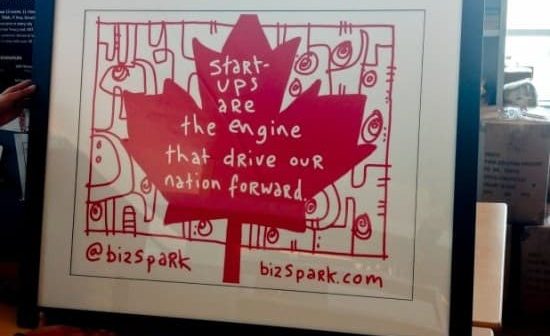
This was a nice little gig: A large print for Bizs­park Canada.

Three thoughts:

1. This is my first Mic­ro­soft gig for a while [Bizs­park is part of their mas­sive star­tup outreach pro­gram], so it felt good to be back in the ol’ saddle again.

2. This piece is a riff on a fami­liar theme of mine, that a nation is only as good as its star­tup cul­ture etc. As we see all the eco­no­mic crap hap­pe­ning in pla­ces like Spain and Greece (Unem­ploy­ment bet­ween 25%-60%, depen­ding on the age group!), it’s somethng we urgently need to teach our lea­ders, by any means neces­sary. And yes, gaping­void likes having clients who agree with us.

3. Though I love doing my more high­brow, intros­pec­tive fine art sch­tick, I also love the more extro­vert stuff for the office wall. Espe­cially offi­ces that belong to inte­res­ting folk doing inte­res­ting stuff, like the Bizs­park gang. This “tense dua­lity” bet­ween the inner and outer parts of exis­tence is where the action is. Too much of either one would be BEYOND tedious IMHO…

Thanks to Mark Gagne and the rest of the Bizs­park Canada team for making it hap­pen. Rock on.

January 31, 2013

Start-up Blues

Send to Kindle

startup blues 1301j

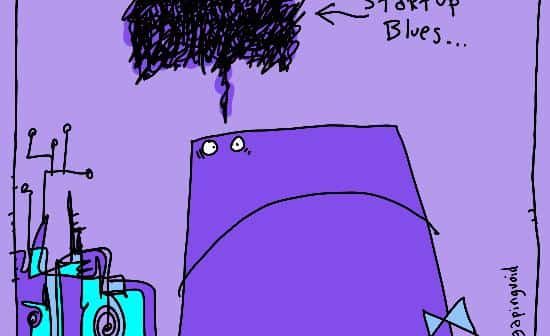
I drew this car­toon because a recent story in the news made me sad:

A lively and popu­lar figure of the start-up scene, Jody Sher­man com­mi­ted suicide.

I didn’t know the guy, but we had mutual friends, like Jason Cala­ca­nis and Tony Hsieh.

Jason sum­med it up well: “And it seems like folks are not ready to talk about that issue just yet. Which I can understand.”

This is the second star­tup sui­cide in a month, after poor ol’ Aaron Swartz. We are gene­ti­cally pro­gram­med to have our our tiny brains fried by the sui­cide of some­body we care about; wri­ting about it well is impos­sibe at the best of times. But here are some of my own mea­gre, insuf­fi­cient thoughts:

1. My dee­pest con­do­len­ces to Jody’s family, ese­cialy his wife and chil­dren. The sorrow must be horri­ble, simply horri­ble. I am so sorry, truly.

2. Once we’ve made our millions, reti­red and got­ten old and dec­re­pit, hey, then DEATH is not so scary an idea, but when one is still in one’s prime… Most of us doing the start-up thing are still in our prime, so natually DEATH is ama­zingly strange and alien to us.

3. The start-up life, for all the time we spend glo­rif­ying it, is a very tough road. Again, Jason says it well:

Perhaps we owe it to these three ama­zing humans to exa­mine if the pres­su­res of being a foun­der, the pres­sure of our community’s relent­less pur­suit of great­ness, in some way con­tri­bu­ted to their deaths?

I’ve always belie­ved that being a foun­der is an unhealthy pur­suit at times, and few have disa­greed — cer­tainly not those who have done it. Read any bio­graphy of a suc­cess­ful foun­der and you’ll find colla­te­ral damage around — and cer­tainly in — those individuals.

Star­tups are a full-contact sport. This is a good time for all of us to pause and think about why we’re doing this. And the impact it’s having on us and the peo­ple around us.

4. Me and my friends in the sart-up scene aren’t spring chic­kens any­more, for the most part. We’re the old guard now. And as Karma catches up with us and the hard choi­ces we made, our deaths are going to start get­ting a lot more common.

5. As I’m fond of saying, anything worth doing will cost you your life, even­tually. Best make sure it’s worth it, make sure it’s something your dee­pest self actually wants.

6. Yes, your dee­pest self, not just your glib, sexy, bullshit self.

7. This is it. Fight like hell. Godbless.

April 7, 2012

How Do You Best Prepare For The Creative Age?

Send to Kindle

PART ONE: THE CONVERGENCE.

So today there was this big con­ver­gence of things I’d been thin­king about lately, including:

1. The car­toon (pic­tu­red above) that we sent out in Friday’s news­let­ter.

2. The “Jiro Dreams Of Sushi” article I pos­ted Thurs­day and the whole “Mas­tery” kick I’ve been rif­fing on recently.

3. Sir Ken Robinson’s ama­zing 2006 Ted Talk on how schools kill creativity.

4. Seth Godin’s fabu­lous, free 30,000-word mani­festo on edu­ca­tion, “Stop Stea­ling Dreams”.

5. The work the team and I have been doing for Bab­son College and to some extent, Racks­pace.

6. This week’s good news for Dave McC­lure and 500 Star­tups rai­sing $50 million for their star­tup incubator.

7. Being in the same room while Babson’s Pre­si­dent, Len Sch­le­sin­ger inter­vie­wed CNN senior poli­ti­cal analyst, Dave Ger­gen in Bos­ton a few months ago. Gergen’s advice to stu­dents? “Learn how to invent.”

8. A tweet I made ear­lier: “I’m not sure if Ame­rica is ready to be a second-rate nation quite yet”.

9. The appa­lling 50% youth unem­ploy­ment in pla­ces like Spain or Greece. Will we Ame­ri­cans be seeing the same one day? Horrifying!

10. One of my favo­rite books in the world, “Wel­come to the Crea­tive Age”  by my old buddy, Mark Earls.

A lot of peo­ple world­wide are rel­ying on Ame­rica not beco­ming, like I said, a second-rate nation. Even some of the peo­ple who don’t par­ti­cu­larly like America.

And how is that going to hap­pen, exactly? How are we going to remain at the top of our game, or at least, make a damn good show of it?

The same way we’ve always done it: by crea­ting new, inte­res­ting pro­ducts and ideas that peo­ple need, want, value and are ins­pi­red by.

PART TWO: THE PREVIOUS TWO AGES OF EDUCATION.

To mas­si­vely over-simplify, there were two main pha­ses in the his­tory of edu­ca­tion, pre-industrial and indus­trial. The first meant only the clergy and the sons of the elite were pro­perly edu­ca­ted. Then along comes the second, indus­trial phase, which meant uni­ver­sal edu­ca­tion on a mass-scale, that emer­ges along with the “Age of Rea­son”, the indus­trial revo­lu­tion and the whole modern era.

As Seth Godin famously likes to talk about, in this second, indus­trial phase, schools became little more than fac­to­ries, chur­ning out young peo­ple edu­ca­ted enough to work in big­ger fac­to­ries one day. Whether we’re tal­king blue collar or white collar, it didn’t mat­ter, it’ still a fac­tory job, basi­cally. You’re still a cog in the fac­tory machine, basi­cally. This factory-model was per­fect for when the fac­tory was still the cor­ners­tone of the indus­trial eco­nomy. A factory-centered model for a factory-centered world. This was true whether in ele­men­tary school in Iowa, or Har­vard Busi­ness School in Cam­bridge, your rea­lity was the fac­tory because your career was the fac­tory. Own the fac­tory, work in the fac­tory, live near the fac­tory, become the fac­tory. Fac­tory, fac­tory, factory…

And of course, this factory-centric model which wor­ked fine for a hundred-plus years is now bro­ken. We can no lon­ger com­pete long-term that way. Just owning a fac­tory doesn’t give us the same edge it used to, the same eco­no­mic secu­rity, as anyone who’s ever tried com­pe­ting lately in the glo­bal eco­nomy has been fin­ding out.

A new model is needed.

PART THREE: WE ARE READY FOR THE THIRD AGE OF EDUCATION: THE CREATIVE AGE.

Per­so­nally, I had a pretty good for­mal edu­ca­tion, where I lear­ned the basics– rea­ding, wri­ting, math, a bit of science, his­tory, lan­gua­ges and a wee smat­te­ring of the arts. I lear­ned to study and pass tests. Like most stu­dents, I lear­ned how to learn, basi­cally. I lea­ned how to work in a foc­tory, basically.

I don’t think that’s enough any­more, as the THOUSANDS UPON THOUSANDS of under-employed and unem­plo­yed uni­ver­sity gra­dua­tes with good gra­des in Europe and Ame­rica will tes­tify. They pas­sed all their tests fine, they all tic­ked off the right boxes… and yet, look at them now, poor things.

Kids in the future are simply not going to leave school with this big, bum­per crop of plum jobs wai­ting for them to fill, not like they used to. In the future, kids will leave school and inc­rea­singly be expec­ted to create their own via­ble realities.

Like David Ger­gen allu­ded to, these young adults will be expec­ted not just to do the work, but expec­ted to ACTUALLY invent something. Create something, not just obey orders, not just ful­fill some sort of social role.

And somehow, we have to teach our schools how to teach our kids exactly that. It’s not going to be easy.

4. HOW DO YOU BEST PREPARE FOR THE CREATIVE AGE?

As I see it, there are basi­cally two ways, at least if you go at it from a college-age, entre­pre­neu­rial, star­tup men­ta­lity. One is the more risky path advo­ca­ted by my won­der­fully lucid friend, Jason Cala­ca­nis, to for­get college and ins­tead, “Spend Your College Tui­tion on Being Men­to­red and Star­ting a Com­pany.” That’s pro­bably what I would have cho­sen for myself, nowa­days. That, or appren­ti­cing for a mas­ter at something, the way English tai­lors learn their craft, or how the adver­ti­sing legend, Dave Trott used to hire kids right off the street in Lon­don and give theme a chance at wri­ting ads (Hence the ear­lier Jiro/Mastery refe­rence]. Lear­ning on the job, as it were. The street-fighter’s approach. Tough, bru­tal, intense, but nonethe­less a first-class edu­ca­tion in the Uni­ver­sity of Life.

The second way is what I see Len Sche­sin­ger  trying to do at Bab­son.… sha­king things up… evol­ving the idea of school (busi­ness school, any­way) as not just a place of lear­ning, but also as a place of DOING.

Where. Stuff. Gets. Done.

In the real world. Here and now.

Where stu­dents don’t just learn about run­ning busi­nes­ses, but are expec­ted to actually start run­ning busi­nes­ses and making them via­ble. All while still get­ting good gra­des. It’s a pretty intense curri­cu­lum, but hey, the best stu­dents seem to thrive at it.

Michael Dell’s com­pany was star­ted in a dorm room. Ditto with Mark Zuc­ker­berg. Hey, my car­too­ning career was, too.

This is the idea of a college as not just a seat of lear­ning, but an incu­ba­tor, of sorts. These days, busi­ness schools like Bab­son aren’t just com­pe­ting with Har­vard or Whar­ton, they’re com­pe­ting with Y Com­bi­na­tor and 500 Star­tups. The most talen­ted kids in the country aren’t wai­ting around for the grow­nups in the ivory towers to get their act together. They’re already inven­ting their own futu­res; they’re in a hurry.

I don’t have all the ans­wers. All I know is that it’s already hap­pe­ning. It’s already begun, the genie is already out of the bottle… and it’s damn exci­ting to watch.

[PS: This blog post only took me a short mor­ning and a cou­ple of hun­dred words to write. Ideally, it would’ve taken me a cou­ple of years and enough words to fill an entire book. I’m sorry if it’s incom­plete, I’m sorry if there are mas­sive holes everywhere. It’s a vast mine­field of a sub­ject that’ll take the cle­ve­rest peo­ple in the land more than a few deca­des to work out fully. But like I infe­rred, it still damn exci­ting to think about. I just hope we’re all up for it.]

March 23, 2012

The #StartupBus video

Send to Kindle

Racks­pace — We Love Star­tups! from Gaping­void on Vimeo.

Another video our new com­pany, Social Object Fac­tory did for Racks­pace at SXSW..

A sea of little red star­tup folk, piling into the #Star­tup­Bus, something they sponsor.

“Because the world needs more Awe­some, the world needs more Star­tups.” A sim­ple enough thought, one I hap­pen to think is very, very true.

Without star­tups, this world really doesn’t have much of a future. At least, not one I would want.

You?

March 22, 2012

“Because the world needs more Awesome, the world needs more Startups.”

Send to Kindle

Racks­pace — Because the World Needs More Awe­some… from Gaping­void on Vimeo.

Something that I’m VERY proud of, Social Object Factory’s recent ani­ma­tion we did for Racks­pace.

“Because the world needs more Awe­some, the world needs more Startups.”

Exactly.

What astounds me is how quickly we tur­ned it around. A cou­ple of days from get­ting the first phone call, in the can. BOOM! Just like that.

Com­pare that to the tra­di­tio­nal ad agency model– it would’ve taken ten times as long and cost ten times as much. Not to men­tion, a lot of stra­tegy mee­tings and end­less Power­point slides.

We live in inc­re­di­ble times…

Con­grats to the team on a splen­did effort! Rock on.

May 19, 2011

Note to Social Media Marketing Dorks: The hard currency of the Internet is “Social Objects”.

Send to Kindle


[One of my favo­rite recent “Social Objects”: a car­toon I did for Racks­pace.]

The Social Object, in a nutshell, is the rea­son two peo­ple are tal­king to each other, as oppo­sed to tal­king to some­body else. Human beings are social ani­mals. We like to socia­lize. But if think about it, there needs to be a rea­son for it to hap­pen in the first place. That rea­son, that “node” in the social net­work, is what we call the Social Object.

For as long as I’ve been invol­ved with the Inter­net, I’ve seen the SAME OLD DISCONNECT appear again and again AND AGAIN i.e. the dis­con­nect bet­ween how the Inter­net ACTUALLY works and how the social media mar­ke­ting dorks like to PRETEND how it works.

Case in point: From Steve Jones’ blog:

Today I recei­ved an e-mail that said “Like us on Face­book and win”. Later in the day I wal­ked into a store and on the door was a sign that said “Like us on Facebook”.

That’s like Billy Joel asking me to buy his album. It is like wal­king into a party and having someone say “Be my friend and I’ll buy you a drink”. In a word, it is pathetic.

Damn right it’s pathetic.

Note to Social Media Mar­ke­ting Dorks: The hard currency of the Inter­net is not Face­book “Likes” or Twit­ter “Ret­weets”, as flavor-of-the-month as they might be. By them­sel­ves, they’re worthless.

The hard currency of the Inter­net is “Social Objects”.

i.e. Social Objects for peo­ple to SHARE MEANINGFULLY with other people.

You’re either crea­ting them or you’re not. And if you’re not, you will fail, end of story.

[Con­ti­nue Reading…]

March 2, 2011

“alea iacta est.”

Send to Kindle


[My latest car­toon.
Down­load the prin­ta­ble ver­sion here etc.]

Dear Racks­pace,

You being my client and all, I thought now would be a good time to let you know my current thinking:

You love star­tups. You live and breathe making them happy. You live and breathe trying to be help­ful to them. You live and breathe “Fanatical”.

Sure, other com­pa­nies offer the same kind of hos­ting that you do– Ama­zon being the best known example.

But it’s your par­ti­cu­lar brand of “Fana­ti­cal” that per­mea­tes your cul­ture… THAT is what makes you uni­que; THAT is what your com­pe­ti­tors DON’T have; THAT is your sec­ret weapon.

And the minute you lose that, of course, is the minute you start to die.

Not every­body rea­ding this is going to believe what I’ve just said. Some will remain skep­ti­cal, both inside and outside your com­pany. Frankly, I don’t care. I’ve been wor­king with y’all long enough to know that I’m spea­king the truth.

“We Love Star­tups.” That is your man­tra. That is your line in the sand.

And now you’re going to have to live it. Now that the line has been drawn, I’m never going to allow you to take those words back. Nor will anyone else. Ever. Nor should you.

“We Love Star­tups.” That is what the star­tup com­mu­nity must know about Racks­pace. They must know it AND believe it. All of them. That is the mission.

Alea iacta est.

[PS: Note to Rac­kers: If your boss will let you, feel free to use the car­toon in your email sig­na­ture. Spread the love etc.]

[See more Racks­pace car­toons here.]

October 18, 2010

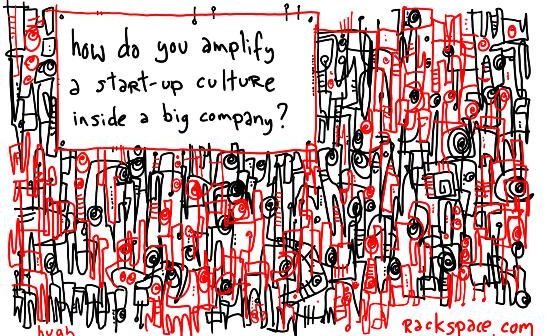
“how do do you amplify a start-up culture inside a big company?”

Send to Kindle

[Down­load the prin­ta­ble ver­sion here.]

A cou­ple of days ago my buddy, Robert Sco­ble (him­self a Racks­pace emplo­yee) twit­te­red the ques­tion, “How do do you amplify a start-up cul­ture inside a big company?”

A damn good ques­tion, Robert. I thought it would make a good piece of art, hence the car­toon above. More spe­ci­fi­cally, I thought it would make a good image to go on the back of  a Racks­pace busi­ness card.

Racks­pace is a big com­pany (3,000 emplo­yees), but not big enough where they can no lon­ger remem­ber when they were a small com­pany. So maybe it’s bet­ter to start a con­ver­sa­tion (which is what han­ding out a busi­ness card does, ideally) with a per­ti­nent ques­tion, rather than the usual “Here’s why you should buy our stuff” shpeel…

September 17, 2010

new gapingvoid client: line2 voip

Send to Kindle

gaping­void has lan­ded itself a new client. Line2, the new VoIP app from Tok­tumi. Hurrah!

To find out more about them, Techc­runch wrote a really good piece about them last year.

“The Apple/Google Voice fiasco just got more inte­res­ting. Tok­tumi, a star­tup that lets small busi­nes­ses build office-caliber phone sys­tems with their mobile pho­nes and com­pu­ters, just had its appli­ca­tion Line2 appro­ved by Apple — nearly three months after it was ori­gi­nally sub­mit­ted. The power­ful ser­vice allows busi­ness emplo­yees to assign two phone num­bers to their iPhone: one that they can give to family and friends, and another that can be given to busi­ness con­tacts, with fea­tu­res that allow for call fil­te­ring and a professional-grade voi­ce­mail sys­tem. But it’s also nota­ble for its many simi­la­ri­ties to Goo­gle Voice, an appli­ca­tion that Apple has kept out of the App Store for months now.

“The story so far: late last July, Apple abruptly pulled all third party Goo­gle Voice appli­ca­tions from the App Store, explai­ning that they somehow were dupli­ca­ting the iPhone’s native func­tio­na­lity. Later that day, we broke the news that Google’s offi­cial Goo­gle Voice client had been barred from the App Store, spar­king a media storm and a FCC inquiry into Apple’s ratio­nale for the ban.”

It’s basi­cally a second line for your phone– your iPhone, in particular.

I’ve never been much of a VoIP geek, so why did I get involved?

It was a sim­ple little fac­toid that got my interest:

The Line2 ser­vice costs $14.95 per month. Not a huge amount, but costly enough when you con­si­der that Goo­gle Voice is free. Line2 has a first month trial offer, which allows you to try it out for free. After that, they start char­ging. Fair enough.

So how many peo­ple start sig­ning on at $14.95, once their free trial expi­res? Five per­cent? Ten per­cent? That’s what I was guessing…

Nope. Thirty percent.

Thirty per­cent! I thought that was huge. They must be doing something right etc.

The second rea­son is purely inte­llec­tual. As many blog­gers have been spou­ting on for a while now (inc­lu­ding me), we are in the early days of the lar­gest com­mu­ni­ca­tion revo­lu­tion in the his­tory of the pla­net. VOIP is in the fore­front of this revo­lu­tion, so get­ting invol­ved should give me a front row seat. And we car­too­nists need inte­res­ting stuff to keep our brains occu­pied etc.

I have no idea where this is going; I’m just along for the ride. Hope­fully a Smar­ter Con­ver­sa­tion will come out of it in the end. Watch this space. Rock on.


[Bonus link: Last March, Masha­ble did a good piece on Line2 as well, inc­lu­ding the video inter­view above.]

February 17, 2010

cube grenade case study: rockstar group

Send to Kindle

Mike Walsh com­mis­sio­ned me to draw a “Cube Gre­nade” for his con­sul­tancy, Rocks­tar Group.

Mike’s com­pany is basi­cally in the busi­ness of hel­ping small star­tups either make or find more money, by wha­te­ver means neces­sary. His web­site explains all…

Why do peo­ple do star­tups? Because they want to be “rock stars”, or something like that. They have that cer­tain drive– or if they don’t have it, they’re in big trou­ble. So I tried to create something that empathi­zed with that.

Because  the world is theirs’. At least, it’s cer­tainly more “theirs’” than for the peo­ple who just turn up every day at the office, with no other rea­son than the steady paycheck.

Mike was a great client, and fun to work for. He tells me his cube gre­nade (which he put on the back of his busi­ness cards) was a big hit at the recent TED con­fe­rence. That made my day.

No, it really did…

[Com­mis­sion your own Cube Gre­nade. The Cube Gre­nade archive is here.]

July 16, 2008

my conversation with dell

Send to Kindle

permanent332.jpg
Four years ago in “The Hugh­train” I published the car­toon above, with the follo­wing thought beneath it:

: There’s only one thing har­der than star­ting a new busi­ness: Re-inventing an old one.
Start-ups are fine and dandy, most peo­ple rea­ding this will know all about them.
But what about Start-Agains? Are they an exer­cise in futi­lity or a tre­men­dous oppor­tu­nity?
THOUGHT: The future of adver­ti­sing is clients inc­rea­singly asking their agen­cies to help re-invent not just their brands, but their actual com­pa­nies. The future is agen­cies being inc­rea­singly una­ble to deli­ver on this.
Out of this wrec­kage a new industry will emerge…
So how do com­pa­nies, busi­nes­ses, brands etc re-invent them­sel­ves?
Big, big ques­tion. Worth a for­tune to know the ans­wer.
Actually, the answer’s pretty sim­ple: The same way humans re-invent them­sel­ves.
I know. It shouldn’t be that sim­ple, but it is.

1. I’ve been thin­king about this a lot lately. I like the entry, though four years later, I’m not sure how com­for­ta­ble I still am with the sta­te­ment, “Actually, the answer’s pretty sim­ple: The same way humans re-invent them­sel­ves. I know. It shouldn’t be that sim­ple, but it is.“
Cor­po­rate re-invention may be in sim­ple in retros­pect, but when it’s hap­pe­ning in real time it’s a tough, nasty, bru­tal busi­ness [Ask IBM if you don’t believe me]. Not for the faint of heart. But that’s what makes it so damn inte­res­ting. And poten­tially luc­ra­tive.
2. In the early 2000’s I had got­ten quite disi­llu­sio­ned with tra­di­tio­nal, Madi­son Ave­nue adver­ti­sing, the industry I had ente­red when I left college [Though let’s be honest, it had never thought that highly of me, either, but that’s a story for another day].
Thank­fully, with the advent of The Clue­train, blogs and what later went on to be called “Web 2.0″, it see­med a new world order was emer­ging. The Inter­net was chan­ging things; just none of us knew exactly how. But it was damn exci­ting new rea­lity to con­tem­plate.
In 2004, I first star­ted arti­cu­la­ting a belief that I still hold true today– that good, well-executed com­mu­ni­ca­tion via blog­ging can make a huge dif­fe­rence in the for­tu­nes of a com­pany, large or small [I went on to explain it as “The Porous Mem­brane”]. And this time, the empha­sis would not be a one-way mes­sage, but in a two-way “Con­ver­sa­tion”.
Of course, “Con­ver­sa­tion” is just a metaphor. When was the last time you wan­ted to phone up Hershey’s and have a long, deep, sti­mu­la­ting con­ver­sa­tion with one their emplo­yees about 75-cent candy bars? No, some­ti­mes you just want to put your money on the coun­ter of the con­ve­nience store and buy your kids a little treat. And. That. Is. Enough. Human beings don’t scale. Our capa­city for deep-and-meaningful is limi­ted. “Con­ver­sa­tion” is just con­ve­nient shorthand to bet­ter explain how mar­kets– sup­pliers and buyers– relate to each other as human beings, not just as num­bers on the spreadsheet. But that’s all it is. That’s all it needs to be.
Since I’ve become aware of this new world of Web 2.0, I’ve always been inte­res­ted in tes­ting its limi­ta­tions, espe­cially when it comes to mar­ke­ting. So I’ve always been on the loo­kout for new oppor­tu­ni­ties in this area of busi­ness.
3. Ear­lier this year I star­ted a con­ver­sa­tion with Dell. So far the con­ver­sa­tion is still going on. Some folks inside the com­pany had seen The Mic­ro­soft Blue Mons­ter and won­de­red if there was anything in this kind of thin­king that could help their com­pany. I’m gues­sing the ans­wer might be “No”. The Blue Mons­ter came out of pretty uni­que, ran­dom cir­cums­tan­ces. Which of course, is the whole point. Ergo, I’m not really inte­res­ted in a car­too­ning gig with Dell per se. I am, howe­ver, inte­res­ted in the com­pany.
4. It seems to me that, like a lot of large tech com­pa­nies of a cer­tain age, Act One in the Dell drama has reached its end. The war to get com­pu­ters onto the desk­tops of the deve­lo­ped world, cheaply and easily, has been lar­gely fought and won by com­pa­nies like Dell, Mic­ro­soft, HP and Apple.
Mis­sion Accom­plished.
But what hap­pens in Act Two? How do large tech com­pa­nies like Dell have to re-invent them­sel­ves in order to make the grade? To keep their ever-growing army of cus­to­mers and sha­rehol­ders rela­ti­vely con­tent? Seriously. I want to know.
5. What needs to hap­pen in order for Dell to become a bet­ter com­pany? What needs to change? What needs to remain the same? These are huge ques­tions. Like I said, it’s worth a for­tune to any­body who can come up with good ans­wers.
6. What is “The Con­ver­sa­tion” that needs to hap­pen? You tell me.
Over the last few years, I’ve had a few ideas about mar­ke­ting and the inter­net. English Cut, Stormhoek and The Blue Mons­ter were oppor­tu­ni­ties for me to prove them. And for the most part, I suc­cee­ded. Dell might be another oppor­tu­nity. I’m not sure yet.