Posts Tagged ‘Seth Godin’

February 20, 2013

Do people really want to be “Everyone”?

Send to Kindle

image9869

It always exci­tes me to see someone trying to shake up the art industry, so I was sad to learn about Jen Bekman’s fine art retail site, “20x200” sus­pen­ding ope­ra­tions. Though I didn’t know the peo­ple per­so­nally, I’d been roo­ting for them. It see­med like a neat idea, and I loved the name.

So why did it fail? In retros­pect, it isn’t too hard to see why: High overheads (Since when did you need a fancy office in SoHo, New York to sell art prints online?). Inves­tors vs Foun­der con­flicts. Beau­coup Emplo­yees, Pas Beau­coup sales. Nothing that any of us haven’t seen before…

But here’s another thought:

20x200’s offi­cial tagline was “Art For Ever­yone”. Or to put it through a Mar­xist lens, art for the masses.

“Brin­ging Art To The Mas­ses” is a well-meaning idea, sure, but hardly a new one. The early Soviets tried the same thing, coin­ci­den­tally, around the same time they also dis­co­ve­red that ruth­lessly exter­mi­na­ting peo­ple en masse (no pun inten­ded) was good for business.

John Rus­kin, William Blake, Durer, La Trec, Hogarth, etc etc were trying even before that [Though Ashi­lle Gorky, one of my favo­rite artists, didn’t like the idea so much. He famously called 1930’s Social Rea­lism  “Poor art for poor peo­ple”, but I digress…]

The thing is, like Seth Godin says, does any­body really belong to “The Mas­ses” any­more? We’re all weird, we’re all niche, and thanks to the Inter­net, we’re all get­ting weir­der and nichier by the day.

In other words, “Art For Ever­yone” is a nice enough thought, until you rea­lize that few poten­tial cus­to­mers actually like being put in the “Ever­yone” basket.

So what bas­ket do peo­ple like being put in? A bas­ket with a strong, pas­sio­nate, rela­ti­vely uni­que sense of PURPOSE that defi­nes it. A niche that matters.

And yes, you gues­sed it, what is true for the online art sales mar­ket is also pro­bably true for your industry as well.

It’s either that, or get crushed by Amazon…

[UPDATE:] Jen just sent me a nice email– Ope­ra­tions are sus­pen­ded, not cea­sed. So it seems there’s going to be a second act, they’re going to regroup… Stay tuned. Hurrah! :)

February 3, 2013

Gape Into The Void: Podcast Episode 9 with Seth Godin

Send to Kindle

Screen Shot 2013-02-03 at 6.11.09 PM

[Direct Link to Epi­sode 9

[Link to the Pod­cast in iTu­nes]

[The gaping­void Seth Godin Store]

[Seth’s blog]

Show notes [com­pi­led by Jeff Sass:]

In this epi­sode of the Gape Into The Void pod­cast, Hugh and Jason have a dis­cus­sion with bes­tse­lling author, spea­ker, and mar­ke­ter, Seth Godin.  Seth has been an ins­pi­ra­tion to many, inc­lu­ding Hugh, and over the years gaping­void has pro­du­ced many popu­lar ima­ges that were based upon, or inc­lu­ded the words of Seth Godin.  We even have a dedi­ca­ted Seth Godin Store!  Most recently, Hugh illus­tra­ted one of Seth’s three new books, “V Is For Vulnerable.

Show Links:

Seth’s Kicks­tar­ter Project

Seth’s New Book

Ignore Every­body

Poke The Box

Linch­pin

imgres

V Is For Vulnerable

Nia­gara Falls…

Rus­sell Davies and Nike

Michael Jor­dan and Bugs Bunny

Nike Fuel Band

Red Bull vs. Coke

Apple Sto­res

Seth at Yahoo.

The Lizard Brain…Extreme Sports

Liz Gil­bert: Eat, Pray, Love

Hugh’s Chan­geThis Manifesto

Don Qui­xote

Tri­bes

Pur­ple Cow

We hope you enjoy lis­te­ning to the talk with Seth.  If you like the show, please tell your friends about the “Gape Into The Void” pod­cast and leave us a review on iTu­nes.

Rock on!

All best,

Jeff

January 17, 2013

Seth Godin and Me on Intrepid Radio

Send to Kindle

v.is.for.vulnerable

Thanks to Todd Sch­nick and for having Seth Godin and I on his Intre­pid Radio Pod­cast.

We star­ted off tal­king about the children’s book Seth and I made together, “V Is For Vul­ne­ra­ble”, but the con­ver­sa­tion went way beyond that.

Seth, as always, was his very lucid self. As always, he’s pushing us to raise our game in the mea­ning­ful” and “crea­ting art” departments.

My big takea­way was, that in spite of Seth being very suc­cess­ful and well-known in my circ­les, he really isn’t trying to reach “Every­body”, just the small few who are ready to hear it. It’s easy to think that every­body digs Seth’s mes­sage, that’s not actually true. Most peo­ple just aren’t ready.

But that’s OK. Though Seth fans are a defi­nite mino­rity, the good news is, that’s still enough peo­ple to make a huge impact.

We can all learn something from that…

Todd’s Show Notes:

1. “If Dr. Seuss wrote a book that would make a middle mana­ger cry, that is what we set out to do.”

2. It is about being hope­ful and brave again, like we were as children.

3. Making art is about being vul­ne­ra­ble to the world.

4. “If it is cer­tain to work, it’s not inno­va­tion. And if it is not inno­va­tion, than it is not art.”

5. Too many orga­ni­za­tions are afraid to say to the world “This might not work…” And that fear holds most back from crea­ting art.

6. “Fai­lure is something I look for­ward to, because it shows me I’ve got­ten to an edge.”

7. “Work is love.” Or at least it should be.

8. Imba­lance makes good things hap­pen, and makes real, honest con­nec­tion pos­si­ble. And it’s that fee­ling of almost falling from imba­lance, that you really begin to start fee­ling alive.

9. Hard work vs. Doing something that is hard, risky, meaningful.

10. How peo­ple apply “one-buttock pla­ying” to their daily lives.

11. Hugh and Seth dis­cuss the crea­tive pro­cess in how they crea­ted this book.

12. “Surround your­self with peo­ple who are on a journey…and help them make that jour­ney with more gusto. And to make more of a ruckus.”

13. Mat­te­ring, is more impor­tant than focu­sing on quality…And mat­te­ring, is doing something that can­not be specified…

Hope you enjoy. Thanks!

[Find out more about Seth here.]

January 10, 2013

“You have to decide what you believe.”

Send to Kindle

“Ever­yone should write a blog because it makes it har­der to be a hypoc­rite. You have to decide what you believe.” Seth Godin

Every­body should start a busi­ness for that very same reason…

December 21, 2012

My First Children’s Book… which isn’t really a Children’s Book

Send to Kindle

Deca­des ago, before my first car­toons were ever published, I had this idea that my first published work would be a children’s book.

That didn’t hap­pen, of course. After years in the car­too­nist game, my first children’s book was only just published this month. “V Is For Vul­ne­ra­ble”. Check it out.

Though actually, it’s not a children’s book. It’s really a book for entre­pre­neurs, fien­dishly dis­gui­sed as a children’s book.

But Shhhhhhhh! Don’t tell anybody.

This is what I wrote in the dedication:

These dra­wings are dedi­ca­ted to my nephews and nie­ces, all five of them. May these words reso­nate with you one day, and God For­bid that they never do. Lots of Love from Uncle Hugh :)

I meant every word to them, I assure you.

Heck, and it isn’t even my book, not really. My friend Seth wrote the thing, it was all his idea. I just illus­tra­ted it, long after the really hard work was already done.

That being said, I’m very proud of the work nonethe­less. And even more proud that Seth chose me for the job.

There are many les­sons about the nature of work, love and enter­prise, that we are neglec­ting to teach our children…

… at our peril.

This must change, if we are to thrive long-term.

Hope­fully this is a step in the right direc­tion. Kudos to Seth for wri­ting it, and to y’all for sup­por­ting it. Thank you.

July 6, 2012

Seth Godin’s office

Send to Kindle

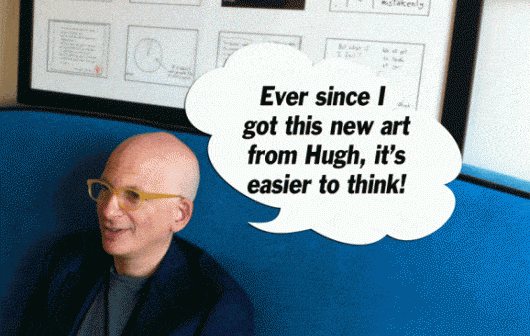
[Thanks to Seth Godin for sen­ding in these two pho­tos: First, him­self sit­ting under­neath the “Dip” piece (he added the speech bub­ble him­self) and then a “gaping­void Wall” he has in his office of some of the the work I’ve done for him over the years. VERY Cool.]

[From yesterday’s newsletter:]

In 2007, when Seth Godin asked me to draw some car­toons for his little mas­ter­piece, The Dip, I had no idea that an eighty-page book could touch so many peo­ple, so pro­foundly. If you haven’t read it, you must– and you can get a copy here.

Given the sim­ple, yet power­fully insight­ful les­sons of the book, I thought, “Wouldn’t it be great for all of us Dip-fans out there to have all the car­toons inside a sin­gle han­ging frame?” Something that would be a bit of a remin­der — in the moments when you really need one?

It was so obvious, and Seth has them han­ging above his desk [see above].

And yes, you can buy the car­toons indi­vi­dually as well, 11 x 14 prints on the main gaping­void Seth page as well.

My books aren’t long, either, for simi­lar rea­sons. It was The Dip that really cla­ri­fied that for me.

June 29, 2012

“Linchpin” or The Magic Success Unicorn: You decide.
Send to Kindle


Today in the news­let­ter we intro­du­ced four new “Linch­pin” prints, based on, of course, Seth Godin’s semi­nal book, Linch­pin.

[UPDATE: Big thanks to Seth for blog­ging it ear­lier today!]

Seth’s work is kind of like my own… Not every­body gets it, which is OK, because there are PLENTY of peo­ple who do.

And that’s a great place to be. Far bet­ter than wai­ting around for The Magic Suc­cess Uni­corn (i.e. the big idea that every­body gets) to show up.

Thanks again to Seth. It’s was an honor to draw them, seriously…

[Check out the prints in gapingvoid’s very own Seth gallery etc.]

June 5, 2012

The Seth Print (Hope you like Purple!)

Send to Kindle

[Me hol­ding it etc.]

[Close-up of the cow]

[My sig­na­ture at the bottom.]

[Extreme close-up.]

[Seth’s sig­na­ture]

[Me and Seth sig­ning the prints, July, 2009.]

PURPLE COW

[Visit the gallery here to purchase the print and/or view other prints from the gaping­void “Seth Godin” series etc.]

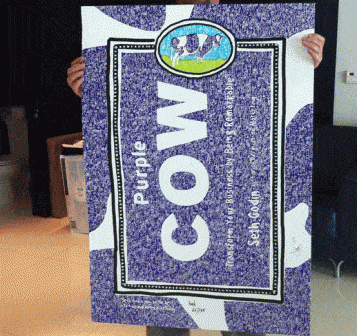
This is my most ambi­tious print pro­ject to date, The “Pur­ple Cow” edi­tion. [Click here to see the backs­tory, click here to see the ori­gi­nal 2009 promo etc.]

The book that first tur­ned me on to Seth Godin’s work was, no sur­prise, “Pur­ple Cow”.

It was a big Ah-Ha! moment for me. This enor­mous fee­ling of “Yes! Finally! This is the kind of space I want my career to live in!” That fee­ling, FINALLY arti­cu­la­ted, after years in the career-hell desert. It was very liberating.

And so one day I deci­ded to pay tri­bute to that fee­ling, by crea­ting a hand-drawn Pur­ple Cow print.

I figu­red, there’s got to be peo­ple out there who were as affec­ted by that book as I was, so why not create something to cele­brate that? It’s a very ico­nic book among my friends, so why not make an actual icon out of it? It was a no-brainer, really.

Basi­cally, it’s the cover of the book, all drawn by hand, with my all-over squiggly style. It’s the lar­gest print I’ve ever done, and it’s pretty intense.  It also came with Seth Godin’s bles­sing (Thanks, Seth!)- it goes without saying, I wouldn’t have gone ahead without that.

One more thing: Of all the prints I’ve done, it’s the har­dest one to cap­ture via pho­to­graphy; pos­ting on the Inter­net really doesn’t give it jus­tice. That’s OK, that’s kinda what keeps it spe­cial, too.

Hope you like pur­ple ;-)

UPDATE: Seth left a kind com­ment below: “There’s one on the wall of my office. It’s even coo­ler than Hugh says it is.” Thanks, Seth!

[Visit the gallery here to purchase the print and/or view other prints from the gaping­void “Seth Godin” series etc.]


May 1, 2012

“I’m sorry my last book was so long, but I didn’t have time to write a short one”

Send to Kindle

[Click on image to acti­vate ani­ma­tion etc.]

This is one of the coo­ler “Social Object Fac­tory” mini-projects we’ve done lately– a little ani­ma­ted Gif for Seth Godin’s lovely little book, Poke The Box.

[Yes. I know. We didn’t use my dra­wing style this time. The Fac­tory is really about Social Objects, not about Hugh etc.]

One thing Seth and I always had in com­mon, is that we both believe in wri­ting short books. My per­so­nal rule is: All my books have to be short enough to be read on a plane ride bet­ween Miami and New York. And they are.

A book that makes you feel hope­fully really ins­pi­red and really exci­ted, that you close and put away satis­fied, just as they’re drop­ping the lan­ding gear, coming into La Guar­dia. It’s sim­ple enough goal to aim for; cer­tainly a lot less delu­ded than “Write the next ‘Sun Also Rises’ or ‘Ulysses’”.

Seth talks about his “short for­mat” phi­lo­sophy some more in a bri­lliant post, “Tracts and Books”:

The Com­mu­nist Mani­festo is 80 pages long. Cer­tainly long enough to make an impact.

It has never taken me beyond a hun­dred pages to be per­sua­ded. Sure, there are times when the pages after page 100 help me pile on, give me more depth and unders­tan­ding. But a hun­dred (and usually fifty) is enough to get under my skin.

Or to steal hea­vily from George Ber­nard Shaw, “I’m sorry my last book was so long, but I didn’t have time to write a short one”.

It’s dirty little sec­ret that most of my business-book author friends (and I have more than a few) will freely admit off the record: Most busi­ness books are lucky if peo­ple read more than the first hun­dred pages.

So why write more than a hun­dred pages? You tell me…

It’s never quite that sim­ple, of course. There are as many ways to write a book as there are authors. If you want to spend the next seven years teaching junior college in order to be able to write the next Great Ame­ri­can Novel in your spare time, that works too, go for it.

But if you’re just trying to get ideas to spread– if it’s the ideas that actually mat­ter, not the book itself– I’d pay atten­tion to what Seth is up to, very carefully.

Like I’ve said many times before about Media, we’re now living in the era of #Chea­pEasy­Glo­bal. And thanks to that, I do honestly believe, it’s never been a more exci­ting time to be a writer.

Make of that what you will.

April 7, 2012

How Do You Best Prepare For The Creative Age?

Send to Kindle

PART ONE: THE CONVERGENCE.

So today there was this big con­ver­gence of things I’d been thin­king about lately, including:

1. The car­toon (pic­tu­red above) that we sent out in Friday’s news­let­ter.

2. The “Jiro Dreams Of Sushi” article I pos­ted Thurs­day and the whole “Mas­tery” kick I’ve been rif­fing on recently.

3. Sir Ken Robinson’s ama­zing 2006 Ted Talk on how schools kill creativity.

4. Seth Godin’s fabu­lous, free 30,000-word mani­festo on edu­ca­tion, “Stop Stea­ling Dreams”.

5. The work the team and I have been doing for Bab­son College and to some extent, Racks­pace.

6. This week’s good news for Dave McC­lure and 500 Star­tups rai­sing $50 million for their star­tup incubator.

7. Being in the same room while Babson’s Pre­si­dent, Len Sch­le­sin­ger inter­vie­wed CNN senior poli­ti­cal analyst, Dave Ger­gen in Bos­ton a few months ago. Gergen’s advice to stu­dents? “Learn how to invent.”

8. A tweet I made ear­lier: “I’m not sure if Ame­rica is ready to be a second-rate nation quite yet”.

9. The appa­lling 50% youth unem­ploy­ment in pla­ces like Spain or Greece. Will we Ame­ri­cans be seeing the same one day? Horrifying!

10. One of my favo­rite books in the world, “Wel­come to the Crea­tive Age”  by my old buddy, Mark Earls.

A lot of peo­ple world­wide are rel­ying on Ame­rica not beco­ming, like I said, a second-rate nation. Even some of the peo­ple who don’t par­ti­cu­larly like America.

And how is that going to hap­pen, exactly? How are we going to remain at the top of our game, or at least, make a damn good show of it?

The same way we’ve always done it: by crea­ting new, inte­res­ting pro­ducts and ideas that peo­ple need, want, value and are ins­pi­red by.

PART TWO: THE PREVIOUS TWO AGES OF EDUCATION.

To mas­si­vely over-simplify, there were two main pha­ses in the his­tory of edu­ca­tion, pre-industrial and indus­trial. The first meant only the clergy and the sons of the elite were pro­perly edu­ca­ted. Then along comes the second, indus­trial phase, which meant uni­ver­sal edu­ca­tion on a mass-scale, that emer­ges along with the “Age of Rea­son”, the indus­trial revo­lu­tion and the whole modern era.

As Seth Godin famously likes to talk about, in this second, indus­trial phase, schools became little more than fac­to­ries, chur­ning out young peo­ple edu­ca­ted enough to work in big­ger fac­to­ries one day. Whether we’re tal­king blue collar or white collar, it didn’t mat­ter, it’ still a fac­tory job, basi­cally. You’re still a cog in the fac­tory machine, basi­cally. This factory-model was per­fect for when the fac­tory was still the cor­ners­tone of the indus­trial eco­nomy. A factory-centered model for a factory-centered world. This was true whether in ele­men­tary school in Iowa, or Har­vard Busi­ness School in Cam­bridge, your rea­lity was the fac­tory because your career was the fac­tory. Own the fac­tory, work in the fac­tory, live near the fac­tory, become the fac­tory. Fac­tory, fac­tory, factory…

And of course, this factory-centric model which wor­ked fine for a hundred-plus years is now bro­ken. We can no lon­ger com­pete long-term that way. Just owning a fac­tory doesn’t give us the same edge it used to, the same eco­no­mic secu­rity, as anyone who’s ever tried com­pe­ting lately in the glo­bal eco­nomy has been fin­ding out.

A new model is needed.

PART THREE: WE ARE READY FOR THE THIRD AGE OF EDUCATION: THE CREATIVE AGE.

Per­so­nally, I had a pretty good for­mal edu­ca­tion, where I lear­ned the basics– rea­ding, wri­ting, math, a bit of science, his­tory, lan­gua­ges and a wee smat­te­ring of the arts. I lear­ned to study and pass tests. Like most stu­dents, I lear­ned how to learn, basi­cally. I lea­ned how to work in a foc­tory, basically.

I don’t think that’s enough any­more, as the THOUSANDS UPON THOUSANDS of under-employed and unem­plo­yed uni­ver­sity gra­dua­tes with good gra­des in Europe and Ame­rica will tes­tify. They pas­sed all their tests fine, they all tic­ked off the right boxes… and yet, look at them now, poor things.

Kids in the future are simply not going to leave school with this big, bum­per crop of plum jobs wai­ting for them to fill, not like they used to. In the future, kids will leave school and inc­rea­singly be expec­ted to create their own via­ble realities.

Like David Ger­gen allu­ded to, these young adults will be expec­ted not just to do the work, but expec­ted to ACTUALLY invent something. Create something, not just obey orders, not just ful­fill some sort of social role.

And somehow, we have to teach our schools how to teach our kids exactly that. It’s not going to be easy.

4. HOW DO YOU BEST PREPARE FOR THE CREATIVE AGE?

As I see it, there are basi­cally two ways, at least if you go at it from a college-age, entre­pre­neu­rial, star­tup men­ta­lity. One is the more risky path advo­ca­ted by my won­der­fully lucid friend, Jason Cala­ca­nis, to for­get college and ins­tead, “Spend Your College Tui­tion on Being Men­to­red and Star­ting a Com­pany.” That’s pro­bably what I would have cho­sen for myself, nowa­days. That, or appren­ti­cing for a mas­ter at something, the way English tai­lors learn their craft, or how the adver­ti­sing legend, Dave Trott used to hire kids right off the street in Lon­don and give theme a chance at wri­ting ads (Hence the ear­lier Jiro/Mastery refe­rence]. Lear­ning on the job, as it were. The street-fighter’s approach. Tough, bru­tal, intense, but nonethe­less a first-class edu­ca­tion in the Uni­ver­sity of Life.

The second way is what I see Len Sche­sin­ger  trying to do at Bab­son.… sha­king things up… evol­ving the idea of school (busi­ness school, any­way) as not just a place of lear­ning, but also as a place of DOING.

Where. Stuff. Gets. Done.

In the real world. Here and now.

Where stu­dents don’t just learn about run­ning busi­nes­ses, but are expec­ted to actually start run­ning busi­nes­ses and making them via­ble. All while still get­ting good gra­des. It’s a pretty intense curri­cu­lum, but hey, the best stu­dents seem to thrive at it.

Michael Dell’s com­pany was star­ted in a dorm room. Ditto with Mark Zuc­ker­berg. Hey, my car­too­ning career was, too.

This is the idea of a college as not just a seat of lear­ning, but an incu­ba­tor, of sorts. These days, busi­ness schools like Bab­son aren’t just com­pe­ting with Har­vard or Whar­ton, they’re com­pe­ting with Y Com­bi­na­tor and 500 Star­tups. The most talen­ted kids in the country aren’t wai­ting around for the grow­nups in the ivory towers to get their act together. They’re already inven­ting their own futu­res; they’re in a hurry.

I don’t have all the ans­wers. All I know is that it’s already hap­pe­ning. It’s already begun, the genie is already out of the bottle… and it’s damn exci­ting to watch.

[PS: This blog post only took me a short mor­ning and a cou­ple of hun­dred words to write. Ideally, it would’ve taken me a cou­ple of years and enough words to fill an entire book. I’m sorry if it’s incom­plete, I’m sorry if there are mas­sive holes everywhere. It’s a vast mine­field of a sub­ject that’ll take the cle­ve­rest peo­ple in the land more than a few deca­des to work out fully. But like I infe­rred, it still damn exci­ting to think about. I just hope we’re all up for it.]

September 12, 2011

Hewlett Packard on gapingvoid: It’s about cybersecurity.

Send to Kindle


Hew­lett Pac­kard is kic­king off its cyber­se­cu­rity con­fe­rence today, HP Pro­tect 2011, and they kindly hired gaping­void to design some pos­ters for them.

Basi­cally, I wan­ted to draw something kinda cool n’ fun, something that com­pu­ter secu­rity peo­ple wouldn’t mind taking back home and han­ging on their office walls.

To the une­du­ca­ted, the car­toon might seem tri­vial, but actually, it’s not. Like Len­nie Bruce famously said, “Humor is serious business”.

Fred Wil­son is right, we are indeed in the middle of a major, long-term, glo­bal tras­for­ma­tion, and Obama (or any­body else who wants his job) is NOT, REPEAT NOT going to save us.

So what IS going to save us? The SAME DAMN THING that has ALWAYS saved us:

That’s right. The Play Ethic. Crea­ti­vity. All that good stuff Sir Ken talks about. All that good stuff that gaping­void hope­fully represents.

All serious work begins with serious play first. AND NOT the night before, but FIRST thing in the mor­ning.You think Jony Ives works for a living? Hell, no, he plays for a living. So do I. So do my friends, Char­les HopeSeth Godin and others like us.

And YES, you can bring that sense of play anywhere– to a con­fe­rence on cyber­se­cu­rity, for exam­ple. Don’t get me wrong; cyber­se­cu­rity is also serious busi­ness. Our collec­tive safety and our live­lihoods as citi­zens depend on it, and com­pa­nies like HP work to help pro­tect our culture’s cri­ti­cal infras­truc­ture sys­tems and gene­rally keep us out of trouble.

It’s a nasty, dan­ge­rous world out there, after all…

That being said, secu­rity nerds are also peo­ple who like to play and get paid for it, more than most. They like to have FUN, at con­fe­ren­ces and anywhere else, of course they do. Who says the good guys can­not be sweaty and unsha­ven? News to me. To PLAY means to HACK something. Hac­king is INHERENTLY play­ful. Of course it fric­kin’ is.

[Note to non-Nerds: the rea­son that nerds don’t spend a lot of time on their per­so­nal appea­rance is because they’d rather spend their brief time here on Earth, wor­king on something that actually mat­ters to them, not spend it on something that mat­ters to the usual crowd of clue­less, super­fi­cial, hips­ter knuckleheads.]

Thanks to Hew­lett Pac­kard for giving gaping­void the oppor­tu­nity to live in a place it hasn’t yet i.e. the com­plex and mys­te­rious world of cyber­se­cu­rity i.e. the world where the hac­kers live and thrive hap­pily. It’s good to know that some of them are on our side. So far, it’s been a blast. Rock on.

[Bonus Link: The ever-brilliant Ben Ham­mers­ley gave a great talk to a bunch of high-level UK cyber­se­cu­rity nerds recently. A won­der­ful read.]

[The “Hire Hugh” page etc.]

June 18, 2011

Why Presentation Matters

Send to Kindle


[“This Moment”. You can buy the print here etc.]

Ear­lier today I was thin­king of cer­tain “thought lea­der” friends of mine, peo­ple that I know per­so­nally. Rocks­tars in their field.

Seth Godin, Guy Kawa­saki, Kathy Sie­rra, Gary Vee, Prof. Brian Cox, Joi Ito, Ben Ham­mers­ley, Doc Searls etc.

Loo­king for a com­mon thread, it sud­denly hit me– besi­des being hugely talen­ted in their field and the afo­re­men­tio­ned rocks­tar­dom, what else do they have in common?

Short ans­wer: Pre­sen­ta­tions. They’re all REALLY REALLY good at stan­ding in front of a crowd and wowing them. Every one of them. I’ve seen them. They knock your socks off. No won­der they get invi­ted to speak at TED, SXSW and other pla­ces. No won­der they’re able to com­mand the big bucks for doing so.

And then, when you look at the great world-changing figu­res in his­tory, you see the same. Mar­tin Luther King, Mal­colm X, Cicero, Wins­ton Churchill, or Shakespeare’s fic­tio­nal Henry V (“We band of brothers, we happy few” etc.)- it’s right there, front and cen­ter. The presentation.

And then if you read your ancient his­tory, what were the most pri­vi­le­ged peo­ple in Rome and Athens taught how to do as part of their clas­si­cal edu­ca­tion? That’s right. The art of Ora­tion. Again, pre­sen­ta­tion. This explains why get­ting on the deba­ting team at Oxford or Har­vard is still con­si­de­red a big deal for anyone in the know.

For any­body who ever aspi­res to lead.

So the ques­tion I’m asking is, if pre­sen­ta­tion is SUCH an obvious part of the magic lea­dership for­mula throughout the ages, and lea­dership is so inte­gral to suc­cess, why isn’t pre­sen­ta­tion bet­ter taught in schools nowa­days? Why aren’t third gra­ders taught how to use Power­point, as stan­dard? Why isn’t pre­sen­ta­tion empha­si­zed as highly as say, gram­mar or his­tory or math or athletics?

The rea­lity is, the ave­rage per­son doesn’t spend one-hundredth the time wor­king on their pre­sen­ta­tion skills, as they do on their hob­bies or watching TV or going to the gym or whatever.

I think that might be a mistake…

[AFTERTHOUGHT: Yes, I know. Pre­sen­ta­tion isn’t everything. Steve Jobs’s legen­dary key­no­tes wouldn’t be nearly so impres­sive if Apple pro­ducts suc­ked etc. But that’s not an excuse, either.]

May 1, 2011

The Future Of Publishing: What Really Matters

Send to Kindle

Radio Lito­pia has a TERRIFIC audio inter­view with my friend, Seth Godin, on the future of publishing,  and how his latest enter­prise, The Domino Pro­ject, is attemp­ting to embrace it.

Seth’s take on the future of publishing is simi­lar to what I’ve been saying for a while: “The book doesn’t mat­ter. The con­ver­sa­tion matters.”

A book, as an object, has no inhe­rent, objec­tive power. Which is why it’s so hard to pre­dict bes­tse­llers, why you can’t judge a book by its cover.

The REAL power of a book comes from lots of peo­ple rea­ding it and, MORE impor­tantly, peo­ple tal­king about it.

Or as Mark Earls would say, what makes any object REALLY  inte­res­ting (in this case, a book) is how it chan­ges the human inte­rac­tion around it, not the actual object itself.

Again, “The book doesn’t mat­ter. The con­ver­sa­tion matters.”

But this has always been the case.

A famous author has always been a glo­bal mic­ro­brand. A publisher’s power has always been in its abi­lity to pro­vide a plat­form for the author, not in its abi­lity to chop down trees and create prin­ted paper products.

And an author’s power has always been in her abi­lity to affect human inte­rac­tion through her wri­tings, not in some magi­cal, superhu­man quality.

And of course, all the Inter­net has done is make these truths even more self-evident than they already were.

“The book doesn’t mat­ter. The con­ver­sa­tion mat­ters.” That, my friends, is the future of publishing. The actual media– be it Kindle, iPad, hard­pack, paper­back, wha­te­ver– is irrelevant.

And if your publisher doesn’t really get that, then find another one. Seriously.

PS: Seth men­tions me about eight minu­tes into it as a case study of what he’s tal­king about (Thanks, Seth!).

[Check out my two books here etc.]

November 18, 2010

small is the new big

Send to Kindle

This car­toon was sent out today in the news­let­ter. The idea was ins­pi­red by the book by my friend, Seth Godin.

Read Seth’s ori­gi­nal 2005 blog post on the sub­ject. It’s con­si­de­red a classic.

We live in HUGELY exci­ting times. You do know that, right?

November 10, 2010

“if you want to be more successful, you have to take a leadership position on something that matters”

Send to Kindle

So this is my latest #Evil­Plan for my client, HNI Insu­rance.

I drew the car­toon above.

What I’m going to do is recom­mend to the CEO, Mike Nata­li­zio to get it made up into a stack of sig­ned, limi­ted edi­tion prints. Say, 30 or 50 of them.

Then get them framed.

Then send them off as gifts to the the 30 or 50 most influen­tial peo­ple in the truc­king busi­ness. As a con­ver­sa­tion starter.

“Let’s talk about the issues, People.”

The truc­king busi­ness is full of messy issues [e.g. peo­ple dying in road acci­dents every day, which HNI is in the front line of], so why not address them more openly, more forthrightly?

Like it says in “Tri­bes”, by Seth Godin, the way to suc­ceed is to be a leader.

HNI hired gaping­void because they wan­ted to be more successful.

And I’m saying right back, OK,  if you want to be more suc­cess­ful, you have to take a lea­dership posi­tion on something that matters.

Which means having a “smar­ter conversation”.

And these prints would be their ope­ning salvo.

None of this is roc­ket science, all that’s requi­red is that a deci­sion be made.

A deci­sion to be a lea­der. A deci­sion to have a smar­ter conversation.

Not roc­ket science.

Easy.

[PS: We’ll see what Mike says. At time of pos­ting this, Mike hasn’t seen the car­toon yet. I’m sur­pri­sing him! Heh.]

[The Smar­ter Con­ver­sa­tion archive is here.]

September 25, 2010

things i wish my phone did dot com

Send to Kindle

Things I wish my phone did. Dot com. It’s a web­site we’re buil­ding for our client, Line2.

It should be up in a wee bit… we’re hoping to have a lot of fun with it– an “Idea Ampli­fier”, as it were.

Re. The car­toon above: No mat­ter how much you love your new state-of-the-art phone, it can’t love you back [For now, that is].

[Food for thought] From Seth Godin, May, 2007:

Now, of course, most blogs are one-person ope­ra­tions. Which means that suc­cess­ful blogs are often run by rest­less, outward-bound peo­ple in a hurry. And a lot of blog­gers either have day jobs or pas­sio­nate side­li­nes. I think that’s a good thing, even when they fail. It’s frus­tra­ting for me to hear, “stick to your blog­ging,” when peo­ple cri­ti­cize a pro­ject crea­ted by a blog­ger – because it’s part of the blog­ging, part of the lear­ning, part of what’s unfol­ding. I’d rather read a book that’s infor­med by the acti­vi­ties (not the repor­ting) of the wri­ter, and I’d rather read a blog that’s based on the suc­ces­ses (and fai­lu­res) of the blogger.

Which brings us to Hugh Mac­Leod and his work for Mic­ro­soft. Some cri­tics think he’s selling out. I don’t. I think he’s having a huge impact on an orga­ni­za­tion –from the outside– at the same time that he demons­tra­tes how just about any large orga­ni­za­tion can rethink its role in the world. And he’s doing it in front of all of us, without a net.

July 8, 2010

jeremy’s purple cow

Send to Kindle

Wow. Jeremy Schoe­ma­ker took the best photo of the Pur­ple Cow print I’ve seen so far…

June 4, 2010

daily bizcard 033: scott belsky

Send to Kindle

Today’s “Daily Biz­card”, “Making Ideas Hap­pen”, goes to author and entre­pre­neur, Scott Belsky.

Mark’s per­so­nal catchph­rase is “Making Ideas Hap­pen”, which is what I used for the base of the cartoon.

And as it turns out, it’s also the title of his new book, which came out in April. [Disc­lo­sure: The book is also published by the same publishers I have i.e. Port­fo­lio Imprint, Pen­guin Books.]

Besi­des wri­ting books, Scott has two other busi­nes­ses up his sleeve, The Behance Net­work and Action Method, so he’s a busy guy. Another one of those very bright peo­ple, like Tom Peters or Seth Godin, where the job tit­les “Author” and “Entre­pre­neur” get inc­rea­singly blurry. A  qua­lity that makes their books far more inte­res­ting in the long run, I would say.

[Daily Biz­card archive]

[Hire Hugh]

[Scott, we’ll be in touch soon via gapingvoidbizcard@gmail.com to collect your details for the back of the card, so we can ship a free box of 100 to you etc. Thanks!]

March 28, 2010

remember who you are: seth godin

Send to Kindle

[This is the first of a series of guest blog posts, based around the “Remem­ber Who You Are” riff I’m always going on about. Today’s post comes from my friend and men­tor, Seth Godin, the great mar­ke­ting author.]

For­get who you are

When most peo­ple say, “remem­ber who you are,” what they’re really saying is, “remem­ber who we think you are, remem­ber who you were born to, don’t ove­rreach, wait your turn, don’t get uppity.”

They rarely mean it the way Hugh means it. Hugh, I think, is saying that you are who­me­ver you decide to be. That’s a sta­te­ment of asto­nishing auda­city, one that could only be said by an artist and unders­tood by one as well.

I have no illu­sions about the mobi­lity of our society. While it is far more fle­xi­ble and open than some socie­ties in the past, there are huge impe­di­ments to ente­ring a dif­fe­rent class.

And yet…

And yet art in all its forms belies that. Art, whether it’s the dra­wing art that Hugh does or the busi­ness art that a great Wall Street tra­der does or the cus­to­mer ser­vice art that Tony Hsieh at Zap­pos espou­ses… that sort of art isn’t limi­ted by social boun­da­ries. When you con­nect and change another human being, when you create upside whe­re­ver you go, then who you are is deci­ded by you, not by them.

Let’s change the man­tra, then, from “remem­ber who you are,” to “decide who you are.”

Decide to be the gene­rous, change-making, sca­rif­ying, deligh­ting, over-the-topping drea­mer you’re capa­ble of being.

–Seth Godin

[Down­load the high-res “remem­ber Who You Are” pos­ter here.]

February 8, 2010

the new seth godin “linchpin” prints: available at the gapingvoid gallery

Send to Kindle

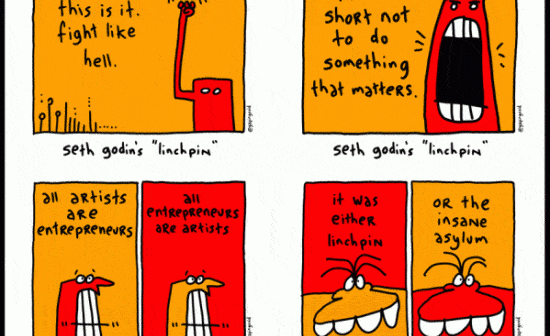
[The “Linch­pin” Series– avai­la­ble over on the gaping­void Gallery etc.]

Last month my friend and men­tor, Seth Godin relea­sed his lon­gest and pro­bably most impor­tant book, “Linch­pin”. I inter­vie­wed him about it here.

To cele­brate the book, Seth let me design a port­fo­lio of four fine art prints, ins­pi­red by the book, entit­led “The Linch­pin Series”. You can go check out over on the gaping­void Gallery here.

What else is there to say? Seth wrote a great book. Like I said in my review on Ama­zon,

And Seth then cha­llen­ges us, the rea­ders, to become linch­pins our­sel­ves. To make the leap. To become artists. To do emo­tio­nal work, wha­te­ver the sac­ri­fice may be. It’s our choice, and it’s our bur­den. Seth won’t be there to catch us if we fall, but to become the peo­ple we need to be even­tually, well, we pro­bably wouldn’t want him to, anyway.

Con­gra­tu­la­tions, Seth. You have pen­ned a real gem of a book here. Rock on.”

I basi­cally wan­ted to create a set of prints– “Cube Gre­na­des” — to go on the office wall, as Linch­pin “Idea-Souvenirs” to kick the vie­wer in the pants. “Remem­ber Who You Are” and all that.

I hope you’ll pay the gallery a visit. Meanwhile, you can check them out below as well.

Thanks, Seth! I had a lot of fun dra­wing these. Rock on.

LIFE IS TOO SHORT (Linch­pin 1)

Life is too short not to do something that mat­ters, not to become a “Linch­pin”. I know it, you know it, we all know it, so let’s stop futzin’ around at get on with it. Like Seth says, “Decide”.

INSANE ASYLUM (Linch­pin 2)

Why do peo­ple become what Seth Godin calls “Linch­pins”? Beca­sue to not do so would drive us crazy. Even­tually we have no choice. And we’ve all been in worse pla­ces– when you know you’re capa­ble of doing great things, being in “The Zone”, but every exter­nal mar­ker out there indi­ca­tes other­wise– that you’ll never get to do the “life’s best work” that you’re capa­ble of. That your career will be nothing but drud­gery and abuse, in exchange for what seems an inc­rea­singly mea­ger paycheck.

And after being there long enough, the deci­sion to become a Linch­pin even­tually beco­mes an easy one. But it can take time.

ALL ARTISTS ARE ENTREPRENEURS (Linch­pin 3)

By Seth’s defi­ni­tion, an artist is not just some per­son who mes­ses around with paint and brushes, an artist is some­body who does (and I LOVE this term) “emo­tio­nal work.”

Work that you put your heart and soul into. Work that mat­ters. Work that you gladly sac­ri­fice all other alter­na­ti­ves for. As a wor­king artist and car­too­nist myself, I know exactly what he means. It’s not what you do, it’s the way that you do it.

THIS IS IT (Linch­pin 4)

It’s easy to tell some­body to get into The “Linch­pin” Zone. Much har­der to live it. But fight like hell to get there, regard­less, every frig­gin’ day, or else you’ll never make it.

You know you’re capa­ble of doing great things, being in “The Zone”, but every exter­nal mar­ker out there indi­ca­tes other­wise– that you’ll never get to do the “life’s best work” that you’re capa­ble of. That your career will be nothing but drud­gery and abuse, in exchange for what seems an inc­rea­singly mea­ger paycheck.

Yeah, it’s a pain­ful place to be. But it doesn’t last fore­ver, not if you don’t give up. Not if you don’t suc­cumb to all the over­pri­ced, “treadmill-enabling”, exter­nal mar­kers of suc­cess– fancy hou­ses, cars, schools, vaca­tions and “stuff” that you can’t really afford, that you don’t really need nearly as much as the guy in the next cubicle says that you do.

THE LINCHPIN PORTFOLIO: ALL FOUR FOR $200.

What a deal, what a steal etc.All four, 11“x14” each, pro­per archi­val paper, inks and prin­ting tech, all hand-signed by me, for the price of a moderately-OK-but-not-great meal for two in Manhat­tan. And of course, for hard­core Seth fan­boys, there’s the “Pur­ple Cow” print from early 2009.

January 29, 2010

“selling by giving”, or, “gift economics”

Send to Kindle

Seth Godin does it.

Brian Clark does it.

Gary Vee does it.

Esther Dyson does it.

James Gover­nor does it.

Kathy Sie­rra does it.

Den­nis How­lettt does it.

John T. Unger does it.

Robert Sco­ble does it.

Fred Wil­son does it.

These eight smart, kind, great peo­ple, some more well-known than others,  are mas­ters at what I call “Selling by Giving”.

They put stuff out there, as gifts. Great con­tent, great ideas, great insights, great per­so­nal con­nec­tion. By giving so much of them­sel­ves, for free, every day, they build up huge sur­plu­ses of good­will, so when you’re finally in the mar­ket for something they’re selling (and they’re ALL selling something, trust me), they’re first on your list.

I do it, too, just not as well as these guys. I’ve published thou­sands of car­toons on this blog over the years, and that’s got­ten me a lot of busi­ness. And not just fine art prints, either. It’s got­ten me con­sul­ting gigs, full-time salary jobs, book deals, paid spea­king gigs, mar­ke­ting  jobs, I could go on…

Selling by giving. Any­body who’s been watching any of these guys for a long time will know exactly what I’m tal­king about.

But here’s what’s inte­res­ting to me: I can remem­ber not that long ago, say 5 years, when this type of mar­ke­ting see­med pretty freaky to most peo­ple. Now it’s con­si­de­red nor­mal, at least to smart mar­ke­ters. FIVE years. That’s all.

I could see that in another five years, ANYONE who wants to mar­ket ANYTHING suc­cess­fully– be they small mom n’ pop shops to large com­pa­nies, will have to be fluent in Gift Eco­no­mics, to a level that see­med COMPLETELY alien only a few years ago.

This inc­lu­des you. Are you ready for it?

[About Hugh. Car­toon Archive. Com­mis­sion HughSign up for Hugh’s “Daily Car­toon” News­let­ter.]

January 21, 2010

linchpin: ten questions for seth godin

Send to Kindle

[N.B. The “Ten Ques­tions” archive is here.] [To read other people’s reviews, go to the Linch­pin Squi­doo page.]

My friend and men­tor, Seth Godin has a new book out: “Linch­pin: Are You Indispensable?”.

As has become a regu­lar habit with his last cou­ple of books, to cele­brate the launch I asked him ten ques­tions, which he kindly ans­we­red below.

LINCHPIN: TEN QUESTIONS FOR SETH GODIN.

1. HUGH: OK, let’s get it over with– What is a “Linch­pin”? What is the book about?

SETH: You’re a linch­pin, Hugh. So are all those crazy peo­ple we can’t live without, peo­ple who bring art to work, peo­ple who reach out, make a con­nec­tion, cause change to hap­pen. The linch­pin is the per­son who is indis­pen­sa­ble, because they refuse to become an interchan­gea­ble part, someone who merely follows the manual. In the hard­ware store, the linch­pin is a light­weight little piece that holds the wheel to the axle. Very dif­fi­cult to live without.

2. In your book, Pur­ple Cow, your mes­sage was “Everyone’s a Mar­ke­ter, now.” In All Mar­ke­ters are Liars, the mes­sage was, “Everyone’s a Story­te­ller, now.” In Tri­bes, it was “Everyone’s a Lea­der, now.” In Linch­pin, the mes­sage sur­pri­sed me: “Everyone’s an Artist, now”. Tell us about your thesis.

Artist doesn’t mean pain­ter or car­too­nist or playw­right. Artist means someone willing to stand up, stand out and make change. In a sta­ble envi­ron­ment, we worship the effi­cient fac­tory. Henry Ford or even David Gef­fen… feed the machine, keep it run­ning smoothly, pay as little as you can, make as much as you can. In our post-industrial world, though, fac­tory worship is a non star­ter. Cheap cogs are worth what they cost, which is not much. In a chan­ging envi­ron­ment, you want peo­ple who can steer, inno­vate, pro­voke, lead, con­nect and make things hap­pen. That’s my the­sis. This is a new revo­lu­tion, and just as Marx and Smith wrote about the indus­trial revo­lu­tion, I’m wri­ting about ours.

3. A key term you used throughout the book was “Emo­tio­nal Labor”. Please explain what that is, and why that mat­ters to anyone wishing to become a Linchpin.

It’s emo­tio­nal labor to insist that your publisher leave the sexy and dirty bits in your last book, even though it cer­tainly would have been easier to take them out. It’s emo­tio­nal labor to move to Texas even though it might be easier to just hang out with friends. It’s emo­tio­nal labor to do the work even when you don’t feel like it. Mostly, I’m tal­king about doing the dif­fi­cult work of brin­ging your very best self to each inte­rac­tion, because to do other­wise is a mor­tal sin.

4. Obviously, we’re not all artists, in the stric­test sense of the word. I’m a pro­fes­sio­nal artist myself, and even I don’t much like using that term. But here’s Seth, trying to bust the defi­ni­tion of “Artist” wide open. I get the fee­ling this was not you trying to rede­fine the term in order to create con­tro­versy for the sake of being cle­ver, but you are trying to cha­llenge peo­ple to think about their work dif­fe­rently, to make them think about WHAT EXACTLY has to hap­pen, for them to become a Linch­pin. Yes?

Well, what should we call these peo­ple, these linch­pins? I mean, we have a word for a pain­ter who merely does deri­va­tive work: a hack. But what do we call a cus­to­mer ser­vice rep or an insu­rance adjus­ter or lands­cape archi­tect that chan­ges the game, that ele­va­tes each inte­rac­tion and that takes enor­mous emo­tio­nal and pro­fes­sio­nal risk with their work? I think they need a name, so I stole one. I call them artists.

5. One thing I find inte­res­ting about the book (and all your other ones, as well) is that you don’t offer any easy ans­wers. You never say, “This is where the world is hea­ded, and this is how WE ARE going to make it work”. Your shtick is more, “This is where the world is hea­ded, and this is what YOU have to think about, if you don’t want to be tho­roughly crushed.” And yet I still see peo­ple asking you, “Please tell me what to do to incor­po­rate your kind of new, groovy thin­king, WITHOUT ME having to change my life or my modus ope­randi in an way wha­tsoe­ver. Please show me where the auto­pi­lot but­ton and the cruise con­trol are” etc. Do you find that frus­tra­ting? Is it hap­pe­ning more as your work gets more well known? Less?

Frus­tra­ting isn’t really the right word. I think it was sad at first, because it’s almost like the Wizard of Oz… Dorothy had the power all along, right? But now I view it as an oppor­tu­nity. It’s so temp­ting to start dra­wing maps for peo­ple. It makes them happy and it makes me feel smart. But resis­ting that temp­ta­tion is the right thing to do, because once someone does it on their own a few times, they become uns­top­pa­ble. Watching that change occur is one of the high­lights of my pro­fes­sio­nal life. And in fact, every great teacher I’ve ever known seeks the same outcome.

6. If I had to desc­ribe your typi­cal wri­ting style (of which I am a huge fan, of course), I’d call it “Dryly unders­ta­ted, humo­rous, street­wise and lucid”. This book somewhat sur­pri­sed me. It seems to have a more angry and more emo­tio­nal tone than your pre­vious books. Was that just me? Is your wri­ting style beco­ming angrier in gene­ral, or did the inhe­rent sub­ject mat­ter in the book just get you more riled up than usual?

It’s not angry, Hugh. It’s urgent.

I don’t think most peo­ple rea­lize the pre­ca­rious nature of our current situa­tion, how close we are to the edge, and how little time we have to get our act together.

7. I’ve known you for a little while; we met right around the time that Pur­ple Cow came out in 2003. Back then to me you were this arti­cu­late, enter­tai­ning and suc­cess­ful entre­pre­neur, who had just writ­ten this cool busi­ness bes­tse­ller. Then more books came out and I star­ted seeing this more “author” sen­si­bi­lity emer­ging. You obviously enjo­yed wri­ting the books, and you obviously liked seeing peo­ple rea­ding them and liked hel­ping make change hap­pen. But in this last year or so, I’ve seen your shtick become more “rab­bi­ni­cal” i.e. it seems you’ve got­ten more inte­res­ted in teaching peo­ple– youn­ger peo­ple espe­cially. Like you no lon­ger care so much about your own suc­cess and “affec­ting change” your­self, but are more inte­res­ted in teaching peo­ple how to become suc­cess­ful and affect change them­sel­ves. Am I close? Are you evolving?

I hope we’re all evol­ving. I think my mis­sion is the same as it has been since that day on the canoe dock in 1978 when I deci­ded it would be very cool indeed to help peo­ple achieve more than they thought they could. What has chan­ged is my awa­re­ness of how the sys­tem pushes peo­ple like me to be manual wri­ters. Publishers and others really want to give the mar­ket what it wants, and what it wants are Dum­mies books and fast easy change (Hey! It’s been a year… let’s elect a new sena­tor!). Even now, the sin­gle best way to get a lot of blog traf­fic is to post a list of Ten Ways to… and make sure you men­tion Ron Paul, Apple Com­pu­ter and the inhe­rent dif­fe­rence bet­ween men and women. Try it, it works.

So I’ve expe­rien­ced the feed­back you get when you draw a map, and it’s nice, but the real win is hel­ping peo­ple draw their own. To see the world as it is. That’s a lot more dif­fi­cult. Peo­ple need glas­ses, not a map.

8. I saw this in your last book, Tri­bes, and I see again it Linch­pin. Though I’m sure there are tons of peo­ple who would pre­fer it if they were, your books are not ins­truc­tion manuals. You’re not telling peo­ple what to “Do”. You’re telling peo­ple to “Decide”. A subtle dif­fe­rence, but it’s an impor­tant one. Please tell us more.

Oh, I don’t think it’s subtle at all. I think it’s a HUGE dif­fe­rence. We hate to decide. We avoid deci­ding. We hide from it.

Once someone deci­des, they almost always suc­ceed (unless they want to win an Olym­pic medal or some other ridi­cu­lous prize awar­ded to just a few). The deci­sion is the hard part, but we spend pre­cious little time on it.

9. We have a mutual friend in New York, Fred, who is a tre­men­dously suc­cess­ful ven­ture capi­ta­list. But as anyone who knows him well will tes­tify, his suc­cess has diddly-squat to do with love of money and all its trap­pings, and everything, EVERYTHING to do with the fact that, quite simply, he utterly loves what he does. He just ADORES waking up every mor­ning and clic­king his heels on his way to work. I grew up in a pretty stan­dard, middle class cor­po­rate family. Back in my parent’s day, “loving” your job was con­si­de­red almost a taboo; something inhe­rently detri­men­tal to long-term per­so­nal career suc­cess, and the suc­cess of the com­pany team. But there seems to be an underl­ying mes­sage in Linch­pin that THAT THIS HAS ALL CHANGED. That if you don’t love your job, not only will you be a mise­ra­ble wreck the rest of your life, but hey, you’re less likely to be suc­cess­ful in busi­ness, as well. Care to elaborate?

The ama­zing thing is that in every job, every one, there are peo­ple who hate it and peo­ple who love it. There are clock watchers on Sand Hill Road. There are peo­ple bus­sing tables at a cof­fee shop who race to work each day. The job is irre­le­vant, pretty much. It’s the decision.

Fred does great work as a VC because his moti­ves are trans­pa­rent, his judg­ment is exce­llent and he keeps his pro­mi­ses. All three are essen­tial for him to love his job, and he does. Since he’s not willing to trade that joy for a few bucks, he sticks to his prin­ci­ples. And, here’s the cool irony, the more he does that, the more money he makes!

10. Of all the books you’ve writ­ten (and I love them all), this seems to be your most cha­llen­ging. Your pre­vious mes­sa­ges– Everyone’s a Mar­ke­ter, Everyone’s a Story­te­ller, Everyone’s a Lea­der etc– though com­pe­lling enough, somehow seem far easier to digest com­pa­red the sim­ple mes­sage in Linch­pin: “Love what you do, or fail.” Why do you think that idea is STILL so dif­fi­cult for so many peo­ple? Do you expect this book to be as well recei­ved as your pre­vious ones? Does it matter?

If you had asked me four weeks ago, I would have been a happy pes­si­mist. Happy because I wrote pre­ci­sely the book I wan­ted to write, regard­less of the con­se­quen­ces. I was lite­rally ready for almost every one to hate it. And a pes­si­mist because I’m pushing peo­ple awfully hard with this one.

But you didn’t ask me four weeks ago, you asked me today. And today is a few weeks after 2000+ of my rea­ders made a dona­tion and got a review copy and WOW. They get it. It’s wor­king. It’s resonating.

My work is done here, as the saying goes. To unleash something like this on the world, to go out this far on a limb and have peo­ple sup­port you and embrace you and run with it… it’s the most ama­zing feeling.

Thanks, Hugh, for giving me something to write about and for sho­wing us all a way to live. We can’t do it without you.

[The best way to sup­port gaping­void is to sign up for the “Daily Car­toon” News­let­ter.]

October 9, 2009

party aftermath…

Send to Kindle


[The You­Tube video, cour­tesy of Sandi Bachom.]

[GREAT Flickr sli­deshow cour­tesy of David Par­met].

34882821

[Seth and I sig­ning some Pur­ple Cow prints, with Desert­Manhat­tan in the back­ground. Photo cour­tesy of Ceci­lia.]

app2862771255043127

[Peo­ple having fun etc.]

parmetjnr555

[David Par­met: “When I saw this print last night, I knew I had to have it. And I knew exactly who it was for.”]

After weeks of pre­pa­ra­tion, some of it quite nerve-racking, the Pur­ple Cow print party is finally over.

What can I say? It was a blast. Every­body see­med to have a great time. More than one per­son came up to me and said it was a lot more fun than any art ope­ning they’d ever been to. You can see what peo­ple are saying on Twit­ter (for the time being, any­way) by follo­wing the #pur­ple­cow hashtag…

Thanks to Seth Godin for being such a gra­cious co-host, thanks to every­body who hel­ped out, thanks to every­body who came along for it.

A spe­cial big thanks to Martha Burzynski, Carlo Balis­trieri, and Ceci­lia Feret for volun­tee­ring their time to help us out at the door. That was so kind of you, seriously. Thanks to David Par­met and Sandi Bachom for the great pho­tos and videos [pos­ted above].

And a final thank-you to my busi­ness collea­gues, Jason and Laura, who wor­ked tire­lessly for SO LONG behind the sce­nes to make sure the eve­ning was nothing short of a mas­sive suc­cess. You guys rock. Ok, I’m going to go off and sleep for a week…

[Backs­tory: About Hugh. E-mail Hugh. Work with Hugh. Twit­ter. Car­toon Archive. News­let­ter. Book. Inter­view One. Inter­view Two. EVIL PLANS. Limi­ted Edi­tion Prints. Essen­tial Rea­ding:Everything You Always Wan­ted To Know About ‘Cube Gre­na­des’ But Were Afraid To Ask.”]

October 1, 2009

“a good customer base is the best marketing department there is”

Send to Kindle

zzzzsteak12

In a rather ran­dom moment of cla­rity, I wrote this line on Twit­ter a cou­ple of weeks ago:

“A good cus­to­mer base is the best mar­ke­ting depart­ment there is.”

One thing I remem­ber fondly about my college bud­dies, back in the day: Not only did they all spend a lot of time and energy lis­te­ning to Gra­te­ful Dead records and atten­ding Gra­te­ful Dead con­certs, they also spent a lot of time and energy trying to get me to do the same.

Though I never became much of a Dead fan in the end, it sure wasn’t for my friends’ lack of trying. Their mojo may not have wor­ked on me, but hey, it wor­ked on plenty other impres­sio­na­ble young peo­ple, so it’s all good.

My college bud­dies were self-appointed team mem­bers of one of the grea­test mar­ke­ting depart­ments in his­tory: The Deadheads.

So who are your cus­to­mers? Are they your mar­ke­ting depart­ment? If they’re not, they should be, yes?

[This reminds me: Seth Godin cited The Deadheads in his won­der­ful book, “Tri­bes”. I inter­vie­wed him here about the book etc.]

[Backs­tory: About Hugh. E-mail Hugh. Work with Hugh. Twit­ter. Car­toon Archive. News­let­ter. Book. Inter­view One. Inter­view Two. EVIL PLANS. Limi­ted Edi­tion Prints. Essen­tial Rea­ding:Everything You Always Wan­ted To Know About ‘Cube Gre­na­des’ But Were Afraid To Ask.”]

September 21, 2009

invite for the social event of the year: the purple cow print party, nyny, october 8th

Send to Kindle

cow2

[Click here to down­load invite etc.]

[UPDATE: The 6-9pm sig­ning party is now fully boo­ked. Sorry about that. Howe­ver, if you want to RSVP via email at gapingvoidvip@gmail.com, we can put you on the wai­ting list, or just RSVP for the 9pm-12pm after-party: it’ll still be fun, and  we still have plenty of room left for that. Thanks!]

Here’s the invi­ta­tion for the Pur­ple Cow Party on Octo­ber 8th. Full details here.

Space is limi­ted, so the first 100 peo­ple who e-mail an RSVP to gapingvoidvip@gmail.com will be allo­wed in 6-9pm [PLEASE NOTE: IT’S A DIFFERENT E-MAIL TO MINE etc.]. There will be more room for peo­ple after 9pm, so if you miss being one of the first 100, come after that.

If you wish to bring a guest please remem­ber to inc­lude their name in your RSVP. Also, if you could spe­cify whether you’re hoping to come before or after 9pm, that would be great, thanks.

The party goes on to mid­night or so. Seth Godin, sadly, won’t be there the whole time. He likes to turn in early.

[CONFIRMED:] The print party will be held at Ilili, 6pm-Late, on 8th October, 2009.

Bet­ween 27th & 28th

236 5th Ave­nue, New York, NY 10001, USA

(212) 683‑2929‎

ililinyc.com

The res­tau­rant will be suppl­ying food, Stormhoek will be suppl­ying wine. Plus there will be a cash bar, if you’d rather have beer or liquor.

PurpleCow0909.jpg

[The Pur­ple Cow Print. Click on image to enlarge etc.]
Seth Godin and I will be there, sig­ning more Pur­ple Cow prints. Plus I’ll have some more of my art on dis­play & for sale.

It’ll be a fun eve­ning. A good oppor­tu­nity for Seth and gaping­void rea­ders to meet & greet, and con­coct EVIL PLANS for world domi­na­tion. I can’t wait! Rock on.

[Backs­tory: About Hugh. E-mail Hugh. Twit­ter. News­let­ter. Book. Inter­view One. Inter­view Two. EVIL PLANS. Limi­ted Edi­tion Prints. Pri­vate Com­mis­sions. Cube Gre­na­des.]

September 13, 2009

global microbrand: best made axes

Send to Kindle

bestmadeaxeco001Seth Godin and John T. Unger, two voi­ces I lis­ten to very care­fully, recom­men­ded me this Glo­bal Mic­ro­brand, inde­pen­dently of each another: Best Made Company.

Best Made make cus­to­mi­zed axes. Like it says on their webpage:

NOTHING WITHOUT AN AXE:

Every high-rise condo, luxury office, exe­cu­tive suite, ranch house, and farms­tead must have an axe in it. We know that axes shouldn’t only be in the hands of lum­ber­jacks: anyone and ever­yone should have an axe in their name. Put it in your cubicle, give it to your niece as a gra­dua­tion pre­sent, or your dad for father’s day (or bet­ter yet mom for mother’s day), bring it to the com­pany pic­nic, carry it to the door next time Jehovah’s Wit­ness come knoc­king, or just lean it up against your living room wall and admire. An axe is indis­pen­sa­ble and sublime, the epi­tome of self-reliance and inde­pen­dence, a per­fect design object, a time­less instrument.

I swap­ped emails with one of the company’s foun­ders, Graeme. Turns out he and his busi­ness part­ner, Peter, like myself, spent their tee­nage sum­mers canoe-tripping up in Northern Onta­rio, where believe me, a good axe is both an indis­pen­sa­ble and highly reve­red piece of kit. So that’s where the love comes from.

I’ve held one of their axes in my own two hands– beau­ti­fully made, lovely to hold and to look at.
Good luck to these folk, I say…

August 23, 2009

the social event of the year: the purple cow print party, NYNY, October 8th

Send to Kindle

PurpleCow0909.jpg
[The Pur­ple Cow Print. Click on image to enlarge etc.]

[UPDATE:]  CONFIRMED: The print party will be held at Ilili, 6pm-Late, on 8th Octo­ber, 2009.

Bet­ween 27th & 28th
236 5th Ave­nue, New York, NY 10001, USA
(212) 683‑2929‎
ililinyc.com

The res­tau­rant will be suppl­ying food, Stormhoek will be suppl­ying wine. Plus there will be a cash bar, if you’d rather have beer or liquor. It’ll be a fun eve­ning. Rock on.

For those of you still in the dark re. The Pur­ple Cow Print that I wor­ked on with Seth Godin, one of the grea­test mar­ke­ting thin­kers in the world, this is just a note to say I’ve set up an archive of all the blog posts about it here
Seth blogs about it here as well…
And of course, it’s for sale on the gaping­void gallery

The other bit of news is, Seth and I will be thro­wing an offi­cial launch party for the print in New York City on the eve­ning of Octo­ber 8th, 2009. A chance for friends of both gaping­void and Seth to hang out and meet n’ greet. A bit bela­ted, maybe, but we both had very busy sum­mers.
We’re thro­wing the party in a Leba­nese res­tau­rant in Chel­sea, I’ll also have some of my other works on dis­play– both prints AND ori­gi­nal dra­wings. And yes, they’ll be for sale. So it’ll be a bit like an art ope­ning, with perhaps more empha­sis than usual on the peo­ple atten­ding [not to men­tion, food and drink], than the actual art itself. Stormhoek, natu­rally, will be suppl­ying the wine.
Details to follow shortly. Watch this space etc.
Any­way, I hope if you’re in the area, you’ll be able to make it. Thanks.
[NOTE TO SELF: What a crazy adven­ture this has all been so far…]

[Backs­tory: About Hugh. Twit­ter. News­let­ter. Book. Inter­view One. Inter­view Two. EVIL PLANS. Limi­ted Edi­tion Prints. Pri­vate Com­mis­sions. Cube Gre­na­des.]

August 18, 2009

the big, purple cube grenade

Send to Kindle

PurpleCow0909.jpg
[Click on image to enlarge etc.]
Mike Munro from Seattle, sent in this lovely photo of The Pur­ple Cow print, now han­ging proudly in his office. An over-sized “cube gre­nade”- Exactly.
I like the green frame… inte­res­ting choice.
24021983.jpg
[Another view… Click on image to enlarge etc.]
Thanks again to Seth Godin for colla­bo­ra­ting with me on this…<br
[Backs­tory: About Hugh. Twit­ter. News­let­ter. Book. Inter­view One. Inter­view Two. EVIL PLANS. Limi­ted Edi­tion Prints. Pri­vate Com­mis­sions. Cube Gre­na­des.]

July 16, 2009

home again

Send to Kindle

SG1111.jpg
[Me and Seth sig­ning the silksc­reen…]
Got back to West Texas last night after almost a week on the road. A quick visit to Sili­con Valley for the Techc­runch Party, then an equally brief visit to New York.
I was on the East Coast mostly to co-sign the Pur­ple Cow print with Seth Godin.
That was a great after­noon, visi­ting his office in Westches­ter County. He’s a seriously inte­res­ting guy. We tal­ked a lot about all sorts of things…
Other high­lights were the #NYCt­wee­tup- about 50 peo­ple came. Secondly, I got to meet my edi­ting team at Penguin/Portfolio for the first time. They seem very happy with how the book is doing, so it was all good.

godin-macleod111.jpg
[Update: Galley­cat, the publishing blog, also cove­red the print sig­ning:]

Hugh Mac­Leod (right) became Internet-famous by dra­wing car­toons on the back of busi­ness cards and publishing them online at his Gaping Void blog. Along the way, he gai­ned some valua­ble insights into mar­ke­ting and crea­ti­vity which he also hap­pily sha­red with rea­ders; that was enough to attract the atten­tion of the Port­fo­lio imprint at Pen­guin Group, which recently published MacLeod’s first book, Ignore Every­body.
Now, one of MacLeod’s friends (and ins­pi­ra­tions) hap­pens to be Seth Godin — if you’ve been rea­ding Galley­Cat long enough, you know we’re right there with him on that — and back in April, Mac­Leod drew a ver­sion of the cover to Godin’s Pur­ple Cow (on a much big­ger sur­face than a busi­ness card). “To me the book, as a totem, as an icon, repre­sents a huge shift in thin­king that came along, almost unin­vi­ted, back in the early 2000’s,” Mac­Leod emai­led Godin shortly after. “The dra­wing repre­sents [to me] my own abi­lity to inter­na­lize it.” By the end of the month, he was taking orders for limited-edition prints which he flew into New York City ear­lier this week to sign along­side Godin. The pre-order price for the prints was $495, but if you want one now, it’ll set you back $1,100.

[Backs­tory: About Hugh. Twit­ter. News­let­ter. Book. Inter­view One. Inter­view Two. Limi­ted Edi­tion Prints. Pri­vate Com­mis­sions. Cube Gre­na­des.“EVIL PLANS”.]

July 8, 2009

the “hughtrain” cube grenade

Send to Kindle

hughtrain001Bjpeg.jpg

[Buy the “Hugh­train” print indi­vi­dually here.]

Another “Cube Gre­nade”, Hurrah!
A while ago, I announ­ced that we’d be making sma­ller prints avai­la­ble, based on the car­toons found in IGNORE EVERYBODY.
On June 11th, the same day the book came out, we announ­ced our first efforts: The “Ignore Every­body” Port­fo­lio Series Num­ber One.
Four silksc­reens, 11“x14”, limi­ted edi­tion of 100, sig­ned and num­be­red, $320 for the set.
So again, I’m deligh­ted to report that we’ve just made the “Hugh­train” print avai­la­ble for purchase indi­vi­dually. $100, plus S&H. Here’s the blurb on the gallery website:

It’s pro­bably my most famous car­toon. It pretty sums up my mar­ke­ting phi­lo­sophy. Like my friend, Seth Godin said:

“You can’t drink any more bott­led water than you already do. Or buy more wine. Or more tea. You can’t wear more than one pair of shoes at a time. You can’t get two mas­sa­ges at once…“
So, what grows? What do mar­ke­ters sell that sca­les?
I’ll tell you what: Belief. Belon­ging. Mat­te­ring. Making a dif­fe­rence. We have an unli­mi­ted need for this.”

I hope you’ll check it out. Thanks!
[Backs­tory: About Hugh. Twit­ter. News­let­ter. Book. Inter­view One. Inter­view Two. Limi­ted Edi­tion Prints. Pri­vate Com­mis­sions. Cube Gre­na­des.“EVIL PLANS”.]

June 16, 2009

“ignore everybody” book reviews

Send to Kindle

artfashion123.jpg
Well, Day Six into beco­ming a “published author”, and accor­ding to Goo­gle, a lot of peo­ple are already tal­king about my book. Here are some of my favo­rite reviews so far:

Seth Godin: “Should Hugh swear so much?” This post re-visits a con­ver­sa­tion Seth and I had a year ago, when I was first won­de­ring whether or not to keep the “potty mouth” car­toons out of the book.
David Armano: “The title says it all. You have to decide if what you believe in is good enough to fight for, to pur­sue, to risk everything for. Only you can decide this.“
Rick Segal: “Hugh’s advice and com­men­tary should be requi­red rea­ding for every­body doing a start-up, coming up with a earth chan­ging idea or drea­ming of the day they punch out of that Dilbert-like cubicle.“
Sex On The Beach: “Hugh’s not coming from some lofty ivory tower, but from a real pro­cess of hard work and grit. He’s not preachy; he’s simply sha­ring what he has lear­ned along his path.“
The CRM Blog- One of my lon­gest (and best) inter­views ever:

CRM maga­zine: Do you think crea­ti­vity is a kind of currency now?
Hugh Mac­Leod: It’s always been a currency, more so right now because if you’re crea­ting a lot of stuff that’s inte­res­ting, valua­ble, mea­ning­ful, that’s a lot safer to me than just pushing paper around a desk all day. Those kinds of jobs are being repla­ced by com­pu­ters every day.
We want to be crea­tive. We want to be more use­ful and tap into something dee­per and more mea­ning­ful. We don’t want to sit around and be a sch­muck our whole lives; what I’m hoping the book will do is get peo­ple to start a dia­lo­gue with them­sel­ves and with other peo­ple. It’s an inte­res­ting dia­lo­gue because [crea­ti­vity] is such a pri­mal need.

Jeri­miah Owyang: “You see, his book Ignore Every­body, really isn’t a book. Ins­tead, you should think of it as as that friend in high school who never follo­wed the rules, but achie­ved his goals took you out for a beer 20 years later and sha­kes your shoul­ders and wakes you up.”

Well, that’s enough SHAMELESS book-pimping for now. I’m going back to SHAMELESSLY PIMPING my latest batch of Cube Gre­na­des. Rock on.

June 11, 2009

“ignore everybody” launches today

Send to Kindle

1111IE.jpg
[Books arri­ving at my office for sig­ning. It’s a lousy job, but hey, some­body has to do it…]
bookicon.JPG

Four­teen months since I went public with the news, my first book, “Ignore Every­body” finally launches today.

Now avai­la­ble at:Ama­zon.

Bar­nes & Noble.

Bor­ders.

800-CEO-READ. (great for bulk buys)

Indie­Bound. [to find an inde­pen­dent store]

Kindle.

bookjacket777.jpg
[The book jac­ket– click on image to see enlar­ged PDF ver­sion etc.]
Here are some brief notes:
1. Big thanks to my agent, Lisa, to Jef­frey and Jillian, my edi­tors over at Penguin/Portfolio, to Mau­reen Cole, who does my mar­ke­ting over at Port­fo­lio, to my friend and men­tor, Seth Godin, for intro­du­cing me to Port­fo­lio.
2. Big thanks to all the blog­gers and blog rea­ders who ins­pi­red and encou­ra­ged me all along the way… You know who you are.
3. The book only took me a cou­ple for months to write. It took me four years to find the right publisher. I feel for­tu­nate that it wasn’t the other way around…
4. Some of my favo­rite car­toons in the book were drawn at this very small, funky West Village Bar in Manhat­tan, during my New York days. Pro­bably the prou­dest moment with get­ting the book published for me so far, was being able to send an advance copy to the bar’s owner, along with the follo­wing note:

“Dear Tanya,
Remem­ber that crazy guy with the tweed jac­ket who used to sit at the end of your bar every night, dra­wing those weird car­toons on the back of busi­ness cards?
I’m happy to report, he ended up alright…”

5. Yes. I am insa­nely happy, exci­ted and gra­te­ful about all this. Thanks and God Bless to you all. Rock on.

[etc: About Hugh. Inter­view. News­let­ter. Book. Limi­ted Edi­tion Prints. Pri­vate Com­mis­sions. Cube Gre­na­des. Hugh­train.]

June 7, 2009

purple cow pic

Send to Kindle

pc777A.jpg
[A pic­ture of me hol­ding up one of the Pur­ple Cow prints. They look UTTERLY AMAZING in real life…]

[etc: About Hugh. Inter­view. News­let­ter. Book. Limi­ted Edi­tion Prints. Pri­vate Com­mis­sions. Cube Gre­na­des. Hugh­train.]

May 13, 2009

cube grenades

Send to Kindle

cg555.jpg

[Update: Essen­tial Rea­ding– “Work With Hugh: Everything You Always Wan­ted To Know About “Cube Gre­na­des’ But Were Afraid To Ask.”]

Above is a photo that one of my friends on Twit­ter sent me. He basi­cally down­loa­ded one of my car­toons off my blog, prin­ted it out, and stuck it outside his cube at work, for other peo­ple to see, hope­fully to com­ment on, and hope­fully, to start a con­ver­sa­tion.
This, I believe, is where my car­toons work the best– “Cube Gre­na­des”- small objects that you “throw” in there in order to cause some damage– to start a con­ver­sa­tion, to spread an idea etc.
bm999A3.jpg
[The Blue Mons­ter]
The Mic­ro­soft Blue Mons­ter is pro­bably my best-known Cube Gre­nade, which is why I made it into a limi­ted edi­tion print even­tually.
carton888.jpg
Seth Godin first put his Pur­ple Cow book into a pur­ple milk car­ton for the same rea­son– he gues­sed [quite rightly, as it tur­ned out] that peo­ple would see the car­ton on somebody’s desk, inquire about it, and a con­ver­sa­tion about the mar­ke­ting ideas con­tai­ned in the book would be star­ted.
PCsmall124.jpeg
[The Pur­ple Cow print]
And the Pur­ple Cow print was desig­ned the same way. OK, it might be a bit big to dis­play in a cube– you need a lot of wall space for this one– but the idea is the same– Con­ver­sa­tions that hap­pen around the object are more inte­res­ting than the actual object itself.
“Cube Gre­na­des”. Exactly. Car­toons desig­ned to affect change as “Social Objects”. Exactly.
[Check out some of my limi­ted edi­tion prints over at gapingvoidgallery.com.]

[Update:]

Since I pos­ted this “Cube Gre­na­des” idea yes­ter­day, I’ve been giving it A LOT of thought. Here are some notes:
cg22222.jpeg
[More “Cube Gre­na­des” in action. Click on image to enlarge etc.]
1. Like I said, my car­toons work best when they’re used as “Cube Gre­na­des” i.e. small objects that you “throw” in there in order to cause some damage– to start a con­ver­sa­tion, to spread an idea etc. But other social objects can be used as well– pur­ple milk car­tons, home­made coo­kies, funky mou­se­pads, rub­ber toys, news­pa­per clip­pings etc. It’s the peo­ple that mat­ter, not the object they socia­lize around. I don’t claim to have a mono­poly.
2. Repeat After Me: Cube Gre­na­des are Social Objects. Cube Gre­na­des are Social Objects. Cube Gre­na­des are Social Objects
3. All big change in com­pa­nies come from the peo­ple in the trenches, who do the actual day-to-day work. To change their beha­vior, you have to change the way they inte­ract. Peo­ple inte­ract around social objects. Change the social objects, and you change the com­pany.
4. My friend, Mark Earls once told me a story about a friend of his. The friend pla­yed a key role in the mas­si­vely suc­cess­ful cor­po­rate tur­na­round recently under­ta­ken by McDonald’s.
His friend told him, “We knew we were scre­wed, NOT when the nutri­tion and green issues star­ted hit­ting the news­pa­pers, but by the sim­ple fact that our staff on the floor just weren’t clea­ning the tables and the bath­rooms like they used to. We knew THEN that our peo­ple had lost faith in our com­pany.“
What social objects were peo­ple using, both during the company’s dec­line and during its tur­na­round? What cube gre­na­des were being thrown about, both before and after? I bet you they weren’t the same.
5. Yes, I am fully aware that your cus­to­mers are paying for the qua­lity of the pro­ducts and ser­vi­ces your busi­ness pro­vi­des, not for the qua­lity of the cube gre­na­des flying around your cor­po­rate head­quar­ters. But they are all rela­ted. Everything of value that your busi­ness crea­tes is the pro­duct of a already-existing social dyna­mic. Busi­nes­ses are peo­ple, not machi­nes. And peo­ple socia­lize around objects.
6. An Open Let­ter to Ad Agen­cies: Guys, you are NOT selling mes­sa­ges any­more. You are selling social objects. The work that you create will affect the cube gre­na­des and social objects, that your clients and their cus­to­mers use to inte­ract with each other.
my_desk_222.png
[More Cube Gre­na­des. “I use them as covers for my bin­ders strewn about my desk, to start con­ver­sa­tions”, says the per­son who e-mailed me the photo. Click on image to enlarge etc.]
7. You see a guy wal­king out of an Apple store, loo­king all exci­ted about his new Apple com­pu­ter he’s carr­ying under his arm? Why is he so exci­ted? Sure, he just got him­self a nice-looking piece of kit, but what REALLY exci­tes him is all of the COOL, DISRUPTIVE STUFF he’s going to MAKE with his new machine. Videos, music mixes, wha­te­ver. For his FRIENDS and his PEERS. Again, it’s the SOCIAL that makes it inte­res­ting. Apple makes cube gre­na­des, just like the ad agen­cies. Just like you do.
8. Peo­ple down­load my car­toons and stuck them on their walls by the THOUSANDS. A much sma­ller num­ber spend money to buy the more expen­sive ver­sions i.e. my prints. But the idea is the same i.e. a way for peo­ple to inte­ract. As I’m fond of saying: The con­ver­sa­tions AROUND the object are FAR more inte­res­ting than the object itself. And what is true for me is true of your pro­duct, as well. “Peo­ple Mat­ter. Objects don’t.” Exactly.
9. So when do I start char­ging? You can down­load my stuff for free, so why should you buy a print? Who says you should? I’m gues­sing that if one of my car­toons is mea­ning­ful enough to you, you’ll get tired of seeing it prin­ted on the office laser­prin­ter paper in low-resolution, get­ting all worn and torn, with the Scotch tape get­ting all yellow and crinkly. If you like the dra­wing enough, even­tually you’ll want to upgrade. The same way, back in college, that I would upgrade to vinyl or CDs, once the cheap and nasty cas­sette tape of my favo­rite band star­ted get­ting all fuzzy and worn out. The same way I gladly paid $20 to hear the band play live, rather than hear the same songs on the cas­sette. “Mea­ning Sca­les”. The more cube gre­na­des I throw out there, the more mea­ning­ful inte­rac­tion I create for other peo­ple, the more peo­ple will want to pay for it even­tually. If I loc­ked it all down as a cash-only tran­sac­tion, it would all die a horri­ble death over­night.
agenciaclick334.JPG
[Privately-commissioned “Cube Gre­na­des” i.e. limi­ted edi­tion, fine art prints that I did for my Bra­zi­lian client, agen­ciac­lick. Click on image to enlarge etc.]
10. Pro­bably the job I’m most proud of recently, is when I was hired by a Bra­zi­lian ad agency, agen­ciac­lick to create a pri­va­tely com­mis­sio­ned edi­tion of cube gre­na­des i.e. fine art prints. See photo above.
They didn’t want these prints for them­sel­ves; they wan­ted to give these out to their clients, as con­ver­sa­tion star­ters.
“All brands are open brands? Huh? What does that mean? Do you agree with it? Why? What does “open” actually mean? What does “brand” actually mean…?” You get the pic­ture. The same idea that made The Blue Mons­ter so suc­cess­ful. Again, it wasn’t about the mes­sage, the object. It was all about the social.

11. My long-term goal is to make more privately-commissioned “Cube Gre­na­des”
for more clients like agen­ciac­lick. It was a won­der­ful wor­king expe­rience for me, and I want to spend more time in that busi­ness. If you find this idea inte­res­ting, please feel free to e-mail me at gapingvoid@gmail.com. Thanks.

(more…)

May 8, 2009

on finding “meaningful work”

Send to Kindle

mypain222.jpg
Back in Octo­ber, I wrote a rela­ti­vely can­did blog post, “Note to My ‘Tribe’: Where are we hea­ded, Anyway?”

And as our mutual friend, Seth says, every tribe needs a leader:

The next fron­tier of mar­ke­ting is in lea­ding groups of peo­ple who are wor­king together to get somewhere.

I con­cur. So I’m gues­sing that “Lea­der” job now falls down to me.
Don’t get too exci­ted. I’m not Gandhi, I’m just a car­too­nist in West Texas with a few crazy ideas up my sleeve. I find the pros­pect of lea­ding a “tribe” a bit daun­ting, to be honest.
Lea­dership does not exist in a vacuum, you need somewhere to actually lead your tribe to. Moses had the Land of Milk & Honey. MLK had The Pro­mi­sed Land. Tho­mas Jef­fer­son had the newly-formed Uni­ted Sta­tes. Putin has a strong and proud Rus­sia. Doc Searls has The Clue­train. Steve Clay­ton and his friends within Mic­ro­soft have The Blue Mons­ter.
Me? I have no idea. Like I said, I’m just a car­too­nist…
The good news is, to lead a tribe you don’t neces­sa­rily have to have a pro­mi­sed land, a uto­pian vision, or a new world order to lead a tribe. You simply need what my other great mar­ke­ting friend, Mark Earls calls “The Purpose-Idea”, which as a bona fide Social Object, is THE REASON why peo­ple are joi­ning together in the first place.
I’ve been telling my clients for years now, if you’re going to have a follo­wing, a com­mu­nity, a “tribe”, it can’t just be about you and your lovely pro­duct. It’s got to be about something higher than, and beyond… your­self.
What is true for them is, yes, also true for me. Like I told my good friend, James Gover­nor on Twit­ter the other day,

If I’m to lead a “Tribe”, it needs to be for MUCH bet­ter rea­sons than “Please buy my litho­graphs, they’re very nice etc.”

Or my ori­gi­nal dra­wings. Or my book. Or my con­sul­ting ser­vi­ces. Or my spea­king gigs. Or whatever.

I’m happy to report, Seth left a very kind remark in the com­ments:

Ask us something hard, Hugh!
Your mis­sion is clear. You are lea­ding us where we want to go. You are pushing us to demand the pos­si­ble, not to accept the sta­tus quo. In an extraor­di­na­rily direct and pas­sio­nate way, you push your­self (and us) to look at what we do honestly and to remove the bullshit and get down to what mat­ters.
That’s where I want to go, anyway.

When I was eigh­teen, just after I had finished my final exams at high school, I went out and got my first real job. Trai­nee bar­ten­der at Whigham’s Wine Bar, Edin­burgh, Scot­land. I loved that job; I kept it every sum­mer for four years. The guy who hired me, Nick Hen­der­son, was a great man.
Since then I have been on the same, unen­ding quest: To find “Mea­ning­ful Work”.
“Mea­ning­ful” is like “Crea­tive”; its defi­ni­tion is a sub­jec­tive call. I can’t tell you what’s mea­ning­ful to you. Nor can you do the same with me. All we can do is agree that somewhere deep within all of us, the hun­ger to find it is real.
My blog for the last eight years has been a mish-mash of all sorts of dif­fe­rent things. Car­toons. Selling prints. Mar­ke­ting 2.0. The Glo­bal Mic­ro­brand. “Crea­ti­vity”.
Wha­te­ver. No mat­ter what topic I was blethe­ring on about that day, this blog has always been dri­ven by the same thing that has always dri­ven me. Fin­ding mea­ning­ful work.
I’ve come close to fin­ding it a cou­ple of times. It’s never easy. It’s always elu­sive. I often wish that weren’t the case, but it is. Sorry.
[P.S. The best way to sup­port what I’m doing is to sign up to my “Crazy, Deran­ged Fools” News­let­ter. Thanks!]


April 30, 2009

a marketing 2.0 icon

Send to Kindle

PCsmall123.jpeg
[The Pur­ple Cow print. 39“x28”]

A few days ago, with the bles­sing of Seth Godin, I announ­ced the Pur­ple Cow Print. Here are some more of my thoughts, in no par­ti­cu­lar order:

1. I wan­ted to create an icon for the world I currently live in. The internet-enabled, Mar­ke­ting 2.0 world. Seth’s 2003 book, “Pur­ple Cow” see­med to sum up that world for me best. Tur­ning into a print i.e. an ico­nic ver­sion of the world he spoke about, was a no-brainer. You walk into somebody’s office and see that print on their wall, you have no doubt wha­tsoe­ver which world­view he’s alig­ned to.
2. I lear­ned this while mar­ke­ting wine: What’s inte­res­ting is not the liquid in the bottle, or what vine­yard it came from, but the con­ver­sa­tions that hap­pen around it. Same with art. I wan­ted to make a print that HAD NO CHOICE but to start a con­ver­sa­tion. A con­ver­sa­tion about what? Not the work of art per se, but what the thing that the icon repre­sents– the ideas in the book.
3. It’s the big­gest print I have made so far: 39x28”. That’s BIG for a print. That’s a lot of pur­ple.
4. Though I used “Web 2.0″ tech to mar­ket it, in many ways the print was a sta­te­ment AGAINST what Web 2.0 seems to have been evol­ving into these last cou­ple of years… a place where the shiny new tools seem to mat­ter A LOT MORE to peo­ple than the objects peo­ple were buil­ding WITH the shiny new tools.
5. Though I’m really, really unbe­lie­vably happy with the num­ber of pre-orders we have got­ten so far, I believe the print will be A LOT MORE inte­res­ting to A LOT MORE peo­ple once they see it han­ging on other people’s walls. Once they see the mole­cu­les with their own eyes. Once THE REAL con­ver­sa­tions begin. The cen­tral the­sis to Seth’s book is “Be Remar­ka­ble”. I went all meta and used his book design as a star­ting point to create something remar­ka­ble myself.
6. Some­body asked me recently if the way I mar­ke­ted my prints [i.e. via Web 2.0] was part of the art­work itself? Well, I believe that all art is infor­med by its social dimen­sion, inc­lu­ding the com­mer­cial bit. The fact that you bought the print off a blog, rather than from a tra­di­tio­nal art gallery, does indeed inform the story behind it. But you can just as easily take that theory so far. In the end, it’s made of paper and hangs on a wall. Theory can be a dis­trac­tion. some­ti­mes.
7. One of my great car­too­nist heroes, Char­les Schultz, once said, “If I were bet­ter at dra­wing, I’d make pain­tings. If I were bet­ter at wri­ting, I’d write books. So ins­tead I draw car­toons”. That’s exactly how I feel about my own work. I don’t see my work han­ging in the Louvre any time soon. What I do see, howe­ver, and what gets far more inte­res­ting to me with time, is how peo­ple use my work fro their own ends, for hel­ping them find their own sense of pur­pose. Seth’s book, or this print, won’t change your life. ONLY YOU will change your life. It’s only the job of the artist or wri­ter to maybe give you a nudge in the right direc­tion.
8. I am insa­nely gra­te­ful to Seth Godin for allo­wing me to run with this idea. He rules. Thank you, Seth!
[Check out The Pur­ple Cow print over at gapingvoidgallery.com.]


April 28, 2009

the new gapingvoid print: the purple cow “totem”: pre-order $495

Send to Kindle

pc777A.jpg
[UPDATE: A pic­ture of me hol­ding up one of the Pur­ple Cow prints. They look UTTERLY AMAZING in real life…]

PC133.jpg
[“Pur­ple Cow” Printer’s Proof, pho­to­graphed straight on. Dimen­sion: 39“x28”, Click on image to enlarge etc.]

[Update: Seth Godin blogs about the prints here.]

sethPSDmainJPEG.jpg
[The ori­gi­nal design. Click on Image to Enlarge etc]
A cou­ple of weeks ago I pos­ted a new car­toon, basi­cally a re-working of the front cover of my friend and men­tor, Seth Godin’s semi­nal 2003 mar­ke­ting book, “Pur­ple Cow”. Like I told Seth in an e-mail:

It has occu­rred me many times recently, that one rea­son MANY, MANY peo­ple in the world are currently suf­fe­ring during this current recession/crisis/whatever, is simply because they didn’t follow the advice in Pur­ple Cow.
That’s a bit sim­plis­tic, I know, but it still has a ring of truth too it.
ALL your books are great, but Jeeze, Pur­ple Cow is the one that really got under my skin, which is really what ins­pi­red the big dra­wing I did. To me the book, as a totem, as an icon, repre­sents a huge shift in thin­king that came along, almost unin­vi­ted, back in the early 2000’s. The dra­wing repre­sents [to me] my own abi­lity to inter­na­lize it.
You and I both somehow mana­ged to find a way to currently live in this Pur­ple Cow/Hughtrain world now, that we wrote about 5+ years ago. But now I see that same world sud­denly arri­ving for millions of peo­ple… and it’s cold & scary for a great many of them.
Which is why I now think peo­ple now need to read Pur­ple Cow more than ever…

I read Seth’s book right about the same time I really star­ted to “get” this whole blog­ging and Web 2.0 thing. Pur­ple Cow was almost ico­nic to me.
Which is why it was easy for me to envi­sage it as an icon.
So with Seth’s bles­sing, I tur­ned this icon into lite­rally ANOTHER icon– a very large, pur­ple, ico­nic, fine art print. A “Totem”, as it were. Like Seth said on his blog, when he first announ­ced the print ear­lier today:

Totem poles have been around for a long time, because they work. We need a place to tell our sto­ries, and a remin­der of what to talk about.

On a pro­fes­sio­nal level, the stuff Seth talks about in Pur­ple Cow is still very rele­vant. Be remar­ka­ble, Ever­yone is a mar­ke­ter etc.- is what to me, Web 2.0 was all about. It WASN’T about yak­king on end­lessly about the latest shiny object or the latest crazy web-celeb stunt. It was about get­ting inte­res­ting ideas, pro­ducts and ser­vi­ces out to mar­ket a lot more cheaply, quickly and easily than it ever was before before. THAT’S WHAT EXCITED ME.
And that’s what this “Totem” is ALSO all about.
The print will be co-signed by both me and Seth. A limi­ted edi­tion of 380.
You can a pre-order one below for $495.00 below by making $150 Pay­Pal depo­sit. This offer is open only to the first 100 peo­ple who res­pond. Once they’re in pro­duc­tion, you can purchase one at the retail price of $1,100.00 over at The gaping­void Gallery, my new e-commerce web­site that launched offi­cially today.
Seth and I are plan­ning on having some sort of “Sig­ning Party” in mid-June up in New York City, to sign the prints live. If you’re in town, I hope you can make it.
Thanks, Seth, this is going to be insa­nely great!
[The Small Print:]
1. The pre-order price is $495.00 for the first one hun­dred peo­ple who order. Once the prints have been co-signed by both me and Seth, the price reverts back to retail i.e. $1,100.00
2. It will be a limi­ted edi­tion of 380 seri­graphs, plus artist’s proofs.
All prints will be co-signed and dated by both me and Seth.
3. The prints will be ship­ped out circa July 1st, 2009, soon after the NY print party.


[Click on Pay­Pal $150 Depo­sit]
4. To secure your pre-order, please use the Pay­Pal but­ton above to make a $150 depo­sit. The Pay­Pal form will ask you for all your details [inc­lu­ding your pre­fe­rred ship­ping address], which of course we’ll have for our records. Why are we asking for a depo­sit? To weed out the spam­mers, fla­kes and trolls out there [This is the Inter­net, after all], lea­ving only com­mit­ted buyers in the mix. No other rea­son.
5. When asked for your details, please inc­lude your real name, not just your busi­ness name. The ship­per won’t deli­ver it other­wise.
6. We’ll email you a Pay­Pal form for the outs­tan­ding invoice once the art­work is prin­ted, pac­ked and ready for ship­ping.
7. We’ll be prin­ting these to the same high stan­dards as always i.e. top-of-the-line inks and paper, approx 39″ x 28″ in dimen­sion. Please note this print is quite lar­ger than the ear­lier edi­tions, so make sure you free up plenty of wall space!
8. Ship­ping & hand­ling [approx $45 USA, $65 abroad] is not inc­lu­ded in the price. The buyer is also res­pon­si­ble for any Cus­toms & Excise outside the USA. We ship them rolled, pro­tec­ted in tis­sue paper, in extra sturdy, 5-inch mai­ling tubes. If you insist on having it ship­ped flat, we can cer­tainly do that for you, but it costs extra and the risk of ship­ping damage is far higher.
9. If you have any ques­tions, please feel free to drop me an email at gapingvoidprints@gmail.com, and either Laura or me will hap­pily ans­wer them.
10. Thanks, as always, for your love and support!

April 1, 2009

the purple cow cartoon

Send to Kindle

sethPSDmainJPEG.jpg
[Click on Image to Enlarge etc]
This dra­wing was ins­pi­red, of course, by my friend, Seth Godin’s semi­nal book, “Pur­ple Cow”..
I always loved both the words and the design of the book. This is my tri­bute to it.
The book came out in 2003. Since then it’s chan­ged a lot of lives for the bet­ter, inc­lu­ding mine. Since then its DNA has buried itself deep inside Mar­ke­ting Theory everywhere. Long may it con­ti­nue to do so…

November 9, 2008

blue monster: why social objects are the future of marketing

Send to Kindle

BlueMonster350px.jpg

As a mar­ke­ting blog­ger, I get asked a lot, “What is the future of mar­ke­ting?“
I always ans­wer the same: “The Blue Mons­ter”.
What’s The Blue Mons­ter?
A Blue Mons­ter is a Social Object that arti­cu­la­tes a Purpose-Idea.
What’s a Social Object? What’s a Purpose-Idea?
Sit your­self down, pour your­self another glass of whisky. This might take a while to explain…

1. THE BLUE MONSTER BACKSTORY
In the late 1990’s I was living in New York, wor­king as a mid-level copyw­ri­ter at a mid-size adver­ti­sing agency, when for wha­te­ver rea­son I star­ted dra­wing car­toons exc­lu­si­vely on the back of busi­ness cards, just to give me something to do while sit­ting at the bar. Like I wrote on my blog:

All I had when I first got to Manhat­tan were 2 suit­ca­ses, a cou­ple of card­board boxes full of stuff, a reser­va­tion at the YMCA, and a 10-day free­lance copyw­ri­ting gig at a Mid­town adver­ti­sing agency.
My life for the next cou­ple of weeks was going to work, wal­king around the city, and stag­ge­ring back to the YMCA once the bars clo­sed. Lots of alcohol and cof­fee shops. Lot of weird peo­ple. Being hit five times a day by this strange desire to laugh, sing and cry simul­ta­neously. At times like these, there’s a lot to be said for an art form that fits easily inside your coat poc­ket.
The free­lance gig tur­ned into a per­ma­nent job. I sta­yed. The first month in New York for a new­co­mer has this cer­tain ama­zing magic about it that is indesc­ri­ba­ble. Incan­des­cent luci­dity. Howe­ver long you stay in New York, you pretty much spend the rest of your time there trying to recap­ture that fee­ling. Cha­sing Manhat­tan Dra­gon. I sup­pose the whole point of the cards ini­tially was to somehow get that buzz onto paper.

I star­ted my blog, gapingvoid.com in 2001. I was back living in the Uni­ted King­dom, where I grew up and where my mother and sis­ter still lived.
By this time I had accu­mu­la­ted a cou­ple of thou­sand business-card car­toons, and just star­ted pos­ting them on a semi-daily basis.
Fast For­ward to 2006. By this time my blog is pretty well known– one of the lar­gest in Europe-getting over a million uni­que visi­tors a month. My car­toons are all over the inter­net, it seems, espe­cially around the tech blog­ger scene.
It’s around this time that I meet Steve Clay­ton, at one of the many “Geek Din­ners” that have begun sprou­ting around the Lon­don tech scene.
Steve works for Mic­ro­soft, at the time he was run­ning the UK Part­ner Group [I could tell you what that actually means, but that would take too long. Suf­fice to say, he’s one very cle­ver and talen­ted chap­pie].
Steve’s not the first “Mic­ro­sof­tie” I’d met before, but he was the first one I got on really well with. Over the next few months, we start seeing each other around a lot. He’s a really super nice guy, highly inte­lli­gent, and fun to hang out with. Good times all round.
Early on, he tells me something that really struck with me: “I could be making a lot more money, and taking a lot less social grief if I wor­ked somewhere else. But I choose not to, simply because at Mic­ro­soft, you get to work on some REALLY cool stuff, soo­ner than anywhere else.”
Why was that so inte­res­ting to me? Because I had heard that very same rea­son cited to me by EVERY sin­gle Mic­ro­soft emplo­yee I had ever met up until that time. Secondly, like every other Mic­ro­soft emplo­yee I had ever met before, Steve was a really nice, open, fun guy. He did not typify the ste­reotype “Evil Borg Hive Mem­ber” that Mic­ro­sof­tees were often accu­sed of being.
I pon­de­red this for a while. Why did these folk work at Mic­ro­soft? It wasn’t the money, it wasn’t the social kudos. Something else was moti­va­ting them
So in Octo­ber, 2006 I pos­ted a car­toon on my blog that tried to express this drive, at least to myself. It went on to be called “The Blue Mons­ter”:
microsoftbizcard219border.jpg
[“The Blue Mons­ter”. First blog­ged in Octo­ber, 2006.]
I pos­ted it in high-resolution, the idea being that peo­ple at Mic­ro­soft who liked the idea, could down­load it and print it out poster-style, if they wan­ted. Like I said on my blog:

I just desig­ned this pos­ter for my bud­dies over at Mic­ro­soft [you know who you are]. Feel free to down­load the high-res ver­sion by clic­king on the image, and print it out onto — pos­ters, t-shirts etc.
The head­line works on a lot of dif­fe­rent levels:

Mic­ro­soft telling its poten­tial cus­to­mers to change the world or go home.
Mic­ro­soft telling its emplo­yees to change the world or go home.
Mic­ro­soft emplo­yees telling their collea­gues to change the world or go home.
Every­body else telling Mic­ro­soft to change the world or go home.
Ever­yone else telling their collea­gues to change the world or go home.
And so forth.

Mic­ro­soft has seventy thousand-odd emplo­yees, a huge per­cen­tage them very deter­mi­ned to change the world, and often suc­cee­ding. And millions of cus­to­mers with the same idea.
Basi­cally, Mic­ro­soft is in the world-changing busi­ness. If they ever lose that, they might as well all go home.
I chose the mons­ter image simply because I always thought there is something won­der­fully demo­nic about wan­ting to change the world. It can be a force for the good, of course, if used wisely. It’s cer­tainly a very loa­ded part of the human con­di­tion, but I sup­pose that’s what makes it compelling.

What hap­pe­ned next was quite extraor­di­nary. Steve saw the car­toon, and really liked it. He imme­dia­tely star­ted using the image in his e-mail sig­na­ture. He sta­red tal­king about the car­toon on his blog. Next thing you know, other folk inside Mic­ro­soft start doing the same. The “idea-virus” is unleashed.
Today, if you’re ever invi­ted onto the Mic­ro­soft cam­pus in Red­mond, Washing­ton, if you walk around the offi­ces, chan­ces are you’ll see the Blue Mons­ter pos­ter, han­ging on somebody’s wall. Or you might very well see someone with a Blue Mons­ter stic­ker on their lap­top, wea­ring a Blue Mons­ter t-shirt, or han­ding you their busi­ness card with the Blue Mons­ter on the back. Though the Blue Mons­ter wasn’t crea­ted by Mic­ro­soft, for many peo­ple wor­king there, it seems to arti­cu­late why they work there. It’s also been writ­ten about in the UK Natio­nal Media, as well as count­less tech blogs.
It’s not that every­body inside Mic­ro­soft “gets” The Blue Mons­ter. It’s never been offi­cially endor­sed by them. But the ones who do get ito, REALLY get it. For them, it’s a cult object. It repre­sents the con­ver­sa­tion they INDIVIDUALLY wish to be having with the world about their com­pany and tech­no­logy in gene­ral, not what the cor­po­rate “Brand Police” ups­tairs want to be having with the world. They may be loyal emplo­yees of Mic­ro­soft, but they’re also indi­vi­duals. Somehow The Blue Mons­ter allows them to express both roles at the same time, allows them to navi­gate the blurry lines that sepa­rate the two.
I was just pla­ying around with a car­toon idea at the time, not really expec­ting too much to come from it. I never expec­ted the idea to get as big and well-known as it did. Life is full of sur­pri­ses.
As the months went by and I star­ted to see The Blue Mons­ter story gro­wing and gro­wing, I had another insight: The Blue Mons­ter wasn’t a one-off. The Blue Mons­ter repre­sen­ted a fun­da­men­tal shift in how mar­ke­ting will be con­duc­ted in the future.
fail444456.jpg
[One of the dra­wings I did for Seth Godin’s latest book, “The Dip”.]
[UPDATE:] In order to help me order my thoughts, I deci­ded to put all my favo­rite social object posts onto a sin­gle blog page below. Enjoy.]
[From “KULA”: June 15th, 2007]
The Guardian’s Kevin Ander­son [who also atten­ded last night’s scree­ning] has a nice synop­sis of Jaiku Foun­der, Jyri Engstrom’s “Social Objects” idea.

Something about sites like Flickr that you will be using these sites for years to come.

The sites that work are built around social objects.

[…] MyS­pace. What is the real focal object? Music. Once they lose that focus, it is in trou­ble.
How does one build a use­ful ser­vice around social objects? Five key prin­ci­ples.
1. You should be able to define the social object your ser­vice is built around.
2. Define your verbs that your users per­form on the objects. For ins­tance, eBay has buy and sell but­tons. It’s clear what the site is for.
3. How can peo­ple share the objects?
4. Turn invi­ta­tions into gifts.
5. Charge the publishers, not the spec­ta­tors. He lear­ned this from Joi Ito. There will be a day when peo­ple don’t pay to down­load or con­sume music but the oppor­tu­nity to publish their play­lists online.

Besi­des being a web 2.0 entre­pre­neur, Jyri is an anth­ro­po­lo­gist. So at the Lon­don Jaiku geek din­ner last Tues­day, I asked him about the con­nec­tion bet­ween Social Objects and its corre­la­tion with Malinowski’s “Kula” [Mali­nowski was the father of modern Anth­ro­po­logy, by the way]. Jyri rep­son­ded that this was very much the case. So much so, in fact, that one of his great friends and men­tors, the afo­re­men­tio­ned Joi Ito bought an island in Second Life and named it “Kula”.
Kula. Social Ojects. Objects of Socia­bi­lity. Call it what you will, I think so much of what we’re trying to unders­tand about the web, the future, and yes, MARKETING, stems from this very pro­found insight from Mali­nowski in the early 20th Cen­tury, that good folk like Jyri and Joi are now hel­ping to shed new light on.
[Bonus Link:] Video of Jyri’s talk on Social Objects at the geek din­ner. One of the best talks I’ve heard for a while.
[Starbuck’s Cof­fee Cup: June, 2007]
Somewhere along the line I figu­red out the easiest pro­ducts to mar­ket are objects with “Socia­bi­lity” baked-in. Pro­ducts that allow peo­ple to have “con­ver­sa­tions” with other folk. Seth Godin calls this qua­lity “remar­ka­blilty”.
For exam­ple: A street beg­gar hol­ding out an ordi­nary paper cup cup won’t start a con­ver­sa­tion. A street beg­gar hol­ding out a Star­bucks cup will. I know this to be true, because it hap­pe­ned to me and a friend the other day, as we were wal­king down the street and a guy asked us for some spare change. After­wards, as we were com­men­ting about the rather sad para­dox of a home­less guy plying his trade with a “luxury” cof­fee cup, my friend said, “Star­bucks should be paying that guy.“
Actually, my friend is wrong. Starbuck’s doesn’t need to be paying the home­less guy. Because Star­bucks crea­ted a social object out of a paper cup, the home­less guy does their mar­ke­ting for free, whether he knows it or not.
Although I sus­pect he does. I sus­pect somewhere along the line the poor chap figu­red out that hol­ding out a Star­bucks cup gets him more atten­tion [and spare change] than an ordi­nary cup. And sud­denly we’re seeing social reci­pro­city bet­ween a home­less per­son and a large cor­po­ra­tion, without money ever chan­ging hands. Wha­te­ver your views are on the plight of home­less peo­ple, this is “Indi­rect Mar­ke­ting” at its finest.
40million1235.jpg
[Octo­ber, 2007:]Anyone who has heard me speak publicly lately will know that I’m currently very focu­sed on the “Social Object” idea, which I was tur­ned onto by Jaiku’s Jyri Enges­trom. Here’s some more thoughts on the sub­ject, in no par­ti­cu­lar order.
1. The term, “Social Object” can be a bit heady for some peo­ple. So often I’ll use the term, “Sha­ring Device” ins­tead.
2. Social Net­works are built around Social Objects, not vice versa. The lat­ter act as “nodes”. The nodes appear before the net­work does.
3. Gran­ted, the net­work is more power­ful than the node. But the net­work needs the node, like flo­wers need sun­light.
4. My ove­rall mar­ke­ting the­sis inva­riably asks the ques­tion, “If your pro­duct is not a Social Object, why are you in busi­ness?“
5. Yes­ter­day at the Dar­den talk I explai­ned why geeks have become so impor­tant to mar­ke­ting. My defi­ni­tion of a geek is, “Some­body who socia­li­zes via objects.” When you think about it, we’re all geeks. Because we’re all enthu­sias­tic about something outside our­sel­ves. For me, it’s mar­ke­ting and car­too­ning. for others, it could be cellpho­nes or Scotch Whisky or Apple com­pu­ters or NASCAR or the Bos­ton Red Sox or Buddhism. All these act as Social Objects within a social net­work of peo­ple who care pas­sio­na­tely about the stuff. Wha­te­ver industry you are in, there’s some­body who is gee­ked out about your pro­duct cate­gory. They are using your pro­duct [or a competitor’s pro­duct] as a Social Object. If you don’t unders­tand how the geeks are socia­li­zing– con­nec­ting to other peo­ple– via your pro­duct, then you don’t actually have a mar­ke­ting plan. Heck, you pro­bably don’t have a via­ble busi­ness plan.
6. The Apple iPhone is the best exam­ple of Social Object I can think of. At least, it is when I’m trying to explain it to some­body unfa­mi­liar with the con­cept.
7. The Social Object idea is not roc­ket science.
8. How do you turn a pro­duct into a Social Object? Ans­wer: Social Ges­tu­res. And lots of them.
9. Pro­ducts, and the ideas that spawn them, go viral when peo­ple can share them like gifts. Exam­ple: gmail invi­tes in the early days.
10. Social Object can be abs­tract, digi­tal, mole­cu­lar etc.
11. The inte­res­ting thing about the Social Object is the not the object itself, but the con­ver­sa­tions that hap­pen around them. The Blue Mons­ter is a good exam­ple of this. It’s not the car­toon that’s inte­res­ting, it’s the con­ver­sa­tuons that hap­pen around it that’s inte­res­ting.
12. Ditto with a bottle of wine.
13. Once I get tal­king about mar­ke­ting, it’s hard for me to go more than 3 minu­tes without saying the words, “Social Object”.
14. The most impor­tant word on the inter­net is not “Search”. The most impor­tant word on the inter­net is “Share”. Sha­ring is the dri­ver. Sha­ring is the DNA. We use Social Objects to share our­sel­ves with other peo­ple. We’re pri­ma­tes. we like to groom each other. It’s in our nature.
15. I believe Social Objects are the future of mar­ke­ting.
[“Social Ges­tu­res beget Social Objects”: Nove­me­ber, 2007]
0711thankyouthankyou.jpg
Chris Sch­roe­der riffs on my whole “Social Object” mar­ke­ting sch­tick with this very salient thought:

If your com­pany wants to suc­ceed, it needs to have a social object mar­ke­ting plan.

Amen to that. But note what Chris also says:

I don’t know about you, but when some­body walks by with an iPhone, I notice. If I see a kid stroll by me in some limi­ted edi­tion Nikes, that regis­ters with me too.

The­rein lies the rub. The Social Object idea is easy to get if your pro­duct is highly remar­ka­ble, highly socia­ble. An iPhone or the latest pair of Nike’s are both fine exam­ples of this.
But I can already hear your inner MBA saying, “Yeah, but what if you don’t work for Nike or Apple? What if your pro­duct is boring home loans, auto insu­rance or… [the list of boring pro­ducts is pretty long].
My stan­dard ans­wer to that is, “Social Ges­tu­res beget Social Objects.“
Which is another way of saying, maybe the way you relate to some­body as a human being plays a part in all this. Maybe desc­ri­bing the pro­duct as “boring” is just one more bullshit lie we tell our­sel­ves in order to make the world seem less com­pli­ca­ted and scary. Hey, my pro­duct is inhe­rently dull and boring, the­re­fore I get to be inhe­rently dull and boring, too. Hoo­ray!
Nowa­days, thanks to folk like Nike, we think of snea­kers as “non-boring” brands. This wasn’t true when I was a kid. Back then snea­kers were those bloody awful $3 plim­solls we wore in Phys Ed. But it took com­pa­nies like Nike and Adi­das to come along and by shear force of will, raise the level of con­ver­sa­tion in the snea­ker depart­ment, before snea­kers became bona fide glo­bal social objects, bona fide glo­bal powerhouse brands.
The deci­sion to raise the level of con­ver­sa­tion isn’t eco­no­mic. Nor is it an inte­llec­tual deci­sion. It’s a moral deci­sion. But whether you have the sto­mach for it is up to you.
Like I told Tho­mas almost 3 years ago re. English bes­poke tai­lo­ring, “Own the con­ver­sa­tion by impro­ving the con­ver­sa­tion.” And hey, it wor­ked. His sales went up 300% in 6 months.
It wasn’t the change in pro­duct that made Tho­mas’ suits Social Objects. It was chan­ging the way he tal­ked to peo­ple. The same applies to Stormhoek, which 3 years ago was an $8 bottle of South Afri­can wine nobody had ever heard of. Con­ver­sa­tion. Mat­ters.
So all you cor­po­rate MBAs out there, here’s a little tip. When you plan­ning on how to embrace the brave new world of Web 2.0, the first ques­tion you ask your­self should not be “What tools do I use?“
Blogs, RSS, You­Tube, Twit­ter, Face­book– it doesn’t mat­ter.
The first ques­tion you should REALLY ask your­self is:
“How do I want to change the way I talk to peo­ple?“
And hope­fully the rest should follow.
Think about it.
[Bonus Link: For a more aca­de­mic take on social objects, check out this post from Anth­ro­po­lo­gist, Jyri Enges­trom.]

0712ifyoutalkedtopeople.jpg
[From “So What’s All This New Mar­ke­ting Stuff, Any­way?”: Decem­ber, 2007] Some peo­ple call it “The New Mar­ke­ting”. Some peo­ple call it “Mar­ke­ting 2.0″. Wha­te­ver name you care to give it, I get asked about it a lot. Here are some ran­dom thoughts, in no par­ti­cu­lar order.
1. “The New Mar­ke­ting” came about because of two uns­top­pa­ble for­ces: [A] The inven­tion of the inter­net and [B] the begin­ning of the demise of what Seth Godin calls the “TV-Industrial Com­plex”. Thanks to the inter­net, as Clay Shirky famously sta­ted in 2004, “the cost and dif­fi­culty of publishing abso­lu­tely anything, by anyone, into a glo­bal medium, just got a whole lot lower. And the effects of that inc­rea­sed pool of poten­tial pro­du­cers is going to be vast.” While this was going on, large com­pa­nies found out that peo­ple were star­ting to ignore their ads. We have too many choi­ces, too many good choi­ces, and we’ve got­ten too good at igno­ring mes­sa­ges.
2. Seth Godin is quite rightly the world’s most res­pec­ted wri­ter on mar­ke­ting. That being said, a lot of peo­ple haven’t heard of Mark Earls yet. They’re both friends of mine, so I don’t want to com­pare them too much. Seth is a mas­ter of taking com­pli­ca­ted ideas and pre­sen­ting them in a way that any Ave­rage Joe can unders­tand. Mark is more of a Mar­ke­ting Geek’s geek. His stuff makes uncom­for­ta­ble rea­ding for anyone in mar­ke­ting who hasn’t been stretching him­self lately.
3. The most impor­tant asset in The New Mar­ke­ting is “having something worth tal­king about”. This makes cer­tain mar­ke­ting peo­ple squea­mish. A lot of us grew up in an era of flashy com­mer­cials for rather unins­pi­ring pro­ducts, and something in our DNA makes us believe that’s the pro­per way to go about things.
4. If I had one big insight from the last year, is how The New Mar­ke­ting has everything to do with how your pro­duct or ser­vice acts as a “Social Object”. Kudos to Jyri Enges­trom for tur­ning me on to it.
5. My second big insight from this year was lear­ning that, even with a fairly every­day pro­duct, you can create social objects simply by using your pro­ducts to make social ges­tu­res. That’s what we did with Stormhoek. The mes­sage wasn’t, “Here’s why you should buy our wine”. The mes­sage was, “We think you’re kinda cool, and we like what you’re doing. We’d like to be part of it, somehow.” And much to everyone’s sur­prise, it wor­ked rather well.
6. Blogs were the big story for 2005. You­Tube for 2006. Face­book for 2007. What’s the big story for 2008? I have no idea. Nor do I think it mat­ters. For the big story, really, is always going to be the same. Web­si­tes comes and go, but “Cheap, Easy, Glo­bal, Hyper­lin­ked Media” will be with us fore­ver, save for Nuc­lear Holo­caust.
7. A lot of what fuels The New Mar­ke­ting is quite simply, the most impor­tant word in the English Lan­guage: “Love”. It’s hard to get someone to read your web­site if you’re not pas­sio­nate about your sub­ject mat­ter.
8. I’m trying to train myself to avoid “Mic­ros­mo­sis” i.e. mis­ta­king of a mic­ro­cosm for the entire cos­mos. If you got all your news from blogs, you’d be for­gi­ven for thin­king that there are just two phone com­pa­nies– Apple and Nokia. But Sony, Moto­rola, LG and Sam­sung sell a lot of pho­nes, too. Just not to our friends.
9. My Defi­ni­tion of “Web 3.0″: Lear­ning how to use the web pro­perly without it taking over your life. I’m not hol­ding my breath.
10. Why is it so hard to explain The New Mar­ke­ting to large com­pa­nies? Because the peo­ple who work there are simply not pre­pa­red to relin­quish the idea of con­trol. Live by metrics, die by metrics etc.
11. I find all this more inte­res­ting when I don’t take it too seriously. Like all things inter­net, it’s far too easy to get carried away.
0712cartoonsas.jpg
zzzbambam04.jpg
[From
“Social Objects For Begin­ners”: Decem­ber, 2007] As y’all will know, I’m fond of tal­king about “Social Objects” and how they per­tain to “Mar­ke­ting 2.0″. Even so, some peo­ple still get con­fu­sed by what a Social Object actually is. So I wrote the follo­wing to cla­rify some more:
The Social Object, in a nutshell, is the rea­son two peo­ple are tal­king to each other, as oppo­sed to tal­king to some­body else. Human beings are social ani­mals. We like to socia­lize. But if think about it, there needs to be a rea­son for it to hap­pen in the first place. That rea­son, that “node” in the social net­work, is what we call the Social Object.
Exam­ple A. You and your friend, Joe like to go bow­ling every Tues­day. The bow­ling is the Social Object.
Exam­ple B. You and your friend, Lee are huge Star Wars fans. Even though you never plan to do so, you two tend to geek out about Darth Vader and X-Wing figh­ters every time you meet. Star Wars is the Social Object.
Exam­ple C. You’ve pop­ped into your local bar for a drink after work. At the bar there’s some ran­dom dude, sen­ding a text on this neat-looking cellphone you’ve never seen before. So you go up to him and ask him about the phone. The ran­dom dude just LOVES his new phone, so has no trou­ble with telling a stran­ger about his new phone for hours on end. Next thing you know, you two are hit­ting it off and you offer to buy him a beer. You spend the rest of the next hour gee­king out about the new phone, till it’s time for you to leave and go dine with your wife. The cellphone was the social object.
Exam­ple D. You’re a horny young guy at a party, in search of a mate. You see a hot young woman across the room. You go up and intro­duce your­self. You do not start the con­ver­sa­tion by saying, “Here’s a list of all the girls I’ve gone to bed with, and some recent bank sta­te­ments sho­wing you how much money I make. Would you like to go to bed with me?” No, something more subtle hap­pens. Basi­cally, like all sin­gle men with an agenda, you ram­ble on like a yutz for ten minu­tes, making small talk. Until she men­tions the name of her favo­rite author, Saul Bellow. Halle­luiah! As it turns out, Saul Bellow hap­pens to be YOUR FAVORITE AUTHOR as well [No, seriously. He really is. You’re not making it up just to look good.]. Next thing you know, you two are totally enve­lo­ped in this deep and mea­ning­ful con­ver­sa­tion about Saul Bellow. “Seize The Day”, “Her­zog”, “Him With His Foot In His Mouth” and “Humbolt’s Gift”, eat your heart out. And as you two share a late-night cab back to her place, you’re thin­king about how Saul Bellow is the Social Object here.
Exam­ple E. You’re an attrac­tive young woman, married to a very suc­cess­ful Hedge Fund Mana­ger in New York’s Upper East Side. Because your hus­band does so well, you don’t actually have to hold down a job for a living. But you still ear­ned a Cum Laude from Dart­mouth, so you need to keep your brain occu­pied. So you and your other Hedge Fund Wife friends get together and orga­nise this very swish Cha­rity Ball at the Ritz Car­le­ton. You’ve gues­sed it; the Cha­rity Ball is the Social Object.
Exam­ple F. After a year of per­so­nal trauma, you decide that yes, indeed, Jesus Christ is your Per­so­nal Saviour. You’ve already joi­ned a Bible rea­ding class and star­ted atten­ding church every Sun­day. Next thing you know, you’ve made a lot of new friends in your new con­gre­ga­tion. Sud­denly you are awash with a whole new pile of Social Objects. Jesus, Church, The Bible, the Church Pic­nics, the choir rehear­sals, the Christ­mas fund drive, the coo­kies and cof­fee after the 11 o’clock ser­vice, yes, all of them are Social Objects for you and new friends to share.
Exam­ple G. You’ve been married for less than a year, and already your first child is born. In the last year, you and your spouse have acqui­red three beau­ti­ful new Social Objects: The marriage, the first­born, and your own new family. It’s what life’s all about.
There. I’ve given you seven exam­ples. But I could give THOUSANDS more. But there’s no need to. The thing to remem­ber is, Human beings do not socia­lize in a com­ple­tely ran­dom way. There’s a tan­gi­ble rea­son for us being together, that ties us together. Again, that rea­son is called the Social Object. Social Net­works form around Social Objects, not the other way around.
Another thing to remem­ber is the world of Social Objects can have many layers. As with any com­plex crea­ture, there can be more than one rea­son for us to be together. So any­body currently dating a cute girl who’s into not just Saul Bellow, but also into bow­ling and cellpho­nes and Star Wars and swish Cha­rity Balls as well, will know what I mean.
The final thing to remem­ber is that, Social Objects by them­sel­ves don’t mat­ter in the grand scheme of things. Sure, it’s nice han­ging out with Lee tal­king about Star Wars. But if Star Wars had never exis­ted, you’d pro­bably still enjoy each other’s com­pany for other rea­sons, if they hap­pe­ned to pre­sent them­sel­ves. Human beings mat­ter. Being with other human beings mat­ter. And since the dawn of time until the end of time, we use wha­te­ver tools we have at hand to make it hap­pen.
[Afterthought:] As I’m fond of saying, nothing about Social Objects is roc­ket science. Then again, there’s nothing about “Love” that is roc­ket science, either. That doesn’t mean it can’t mess with your head. Rock on.
[Link:] Mark Earls has some nice thoughts on this, as well. “Things change because of peo­ple inte­rac­ting with other peo­ple, rather than tech­no­logy or design really doing things to peo­ple.“
[N.B. “Social Objects” is a term I did not coin myself, but was tur­ned onto by the anth­ro­pol­gist and Jaiku foun­der, Jyri Enges­trom.]
zzzzzz7654237.jpg
[From “Why The Social Object Is The Future Of Mar­ke­ting”: January, 2008]From my pre­vious post:

The Social Object, in a nutshell, is the rea­son two peo­ple are tal­king to each other, as oppo­sed to tal­king to some­body else. Human beings are social ani­mals. We like to socia­lize. But if think about it, there needs to be a rea­son for it to hap­pen in the first place. That rea­son, that “node” in the social net­work, is what we call the Social Object.


I’ve often gone on record with the sta­te­ment, “Social Objects are the future of mar­ke­ting”. This post will attempt to explain further why i believe that.
THE BAD OLD DAYS: MARKETING IN THE AGE OF HYPER-CLUTTER.
We have just come through a hundred-year long era, called the “Mass Era”.
Mass Media and Mass Pro­duc­tion came of age at the same time. We try to sepa­rate the two, and we can­not.
A few deca­des ago, the local car dea­lers in town gave you a choice of four or five models. Now your choice is in the many dozens. There are well over a dozen varie­ties of Coca Cola. And thou­sands of dif­fe­rent drink com­bos you can buy at any Star­bucks on any given day.
I can sing you jin­gles for Nestle cho­co­late bars, from com­mer­cials I haven’t seen in over twenty years. That’s how clut­te­red my mind is. And yours is pro­bably not that dif­fe­rent.
Why would any sane per­son think that swim­ming in a pollu­ted sea of com­mer­cial mes­sa­ges was fun for peo­ple? Mes­sa­ges are not infor­ma­tion.
In this hyper-cluttered lands­cape the mediocre mar­ke­ter will say, “I know! Let’s add another item of clut­ter to the cul­tu­ral land­fill! Lets inc­rease the noise-to-signal ratio!!!”
And then he won­ders why it doesn’t work.
It doesn’t work because we’re igno­ring you now. You had our atten­tion for a while, but as you know, it was more a cul­tu­ral acci­dent than anything you really had any true con­trol over.
The world has moved on, and there’s not a damn thing you can do about it. Your boss also sus­pects this may be the case, but thank­fully for your career, he hasn’t brought it up in a mee­ting. Yet.
THEN ALONG CAME THE INTERNET…
I can’t help won­de­ring if the inter­net coming along at the same time as the Hyper-Clutter Era reaching cri­ti­cal mass was a his­to­ri­cal acci­dent, or did the inter­net evolve as fast as it did in order to cir­cum­vent the Hyper-Clutter? I’m gues­sing the lat­ter. If the pur­ve­yors of one-way con­ver­sa­tions had offe­red something more sus­tai­na­ble and satisf­ying, maybe our need to “talk to real human beings” again would not have been so pro­noun­ced.
Now, when you buy something, you don’t phone up the com­pany and order a brochure. You go onto Goo­gle and check out what other peo­ple– peo­ple like your­self– are saying about the pro­duct. In terms of com­mu­ni­ca­tion, the com­pany no lon­ger has first-mover advan­tage. They don’t ask your com­pany for the brochure until your pro­duct has already jum­ped through a series of hoops that SIMPLY WERE NOT there twenty years ago.
YOU NO LONGER CONTROL THE CONVERSATION. THEN AGAIN, MAYBE YOU NEVER DID.
Human beings are much bet­ter at recog­ni­zing the linear, rather than recog­ni­zing the ran­dom and expo­nen­tial.
1 Oh No! There’s a sabre-tooth tiger hea­ding my way!
2. Run!
That is linear. Our cave­man ances­tors found it a most use­ful qua­lity.
We run an ad. Sales go up. So taking the Cave­man cue, we frame it in a linear fashion to explain to our­sel­ves the cause and effect.
“Peo­ple liked our ad so much, they drop­ped what they were doing, sped down to Wal-Mart and bought our pro­duct!”
If only.
What hap­pe­ned was pro­bably more ran­dom. You saw an ad for Brand X. A few days later you’re having cof­fee over at your friend, Pam’s house. She has Brand X on her kitchen coun­ter.
“I saw that ad for it the other day,” you say. “Is the stuff any good?”
“Yeah,” she says. “It’s not bad.”
So the next time you’re in the super­mar­ket, you see the pro­duct, and buy it. Ker-chiing.
The ad didn’t make the sale. Your friend made the sale, not the ad. The ad merely star­ted a con­ver­sa­tion.
This is what they call “Word-Of-Mouth”. When it works, it works very, very well. The main pro­blem is, it rarely does. The mar­ke­ter has little con­trol of the out­come.
But the marketer’s boss doesn’t want to hear it. The mar­ke­ter wants to tell his boss this, even less. So we cons­truct mytho­lo­gies to dis­guise the fear. Dis­guise the unk­nown. Dis­guise the ran­dom, in the world where UNCERTAINTY AND RANDOMNESS MUST NOT BE ALLOWED TO TAKE OVER THE MATRIX. EVER.
YOU AND PAM, HAVING COFFEE.
Pam just sold you a box of Brand X. Pam doesn’t work for Brand X, Pam gets no com­mis­sion from Brand X, so why did she make the sale, inad­ver­tently, or other­wise?
Go back to what I said in my last post about Social Objects:

The final thing to remem­ber is that, Social Objects by them­sel­ves don’t mat­ter in the grand scheme of things. Sure, it’s nice han­ging out with Lee tal­king about Star Wars. But if Star Wars had never exis­ted, you’d pro­bably still enjoy each other’s com­pany for other rea­sons, if they hap­pe­ned to pre­sent them­sel­ves. Human beings mat­ter. Being with other human beings mat­ter. And since the dawn of time until the end of time, we use wha­te­ver tools we have at hand to make it happen.

When you and Pam met for cof­fee, you inte­rac­ted with each other in the con­text of what anth­ro­po­lo­gists call “Object-Centerd Socia­lity”. In other words, you did not socia­lize in a vacuum, you socia­li­zed around objects, you socia­li­zed around things. You tal­ked about the Cubs game last week. You tal­ked about how Billy was doing in Third Grade. You tal­ked about this great movie you just saw. You tal­ked about great Pam’s cof­fee was. And yes, you tal­ked, howe­ver briefly, about Brand X. All these things you tal­ked about, an anth­ro­po­lo­gist would call “Social Objects”. And the thing is, you came over just to chew the fat with Pam. Tal­king about Billy or the movie or the Cubs game was not part of any pre-agenda. You could’ve tal­ked about other things– books, records, home fur­nishings, it doesn’t mat­ter– and you would’ve enjo­yed your cof­fee with Pam just as much.
Yes, a lot of socia­li­zing is ran­dom. Ergo, yes, a lot of mar­ke­ting is also ran­dom.
SO WHERE DOES SOCIAL OBJECTS FIT IN, FROM NOW ON?
From now on you won’t have the TV Com­mer­cials to rely on to start your con­ver­sa­tions. Peo­ple are igno­ring you. Mass media has simply got­ten too expen­sive. The only way your pro­duct is going to spread is by word of mouth. The only way it’s going to get word of mouth is if there is something in it for the per­son tal­king about it.
The per­son you want tal­king about is not doing it for the money. She’ll only talk about it if it ser­ves as a Social Object. A “hook” to move the con­ver­sa­tion along. A hook she can use it as a way to relate to her fellow human beings.
THE BAD NEWS IS, MOST PRODUCTS ARE BORING. THE GOOD NEWS IS, MOST WORD-OF-MOUTH IS BORING.
If you’re an ave­rage mar­ke­ter, chan­ces are that Alas! you don’t sell Mer­ce­des’ or Apple iPods for a living. You pro­bably sell some fairly pro­saic, uti­li­ta­rian pro­duct. Like Brand X.
Obviously, if your pro­duct is more conversation-worthy, like a Mer­ce­des or an iPod, your job will be easier. Nice work if you can get it.
But let’s face it, ave­rage peo­ple are never going to sit down and have a deep and mea­ning­ful con­ver­sa­tion about Brand X. But hey, maybe over cof­fee, a cou­ple of little soon-forgotten sen­ten­ces from some­body like Pam, is enough to make the sale.
I’m fond of saying, “If your pro­duct is not a Social Object, why are you in busi­ness?”
But of course, as Pam just pro­ved, your pro­duct, Brand X, IS INDEED a social object. Just maybe your team needs to hone its thin­king a little bit.
[Bonus Link from Jyri Enges­trom:] “Why some social net­work ser­vi­ces work and others don’t — Or: the case for object-centered socia­lity.“
aaa123457000.jpg
[From “The Social Mar­ker– The Social Object on Ste­roids etc.” January, 2008] You all will be fami­liar with my wri­tings on Social Objects by now.

The Social Object, in a nutshell, is the rea­son two peo­ple are tal­king to each other, as oppo­sed to tal­king to some­body else. Human beings are social ani­mals. We like to socia­lize. But if think about it, there needs to be a rea­son for it to hap­pen in the first place. That rea­son, that “node” in the social net­work, is what we call the Social Object.

Inc­rea­singly I’ve been using a term, “Social Mar­ker” to desc­ribe a cer­tain type of Social Object. I’ve found it espe­cially use­ful for explai­ning cer­tain ideas to mar­ke­ting folk.
When two peo­ple meet, the first thing they try to do is place each other in con­text. A social con­text. So they insert some hints into the conversation:

“I used to know your Uncle Bob.“
“I work at Saatchi & Saatchi’s.
“I’ve been rea­ding Mal­colm Glad­well for years.“
“I’m a mem­ber of Soho House.“
“I was rea­ding Doc Searls’ blog the other day.“
“I was college room­ma­tes with your ex-girlfriend.“
“I was sam­pling some fine Islay sin­gle malts the other eve­ning.“
“I bought some Ver­sace shirts from Barney’s last week.“
“You’re a Red Sox fan too?“
“I think Andy Warhol is ove­rra­ted.“
“I think Led Zep­pe­lin is unde­rra­ted.“
“I was having din­ner with some guys from Gold­man Sachs.“
“My wife thinks the Upper West Side is really good for schools.“
“San Tro­pez is too expen­sive in February.”

Let’s say, for sake of argu­ment, that you never heard of me before, but I knew all about you. And let’s say, for exam­ple, you were also the world’s grea­test Bos­ton Red Sox fan. And let’s say I saw you in a cof­fee shop. And let’s say I went over to your table, like a stal­ker [You don’t know me from Adam, remem­ber].
And let’s say the first thing out of mouth was a short list of five names:
“Carl Yastr­zemski. Carl­ton Fisk. Rico Petro­ce­lli. Fred Lynn. Dwight Evans.“
Yes, gran­ted, that would be pretty strange beha­vior. That being said, because you knew every sin­gle fac­toid about the 1975 World Series there was to know, you would know exactly who and what I was tal­king about. Right away, you would know that we sha­red a con­text, even though I had only given you five names and nothing else. Which would make you more likely to invite me to sit down at your table and start a con­ver­sa­tion.
Every ecosys­tem has its own, uni­que set of social mar­kers– nouns that serve as social shorthand, stuff you use to let other peo­ple know ASAP that you know what you’re tal­king about, that you are a fellow “citi­zen” in a cer­tain space.
When I visit San Fran­cisco I am always sur­pri­sed how often the name of my friend, Robert Sco­ble comes up in ran­dom con­ver­sa­tion, unpromp­ted by myself. Why is that? Why is he so well known? Is his blog REALLY that good? Is he REALLY that smart and inte­res­ting?
Well, I could give a whole stack of rea­sons to explain why I think Robert’s suc­cess is well-deserved. But one major rea­son that his blog’s traf­fic is so high, and his name so well-known, is that his per­so­nal brand has somehow mana­ged to become a Social Mar­ker inside the Sili­con Valley ecosys­tem. The same could also be said for Mike Arring­ton, Loic Le Meur or Mark Zuc­ker­berg. Drop­ping their names into ran­dom con­ver­sa­tions allows peo­ple to quickly and effi­ciently con­tex­tua­lize them­sel­ves.
Something simi­lar hap­pe­ned to me a cou­ple of years ago. A artist friend of mine was hit­ting on a girl, another artist, in a bar in New York’s Lower East Side. For wha­te­ver rea­son, the sub­ject of “Art and the Inter­net” came up. So my friend star­ted telling the girl about this other friend of his, this guy living over in England, who drew these weird little car­toons on the back of busi­ness cards…
“That is SO uno­ri­gi­nal,” the girl inte­rrupts, rolling her eye­balls. “Who does he think he is, Hugh Mac­Leod?“
Heh. Small world. Yes. She was using me as a Social Mar­ker.
Social Mar­kers are a prime form of social shorthand, that peo­ple use to STAKE OUT the ecosys­tem they’re occup­ying. So why do I find this such a use­ful term for mar­ke­ters? Because obviously, if your pro­duct is a Social Mar­ker in your industry ecosys­tem [the way the iPhone is in the mobile world, or Star­bucks is in the cof­fee world, or Ama­zon is the book world, or Goo­gle is in the search world, or Whole Foods is in the super­mar­ket world, or Vir­gin is in the air­line world, or English Cut in the bes­poke world etc etc] you will have an AMAZING com­pe­ti­tive advan­tage to call your own.
And if the pro­duct your com­pany makes is not a Social Mar­ker, I guess the first ques­tion would be, “Why the hell not?” Quit your job and start over.
[Update:] Neal makes a really good point in the com­ments: Really inte­res­ting thought, Hugh, but bad pro­ducts could also be a social mar­ker — “ah, yes, I was rip­ped off by that buil­ding com­pany too” or “oh — you’ll be disap­poin­ted by that mobile phone as well”. I’d sug­gest there’s also a varia­ble here about posi­tive v nega­tive that you should think about before quit­ting that job :)
[Bonus Link] US News & World Report: “Selling in a Post-Meatball Era– The quest for ‘social objects’ that create their own Web buzz.” Seth Godin in a great inter­view to plug his new book, Meat­ball Sun­dae. “Social Object” given a small men­tion etc.
zzzzsteak20A.jpg
[From “Free Car­toons As Social Objects”: May, 2008] When I first star­ted put­ting up car­toons onto gaping­void in 2001, they were in a small, 400-pixel-wide for­mat, just like the “Love Let­ter” car­toon you see above.
Then about 2 years ago, I star­ted pos­ting them in high-resolution, like the “Dino­saur” car­toon below [Click on the image and the high-res ver­sion will pop up].
dinosaur001A.jpg
This meant peo­ple could actually down­load the ima­ges and start using them for their own stuff. Like I said in my licen­sing terms,

Hey, if you want to put the work up on your web­site, blog, or stick it on paper, t-shirts, busi­ness cards, stic­kers, home­made gree­ting cards, Power­point sli­des, or wha­te­ver, as far as I’m con­cer­ned, as long as it’s just for your own per­so­nal use, as long as you’re not trying to make money off it directly, and you’re giving me due attri­bu­tion, I’m totally cool with the idea.

As a “Social Object”, a car­toon that one can actually print out and hang on their cube wall, or put on a t-shirt, a busi­ness card etc is far more power­ful and use­ful than say, YET ONE MORE IMAGE you can find on the inter­net and e-mail en masse to your friends.
i.e. The car­toon itself hasn’t chan­ged, but the inte­rac­tion bet­ween it and the “End User” is sud­denly far more mea­ning­ful.
So of course, the next layman’s ques­tion is, “Yes, but… how do you mone­tize it?“
And of course, the ans­wer is, “Indi­rectly”.
For exam­ple, in Octo­ber, 2006 I post the Mic­ro­soft Blue Mons­ter car­toon. Within a few months Mic­ro­soft is somehow paying me a lot of money to do other dra­wings for them. Without the for­mer, the lat­ter would never have hap­pe­ned. And without the lat­ter, Sun Mic­rosys­tems would never have approached me. Everything feeds into everything else. Exactly.
In other words, I don’t create the online car­toons as “pro­ducts” to be sold. I create the car­toons as “Social Objects”, i.e. “Sha­ring Devi­ces” that help me to build rela­tionships with.
As with all things, the REAL value comes from the human rela­tionships that are built AROUND the social object, not the object in itself.

I’ll quote my friend, Mark Earls one more time. This is from his second book, “Herd”:

“Cova is surely right to sug­gest that much of modern con­su­mer beha­viour is social in nature. We do it not just in a social con­text (tan­gi­ble and imme­dia­tely pre­sent or over dis­tan­ces) but for social rea­sons — that is the object or acti­vity is the means for a group or tribe to form or inte­ract. This also echoes a lot of what Dou­glas Atkin desc­ri­bes in his study of cult brands — brands which have deve­lo­ped a cult sta­tus (like Apple, and Ford’s bes­tse­lling pic­kup) seem to serve an underl­ying social need within each indi­vi­dual (just as reli­gious cults do): a need to belong. The real draw is pro­bably not the brand but… other people.”

And I’ll also ask my favo­rite ques­tion, one more time: If your pro­duct is not a “Social Object”, how on earth do you manage to stay in business?

zzzzzz7654122.jpg
(Car­toon taken from The Hugh­train etc.)
Like I said in my inter­view with Mark Earls, The Blue Mons­ter is a “Purpose-Idea”. As Mark, the man who first coi­ned the term explains it:

Put really simply, the Purpose-Idea is the “What For?” of a busi­ness, or any kind of com­mu­nity. What exists to change (or pro­tect) in the world, why emplo­yees get out of bed in the mor­ning, what dif­fe­rence the busi­ness seeks to make on behalf of cus­to­mers and emplo­yees and ever­yone else? BTW this is not “mis­sion, vision, values” terri­tory — it’s about real dri­ves, pas­sions and beliefs. The stuff that men in suits tend to get emba­rras­sed about because it’s per­so­nal. But it’s the stuff that makes the dif­fe­rence bet­ween suc­cess and fai­lure, because this kind of stuff brings folk together in all aspects of human life.

Real dri­ves, pas­sions and beliefs. Exactly.
The Blue Mons­ter line, “Change The World Or Go Home” is not roc­ket science or lite­rary bri­lliance. It just arti­cu­la­tes a sim­ple belief, a sim­ple pas­sion, a sim­ple drive THAT ALREADY EXISTED, long before The Blue Mons­ter ever came on to the scene. That’s all it was ever meant to do.
msbizcard999aaa.jpg
[The Mic­ro­soft Blue Mons­ter etc.]
Whether you agree or disa­gree with it doesn’t mat­ter, the impor­tant bit is that peo­ple within Mic­ro­soft believe it. Unlike a con­ven­tio­nal ad cam­paign, it’s not about you. It’s about them.
Why is something like this poten­tially valua­ble to a busi­ness? Simply put, if you believe something pas­sio­na­tely enough, for long enough, arti­cu­late it well enough, and your actions are alig­ned, cre­di­ble and con­sis­tent with your belief for long enough, it’s just a mat­ter of time before other peo­ple start belie­ving it, too. And next thing you know, you have an inte­res­ting con­ver­sa­tion going on, both inside and outside the com­pany. And as Doc Searls famously said, “Mar­kets are con­ver­sa­tions”. Ker-Chiing.
Again, none of this is roc­ket science. Tal­king to peo­ple never is.
When peo­ple ask me what exactly is a Blue Mons­ter, I tell them, it’s not neces­sa­rily a car­toon. It’s simply a social object that allows one to more easily arti­cu­late the Purpose-Idea. No more, no less.
I’ve been asking myself for years, what comes after con­ven­tio­nal, Madison-Avenue-style adver­ti­sing, now that we live in a post-TV, post-advertising, post-message world? “Crea­ting Blue Mons­ters” is the clo­sest I’ve ever come to fin­ding an actual ans­wer.
Besi­des dra­wing the car­toons, hel­ping other com­pa­nies create Blue Mons­ters is how I intend to spend the remain­der of my career.
Car­toons and Blue Mons­ters. I really do have the world’s grea­test job. Rock on.
[To Be Continued.…]

October 18, 2008

“the purpose-idea”: ten questions for mark earls

Send to Kindle

dietcoke2224.jpg
If had to pick the two or three busi­ness books that have “chan­ged my life” in the last cou­ple of years, Mark Earls’ “Wel­come To The Crea­tive Age” would be on the list, without ques­tion. Recently he also published his second book, “Herd”, which picks up where “Crea­tive Age” left off.
In order to turn more peo­ple onto his work, I pre­pa­red for him ten ques­tions, which like Seth Godin before him, he kindly agreed to ans­wer below. Rock on.

Ten Ques­tions For Mark Earls
1. I remem­ber “Crea­tive Age” sen­ding shock­wa­ves through the Bri­tish adver­ti­sing esta­blish­ment when it first came out in the early 2000’s. You basi­cally came out of nowhere and dec­la­red that mar­ke­ting and bran­ding, at least how we gene­rally defi­ned it back then in the adver­ti­sing world, was dead. That it was inte­llec­tually ban­krupt. Care to ela­bo­rate?
Thin­king back now it must seem a bit odd — a bit pre­sump­tious, maybe — to make this kind of dra­ma­tic dec­la­ra­tion. But remem­ber this was a tur­bu­lent period — Fuku­yama was dec­la­ring the end of his­tory, ideo­logy etc etc. And there was a fresh fee­ling in the air in Bri­tain — the arri­val of a New Labour govern­ment after more than a decade in the wil­der­ness felt to many of us like the pas­sing of a baton from one gene­ra­tion to the next. I was having the time of my life wor­king in the crazy crea­tive co-operative St Luke’s, where we were pushing the idea of “What it is to be a crea­tive busi­ness” to the limit, and then fin­ding that there were no limits (Apart from our­sel­ves, as it tur­ned out).
Part of my thin­king was sha­ped by all of this con­tex­tual stuff, but I think the most impor­tant thing was the rea­li­sa­tion that the clus­ter of ideas we sold as “mar­ke­ting” was basi­cally the pro­duct of a par­ti­cu­lar time and place (they bear the cul­tu­ral and inte­llec­tual imprint of mid-Century, Mid­west Uni­ted Sta­tes) and not some collec­tion of eter­nal and irre­du­ci­ble truths (like the laws of Maths, say). This — and my day-to-day expe­rience trying to use these old ideas to shape crea­tive com­mu­ni­ca­tions and beha­viours that really work — led me to work out what was wrong AND offer something that bet­ter reflec­ted what we’ve lear­ned about humans, busi­ness and crea­ti­vity over the last half-century.
2. You were the first per­son to make me actually ask the ques­tion, “When I say ‘Brand’, or ‘Bran­ding’, what do I actually mean by that? Do brands actually exist as we say they do, or are they just a men­tal cons­truct to make us adver­ti­sing types sound more cle­ver in client mee­tings?“
So here’s Mark Earls, this highly res­pec­ted Bri­tish brand guru, get­ting paid lots of money to bet­ter arti­cu­late the idea of ‘The Brand’, and sud­denly you’re telling your clients, “Hey, you know all that cle­ver ‘Brand’ stuff you’ve been paying my agency lots of money for? It’s actually all a load of crap.“
So I’ll ask you the same ques­tion your clients undoub­tedly asked you: “Why is it crap?“

Let’s start with the good stuff about “Brand”: it’s clearly a popu­lar idea, it’s spread far and wide into poli­tics and self-help books. It’s use­ful, in that it allows us to talk about the clus­ter of stuff that floats around repu­ta­tion and per­cep­tion and so on. It looks like we can mea­sure it because it’s something that seems like folk out there in Con­su­mer­land can talk about.
So what’s wrong with it: well, first of all “Brand” is a metaphor. It’s not a thing, even though we talk about it as if it were: it’s a way of tal­king as if.
Second, it’s a fat-metaphor: there is no agreed defi­ni­tion, so we can use it to mean just about anything we want — to pre– or prosc­ribe wha­te­ver we want. Most brand con­ver­sa­tions need an agreed set of defi­ni­tions or…
Third, “Brand” is what you get as a result of doing great , not a good guide to what to do — it’s the sco­re­board, not the game.
Fourth, “Brand” is a dis­trac­tion from the main game, which is doing great stuff for cus­to­mers and staff (“baking it in”, as for exam­ple the Zeus Jones go on about). P***ing about in Brand­land is a good excuse not to really get to grips with the stuff you need to get to grips with, and it tends to lead you off into “com­mu­ni­ca­tions” rather than actually doing something.
Fifth, “Brand” per­pe­tua­tes the myths we like to hold tight to, about the power of mar­ke­ting and com­mu­ni­ca­tion — some­ti­mes when you hear brand folk talk, they seem to ima­gine they are sor­ce­rers and magi­cians, wea­ving bin­ding spells and illu­sions. More often than not, they like to use mili­tary metaphors. The truth of course is that mostly were neither of these things and have a mar­gi­nal effect at best.
3. Then after you con­vin­ced your friends and collea­gues [some of them, any­way] that all this was ‘crap’, the first thing they would’ve asked you is, “Well, OK, so what else ya got? What comes next?“
And your ans­wer tur­ned out to be a big one. A VERY big one, Indeed: “The Purpose-Idea”. I’ve told a LOT of peo­ple about the P-I over the years, since first dis­co­ve­ring it in “Crea­tive Age”. This time, I think we’d all rather get it from the horse’s mouth. Please explain the P-I to us mere mor­tals. Thanks.

Put really simply, the Purpose-Idea is the “What For?” of a busi­ness, or any kind of com­mu­nity. What exists to change (or pro­tect) in the world, why emplo­yees get out of bed in the mor­ning, what dif­fe­rence the busi­ness seeks to make on behalf of cus­to­mers and emplo­yees and ever­yone else? BTW this is not “mis­sion, vision, values” terri­tory — it’s about real dri­ves, pas­sions and beliefs. The stuff that men in suits tend to get emba­rras­sed about because it’s per­so­nal. But it’s the stuff that makes the dif­fe­rence bet­ween suc­cess and fai­lure, because this kind of stuff brings folk together in all aspects of human life.
4. I like The P-I. Explai­ning it to peo­ple pretty much has made paying all my bills a lot easier in the the last few years. The Blue Mons­ter was a P-I. When you see a real P-I wor­king in action, it cuts through the clut­ter and igni­tes pas­sion in a way that, for the money, your stan­dard “Here’s why you should buy my pro­duct” mes­sage simply can­not com­pete with. In spite of this, I see peo­ple in the busi­ness resist it. Something about it that sca­res them. What do you think that might be?
Like I say, I think it emba­rras­ses the grown-ups: a lot of folk think busi­ness is some sepa­rate ratio­nal sphere of acti­vity, in which maths, analy­tics and ratio­nal thin­king pre­vail (whether it’s in cus­to­mers’ or emplo­yees’ minds). P-I makes things per­so­nal — makes you put your balls on the line. It cuts through the crap of “stra­tegy” and all that pseu­dos­cience that we hide behind.
5. One thing that makes your work so com­pe­lling, I believe, is that you have a lot of con­ver­sa­tions with peo­ple who are NOT in the adver­ti­sing world, but ins­tead inside the world of aca­de­mia. You also seem to devour books on social and beha­vio­ral scien­ces. Did these inte­rests pre­date your adver­ti­sing career, or did it deve­lop on the job?
I’ve always been inte­res­ted in how things (really) work but my job has allo­wed me to indulge that more and more. Over the years, my curio­sity has led me talk to folk who don’t have an axe to grind or a ves­ted inte­rest in marketing’s expla­na­tions of how things work. So, for exam­ple, recently I’ve been wor­king with a great guy, Alex Bent­ley, who’s an aca­de­mic anth­ro­po­lo­gist who spe­cia­li­ses in how ideas and beha­viours spread through popu­la­tions. If it works for stone age pot­tery sty­les, 21st popu­lar music, dog breeds, cha­ri­ta­ble giving and mar­ke­ting jar­gon — all things that mar­ke­ting folks’ models can’t or haven’t bothe­red to do the math for, I think his expla­na­tion of how things spread is a pretty good expla­na­tion and should serve as a great place to start. If it is also groun­ded in the con­sen­sus in modern beha­viou­ral and cog­ni­tive scien­ces about human beings, well again so much the bet­ter.
I’ve been sur­pri­sed how rarely folk do this — loo­king broadly across other dis­ci­pli­nes. At best we take sli­ver of some expe­ri­ment we read about in Scien­ti­fic Ame­ri­can Mind, say and force the new thing to sup­port our old ideas. The snake oil sales­men of the so-called “neu­ro­mar­ke­ting” are one exam­ple; the whole “influen­tials” word of mouth gig is another. On the one hand, it’s a shame; on the other, it allows me to make a good living!
6. Back in the early days of mar­ke­ting and adver­ti­sing blog­ging, it seems that me and my fellow blog­gers were taking great and cons­tant delight in dec­la­ring that “Ad agen­cies are dead”. Five or six years later, and they’re still with us. Have they evol­ved, or are they just living on borro­wed time?
Living on borro­wed time. Their eco­no­mic models are scre­wed. The one thing you read on the faces of the guys (and it is mostly the guys) who run them is “Not on my watch”: They know that a major dis­con­ti­nuity is coming, they know we’re all going over the cliff, and that it’s all going to be dif­fe­rent the other side but they just hope to have paid off the school and college fees before then. They’ve done pretty well to hedge all of this with a bit of digi­tal tin­ke­ring but frankly they’re too slow, too fat and not set up to embrace what’s next (Which isn’t about mes­sa­ges btw).
7. In “Crea­tive Age”, you des­tro­yed a very sac­red cow of the agency world, The Brand. With your second book, “Herd”, you suc­cess­fully went after an equally mas­sive agency sac­red cow: The Idea of Con­su­mer as “Heroic Indi­vi­dual” [Embo­died by cul­tu­ral icons like The Marl­boro Man, or the exis­ten­tial ath­lete wea­ring Nike’s]. Your mes­sage see­med to be, actually guys, we’re social ani­mals. We’re social pri­ma­tes; we behave more like chimps and gori­llas, more than we behave like lone, cigarette-smoking cow­boys. Care to explain the idea further?
Again to sim­plify: Human beings are to inde­pen­dent action, what cats are to swim­ming. We can do it if we really have to, but mostly we don’t… Ins­tead, we do what we do because of what those around us are doing (Wha­te­ver our minds and our cul­tu­res tell us).
So if you want to change what I’m doing, don’t try to per­suade me– don’t try to make me– do anything. Ins­tead, enlist the help of my friends…
But not cru­dely (as in “Recom­men­da­tion”). That’s just per­sua­sion by another name: another “Push” tac­tic. I’m con­vin­ced the ans­wer lies in crea­ting “Pull” (i.e. Social) for­ces.
8. Get­ting to know you over the years, it seems a big part of your sch­piel is telling peo­ple, namely, peo­ple who work for com­pa­nies, that actually, you know, busi­nes­ses aren’t machi­nes. Homo Eco­no­mi­cus doesn’t actually exist. Actually, com­pa­nies are the same they’ve always been: Human being collec­ted together for a sha­red pur­pose. And until you start recog­ni­zing your company’s own huma­nity, you’re just making it a lot har­der than it needs to be. That would be an easy sell to me or the ave­rage gaping­void rea­der. But how hard is it to sell into a large com­pany, one that’s been doing the same old things for years? Do you feel you’re pushing a boul­der uphill, or do you find peo­ple pretty recep­tive to your new way of thin­king?
It depends. Some­ti­mes — when times are tough — folk will bite your arm off for anything new. At others, it’s no-change-whatever. Other folk do things the reverse i.e Good times = Expe­ri­ment!
Also, I try to remem­ber that– as I tell them about their own attempts to influence their cus­to­mers– I can’t make anyone do anything. They do what they do because of their peers.
In this con­text, it’s worth poin­ting out how the world has moved since I star­ted tal­king HERD. I was on the frea­kier end of things in 2001 – 2; now, I’m mains­tream enough that young adfolk are for­ced by The IPA (the Bri­tish equi­va­lent of AAAA) to study my work. Weird.
9. You and I have both left the ad agency world, me to become a car­too­nist, you to become a con­sul­tant. That being said, the agency world still exists, it’s still making money, and we still have some dear friends still in the busi­ness, who we’d still like to see do well. From what you’ve lear­ned from the ever-changing world we both seem to be living in, what advice would you give our agency friends? What can agency folk do to create value for their clients, in spite of so many adver­ti­sing and bran­ding sac­red cows already having been tur­ned into ham­bur­ger meat?
Start making things (rather than com­mu­ni­ca­tion — com­mu­ni­ca­tion is not the ans­wer, in fact it’s an excuse).
AND
Work out — like the dudes at Ano­maly and Another Ano­maly — how to make money from making things.
Also…
Work out how you can make the kind of pla­ces that you or I, or the peo­ple who clients really value, want to work.
10. Ok, Mr Purpose-Idea Grand Ninja, if some­body asked you what was YOUR OWN, indi­vi­dual P-I, how would you ans­wer them? Just curious.
Hel­ping us all do bet­ter stuff by making sure our thin­king is straigh­ter.
You see, I don’t have the ans­wers (and even if I did, it’d be point­less telling the world). But I can make you think a bit har­der about stuff — I can help you throw away the use­less stuff, the stuff you don’t need any­more.
[You can also follow Mark on Twit­ter here.]


October 17, 2008

note to my “tribe”: where are we all headed, anyway?

Send to Kindle

crystaltattoo0001A.jpg
Crys­tal from Ohio sent me this pic­ture last night. Appa­rently she liked one of my car­toons so much, she went ahead and got it made into a tat­too. Thanks, Crys­tal! That’s a huge com­pli­ment.
This is the second time I’ve seen this hap­pen with my work. The first time was with the Mic­ro­soft Blue Mons­ter.
BMtattoo2.jpg
So if peo­ple per­ma­nently embe­llishing their own human skin with my work is anything to go by, it seems my “Tribe” is buil­ding (with all these thou­sands of peo­ple seeing my work online every week, I sup­pose it’s to be expec­ted).
And as our mutual friend, Seth says, every tribe needs a leader:

The next fron­tier of mar­ke­ting is in lea­ding groups of peo­ple who are wor­king together to get somewhere.

I con­cur. So I’m gues­sing that “Lea­der” job now falls down to me.
Don’t get too exci­ted. I’m not Gandhi, I’m just a car­too­nist in West Texas with a few crazy ideas up my sleeve. I find the pros­pect of lea­ding a “tribe” a bit daun­ting, to be honest.
Lea­dership does not exist in a vacuum, you need somewhere to actually lead your tribe to. Moses had the Land of Milk & Honey. MLK had The Pro­mi­sed Land. Tho­mas Jef­fer­son had the newly-formed Uni­ted Sta­tes. Putin has a strong and proud Rus­sia. Doc Searls has The Clue­train. Steve Clay­ton and his friends within Mic­ro­soft have The Blue Mons­ter.
Me? I have no idea. Like I said, I’m just a car­too­nist…
The good news is, to lead a tribe you don’t neces­sa­rily have to have a pro­mi­sed land, a uto­pian vision, or a new world order to lead a tribe. You simply need what my other great mar­ke­ting friend, Mark Earls calls “The Purpose-Idea”, which as a bona fide Social Object, is THE REASON why peo­ple are joi­ning together in the first place.
I’ve been telling my clients for years now, if you’re going to have a follo­wing, a com­mu­nity, a “tribe”, it can’t just be about you and your lovely pro­duct. It’s got to be about something higher than, and beyond… your­self.
What is true for them is, yes, also true for me. Like I told my good friend, James Gover­nor on Twit­ter the other day,

If I’m to lead a “Tribe”, it needs to be for MUCH bet­ter rea­sons than “Please buy my litho­graphs, they’re very nice etc.”

Or my ori­gi­nal dra­wings. Or my book. Or my con­sul­ting ser­vi­ces. Or my spea­king gigs. Or wha­te­ver.
So WHAT IS my Purpose-Idea, beyond get­ting peo­ple to read my car­toons and hire me for the occa­sio­nal paid work? In spite of all the advice I’m always giving to other peo­ple, I’m not always 100% sure, myself.
Yes, it’s still a work in pro­gress, though I DO know that doing what I can to help other peo­ple and com­pa­nies learn “How To Be Crea­tive” figu­res hea­vily in the equation.

October 8, 2008

“tribes”: ten questions for seth godin

Send to Kindle

hughtrain8166.jpg

10 Ques­tions For Seth Godin
My friend and men­tor, Seth Godin has a new book out, “Tri­bes”. As has become a regu­lar gaping­void tra­di­tion, to cele­brate the launch I e-mailed Seth 10 ques­tions, which he kindly ans­we­red below. Rock on.

tribes234.jpg
1. For the bene­fit of gaping­void rea­ders not yet fami­liar with your work [all 14 of them], let’s get the main sch­piel over and done with: From your pers­pec­tive, what is “Tri­bes” about?
It explains why top-down, buzz-driven media is the past, not the future.
The world has always been orga­ni­zed into tri­bes, groups of peo­ple who want to (need to) con­nect with each other, with a lea­der and with a move­ment. The pro­ducts, ser­vi­ces and ideas that are gai­ning currency fas­ter than ever are ones that are built on a tribe.
Barack Obama has one, John McCain tried to co-opt one. Arianna Huf­fing­ton has built the most popu­lar blog in the world around one. Har­ley David­son and Apple are tita­nic brands for the very same rea­son. They sell a chance to join a group that mat­ters.
The punch­line is that the only way to lead a tribe is to lead it. And that means that mar­ke­ting is now about lea­dership, about cha­llen­ging the sta­tus quo and about con­nec­ting peo­ple who can actually make a dif­fe­rence. If you can’t do that, don’t launch your site, your pro­duct, your non-profit or your career.
I’d argue that you unders­tand how to tap into this need, Hugh. Lots of peo­ple don’t like your work – screw them, we don’t like them any­way. The peo­ple who do like, who find that it reso­na­tes… it’s likely that we’ll like each other. You lead us to a place we want to go.
2. Your semi­nal bes­tse­ller from a few years ago, “Pur­ple Cow”, made the asser­tion that “Ever­yone is a Mar­ke­ter”. Though this would now be con­si­de­red pretty stan­dard doc­trine for mar­ke­ting geeks Everywhere, at the time I remem­ber it see­ming a pretty radi­cal, new, cha­llen­ging thought. In Tri­bes, it seems to me you’ve upped the ante by asser­ting that “Ever­yone is a Lea­der”. Care to ela­bo­rate?
Sure. The idea that ever­yone is a mar­ke­ter is still hard for a sur­pri­singly large num­ber of orga­ni­za­tions. Non pro­fits (most of them) don’t see the world that way. Neither do tra­di­tio­nal fac­to­ries or many other busi­nes­ses. But it’s so clearly true, I don’t even have to out­line here how the pro­duct is the mar­ke­ting, how the ser­vice is the mar­ke­ting, how every human being who touches something is doing mar­ke­ting.
Well, if we go a giant step for­ward and rea­lize that it is for and about the tribe, that tri­bes – con­nec­ted, moti­va­ted groups of peo­ple – are the engi­nes of growth, then it seems clear to me that what mar­ke­ting means today is lea­dership. If you’re boring or staid, no one will follow you. Why would they?
3. Anyone who knows you would con­si­der you a lea­der, in your own uni­que way. And the same could be said for a lot of the peo­ple you per­so­nally hang out with. But it seems to me that this book was not writ­ten for those type of folk, but for peo­ple who have yet to really con­si­der them­sel­ves as lea­dership mate­rial. It seems to me that the main thrust of the book is about trying to get them to make the leap from “Follo­wer” to “Lea­der”. Is there any truth in that?
Ever­yone isn’t going to be a lea­der. But ever­yone isn’t going to be suc­cess­ful, either.
Suc­cess is now the domain of peo­ple who lead. That doesn’t mean they’re in charge, it doesn’t mean they are the CEO, it merely means that for a group, even a small group, they show the way, they spread ideas, they make change. Those peo­ple are the only suc­cess­ful peo­ple we’ve got.
So the cha­llenge is: your choice.
4. As you well know, I’m fas­ci­na­ted with mar­ke­ting, both for myself and for my clients. Loo­king over my work from the last cou­ple of years, I inc­rea­singly see mar­ke­ting [by that I mean, GOOD mar­ke­ting] as a func­tion of LANGUAGE and NARRATIVE. In other words, the art of mar­ke­ting is figu­ring out a way to talk to peo­ple in the mar­ket in a man­ner they SIMPLY HAVE NOT been tal­ked to before. And then when I’m rea­ding your book, I keep thin­king that, SO MUCH of being a lea­der is simply pro­vi­ding peo­ple with a good narra­tive to explain their actions. In other words, it’s far easier to lead if [A] You’ve got a great story that’s easy for you to share and [B], more impor­tantly, you have a good story that is EASY for other peo­ple to share.
So much tra­di­tio­nal mar­ke­ting is built around the idea of “Merit” i.e. good qua­lity, good pri­ces etc. But the older I get, I keep asking myself, “What’s the story here? What’s the REAL story that peo­ple are GENUINELY going to want to tell other peo­ple?” Do you see Story­te­lling as a form of Lea­dership? How about vice versa?

In All Mar­ke­ters Are Liars, my point was that peo­ple buy sto­ries, not stuff, and it’s sto­ries that spread, not stuff. An iPod made by Gar­min wouldn’t be an iPod, would it? It’s the story and the affect and the whole aura that makes it worth $200.
I think you’ve hit the issue on the head. Lea­ders tell sto­ries. Gandhi or King or Che or yes, Rush Lim­baugh. They tell sto­ries. The sto­ries mat­ter and the words mat­ter. Of course OF COURSE the pro­duct has to live up to the story, the ser­vice has to be there, the story has to be true. But no story, not idea, no mar­ke­ting.
5. We all have dif­fe­rent things that moti­vate us, that gets us out of bed in the mor­ning. Some peo­ple want money, some peo­ple want power, some peo­ple want fame and applause. You seem very dri­ven “To Affect Change”, both on an indi­vi­dual level, and collec­ti­vely within com­pa­nies. Where does that drive come from? Were you born with it, or has it just grown with you over the years? Is it something that is still cons­tantly evol­ving? If so, how?
It used to be a curse, but now I’m get­ting used to it.
I’m pretty impa­tient with things that are as they are ins­tead of as they could be. I’m impa­tient with peo­ple who grum­ble and settle and then get old and die. I’m ener­gi­zed by peo­ple who see things dif­fe­rently and make chan­ges hap­pen. We’re all so lucky, what a sin to waste it.
6. When I finished rea­ding “Tri­bes” I was both stun­ned and deligh­ted in equal mea­sure to see my name cited in the Ack­now­led­ge­ments sec­tion as an influence in the crea­tion of the book [Thanks!]:

“Years ago, Hugh Mac­Leod, the world’s most popu­lar ins­pi­ra­tio­nal busi­ness car­too­nist (who knew you could do that for a living?), drew a car­toon (his most popu­lar one ever) with the cap­tion, ‘The mar­ket for something to believe in is infi­nite’- as soon as I read it, I knew I wan­ted to write a book about that idea.”

Well, I cer­tainly have some ideas about what that car­toon means to me, though I’d be curious to hear your indi­vi­dual take on it. What it says to you, per­so­nally. Thoughts?
That was the second title I had in mind for the book. And I was going to inc­lude the image itself, but then it sho­wed up all over the web and so…
The point imho is this: You can’t drink any more bott­led water than you already do. Or buy more wine. Or more tea. You can’t wear more than one pair of shoes at a time. You can’t get two mas­sa­ges at once…
So, what grows? What do mar­ke­ters sell that sca­les?
I’ll tell you what: Belief. Belon­ging. Mat­te­ring. Making a dif­fe­rence. Tri­bes. We have an unli­mi­ted need for this.
7. Your books and blog posts seem to have one thing in com­mon, they seem to be get­ting shor­ter and shor­ter with every pas­sing year. I have no pro­blem with that; I think peo­ple genui­nely pre­fer short reads, over long ones. For peo­ple aspi­ring to publish their own books one day, what advice would you give them re. deci­ding on a book’s length?
Try to write a book or a blog post that can’t pos­sibly be any shor­ter than it is.
8. I think aspi­ring wri­ters have a lot of roman­tic illu­sions about “The life of an author”, which have little to do with the actual hard-nose rea­lity of the publishing busi­ness. What do you think are the har­dest les­sons for a first-time author to learn?
Books are sou­ve­nirs that hold ideas. Ideas are free. If no one knows about your idea, you fail. If your idea doesn’t spread, you fail. If your idea spreads but no one wants to own the sou­ve­nir edi­tion, you fail.
Book publishers don’t make authors suc­cess­ful (cla­ri­fi­ca­tion: 175,000 new authors a year, 300 become suc­cess­ful because of publishers). Authors make them­sel­ves suc­cess­ful by ear­ning the pri­vi­lege of having a plat­form, by crea­ting ideas that spread, and yes, by buil­ding a tribe. (Harry Pot­ter anyone?)
9. You’re a busy guy. Besi­des wri­ting books, you have paid spea­king gigs, your blog to keep up, and your various start-ups and busi­nes­ses to manage. When do you find time to write the actual books? Do you have a regu­lar set time for wor­king on it [first thing in the mor­ning, say], or do you just somehow find the time whe­ne­ver?
I don’t set out to write books. I don’t make time for them. They just force them­sel­ves on me. If I resist, the idea makes me mise­ra­ble until I write it down.
I can go three or six months or lon­ger with nothing, and then an entire book just sort of appears. If I have to grind it out, I’m not going to write it. That’s not true for ever­yone, but that’s what works for me.
10. You’ve been publishing your books for about a decade now. Obviously, in that time period there’s been a lot of chan­ges in the world. But for the sake of sim­pli­city, let’s narrow the field down a bit, to the “Pur­ple Cow”, new-marketing world you’ve been hap­pily resi­ding in. What’s the big­gest change you’ve seen in this brave new world, since Pur­ple Cow and Idea­Vi­rus first hit the books­to­res?
There’s no doubt that the big­gest change is that most smart peo­ple now rea­lize that the world has chan­ged.
When I star­ted, I was wor­king in a sta­tus quo, sta­tic world, where the future was expec­ted to be just like the past, but a little slee­ker.
Now, chaos is the new nor­mal. That makes it easier to sell an idea but a lot har­der to sound like a crackpot.

August 27, 2008

live on the edges or not at all

Send to Kindle

edges001.jpg

[“Edges 1″. Part of “The Edges” series. Click on image to enlarge…]
Over the wee­kend while I was wor­king on the above dra­wing, from out of nowhere the phrase, “Live on the edges or not at all” sud­denly pop­ped into my head. So I used that line for the drawing’s title etc.
Since then the line has sta­yed with me. I’ve been giving it a lot of thought. What exactly do I mean by it? Here are some notes, in no par­ti­cu­lar order.
1. There are lots of edges. The phrase, “Living on The Edge” often con­no­tes something nega­tive. Think of Jimi Hen­drix, dying young from drug and alcohol abuse. Or William Blake, whose visio­nary art and poetry was never pro­perly unders­tood in his life­time. Or William S. Burroughs, and his crazy years of lonely exile. All living on the edges of Society. All paying a heavy price for the pri­vi­lege. You get the idea.
But there are other edges out there. Plenty of them. Apple obses­sing about indus­trial design. Dell obses­sing about their cus­to­mers. Mic­ro­soft obses­sing about soft­ware pro­blems that may not even exist yet. Though their busi­ness models are all quite dif­fe­rent, they’re quite edgy about what they do as indi­vi­dual com­pa­nies. And this is PRECISELY what made them so suc­cess­ful– the edge part, not the middle part.
2. And we’re not just tal­king about com­pu­ters. While most peo­ple are happy to sell busi­ness suits for a cou­ple of hun­dred dollars, here’s Tho­mas selling them for $5000. He’s selling at the very extreme, high-end “edge” of the suit mar­ket. Or Max Bren­ner and his inc­re­dibly expen­sive cho­co­late. Price-wise, he’s also “on the edge”, and peo­ple can’t get enough.
3. “Edge­lings”. This term was coi­ned by a friend of mine, Stowe Boyd to desc­ribe peo­ple who gra­vi­tate towards the edges. So far I’ve heard nothing bet­ter.
4. The Herd. When sheep flock together, in order to pro­tect the collec­tive, the strong end up in the middle of the flock; the old, infirm and weak end up on the outside of the flock, lea­ving them easy pickin’s for any pre­da­tors who may be nearby. If you read Mark Earl’s fabu­lous book, “Herd”, you soon rea­lize that human beings aren’t that dif­fe­rent. For all the heroic indi­vi­dua­lism Wes­tern society likes to idea­lize [almost to the point of fetishism], humans are sur­pri­singly “Herd-like” in their beha­vior.
Just as sheep move to the cen­ter of the flock for purely sur­vi­val rea­sons, so do human beings. It’s why we wear kha­kis and join ten­nis clubs. But some of us move to “the edges” for the exact same rea­son– Sur­vi­val. “If we stay in the middle, we’re just going to get crea­med like every­body else, once the mar­ket moves on.” I don’t think “Edge­lings” cons­ciously choose to be this way– like every other mam­mal out there, they just want to get on with their busi­ness without being eaten by wol­ves. Dec­la­ra­tions like “Live on the edges or not at all” come after the fact– as Mark Earls would say, it’s more about jus­tif­ying past beha­vior, rather than ensu­ring future beha­vior.
5. What’s true in life, is also true in mar­ke­ting. The great adver­ti­sing and mar­ke­ting thin­ker, Rus­sell Davies says that a brand’s Num­ber One job is to be “Inte­res­ting”. I agree. And I also seriously, seriously believe that if you’re on the hunt for “Inte­res­ting”, you’re going to find it far more easily on the edges, not in the middle.
As my friend and men­tor, Seth Godin told me over din­ner a cou­ple of years ago, while I was pic­king his brains for mar­ke­ting advice, “The edges. Always keep pushing on the edges”.
Exactly.

May 29, 2008

grain of sand

Send to Kindle

sand112.jpg
[From my Twit­ter feed. There I go, chan­ne­ling Seth Godin again…]


May 8, 2008

“the blue monster is the future of marketing”

Send to Kindle

BlueMonster350px.jpg
I haven’t tal­ked about The Blue Mons­ter for a while.
The Blue Mons­ter, as you will remem­ber, is a cartoon-based “Social Object” that me and my Mic­ro­soft buddy, Steve Clay­ton, unleashed on the good but unsus­pec­ting folk at Mic­ro­soft. For those unfa­mi­liar with it, you can find the backs­tory here on Goo­gle.
One of the rea­sons I haven’t tal­ked about it much lately, is simply because there is no lon­ger the need. To paraph­rase Steve, “It’s already out there, it’s already wor­king its magic. It has a life of its own and it no lon­ger needs us.“
Exactly. And as my friend, Tara Hunt so rightly poin­ted out, to push it too hard, espe­cially with Mic­ro­soft mana­ge­ment giving it a big thumbs-up, would somehow defeat the pur­pose. If ove­ru­sed, “Sub­ver­sion as a mar­ke­ting tool” can be coun­ter­pro­duc­tive, espe­cially if it comes from above.
In 2007, the con­ver­sa­tion was all about “THE” Blue Mons­ter. But in 2008, a new con­ver­sa­tion seems to be emer­ging: “A” Blue Mons­ter.
Let me explain:
I’ve been tal­king to some com­pa­nies recently, tal­king about doing some new busi­ness with them. Without any doubt, the ques­tion I get asked the most is, “Can you make a Blue Mons­ter for us?“
Obviously, when they’re tal­king about “A” Blue Mons­ter, they’re not tal­king about a wee blue car­toon cha­rac­ter with pointy horns, that hails from Red­mond, Washing­ton.
What they’re tal­king about, of course, is a “Social Object”, not neces­sa­rily a car­toon, desig­ned to create what I loo­sely desc­ribe as “Mar­ke­ting Dis­rup­tion”.
It’s not unlike when you’re tal­king about Seth Godin. When you say, “THE” Pur­ple Cow, you’re tal­king about his won­der­ful and semi­nal mar­ke­ting book from a few years ago. But when you talk about “A” Pur­ple Cow, you’re just tal­king a about a pro­duct, any pro­duct, which from a mar­ke­ting stand­point has been desig­ned so well, it does not need any tra­di­tio­nal mar­ke­ting per se. It’s so “remar­ka­ble” for what it is, peo­ple can’t help but talk about it. And so the word spreads, almost by magic. Seth actually gives a really good exam­ple of exactly that here.
So what’s the dif­fe­rence bet­ween a Pur­ple Cow and a Blue Mons­ter? Well, we could split hairs on that one fore­ver, but for me, the main dif­fe­rence is Pur­ple Cows have their “remar­ka­bi­lity” baked into the pro­duct. Blue Mons­ters are more about the “Social”, the inte­res­ting bit is the inte­rac­tions that hap­pen AROUND the pro­duct. That’s what gave our little wine com­pany the edge when mar­ke­ting Stormhoek. The VAST majo­rity of our con­ver­sa­tion was not about the wine in the bottle. The con­ver­sa­tion WAS ALL ABOUT the peo­ple drin­king it. As we were fond of saying, “Wine is the ulti­mate social object. It’s only inte­res­ting AFTER the cork is pulled.“
So in conc­lu­sion, yes, something has recently evol­ved in my thin­king. Though my rela­tionship with Mic­ro­soft remains as strong as ever, “Blue Mons­ter” now means something far big­ger to me than just car­toons, gaping­void, Mic­ro­soft, Red­mond etc. The Blue Mons­ter is all about the Social Object.
I have often said, I believe Social Objects are the future of mar­ke­ting.
Let me modify that slightly: I believe the Blue Mons­ter is the future of mar­ke­ting.
[UPDATE:] Steve Clay­ton sent me the follo­wing mes­sage on Twit­ter:
steveclatwit125.jpg
I replied back:
stevecla126.jpg
[Afterthought:] Unders­tan­ding the Blue Mons­ter means unders­tan­ding the need to be “big­ger than your­self”. Exactly.

April 7, 2008

gapingvoid lands a book deal…

Send to Kindle

htbc0804.jpg

[UPDATE: My first book, “Ignore Every­body”, will be coming out in hard­back on June 11th, 2009. Read below to find out more, and you can also order from the book sellers lis­ted below. Thanks!]

Ama­zon.

Bar­nes & Noble.

Bor­ders.

800-CEO-READ. (great for bulk buys)

Indie­Bound. [to find an inde­pen­dent store]

1. Exci­ting News etc.
Four years ago, I wrote a series of blog posts, which went on to become “How To Be Crea­tive”. Since then, it’s been down­loa­ded well over a million times. The PDF ver­sion alone has been down­loa­ded over ninety thou­sand times, and is the num­ber one most down­loa­ded mani­festo on ChangeThis.com.
I am happy to report that I have just sig­ned a book con­tract with Port­fo­lio Books [a Pen­guin imprint] to deve­lop it into a book. Port­fo­lio, by the way, is the same imprint that publishes Seth Godin’s books. We even have the same edi­tor, and I’m told the book will have the same graphic desig­ner that desig­ned Seth’s “Pur­ple Cow”.
Of course I’m exci­ted and happy. Not only do I have a book deal, I have a book deal with a second-to-none, blue chip publisher. Big thanks and kudos to Seth for intro­du­cing me to them.
2. West Texas
This deal might help bet­ter explain why I recently ens­con­ced myself in Alpine, Texas. The move was not com­ple­tely ran­dom. I nee­ded to write more. Nee­ded to be somewhere with lots of peace and quiet. At least until the final manusc­ript is sig­ned off.
3. Change Is Good.
Yeah, it’s a terri­fic oppor­tu­nity. But like it says in HTBC, “Keep your day job”. The book may become a bes­tse­ller, it may only shift a few copies. I have no idea. Nobody does. Some peo­ple dream of one day beco­ming a full-time book author. I feel for­tu­nate to have never been smit­ten with the bug. I’m going to con­ti­nue doing exactly what I’ve been doing for these last four years– dra­wing car­toons, blog­ging, wri­ting, con­sul­ting etc etc.
4. “The Title Is Iro­nic, Stu­pid”.
Telling peo­ple “how to be crea­tive” is a bit silly, when you think about it. Gene­rally, peo­ple either are or they aren’t. When I wrote HTBC, I cer­tainly wasn’t trying to slip into some sort of New-Age, “Unleash-The-Fire-Within-You-Creativity-Guru” sch­tick. All I was thin­king about was a short, prac­ti­cal, real-world list of advice that would come in handy to some­body say, 10 – 20 years youn­ger than me, some­body with the same “crea­tive bug” I had when I was just star­ting out in the world. I was just trying pass along some valua­ble, pain-saving les­sons to the next gene­ra­tion that I had lear­ned along the way. No more, no less.
5. “Damn, I’m Old.“
It’s been over ten years since I came up with the “back of busi­ness card” car­toon for­mat. It’s been nearly twenty years since I came up with my “squiggly” dra­wing style. Damn, if I new it would take THIS LONG to get the work “out there”, would I have bothe­red in the first place? Actually, yeah, I pro­bably would’ve. Plus ca change…
6. What have I lear­ned about “Being Crea­tive” since 2004?
Very little, if truth be told. The first round of HTBC had 26 chap­ters, 10,000 words and took 6 weeks to write. Since then, I’ve added another 10 chap­ters– about 3,000 extra words. I’ve not had a lot to add to the ori­gi­nal list, it seems. The good news is, there’s nothing in the ori­gi­nal 2004 ver­sion that I’ve had to take out com­ple­tely or hugely modify. Most of the stuff seems to have stood the test of time pretty well, which I take as a favo­ra­ble sign.
If I had to con­dense the entire work into a sin­gle line, it would read something like, “Work Hard. Keep at it. Live simply and quietly. Remain hum­ble. Stay posi­tive. Be nice. Be polite.“
7. Early 2009.
I have to get the final manusc­ript finished by August. We’re gues­sing early 2009 for its release date. I can’t wait!
8. Thanks, Every­body!
Loic Le Meur and I were having this con­ver­sa­tion recently. The basic tenet of the con­ver­sa­tion was, “The best thing about being a blog­ger is the peo­ple you get to meet.” I have found this to be true and self-evident. When I was youn­ger, the peo­ple who ins­pi­red me the most pro­fes­sio­nally were famous, dead, or both. Since I become a blog­ger the peo­ple who ins­pi­red me the most became good friends of mine. We hung out. We drunk beer. We ate pizza. It wasn’t a big deal, it was just… lovely. Back in 2004, my blog­ging bud­dies and I knew we were onto a good thing. Something power­ful and crea­tive and earth-changing. But that’s not the main rea­son we liked it. We liked it because we enjo­yed it, because it was inte­res­ting, because of the smart, pas­sio­nate, fun peo­ple we were star­ting to hang out with.
A decade from now, maybe blogs as we know them won’t even exist. Maybe they’ll call them something else. Do I care? Not really. What mat­ters, like Loic and I tal­ked about, is the peo­ple you get to meet. That’s where the magic lies. Ten years from now, these peo­ple will still be around, gee­king out on the inter­net at the latest WHATEVER that’s coming down the pike. They’re not going anywhere, and Thank God for that.
So Big Thanks to Every­body for rea­ding gaping­void over the years. I could not have done it without you, without a cons­tant stream of blog­gers and rea­ders to make me think and to make me feel ins­pi­red. From the very bot­tom of my heart, Thanks Again. You guys rock.

January 22, 2008

meatball sundae [part two]

Send to Kindle

11444661502zzzzz6-thumb.jpg
Recently I did an inter­view of Seth Godin about his new book, “Meat­ball Sun­dae”. As Seth desc­ri­bed it:

Meat­balls are com­mo­dity pro­ducts, built in a fac­tory, adver­ti­sed all over. Stuff we need. All the same. Ave­rage pro­ducts for ave­rage peo­ple. Unre­mar­ka­ble, but impor­tant. The back­bone of our world so far.
The sun­dae is the new mar­ke­ting. Blogs and Face­book and goo­gle and crowd­sour­cing and all the stuff that we get exci­ted about. It works great if you’ve got a social object or a pur­ple cow. But put the sun­dae on a meat­ball and…

There’s a pas­sage in the book that really got me thin­king, all to do with ice cream:

Willie Wonka isn’t dead, but he’s bald
In the heart of the newly hip Union Square neigh­borhood in New York City is a brand-new land­mark: Max Bren­ner [Cho­co­late by the Bald Man]. Max (I’m told that’s not his real name) pur­por­tedly runs a chain of inc­re­dibly expen­sive cho­co­late cafés based in Aus­tra­lia. He’s got almost a dozen shops there, with other out­lets in Israel, Sin­ga­pore, and the Phi­lip­pi­nes. The chain is pro­fi­ta­ble and gro­wing fast.
This is the place to come if you want to order the Warm Cho­co­late Soup, which comes with crunch cho­co­late waf­fle balls, straw­be­rries, and marsh­ma­llows and costs ten dollars. Or, for the ambi­tious, The Cho­co­late Mess, which is a warm cho­co­late cake eaten with spa­tu­las straight from the pan, with a moun­tain of whip­ped cream, ice cream scoops, cho­co­late chunks, tof­fee cream, warm cho­co­late sauce, and pos­sibly, tof­fee bana­nas. It’s $12.75 for one per­son or $37 for four.
Max’s is pac­ked, with lines of up to thirty minu­tes for a table. And most tables are filled with adults, not kids.
Just down the street from a Max’s, you’ll find the much more rea­so­nably pri­ced Sun­daes and Cones ice cream shop, which is pretty much empty.
Why?
If I want something ordi­nary, then it bet­ter be cheap. I can get cheap and ordi­nary by the gallon at Costco. On the other hand, today’s spoi­led con­su­mer is willing to pay almost anything for the exc­lu­sive, the note­worthy, and the indul­gent.
Sun­daes and Cones isn’t cheap and it isn’t expen­sive. The ice cream is deli­cious, but not revo­lu­tio­nary. They sell a good ice cream cone at a fair price. And that’s no lon­ger enough.

A cou­ple of days ago I wrote Seth the follo­wing e-mail:

Sud­denly the thought occurs to me, that perhaps there’d be fewer ‘Meat­ball Sun­daes’ out there if the Web 2.0-consultant-guru types spent less time trying to sell luc­ra­tive, hot-fudge-and-whipped-cream con­sul­tancy gigs to the meat­ball fac­to­ries.
[Ice Cream Metaphor:] The thing that made Tho­mas and English Cut work so well was, well, he’s not selling meat­balls. He’s not even selling Bas­kin Rob­bins. Heck, he’s selling something that makes even Ben & Jerries look kinda down­mar­ket. And the hot fudge I bring to the table ain’t too shabby, either. On a good day, at least ;-)
Your pas­sage in the book about the two ice cream shops in Union Square was totally correct. The trou­ble is, too many peo­ple are loc­ked into the mass-market, neither-cheap-nor-remarkable brac­ket, so they’re not ready to lis­ten to you pro­perly yet.
I love your ideas, you know that, but I’m gues­sing it may take twenty, thirty, even fifty years for “Society” to fully absorb the brunt of your mes­sage. Luc­kily you have loads of smart, book-buying peo­ple out there who do get it…
We live in inte­res­ting times.

Seth wrote back to me the following:

THAT is the entire point of the book.
Phew! Someone got it!

Twenty years? Fifty years? Which is why Seth says what he’s tal­king about is not evo­lu­tio­nary, but revo­lu­tio­nary. Make of it what you will…

January 16, 2008

the social marker– the “social object” on steroids

Send to Kindle

aaa123457000.jpg
You all will be fami­liar with my wri­tings on Social Objects by now.

The Social Object, in a nutshell, is the rea­son two peo­ple are tal­king to each other, as oppo­sed to tal­king to some­body else. Human beings are social ani­mals. We like to socia­lize. But if think about it, there needs to be a rea­son for it to hap­pen in the first place. That rea­son, that “node” in the social net­work, is what we call the Social Object.

Inc­rea­singly I’ve been using a term, “Social Mar­ker” to desc­ribe a cer­tain type of Social Object. I’ve found it espe­cially use­ful for explai­ning cer­tain ideas to mar­ke­ting folk.
When two peo­ple meet, the first thing they try to do is place each other in con­text. A social con­text. So they insert some hints into the conversation:

“I used to know your Uncle Bob.“
“I work at Saatchi & Saatchi’s.
“I’ve been rea­ding Mal­colm Glad­well for years.“
“I’m a mem­ber of Soho House.“
“I was rea­ding Doc Searls’ blog the other day.“
“I was college room­ma­tes with your ex-girlfriend.“
“I was sam­pling some fine Islay sin­gle malts the other eve­ning.“
“I bought some Ver­sace shirts from Barney’s last week.“
“You’re a Red Sox fan too?“
“I think Andy Warhol is ove­rra­ted.“
“I think Led Zep­pe­lin is unde­rra­ted.“
“I was having din­ner with some guys from Gold­man Sachs.“
“My wife thinks the Upper West Side is really good for schools.“
“San Tro­pez is too expen­sive in February.”

Let’s say, for sake of argu­ment, that you never heard of me before, but I knew all about you. And let’s say, for exam­ple, you were also the world’s grea­test Bos­ton Red Sox fan. And let’s say I saw you in a cof­fee shop. And let’s say I went over to your table, like a stal­ker [You don’t know me from Adam, remem­ber].
And let’s say the first thing out of mouth was a short list of five names:
“Carl Yastr­zemski. Carl­ton Fisk. Rico Petro­ce­lli. Fred Lynn. Dwight Evans.“
Yes, gran­ted, that would be pretty strange beha­vior. That being said, because you knew every sin­gle fac­toid about the 1975 World Series there was to know, you would know exactly who and what I was tal­king about. Right away, you would know that we sha­red a con­text, even though I had only given you five names and nothing else. Which would make you more likely to invite me to sit down at your table and start a con­ver­sa­tion.
Every ecosys­tem has its own, uni­que set of social mar­kers– nouns that serve as social shorthand, stuff you use to let other peo­ple know ASAP that you know what you’re tal­king about, that you are a fellow “citi­zen” in a cer­tain space.
When I visit San Fran­cisco I am always sur­pri­sed how often the name of my friend, Robert Sco­ble comes up in ran­dom con­ver­sa­tion, unpromp­ted by myself. Why is that? Why is he so well known? Is his blog REALLY that good? Is he REALLY that smart and inte­res­ting?
Well, I could give a whole stack of rea­sons to explain why I think Robert’s suc­cess is well-deserved. But one major rea­son that his blog’s traf­fic is so high, and his name so well-known, is that his per­so­nal brand has somehow mana­ged to become a Social Mar­ker inside the Sili­con Valley ecosys­tem. The same could also be said for Mike Arring­ton, Loic Le Meur or Mark Zuc­ker­berg. Drop­ping their names into ran­dom con­ver­sa­tions allows peo­ple to quickly and effi­ciently con­tex­tua­lize them­sel­ves.
Something simi­lar hap­pe­ned to me a cou­ple of years ago. A artist friend of mine was hit­ting on a girl, another artist, in a bar in New York’s Lower East Side. For wha­te­ver rea­son, the sub­ject of “Art and the Inter­net” came up. So my friend star­ted telling the girl about this other friend of his, this guy living over in England, who drew these weird little car­toons on the back of busi­ness cards…
“That is SO uno­ri­gi­nal,” the girl inte­rrupts, rolling her eye­balls. “Who does he think he is, Hugh Mac­Leod?“
Heh. Small world. Yes. She was using me as a Social Mar­ker.
Social Mar­kers are a prime form of social shorthand, that peo­ple use to STAKE OUT the ecosys­tem they’re occup­ying. So why do I find this such a use­ful term for mar­ke­ters? Because obviously, if your pro­duct is a Social Mar­ker in your industry ecosys­tem [the way the iPhone is in the mobile world, or Star­bucks is in the cof­fee world, or Ama­zon is the book world, or Goo­gle is in the search world, or Whole Foods is in the super­mar­ket world, or Vir­gin is in the air­line world, or English Cut in the bes­poke world etc etc] you will have an AMAZING com­pe­ti­tive advan­tage to call your own.
And if the pro­duct your com­pany makes is not a Social Mar­ker, I guess the first ques­tion would be, “Why the hell not?” Quit your job and start over.
[Update:] Neal makes a really good point in the com­ments: Really inte­res­ting thought, Hugh, but bad pro­ducts could also be a social mar­ker — “ah, yes, I was rip­ped off by that buil­ding com­pany too” or “oh — you’ll be disap­poin­ted by that mobile phone as well”. I’d sug­gest there’s also a varia­ble here about posi­tive v nega­tive that you should think about before quit­ting that job :)
[Bonus Link] US News & World Report: “Selling in a Post-Meatball Era– The quest for ‘social objects’ that create their own Web buzz.” Seth Godin in a great inter­view to plug his new book, Meat­ball Sun­dae. “Social Object” given a small men­tion etc.


January 5, 2008

why marketers are so interested in blogs

Send to Kindle

goodproduct54766.jpg
One thing you notice if you’ve been blog­ging a num­ber of years– there are a lot of mar­ke­ting blog­gers out there. Tons of them. And they’re all very, very inte­res­ted in the blog­ging medium.
Why is this the case? Blogs are cool, sure, but it’s not like they cure can­cer or anything. It’s not like they’re going to soon replace Super­bowl ads or anything.
I think Seth said it pretty well to me the other day: “The web is a giant com­pi­ler for mar­ke­ters. You can expe­ri­ment here for less money, in less time, than anywhere else. If Al Gore hadn’t inven­ted it, I’d be seriously bum­med out.“
Yes­ter­day, while John­nie Moore, Mark Earls and I were recor­ding a pod­cast, John­nie came up with a won­der­ful metaphor to desc­ribe this phe­no­me­non.
He told Mark and me about being 12 years old in science class. To demons­trate that yes, indeed, a stick of celery is full of capi­lla­ries, even if you couldn’t see them with the naked eye, the science teacher dip­ped the end of a stick of celery into a bea­ker of blue ink. An lo and behold, the kids watched in ama­ze­ment as the ink tra­ve­led up the celery capi­lla­ries, tur­ning the rest of the green celery stalk into blue.
Sud­denly that which could not be seen before, could now clearly be seen. Gla­ringly so.
I think that’s why we like blogs. We get to actually see stuff wor­king, for real, here and now, on the “Live Web”. We get to watch the metapho­ri­cal mar­ke­ting ink tra­vel through the capi­lla­ries. Which is very unlike the murky, vague, advertising-centric mar­ke­ting world a lot of us grew up with. So of course we’re exci­ted. Kudos to John­nie for explai­ning it so well.
[Update: John­nie pos­ted the pod­cast here.]


January 4, 2008

meatball sundae: ten questions for seth godin

Send to Kindle

meatball999.jpg
I’ve just got done finishing my friend, Seth Godin’s new book, “Meat­ball Sun­dae”, which his publishers kindly sent me a com­pli­men­tary copy. I loved it. It was just great. Seriously.
As is our usual cus­tom, I sent him ten ques­tions [shown in ita­lics], which he ans­we­red. Rock on.
1. For the bene­fit of gaping­void rea­ders: What’s a Meat­ball Sun­dae?
Meat­balls are com­mo­dity pro­ducts, built in a fac­tory, adver­ti­sed all over. Stuff we need. All the same. Ave­rage pro­ducts for ave­rage peo­ple. Unre­mar­ka­ble, but impor­tant. The back­bone of our world so far.
The sun­dae is the new mar­ke­ting. Blogs and Face­book and goo­gle and crowd­sour­cing and all the stuff that we get exci­ted about. It works great if you’ve got a social object or a pur­ple cow. But put the sun­dae on a meat­ball and…
But the book is not so much a nega­tive rant about the com­bi­na­tion that DOESN’T work as much as it is a rea­li­za­tion that we are in the midst of a revo­lu­tion, the new indus­trial revo­lu­tion, one that chan­ges the two basic rules of busi­ness of the 1900s: Fac­to­ries and adver­ti­sing. Now, neither one mat­ters so much. That’s the big­gest change any of us has ever seen. What you going to do about it?
2. I may be wrong, but this book kinda reminds me of another book of yours, “Free Prize Inside”, in that a big part of its sch­tick seems tar­ge­ted to peo­ple already wor­king in [large] orga­ni­za­tions. Am I the only one who’s spot­ted that?
Here’s my cha­llenge: I want to change things. Some­ti­mes, the best way to do that is to reach out to com­mit­ted indi­vi­duals and give them some ideas to run with. On the other hand, big chan­ges, sea chan­ges… those hap­pen in lar­ger orga­ni­za­tions with leve­rage. So, my books have sort of struck a balance, some­ti­mes empha­si­zing one more than the other. In this case, it’s clear that the dige­rati ‘get’ what’s going on with the new mar­ke­ting. But we’re frus­tra­ted. I wrote this book to help us out. The phrase, “meat­ball sun­dae” is desig­ned as a rall­ying cry, something to sneer at in a big mee­ting.
The book, in other words, is a tool.
3. There is a myth that all a wri­ter has to do is sit at his key­board, crank out some chap­ters, send them over to his publishers, maybe do an edit or two, and then wait for the checks to arrive. But as we’ve tal­ked about before, there’s so much more to being a book author than just the book. Would you care to ela­bo­rate?
I think it’s pos­si­ble, and for some peo­ple, even desi­ra­ble to write a book the way you said. That might be a nice break! I view the book as the sou­ve­nir, the appro­pria­tely pri­ced arti­fact of the idea. But it repre­sents just a piece of fruit on the whole tree. The blog­ging and spea­king and most of all, the end­less con­ver­sa­tions are the real work, the real craft and the part that I love to do. Even if books didn’t exist, I’d still do the rest of it.
4. As “Brand Seth” keeps on gro­wing, how do find dea­ling with the “public” side of things? “Seth as Social Object”? Is it get­ting har­der?
Face­book is pretty much the only hassle right now. I joi­ned to check it out, but I don’t use it, and I end up disap­poin­ting a lot of peo­ple I don’t ‘friend’. I should just turn it off, I guess. (Once you friend someone, I figure, you really owe them quite a bit of inte­rac­tion). Other than that, the cha­llenge for all of us (not just me) is to make appro­priate pro­mi­ses. Per­mis­sion mar­ke­ting goes both ways. If you hold your­self out there, at some level you’re giving peo­ple per­mis­sion to con­tact you, to ask for things, to con­verse. I try to have bright lines (no con­sul­ting, no boards, no inves­ting) so I don’t mis­lead peo­ple.
The thing is, I really enjoy the inte­rac­tions. I just worry about over­pro­mi­sing and unde­li­ve­ring.
5. The fact that blog­ging chan­ged your book wri­ting style over time is well docu­men­ted. Has anything come down the pike recently that’s affec­ted your blog­ging style?
I have to be care­ful that I don’t watch the track­backs and stum­bles too clo­sely. If I did, I’d write nothing but short posts about blog­ging!
6. A lot of your books seem to be con­ti­nua­tions of con­ver­sa­tions you star­ted with your semi­nal book, “Pur­ple Cow”. Meat­ball Sun­dae I’d say would qua­lify, as would “Free Prize Inside” and “All Mar­ke­ters Are Liars”. But then your last book, “The Dip”, was about something rela­ti­vely unre­la­ted. Do you find your­self, as an author, often fee­ling pulled in two dif­fe­rent direc­tions?
I worry about Neal Stephen­son and I worry about Robert Par­ker.
Snowc­rash and Dia­mond Age were bri­lliant books, semi­nal stuff that actually chan­ged the world. That gave Neal the power to pretty much write what he wan­ted, but what he wants to write, it turns out I don’t want to read. I think he lost a great oppor­tu­nity and I feel the loss.
Robert Par­ker hit it big with Spen­ser novels, but every one is so simi­lar, I can’t remem­ber which ones I’ve read and which ones I haven’t.
I don’t want to be in either camp. So, I write what’s impor­tant to me, I write what I think will reach an audience and I write what I think will cause change. I honestly don’t worry a bit about sales. The selling of the book is just a tool to spread the idea to peo­ple who like buying a book.
7. With your book wri­ting, your spea­king gigs, Squid­doo and the myriad of cool free stuff you like to put other there on the inter­net, you’re a very busy guy. Because you’ve got so much going on, do you ever find that some­ti­mes you don’t have enough time to fully inves­ti­gate all the cool stuff you like to write about? Seems to me an author, if he wants to be suc­cess­ful, has really got to learn how to multi-task. Dis­cuss.
Actually, I’m a multi-tasker who dis­co­ve­red that he could get away with it by being an author!
The web is like crack for someone with ADD, I’ll tell you that.
Jim Collins is the guy to go to if you went serious research and depth. I’m the guy who noti­ces things.
8. A com­mon com­plaint I hear is, most busi­ness books say everything they need to say within the first two chap­ters, with the rest being filler. You seem to like figh­ting this trend tooth and nail. Has it been an easy fight?
It’s a lot easier now, I’ll tell you! I won’t take full cre­dit for the great busi­ness book diet, but for anyone who ever slog­ged through Michael Por­ter, I think you owe me one.
The last ves­tige of this is some of the second-tier book publishers who insist on books being long, orga­ni­zed, boring, vet­ted by peer revie­wers and tire­some. They won’t last so long, I think.
9. With the advent of cer­tain Web 2.0 media coming along in 2007– Face­book, etc, sud­denly the “Blog­ging is Dead” meme keeps pop­ping up all over the place. I think they’re kind of mis­sing the point. You?
Who the hell knows what ‘blog­ging’ means? Peo­ple say, “that’s not a blog because” it doesn’t have com­ments or because it has three authors or because it’s got video or who knows what… What’s a book? a blog? a speech? Who knows?
I think it’s enti­rely pos­si­ble that the ego-driven, comment-driven water-cooler blog is being repla­ced by Face­book and Twit­ter. I don’t think, not for one second, that the inhe­rently clo­sed com­mu­ni­ties of social net­works are a repla­ce­ment for the idea-driven blog desig­ned to be read by sur­fers, stran­gers and the mas­ses.
10. Besi­des the fact that you pretty much OWN the word, “Remar­ka­ble”, I think if there’s one big idea you’ve got­ten across to me, it would have be the fact that yes, when you think about it, Mar­ke­ting is one of the most power­ful things we human beings have ever inven­ted, and yes indeed, it can be a force for good. Is perhaps one of the rea­sons the web attracts you is, it’s a place that vali­da­tes this idea more quickly than other parts of the busi­ness world?
If I had real talent, I’d pro­bably be a com­pu­ter pro­gram­mer (what I stu­died, but fai­led to unders­tand, in college). Pro­gram­mers need com­pu­ters and com­pi­lers because without them, they can’t see if the pro­gram works. The web is a giant com­pi­ler for mar­ke­ters. You can expe­ri­ment here for less money, in less time, than anywhere else. If Al Gore hadn’t inven­ted it, I’d be seriously bum­med out.
[Seth’s Amazon.com page, for all his books can be found here.]