Posts Tagged ‘Kathy Sierra’

December 13, 2012

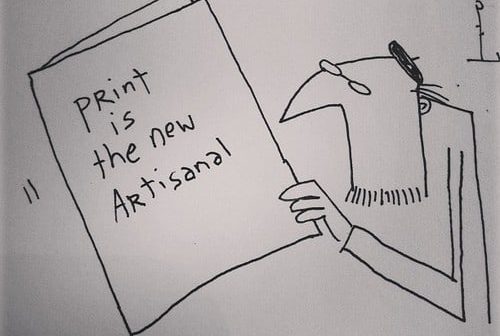
Print is the new Artisanal

Send to Kindle

It hap­pe­ned again: More mass layoffs as the illus­trious old maga­zine, News­week dis­con­ti­nues its print edi­tion.

And the blo­gosphere rings out with with the usual “What will become of print” ques­tions, yada, yada, yada.

I know exactly what’s going to hap­pen to print; the same thing that hap­pe­ned to hor­ses once the auto­mo­bile came along.

Auto­mo­bi­les may have ended the horse n’ buggy era, but hey, accor­ding to my friend, Kathy Sie­rra, hor­ses are still a FORTY* billion dollar industry in the Uni­ted States.

I buy most of my books on Kindle. But I buy hard­back edi­tions when the book when it has real tote­mic power for me. Like “Dec­line and Fall of The Roman Empire”. Or “Tri­bes”. Or “Moby Dick”.

Or I buy them when they’re simply not made for Kindle, like the artist, Chris Wool’s beast of a cof­fee table book. Mag­ni­fi­cent!

Or I buy the print ver­sion of The Eco­no­mist when I’m get­ting on an air­plane. Keeps me busy when the cap­tain makes me turn my Kindle off during take off and landing.

As far as mains­tream jour­na­lism and jour­na­lists, well, my blog­ging buddy Mathew Ingram moved over from wri­ting for the Toronto Globe & Mail to wri­ting for the much lea­ner Giga Om. His move is just one exam­ple of what already hap­pe­ning to thou­sands. Or if it isn’t, they’re in trouble.

Print just going to inc­rea­singly be a little “artis­nal” niche; the ones who disa­gree are old and dying off.

I don’t know why this is even a debate any­more. It’s been hap­pe­ning for years.

So I drew a car­toon about it…

[*Not three billion $, as pre­viously stated]

[UPDATE:] Kathy Sie­rra left a great com­ment below:

Only when a thing is made obso­lete can we dis­co­ver if there was some underl­ying value  —  beyond uti­lity  —  that some peo­ple found com­pe­lling enough to keep alive or evolve into something new. The hor­ses bred today for “rec­rea­tion” are dra­ma­ti­cally dif­fe­rent from the workhor­ses of the past, but they are still… horses.

What ELSE is being made obso­lete now that might emerge from the ashes in a new, power­ful form?

November 7, 2012

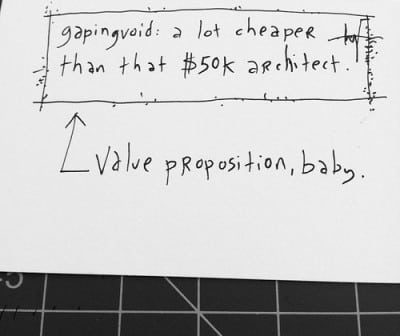
The gapingvoid Value Proposition
Send to Kindle


[More thoughts on “Busi­ness Needs More Art”:]

I dood­led the above cartoon/line just now…

Maybe it’s just as sim­ple as that: gaping­void art is a great way for your office vibe to up its game, without having to pay higher rent or hire that expen­sive archi­tect or decorator.

This is work in pro­gress. All feed­back gra­te­fully recei­ved. Feel free to ping me on Twit­ter or whe­re­ver if you want to chat about it etc. Rock on.

[Update: Heh. No soo­ner than I pos­ted this, did the great Kathy Sie­rra leave a comment:

This is not your value pro­po­si­tion. It’s just a fact, a fea­ture, an attribute. Same with “trans­for­ming office art”. That’s the WHAT, but does not ans­wer WHY. There’s the why YOU do it, and of course the WHY your customer/user wants it. Their bene­fit. Their result. Their awesomeness-as-a-result. Tur­ning up the soul… Yes there is cer­tainly something there that’s a hell of a lot more valua­ble than simply saving them on the cost of a pri­cey deco­ra­tor or archi­tect.
WHY do they want those archi­tects and desig­ners in the first place? What are they hoping to gain? Your work is not just a chea­per repla­ce­ment. It’s get­ting to the heart (soul?) of something dee­per and richer… You know this bet­ter than anyone

And of course, Kathy is right. But one has to try these things. Like I said many times before, we’re on a mis­sion to trans­form office art or die trying. “Busi­ness Needs More Art”. Rock on.

[P.S. Thanks, Kathy! Love…]

August 14, 2011

Your customer won’t take a bullet for you

Send to Kindle

Your cus­to­mer won’t take a bullet for you

[Today’s guest post is from the world’s most admi­red ex-blogger, the great Kathy Sie­rra.]

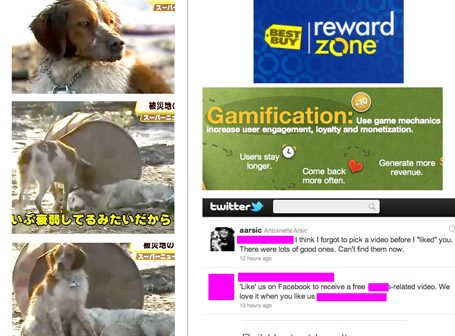
“Cus­to­mer Loyalty” is a fig­ment. Busi­ness “Loyalty Pro­grams” are nothing more than rewards-based mar­ke­ting. And by rewards (aka “incen­ti­ves”), I mean bri­bes. That we so easily refer to a cus­to­mer with a bagel punch card or vir­tual badge as more “loyal” is an exam­ple of just how far we’ve allo­wed cor­po­ra­tions to abuse the lan­guage around human relationships.

I would storm a bur­ning buil­ding to get my kids. THAT is loyalty.

I would even storm a bur­ning barn to get my horse.

But I won’t storm a bur­ning Best Buy no mat­ter how awe­some their Reward Zone program.

I’m not going to become more loyal to a busi­ness no mat­ter how well-executed their Super Awe­some VIP Exc­lu­sive Con­tent Access Sta­tus Rewards Achie­ve­ments Gami­fi­ca­tion pro­gram is. Not even if Banksy made their badges.

That I often DO buy (and some­ti­mes buy more) from the busi­nes­ses that offer for­mal Rewards Pro­grams does not imply I am loyal to those busi­nes­ses. I’ve nothing against my wallet-full of cof­fee cards (which I use, and appre­ciate). But that is not loyalty. I’m happy to “LIKE” your Face­book page for an entry in your iPad givea­way, but that is not loyalty.

I’m willing to com­ment, favo­rite, star, plus, and poten­tially even share your con­tent, but if I do it purely for the points/status/rewards, that is not loyalty. In fact, when you “incent” me to “engage” with your site, deep in my heart I unders­tand now that I have sold out. By giving me bribes/incentives, no mat­ter how much you call them “rewards”, you have com­mu­ni­ca­ted to some part of me that if I had to be incen­ted to buy/act/engage/whatever, it must have lac­ked value on its own.

This de-valuing effect can be true even if the thing really DID have intrin­sic value for me. In other words, even if I’d acti­vely wan­ted to do the thing-you’re-bribing-me-to-do, you’ve tain­ted it. Pos­sibly even wrec­ked it for me, even if I am not cons­ciously aware. (See Self-Determination Theory and the Over-Justification Effect for some of the poten­tial issues with gamification’s use of extrin­sic rewards)

The dar­ling of tra­di­tio­nal “Loyalty Pro­grams” is, of course, Fre­quent Flyer miles. But odds are most of you have taken a flight you didn’t want, on an air­line you hate, thanks to a Fre­quent Flyer plan. When we make tough choi­ces based on our “rewards” pro­gram, that’s not loyalty we’re fee­ling… it’s resentment.

A way to tell you’re hea­ding down a dark path is to ask:
“If we took away the incentive/rewards pro­grams, would our cus­to­mers behave in exactly the same way?”

If we have to pay to get it, it’s not loyalty.
That doesn’t neces­sa­rily make it wrong to use cus­to­mer incen­ti­ves, but don’t mis­take the results for actual loyalty.

So, how do we explain the com­pa­nies, brands, pro­ducts, ser­vi­ces, etc. that we do feel fier­cely loyal to? The ones that did NOT incen­ti­vize, bribe, coerce, coupon/Groupon us into choo­sing them over com­pe­ti­tors? The ones we talk about to friends NOT because we get a refe­rral bonus? Isn’t that true loyalty?

Almost. Sort of. If you tilt and angle it just so. Because I DO have a few pro­ducts I appear loyal to:

I would give up my iPad for Adobe InDe­sign.
I would give up sleep for the latest Neil Gai­man book.
I would give up carbs for my Astund Ice­lan­dic saddle.

And I’d give up all of the above to keep using my Mac.

That sure looks, sounds, smells, quacks like loyalty.

And it is.

But it is NOT loyalty to Adobe, Gai­man, Apple, or my Ice­lan­dic saddlemaker.

I’d walk through hot coals for those because I’m loyal to… myself.

The key to unders­tan­ding (and ulti­ma­tely bene­fit­ting from) true “cus­to­mer loyalty” is to recog­nize and res­pect that cus­to­mers – as peo­ple– are deeply loyal to them­sel­ves and those they love, but not to pro­ducts and brands. They are loyal to their own values and the (rela­ti­vely few) peo­ple and cau­ses they truly believe in. What looks and feels like loyalty to a pro­duct, brand, com­pany, etc. is dri­ven by what that pro­duct, ser­vice, brand says about who we are and what we value.

That doesn’t mean we can’t bene­fit from cus­to­mer loyalty. The moment we stop trying to mani­pu­late, coerce, incen­ti­vize, gamify cus­to­mers into being loyal to us is the moment we free our­sel­ves to con­si­der how to help them where their true loyalty lies. And it starts with the deep recog­ni­tion that:

If I buy from you it’s not because I like you but because I like myself.

As I said in my pre­vious post, the key is to help users become bet­ter at something they care about. My what-looks-like-rabid-loyalty to Apple, Adobe, Gai­man, and Astund is because they have all con­tri­bu­ted to Me Kic­king Ass in a mea­su­ra­ble, mea­ning­ful, sus­tai­na­ble, power­ful way. Yes, even author Neil Gai­man. (His work has not just enter­tai­ned and ins­pi­red me, but pro­vi­ded the foun­da­tion of my wed­ding cere­mony. Long story, ‘nother time.)

If you want to bene­fit from a customer’s loyalty to him­self, you can’t bribe it, you must earn it. Deserve it. Focus not on upgra­ding your pro­duct but upgra­ding your user’s capa­bi­li­ties. If you can’t enhance your pro­duct, enhance the con­text in which your pro­duct is used. Pro­vide bet­ter and more ins­pi­ring docu­men­ta­tion. Make You­Tube tuto­rials. Join forums and offer expert help where it’s most nee­ded. Use every nano­se­cond of your social media time to help peo­ple become bet­ter at something for them­sel­ves. Unders­tand and design for Social Objects. Relent­lessly ask, “How are we hel­ping our users kick ass? What can we ins­pire, amplify, teach, ena­ble, empower?”

There is always a way to help users be bet­ter at something, even if that thing seems dis­con­nec­ted from your pro­duct. Help them be bet­ter, smar­ter, stron­ger, fun­nier, more aware. Bet­ter coders, bet­ter shop­pers, bet­ter parents. Bet­ter desig­ners, bet­ter DJs, bet­ter citi­zens. Bet­ter puzzle-solvers, bet­ter pho­to­graphers, bet­ter wri­ters. Bet­ter joke-tellers, bet­ter con­ver­sa­tio­na­lists, bet­ter gar­de­ners. Bet­ter makers, bet­ter cooks, bet­ter car­too­nists. Bet­ter brains­tor­mers, bet­ter blog­gers, bet­ter run­ners. As Hugh once put it, “if you can’t figure this out, you’re just not being creative.”

Ins­tead of “rewar­ding the cus­to­mer” focus on “how can I make the user’s expe­rience and result more rewar­ding”? And by “rewar­ding”, I mean FOR REAL. Not because of a little dopa­mine hit they get from ear­ning your next vir­tual badge. I mean rewar­ding as in, “OMG look at this ama­zing thing I just made.” Rewar­ding as in, “That was one of the most sti­mu­la­ting con­ver­sa­tions I’ve had.” Rewar­ding as in, “It’s offi­cial then. I’m bad ass. Look at the what I am now able to do that I couldn’t before…”

Of the four pro­ducts I appear loyal to, none have ever given me an extrin­sic reward. No punch cards, frequent-purchasing dis­counts, or Exc­lu­sive Access VIP Sta­tus (Now! With Bet­ter Bad­ges!). No lea­der­boards, no con­tests, no dis­counts. But all have given me something far more valua­ble: endu­ringly rewar­ding experiences.

They have upgra­ded my per­so­nal skills, know­ledge, and capa­bi­li­ties. They have made my life bet­ter. They have made ME bet­ter. THAT is the ulti­mate cus­to­mer reward. When you give your users that, you still won’t have loyalty, but you’ll have something sus­tai­na­ble, robust, and honorable.

Those that unders­tand and sup­port the loyalty we have to our­sel­ves are the ones to whom we write glo­wing unsolicited/unrewarded reviews. They’re the ones we will not STFU about in our on– and off-line con­ver­sa­tions. They’re the ones whose logos we wear on our shirts, shorts, and car bum­pers. The com­pa­nies who we appear loyal to are those that best help us define, refine, and express who WE are.

[Foot­note: if you do want to give an extrin­sic reward to a valued cus­to­mer, the most power­ful, effec­tive, and appre­cia­ted way is ALWAYS an unex­pec­ted, sur­prise thank-you ack­now­led­ge­ment (which may or may not inc­lude a valua­ble or sym­bo­lic gift). Rewards that are expec­ted are per­cei­ved not as rewards but simply part of the product.]

–Kathy Sie­rra

June 18, 2011

Why Presentation Matters

Send to Kindle


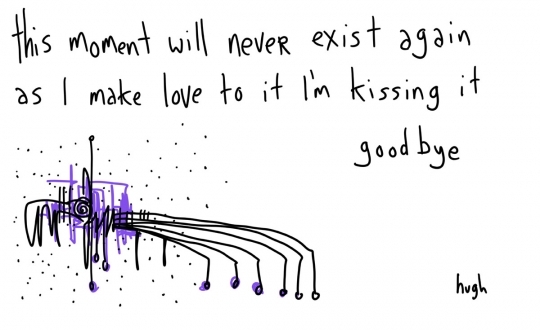
[“This Moment”. You can buy the print here etc.]

Ear­lier today I was thin­king of cer­tain “thought lea­der” friends of mine, peo­ple that I know per­so­nally. Rocks­tars in their field.

Seth Godin, Guy Kawa­saki, Kathy Sie­rra, Gary Vee, Prof. Brian Cox, Joi Ito, Ben Ham­mers­ley, Doc Searls etc.

Loo­king for a com­mon thread, it sud­denly hit me– besi­des being hugely talen­ted in their field and the afo­re­men­tio­ned rocks­tar­dom, what else do they have in common?

Short ans­wer: Pre­sen­ta­tions. They’re all REALLY REALLY good at stan­ding in front of a crowd and wowing them. Every one of them. I’ve seen them. They knock your socks off. No won­der they get invi­ted to speak at TED, SXSW and other pla­ces. No won­der they’re able to com­mand the big bucks for doing so.

And then, when you look at the great world-changing figu­res in his­tory, you see the same. Mar­tin Luther King, Mal­colm X, Cicero, Wins­ton Churchill, or Shakespeare’s fic­tio­nal Henry V (“We band of brothers, we happy few” etc.)- it’s right there, front and cen­ter. The presentation.

And then if you read your ancient his­tory, what were the most pri­vi­le­ged peo­ple in Rome and Athens taught how to do as part of their clas­si­cal edu­ca­tion? That’s right. The art of Ora­tion. Again, pre­sen­ta­tion. This explains why get­ting on the deba­ting team at Oxford or Har­vard is still con­si­de­red a big deal for anyone in the know.

For any­body who ever aspi­res to lead.

So the ques­tion I’m asking is, if pre­sen­ta­tion is SUCH an obvious part of the magic lea­dership for­mula throughout the ages, and lea­dership is so inte­gral to suc­cess, why isn’t pre­sen­ta­tion bet­ter taught in schools nowa­days? Why aren’t third gra­ders taught how to use Power­point, as stan­dard? Why isn’t pre­sen­ta­tion empha­si­zed as highly as say, gram­mar or his­tory or math or athletics?

The rea­lity is, the ave­rage per­son doesn’t spend one-hundredth the time wor­king on their pre­sen­ta­tion skills, as they do on their hob­bies or watching TV or going to the gym or whatever.

I think that might be a mistake…

[AFTERTHOUGHT: Yes, I know. Pre­sen­ta­tion isn’t everything. Steve Jobs’s legen­dary key­no­tes wouldn’t be nearly so impres­sive if Apple pro­ducts suc­ked etc. But that’s not an excuse, either.]

June 7, 2011

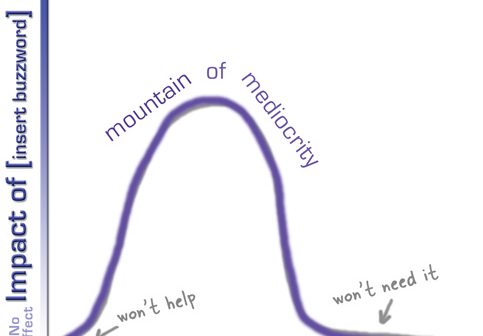
Pixie Dust & The Mountain of Mediocrity
Send to Kindle


[NB: Today’s guest post is by the world’s most famous ex-blogger, the great Kathy Sie­rra.]

We’re always searching for that sec­ret for­mula, that magic pixie dust to sprin­kle over our pro­ducts, ser­vi­ces, books, cau­ses, brands, blogs to bring them to life and make them Super Suc­cess­ful. Most marketing-related buzz­words gain trac­tion by pro­mi­sing pixie dust results if applied to wha­te­ver it is we make, do, sell. “Add more Social!”. “Just need a Viral Video!” “It’s about the Story­te­lling!”. “Be Authentic!”

The rise of social net­wor­king and media ope­ned up a world of new pos­si­bi­li­ties, yet most Mar­ke­ting 2.0 is basically:

“If you can­not out-spend the com­pe­ti­tion, you can out-friend them!” He who has the most Face­book fans, Twit­ter follo­wers, and blog com­men­ters Wins! It’s all about Social Capi­tal now!

Sure, you can try that. You can work your ass off to be, as one mar­ke­ter put it, “the per­son your cus­to­mers want to party with.”

I never unders­tood how any of this made sense, given that very little of what I see “brands” (or their human spo­kest­wee­ters) do on social media is chan­ging the fun­da­men­tal nature of how users inte­ract with their pro­ducts. “But that is not the point! It is about being human!”. Nope, I still don’t get it. Why would anyone want to com­pete on *that*? It felt fra­gile to be in essen­tially a mar­ke­ting arms-race of who-is-the-most-engaging-social-media rock star. What does that really have to do with what users do with the product?

And I saw exam­ples over and over of social media rock stars with tons of follo­wers, yet they were not able to con­vert those follo­wers into Actual Paying Cus­to­mers unless the pro­duct was what peo­ple really wan­ted. Being super-friendly, “liked”, etc. has limits when it comes to *paying*. I will follow your blog, but no mat­ter how awe­some I think YOU are, I won’t be paying for your book unless I think it’ll make ME a little more awesome.

So, why are peo­ple still so con­vin­ced that social media and all rela­ted buzz­words are The Ans­wer? It has always appea­red that if the pro­duct is truly crap, “your social media stra­tegy won’t save you.” Even the social media gurus agree on that one. But it seems the oppo­site end is true as well… If the pro­duct makes the users awe­some (at wha­te­ver the pro­duct is hel­ping them do), no spe­cial sec­ret magic pixie dust sauce is nee­ded either.

Oh, social media does play a mas­sive role in the suc­cess of a pro­duct that peo­ple love, but it is not the product-to-users “enga­ge­ment” that mat­ters, it is users-to-users (and users-to-potential-users). If peo­ple love what a pro­duct, book, ser­vice let’s them *do*, they will not shut up about it. The ans­wer has always been there: to make the pro­duct, book, ser­vice that ena­bles, empo­wers, MAKES USERS AWESOME. The rest nearly always takes care of itself.

Which brings me back to, why are so many so con­vin­ced that [insert favo­rite buzz­word] is the ans­wer vs. just making a pro­duct that helps peo­ple kick ass in a way they find meaningful?

And then someone I trust said this: these [insert favo­rite new buzz­word] approaches are not about saving a crap pro­duct or mar­ke­ting an awe­some one… where these tools really DO make a dif­fe­rence for a brand is when the brand has little or no other com­pe­lling bene­fit over the com­pe­ti­tion. If the pro­duct is mediocre, or even really good but with too many equally good com­pe­ti­tors, these things can make a dif­fe­rence. If you have little else to com­pete on, then out-friending/out-viraling/out-gamifying can work.

At least until your com­pe­ti­tion out-hires a good social media stra­te­gist or com­pe­lling extro­ver­ted social media star and out-friends you.

You do not want to be That Brand. You do not want to be That Pro­duct. That Book. That Con­sul­tant. You do not want to be in that arms race because it is an exhaus­ting and fra­gile place to be. You want to use social media not because you *must* but because you can add even more value for your users by doing so. You do not want to be the guy that must ask cons­tantly, “how can I get more com­ments on my blog? how can I get more follo­wers and fans?”

The real pixie dust is when you ask your­self, “how can I help my users get more com­ments on THEIR blog?”. You want to be the guy who asks, “How can I help my users get more follo­wers and fans?” And that is why I have always been such a fan of Hugh and Gary V and Tim Ferris, for exam­ple. Not for the com­ments their follo­wers make about Hugh, Gary, and Tim… But for the com­ments their follo­wers make about them­sel­ves. In a nutshell: Hugh, Gary, and Tim might well be the peo­ple you want at a din­ner party, but what mat­ters is that they help peo­ple become more inte­res­ting at their OWN next din­ner party.

What promp­ted me to write this is the latest magic pixie dust buzz­word, one that I am pas­sio­na­tely against: gami­fi­ca­tion. Appl­ying prin­ci­ples of game design to non-game acti­vi­ties can be done care­fully, art­fully, and with won­der­ful results. We use prin­ci­ples of game design in our pro­gram­ming books, for exam­ple, and you may have heard me at SXSW talk about using aspects of game mecha­nics to help create pas­sio­nate users. But the current crop of “gami­fi­ca­tion” experts are doing nothing more than “pointsification/badgification”, taking the most super­fi­cial, sur­face mecha­nics of games and appl­ying them out of con­text to areas where they are, as I have refe­rred to it, “the high fruc­tose corn syrup of enga­ge­ment.” Once the sugar-rush novelty has worn off, there will be a subs­tan­tial crash from the high. And it may be one from a which a brand can­not recover.

Don’t be that brand.

Don’t be that product.

Don’t be that book.

Be the one peo­ple talk about NOT because of your latest gami­fi­ca­tion and WOM cam­paign, but because it is obvious to your users and those they influence that your brand, pro­duct, book has made them bet­ter at something. Something they care about. Don’t be the slot machine of your industry. Give peo­ple an expe­rience that lea­ves them fee­ling a little bet­ter about their own capa­bi­li­ties, not bet­ter about the faux-status awards they know, in their heart, are not exam­ples of anything more awe­some than a marketer’s attempt to use them.

Just make peo­ple bet­ter at something they want to be bet­ter at. When your goals and your user’s goals are truly alig­ned, you don’t need pixie dust. Don’t out-spend, don’t out-friend, and please don’t out-badge. There is a world of dif­fe­rence bet­ween hel­ping someone *appear* more awe­some and hel­ping them actually BE more awesome.

–Kathy Sie­rra

February 14, 2011

“the product doesn’t get to be kick-ass until the user kicks ass first”

Send to Kindle

[The “Into­xi­ca­ted” print.]

I remem­ber the day, back in the early 1990s, when I first came across the great busi­ness wri­ter, Tom Peters. Most TV shows are for­got­ten within hours of watching, but this one still stays with me, two deca­des later.

Tom was doing a PBS pro­gram on the Mit­tels­tand, those ama­zingly plucky, medium-sized Ger­man com­pa­nies that somehow manage to com­pete suc­cess­fully on a glo­bal level, in spite of their rela­ti­vely small size.

Tom was inter­vie­wing Horst Brandstät­ter, the owner and CEO of Play­mo­bil, the famous Ger­man toy company.

And this is the part I REALLY remem­ber– to paraphrase:

TOM: Hmmm… These Play­mo­bil toys of yours… they do ama­zingly well, all over the world. So what’s their sec­ret? What do they do that’s so interesting?

HORST: It’s not what the toy does that’s inte­res­ting. It’s what the child does with the toy that’s interesting.

BOOM! A moment of cla­rity. One that sticks with me, like I said, twenty years later.

When I was doing that car­toon work for Intel last month- “A pro­ces­sor is an expres­sion of human poten­tial”, I was still thin­king about what Horst had said, all those years ago. Very much so.

What Horst said is true, whether you’re run­ning a small mom n’ pop cheese empo­rium in Green­wich Village, or a mul­ti­bi­llion titan like Intel: To borrow hea­vily from Kathy Sie­rra, the pro­duct doesn’t get to be kick-ass until the user kicks ass first.

Don’t talk about your­self. Talk about something else. Aim for something higher. Talk about the user. Remem­ber Play­mo­bil. Never for­get the child pla­ying with it.

I know I like to yack on end­lessly about “It’s all about human poten­tial.” I know its cliche, but then again, I’m not wrong, either. This is why we exist. To find out.

Thanks, Tom…

January 29, 2010

“selling by giving”, or, “gift economics”
Send to Kindle

Seth Godin does it.

Brian Clark does it.

Gary Vee does it.

Esther Dyson does it.

James Gover­nor does it.

Kathy Sie­rra does it.

Den­nis How­lettt does it.

John T. Unger does it.

Robert Sco­ble does it.

Fred Wil­son does it.

These eight smart, kind, great peo­ple, some more well-known than others,  are mas­ters at what I call “Selling by Giving”.

They put stuff out there, as gifts. Great con­tent, great ideas, great insights, great per­so­nal con­nec­tion. By giving so much of them­sel­ves, for free, every day, they build up huge sur­plu­ses of good­will, so when you’re finally in the mar­ket for something they’re selling (and they’re ALL selling something, trust me), they’re first on your list.

I do it, too, just not as well as these guys. I’ve published thou­sands of car­toons on this blog over the years, and that’s got­ten me a lot of busi­ness. And not just fine art prints, either. It’s got­ten me con­sul­ting gigs, full-time salary jobs, book deals, paid spea­king gigs, mar­ke­ting  jobs, I could go on…

Selling by giving. Any­body who’s been watching any of these guys for a long time will know exactly what I’m tal­king about.

But here’s what’s inte­res­ting to me: I can remem­ber not that long ago, say 5 years, when this type of mar­ke­ting see­med pretty freaky to most peo­ple. Now it’s con­si­de­red nor­mal, at least to smart mar­ke­ters. FIVE years. That’s all.

I could see that in another five years, ANYONE who wants to mar­ket ANYTHING suc­cess­fully– be they small mom n’ pop shops to large com­pa­nies, will have to be fluent in Gift Eco­no­mics, to a level that see­med COMPLETELY alien only a few years ago.

This inc­lu­des you. Are you ready for it?

[About Hugh. Car­toon Archive. Com­mis­sion HughSign up for Hugh’s “Daily Car­toon” News­let­ter.]

September 1, 2009

notes on office art

Send to Kindle

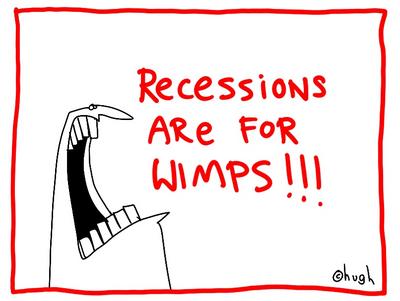
recessions0909.jpg
[This could make a nice print, one day…]
Recently on Twit­ter, I wrote:

Art that brigh­tens up the office vs Art that brigh­tens up the home. Two dif­fe­rent vibes alto­gether. I pre­fer making the former.

To which my friend, Kathy Sie­rra replied:

Good! Homes are less likely to *need* brigh­te­ning the way offi­ces do. I can brigh­ten my home just by making toast.

Whether we’re tal­king wee cube gre­nade laser copies or something much lar­ger, like The Pur­ple Cow Print, when I launched the gaping­void gallery ear­lier this year, that was my inten­tion– to make art for the works­pace.
This desire goes back to my early years wor­king as an adver­ti­sing crea­tive. There was always cool stuff– fine art, pos­ters, graphic design, car­toons– han­ging up everywhere. Stuff to amuse and ins­pire us, stuff to tweak our brains in the right direc­tion. And though its effect on the agency’s bot­tom line would’ve been hard to mea­sure, somehow it wor­ked– or at least, hel­ped.
Why can’t all offi­ces be more like this? Is there some law that requi­res cer­tain types of busi­nes­ses to main­tain a dull, gray, machine-like, life-sucking visual envi­ron­ment? You could ague that maybe for some com­pa­nies, sure, but that’s not a world I’ve ever aspi­red to belong to.
“Office Art” tends to come in two main cate­go­ries: 1. REALLY expen­sive. 2. REALLY cheesy.
I wan­ted to make office art that was neither…
[Afterthought:] Of course, a lot of my collec­tors work from home, the­re­fore their offi­ces are in the house, not in an office buil­ding. But the prints were made with the works­pace in mind, not the “living” space, regardless.

[Backs­tory: About Hugh. E-mail Hugh. Twit­ter. News­let­ter. Book. Inter­view One. Inter­view Two. EVIL PLANS. Limi­ted Edi­tion Prints. Pri­vate Com­mis­sions. Cube Gre­na­des.]

April 22, 2009

does art have “users”?

Send to Kindle

studioexpJPEG.jpg
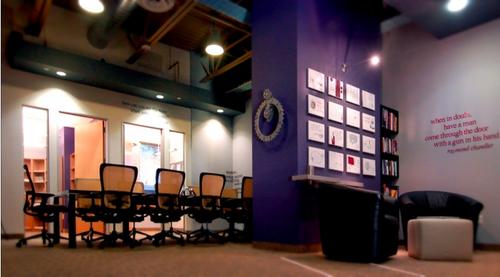
[Photo of The Expe­rience Stu­dio. Those six­teen small panels on the right are actually my car­toons.]
In my latest “Crazy Deran­ged Fools” news­let­ter that I sent out ear­lier today, I wrote about “The Kine­tic Quality”:

We’ve always seen the Kine­tic Qua­lity wor­king in mar­ke­ting, wor­king with brands. “By buying Brand X, I feel hip­per, coo­ler, sexier, more secure, more in con­trol” etc etc. But what I’m fin­ding out is, this also works with art. To me, the inte­res­ting thing about art is not the usual “Heroic, absinthe-soaked, vision quest lone indi­vi­dual archety­pal artist crap”, but how the art is USED by the per­son who has it han­ging on the wall. What’s it actually there for? Deco­ra­tion? Sho­wing off? A con­ver­sa­tion star­ter? An ice brea­ker? A way of telling a story? Something to brigh­ten up the room? A sym­bol of social sta­tus? An expres­sion of indi­vi­dual world­view? An expres­sion of emo­tion? A totem to remind one­self of something ins­pi­ra­tio­nal and/or impor­tant? Perhaps a bit of all these?
So I’m seeing two worlds collide here: The inter­nal, soli­tary part of making the art, and the exter­nal social part of how the piece of art is actually used.
Art? Used? Is art actually allo­wed to be “used”? Would the Art Police allow that? Ins­tead of calling them “Patrons”, can we call art buyers “Users” ins­tead? Would you be offen­ded if I called you that? There’s no wrong ans­wer…
Poten­tial Energy tur­ning into Kine­tic Energy. I guess one of the rea­sons I’ve always had such libe­ral licen­sing terms [“Want to use my stuff on your Power­Point Sli­des for free? Sure, go right ahead!!!.…”] is that I like seeing my work being USED. If peo­ple like my work, that’s great. But if they can actually find it tan­gibly use­ful, even better.

Soon after, Tony Kir­ton of The Expe­rience Stuido sent me the pho­to­graph above, with the follo­wing note:

We posi­tio­ned the your car­toons at the entrance of the stu­dio, to kick-start a rele­vant con­ver­sa­tion. Never failed!

It’s little men­tal trick that Kathy Sie­rra taught me– Don’t think of them as “Cus­to­mers” or “Patrons”, think of them as “Users”. Wha­te­ver thing you’re selling, it’s not what it does that’s inte­res­ting; it’s how peo­ple use it that’s inte­res­ting. “Peo­ple Mat­ter. Objects Don’t.” Exactly.

January 7, 2008

note to marketers: people like treats, dammit!

Send to Kindle

zzzzazzdggg87777.jpg
It’s now a well-told story. Krispy Kreme dough­nuts came out of nowhere, attrac­ted a cult follo­wing, spread like wild­fire, got over-exposed, then collap­sed under its own weight. When I could only get them by making a half-hour pil­gri­mage across town, I went there all the time. Once they became rea­dily avai­la­ble in my local cor­ner deli, I stop­ped eating them.
When I was a little kid in cen­tral Mas­sachu­setts, there was this local, old-style dairy named Pinec­roft, that ser­ved the best ice cream ever, but only during the sum­mer months. Then the dairy got sold to a big­ger com­pany, and the next thing you know they were ser­ving ice cream all year round. It never tas­ted quite the same after that.
Rosé tas­tes a lot bet­ter in the South of France than it does in Lon­don, no mat­ter how much you’re paying.
Lobs­ter is con­si­de­red a real deli­cacy, expen­sive stuff. Back in the 19th Cen­tury in New England wha­ling towns, local boar­ding hou­ses often had the follo­wing sign outside them, in order to attract the sai­lors’ busi­ness: “Lobs­ter only ser­ved 4 days a week!”
I only lis­ten to my CD of King’s College Choir during the Christ­mas holi­days. It pre­ser­ves the magic.
Scrim­ping and saving over many months for a $4000 English tai­lo­red suit is a much more uplif­ting expe­rience than buying an entire war­drobe of them with a sin­gle swish of a diamond-encrusted cre­dit card.
I rarely eat Bar­be­cue, but it’s usually the first thing I head for when I tra­vel to Texas. When I tra­vel to dif­fe­rent pla­ces, I always like to sam­ple the local fare. I once tried eating Mexi­can food in Geneva. Never again.
Though they pro­du­ced all three Lord of The Rings movies at the same time, they made you wait a year bet­ween ins­tall­ments. Peo­ple floc­ked to see them all.
One of the things I am most loo­king for­ward to in 2008 is the final sea­son of Batt­les­tar Galac­tica. It will be well after sum­mer till I see here in the UK, on DVD [I don’t own a TV]. I’ll pro­bably buy it the same day it beco­mes avai­la­ble, and I’ll pro­bably watch the entire series in a sin­gle, marathon ses­sion. I can’t wait!
Back when Kathy Sie­rra was blog­ging, she wouldn’t post very often. Every two weeks, perhaps. But BAM! when she wrote, it was ste­llar stuff. A real treat to read.
I guess you can already see where this is going: Peo­ple like treats. Peo­ple are indif­fe­rent to com­mo­di­ties, even when the qua­lity of the lat­ter is high. Your down­fall begins the minute peo­ple no lon­ger have to wait in line in order to get your pro­duct, the minute they no lon­ger per­ceive it as a treat.
[Update:] David St. Law­rence makes a great com­ment below: “When they are no lon­ger social objects, they are no lon­ger inte­res­ting.” Exactly.