Posts Tagged ‘Early Blogging’

December 14, 2012

“The Web We Lost” and the Commons

Send to Kindle

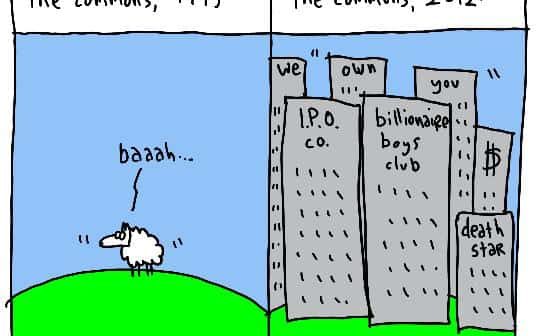
The big Web story last week was about how Ins­ta­gram just remo­ved its API from Twit­ter. My old friend, Dave Winer (he is also one of the great web pio­neers of the last decade or so) wrote a great post about it. I drew the car­toon above in res­ponse to Dave (“Com­mons” refers to the cul­tu­ral and natu­ral resour­ces acces­si­ble to all mem­bers of a society, in this case, the Inter­net. It’s also where peo­ple gra­zed their sheep in the old days).

Then yes­ter­day, another blog­ging buddy from the old days, Anil Dash wrote this great blog post, “The Web We Lost”, about how much the web has chan­ged in the last 5 – 10 years, along simi­lar lines.

In the early days of the social web, there was a broad expec­ta­tion that regu­lar peo­ple might own their own iden­ti­ties by having their own web­si­tes, ins­tead of being depen­dent on a few big sites to host their online iden­tity. In this vision, you would own your own domain name and have com­plete con­trol over its con­tents, rather than having a handle tac­ked on to the end of a huge company’s site. This was a sen­si­ble reac­tion to the rea­li­za­tion that big sites rise and fall in popu­la­rity, but that regu­lar peo­ple need an iden­tity that per­sists lon­ger than those sites do.

When I think about the era Anil speaks of, I feel like an old hippy tal­king about how great the ‘six­ties were, but he does have a point. The early-blogging see­med a much more fun, edgy, inte­res­ting, giving and inde­pen­dent place back then. And then the big boys came along and took over, suc­king in all OUR con­tent like a big ol’ indus­trial tur­bine. Face­book, Twit­ter, Ins­ta­gram etc.

I’m not saying everything was bet­ter back then, a lot of things we far har­der and slo­wer. But I do miss that indie, “We’re on the verge of something impor­tant and won­der­ful” fee­ling that per­mea­ted the air. It’s not nearly as pal­pa­ble as it once was. I hope we can one day get that fee­ling back.

April 26, 2012

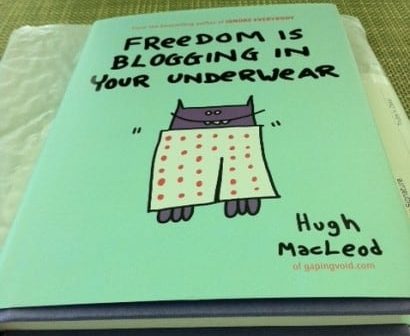
My latest book launches today: “Freedom Is Blogging In Your Underwear”

Send to Kindle

Ama­zon. Ama­zon UK.  Bar­nes & Noble. 800 CEO Read.

In this era of every­body tal­king about the latest shiny app or the latest shiny billio­naire, I deci­ded to write a book about blog­ging, and why it mat­ters: “Free­dom Is Blog­ging In Your Underwear”.

[From the intro:]

In May of last year, my blog, gapingvoid.com, tur­ned ten years old.

Having a blog, a voice, having my own media, utterly chan­ged my life. Sud­denly my career as a car­too­nist wasn’t depen­dent on other peo­ple: the “gatekeepers” — publishers, edi­tors, Holly­wood exe­cu­ti­ves, etc., etc.

Sud­denly I had direct con­tact with my audience. They had direct con­tact with me. I could just do my thing, without having to wait for some­body else to give me the “green light,” some­body else to write a check. I didn’t have to wait around for some­body else to deem me “worthy” …

This gave me the free­dom I spent most of my adult life searching for, the same free­dom I believe we’re ALL searching for, in one way or another.

Career­wise, blog­ging gave me everything. Even in the early days, the bene­fits of blog­ging were so gla­ringly obvious to me that I couldn’t unders­tand why more peo­ple weren’t doing it. Ten years later, I still can’t. So I deci­ded to write a book about it; maybe I could help other peo­ple find this free­dom, too.

Like I said, I’m a car­too­nist. I don’t con­si­der myself a “blog­ging pro­fes­sio­nal.” I don’t con­si­der myself a “social media autho­rity.” That being said, I believe my expe­rience as one of the very early visual artists to totally esta­blish their careers via this won­der­ful new medium might help folks unders­tand not only how power­ful blog­ging is, but WHY it’s power­ful and WHY it mat­ters. And once you can unders­tand this, I believe, your life will be quickly trans­for­med, same as mine was.

[If you’re going to Twit­ter about it, please use hash­tag #Free­do­mIs­Blog­ging. Thanks!]

June 20, 2011

How To Really Use The Internet

Send to Kindle

I remem­ber my first really big Inter­net “A-Ha!” moment like it was yesterday.

It was about a decade ago, just after the Dot­Com crash, around the same time I first heard about blogging.

I had just heard from somewhere that Salon.com, one of the first big-time maga­zi­nes to launch exc­lu­si­vely online (that was still a big deal in those days) had blown through $60 million set­ting itself up, before the crash. Was it ever expec­ted to make back its inves­tors’ money? Of course not.

Sixty. Million.

Then I heard from somewhere that Arts & Let­ters Daily, a blog that appea­led to the same kind of rea­der as Salon, had been set up for a cou­ple of grand; I think $10K was the number.

Peo­ple would tell me at the time that yeah, of course Salon was more expen­sive. It had an office in San Fran­cisco and a big staff of pro­per jour­na­lists. It had all the overhead of con­ven­tio­nal maga­zi­nes, minus the paper and prin­ting press. A&L Daily was just an aggre­ga­tor blog that poin­ted to inte­res­ting bits and pie­ces across the web.

Yes, that was true, but as a ran­dom, semi-educated dude loo­king for a place that offe­red me something inte­res­ting to read on a regu­lar basis, I pre­fe­rred A&L Daily to Salon.

As far as I could see, A&L Daily was not only a bet­ter pro­duct, it was offe­ring its bet­ter pro­duct for ONE SIX-THOUSANDTH the cost of Salon. For 0.0166% the overheads.

The idea that media could now be viably made for not just pen­nies on the dollar, but MICRO-PENNIES, hit me like train. BAM!

So I star­ted blog­ging. The rest is history.

Ten years later, my only dis­con­nect would be, with this ama­zing oppor­tu­nity that hyper-cheap media offers us, why are so many of us squan­de­ring it?

While others Twit­ter or Face­book or Fours­quare for hours on end about what hips­ter food truck they’ve just been to or what dumb TV show they just watched, my young car­too­nist friend, Aus­tin Kleon is using social media to trans­form his life and career (and the lives and careers of others).

This is a totally dif­fe­rent lea­gue of Inter­net use I’m tal­king about. And Aus­tin is just one exam­ple. So am I. So is John T Unger or Willo O’Brien of Willo­toons fame. I could give hun­dreds of others.

The Inter­net has given you a HUGE, life-changing oppor­tu­nity that simply didn’t exist a gene­ra­tion ago. Don’t waste it. A life just sur­fing the net for hipster-friendly dum­bass stuff is no less a waste of a life than sit­ting in front of the television.

The way to use the Inter­net is to be more like Aus­tin or Willo or John. Use it seriously.

June 14, 2011

To my jaded veteran blogger friends: Get over yourselves.

Send to Kindle

Peo­ple think that blog­ging has chan­ged a lot in the last few years, far from the heady early blog­ging days of 2000 – 2005 etc etc.

Hmmm. Maybe. Cer­tainly having things like Twit­ter and Face­book make it easier for peo­ple to nat­ter to each other without having to write con­ti­nual blog posts first… the lat­ter is cer­tainly time con­su­ming, and peo­ple are already way too busy.

Actually, the busi­ness model for gaping­void hasn’t chan­ged very much over time. I can only handle so many pro­jects at one time– a dozen at the most. So as a way of gene­ra­ting busi­ness, I only need enough rea­ders to attract one new pos­si­ble colla­bo­ra­tor every so often.

Which works out to be how much? Maybe one out of ten thou­sand rea­ders. Or something.

Wha­te­ver the final num­bers might be, com­pa­red to the ad-driven blogs like Gaw­ker or Techc­runch, they’re rela­ti­vely small ones. And Thank God for that, “Audience” is a bitch.

And then there is the fun of dra­wing and pos­ting car­toons on the blog. In busi­ness terms, that really can’t be mea­su­red. All that can do is create good karma. But I enjoy it immen­sely so what the hell… same is true for the daily news­let­ter car­toons.

I keep hea­ring the same com­plaint a lot these days. That blog­ging isn’t as much fun or as inte­res­ting as it used to be. It used to be sub­ver­sive. It used to be cut­ting edge. Now it’s mains­tream and boring. That kinda thing.

To my jaded vete­ran blog­ger friends: Get over your­sel­ves. Blog­ging hasn’t chan­ged, you have. What’s hap­pe­ning on the Inter­net isn’t impor­tant; What’s impor­tant is that the world knows how you intend to change it. Right here. Right now.

Same as it ever was…

August 30, 2010

i believe that both our economic and spiritual future, good or bad, is directly related to our ability to unlock the latent creativity within us.

Send to Kindle


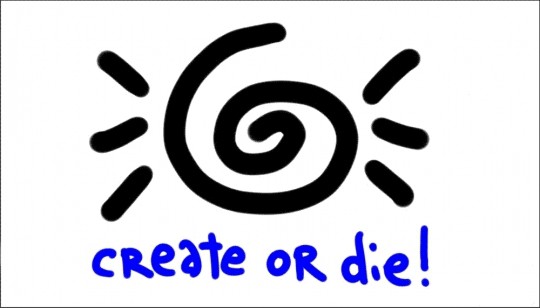
[Buy the “Create Or Die” print here etc.]

I believe that both our eco­no­mic and spi­ri­tual future, good or bad, is directly rela­ted to our abi­lity to unlock the latent crea­ti­vity within us.

There. I’ve said it.

It’s been six years since I first star­ted blog­ging what would even­tually end up being my first book, Ignore Every­body.

The book didn’t really start off with a plan. Like I said at the very beginning,

“So you want to be more crea­tive, in art, in busi­ness, wha­te­ver. Here are some tips that have wor­ked for me over the years.”

That was it. One person’s ram­blings. No big, autho­ri­ta­tive volume with lots of prac­ti­cal how-to’s, case stu­dies and aca­de­mic citations.

Some peo­ple didn’t care for that. “I paid $23.00 for a hard­back edi­tion and I expect RESULTS, dammit!”

Results!

Ah. But I never said anything about results. There was no plan, you see. That’s because there is no plan. There never is.

Wri­ting about crea­ti­vity is a messy busi­ness because crea­ti­vity is a messy business.

Even using the word “crea­ti­vity” in con­ver­sa­tion is going to get you in trou­ble from some quar­ters. Stick your head above the para­pet for just a few seconds and watch the arrows start flying at you.

Yet somewhere in the back of our minds, we all know it’s too impor­tant a sub­ject to ignore, too impor­tant a rea­lity not to confront.

Why? Because when I first star­ted wri­ting Ignore Every­body, I was coming at it from a very per­so­nal angle. Con­fron­ting one’s exis­ten­tial need to be “crea­tive”, to express one­self etc. Which is why the book did so well with tee­na­gers, college stu­dents and young adults just star­ting out in the wor­king world. That’s the time of life to be thin­king about all that.

But now, six years later I’m a bit older and bit more expe­rien­ced. Maybe a lot more.

And time and expe­rience has led me to conc­lude that even if we hate the word “crea­ti­vity”, even if it’s a nasty, anno­ying, sopho­mo­ric, hipster-dipster, New Age gag­fest that really should have no place among the serious, results-orientated world of equally serious, result-orientated grownups…

It’s where all mea­ning­ful growth is going to come from, both inter­nal and exter­nal, whether we like it or not.

I don’t believe crea­ti­vity can be taught, not really, but I do believe:

  • That with a bit of prod­ding in the right pla­ces, indi­vi­duals can train them­sel­ves to be more creative.
  • That with a bit of prod­ding in the right pla­ces, indi­vi­duals wor­king as a team can train them­sel­ves to be more creative.
  • That with a bit of prod­ding in the right pla­ces, com­pa­nies and orga­ni­za­tions can train them­sel­ves to be more creative.
  • That with a bit of prod­ding in the right pla­ces, socie­ties can train them­sel­ves to be more creative.

And that if they can do this, the value they create will be off the scale.

I’ll say it again: I believe that both our eco­no­mic and spi­ri­tual future, good or bad, is directly rela­ted to our abi­lity to unlock the latent crea­ti­vity within us.

Let the jour­ney begin…