April 7, 2012

How Do You Best Prepare For The Creative Age?

Send to Kindle

PART ONE: THE CONVERGENCE.

So today there was this big con­ver­gence of things I’d been thin­king about lately, including:

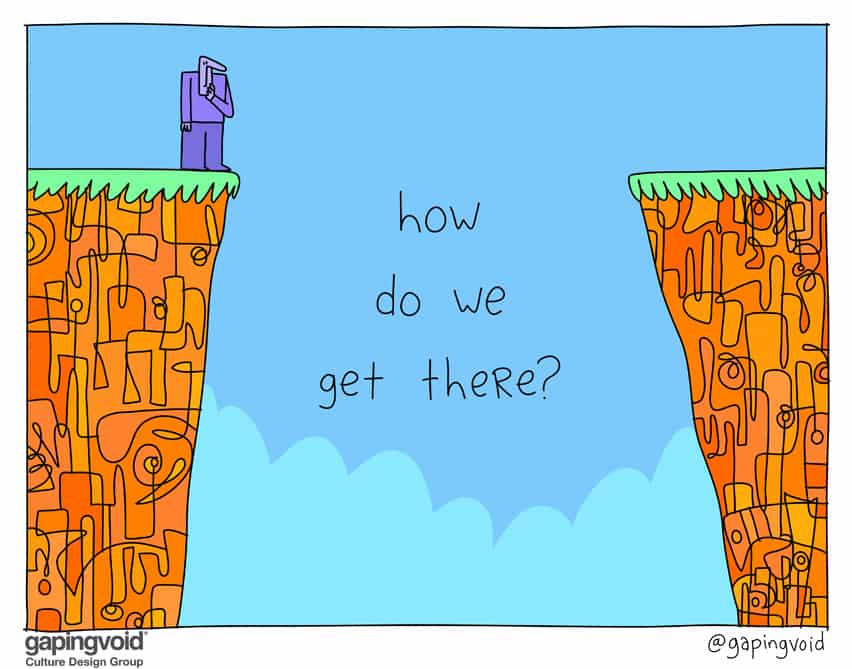
1. The car­toon (pic­tu­red above) that we sent out in Friday’s news­let­ter.

2. The “Jiro Dreams Of Sushi” article I pos­ted Thurs­day and the whole “Mas­tery” kick I’ve been rif­fing on recently.

3. Sir Ken Robinson’s ama­zing 2006 Ted Talk on how schools kill creativity.

4. Seth Godin’s fabu­lous, free 30,000-word mani­festo on edu­ca­tion, “Stop Stea­ling Dreams”.

5. The work the team and I have been doing for Bab­son College and to some extent, Racks­pace.

6. This week’s good news for Dave McC­lure and 500 Star­tups rai­sing $50 million for their star­tup incubator.

7. Being in the same room while Babson’s Pre­si­dent, Len Sch­le­sin­ger inter­vie­wed CNN senior poli­ti­cal analyst, Dave Ger­gen in Bos­ton a few months ago. Gergen’s advice to stu­dents? “Learn how to invent.”

8. A tweet I made ear­lier: “I’m not sure if Ame­rica is ready to be a second-rate nation quite yet”.

9. The appa­lling 50% youth unem­ploy­ment in pla­ces like Spain or Greece. Will we Ame­ri­cans be seeing the same one day? Horrifying!

10. One of my favo­rite books in the world, “Wel­come to the Crea­tive Age”  by my old buddy, Mark Earls.

A lot of peo­ple world­wide are rel­ying on Ame­rica not beco­ming, like I said, a second-rate nation. Even some of the peo­ple who don’t par­ti­cu­larly like America.

And how is that going to hap­pen, exactly? How are we going to remain at the top of our game, or at least, make a damn good show of it?

The same way we’ve always done it: by crea­ting new, inte­res­ting pro­ducts and ideas that peo­ple need, want, value and are ins­pi­red by.

PART TWO: THE PREVIOUS TWO AGES OF EDUCATION.

To mas­si­vely over-simplify, there were two main pha­ses in the his­tory of edu­ca­tion, pre-industrial and indus­trial. The first meant only the clergy and the sons of the elite were pro­perly edu­ca­ted. Then along comes the second, indus­trial phase, which meant uni­ver­sal edu­ca­tion on a mass-scale, that emer­ges along with the “Age of Rea­son”, the indus­trial revo­lu­tion and the whole modern era.

As Seth Godin famously likes to talk about, in this second, indus­trial phase, schools became little more than fac­to­ries, chur­ning out young peo­ple edu­ca­ted enough to work in big­ger fac­to­ries one day. Whether we’re tal­king blue collar or white collar, it didn’t mat­ter, it’ still a fac­tory job, basi­cally. You’re still a cog in the fac­tory machine, basi­cally. This factory-model was per­fect for when the fac­tory was still the cor­ners­tone of the indus­trial eco­nomy. A factory-centered model for a factory-centered world. This was true whether in ele­men­tary school in Iowa, or Har­vard Busi­ness School in Cam­bridge, your rea­lity was the fac­tory because your career was the fac­tory. Own the fac­tory, work in the fac­tory, live near the fac­tory, become the fac­tory. Fac­tory, fac­tory, factory…

And of course, this factory-centric model which wor­ked fine for a hundred-plus years is now bro­ken. We can no lon­ger com­pete long-term that way. Just owning a fac­tory doesn’t give us the same edge it used to, the same eco­no­mic secu­rity, as anyone who’s ever tried com­pe­ting lately in the glo­bal eco­nomy has been fin­ding out.

A new model is needed.

PART THREE: WE ARE READY FOR THE THIRD AGE OF EDUCATION: THE CREATIVE AGE.

Per­so­nally, I had a pretty good for­mal edu­ca­tion, where I lear­ned the basics– rea­ding, wri­ting, math, a bit of science, his­tory, lan­gua­ges and a wee smat­te­ring of the arts. I lear­ned to study and pass tests. Like most stu­dents, I lear­ned how to learn, basi­cally. I lea­ned how to work in a foc­tory, basically.

I don’t think that’s enough any­more, as the THOUSANDS UPON THOUSANDS of under-employed and unem­plo­yed uni­ver­sity gra­dua­tes with good gra­des in Europe and Ame­rica will tes­tify. They pas­sed all their tests fine, they all tic­ked off the right boxes… and yet, look at them now, poor things.

Kids in the future are simply not going to leave school with this big, bum­per crop of plum jobs wai­ting for them to fill, not like they used to. In the future, kids will leave school and inc­rea­singly be expec­ted to create their own via­ble realities.

Like David Ger­gen allu­ded to, these young adults will be expec­ted not just to do the work, but expec­ted to ACTUALLY invent something. Create something, not just obey orders, not just ful­fill some sort of social role.

And somehow, we have to teach our schools how to teach our kids exactly that. It’s not going to be easy.

4. HOW DO YOU BEST PREPARE FOR THE CREATIVE AGE?

As I see it, there are basi­cally two ways, at least if you go at it from a college-age, entre­pre­neu­rial, star­tup men­ta­lity. One is the more risky path advo­ca­ted by my won­der­fully lucid friend, Jason Cala­ca­nis, to for­get college and ins­tead, “Spend Your College Tui­tion on Being Men­to­red and Star­ting a Com­pany.” That’s pro­bably what I would have cho­sen for myself, nowa­days. That, or appren­ti­cing for a mas­ter at something, the way English tai­lors learn their craft, or how the adver­ti­sing legend, Dave Trott used to hire kids right off the street in Lon­don and give theme a chance at wri­ting ads (Hence the ear­lier Jiro/Mastery refe­rence]. Lear­ning on the job, as it were. The street-fighter’s approach. Tough, bru­tal, intense, but nonethe­less a first-class edu­ca­tion in the Uni­ver­sity of Life.

The second way is what I see Len Sche­sin­ger  trying to do at Bab­son.… sha­king things up… evol­ving the idea of school (busi­ness school, any­way) as not just a place of lear­ning, but also as a place of DOING.

Where. Stuff. Gets. Done.

In the real world. Here and now.

Where stu­dents don’t just learn about run­ning busi­nes­ses, but are expec­ted to actually start run­ning busi­nes­ses and making them via­ble. All while still get­ting good gra­des. It’s a pretty intense curri­cu­lum, but hey, the best stu­dents seem to thrive at it.

Michael Dell’s com­pany was star­ted in a dorm room. Ditto with Mark Zuc­ker­berg. Hey, my car­too­ning career was, too.

This is the idea of a college as not just a seat of lear­ning, but an incu­ba­tor, of sorts. These days, busi­ness schools like Bab­son aren’t just com­pe­ting with Har­vard or Whar­ton, they’re com­pe­ting with Y Com­bi­na­tor and 500 Star­tups. The most talen­ted kids in the country aren’t wai­ting around for the grow­nups in the ivory towers to get their act together. They’re already inven­ting their own futu­res; they’re in a hurry.

I don’t have all the ans­wers. All I know is that it’s already hap­pe­ning. It’s already begun, the genie is already out of the bottle… and it’s damn exci­ting to watch.

[PS: This blog post only took me a short mor­ning and a cou­ple of hun­dred words to write. Ideally, it would’ve taken me a cou­ple of years and enough words to fill an entire book. I’m sorry if it’s incom­plete, I’m sorry if there are mas­sive holes everywhere. It’s a vast mine­field of a sub­ject that’ll take the cle­ve­rest peo­ple in the land more than a few deca­des to work out fully. But like I infe­rred, it still damn exci­ting to think about. I just hope we’re all up for it.]

Be Socia­ble, Share!

"Hugh's Daily Cartoon" Newsletter. A new cartoon sent out every weekday morning to your inbox [RSS version here.]. A wee chuckle to start your day off right etc.

Tags: , , ,

12 Responses to “How Do You Best Prepare For The Creative Age?”

  1. Sheila Foley says:

    I’m defi­ni­tely up for it and I’m des­pe­ra­tely trying to see to it that my stu­dents are too. Unfor­tu­na­tely, our school doesn’t seem to think the arts should be requi­red cour­ses and the­re­fore arts are rele­ga­ted to shor­ter class periods than “aca­de­mic sub­jects” or teachers are called upon to “mode­rate”, not teach, after-school “acti­vi­ties”. I’ve been doing this for a long time and des­pite current research, schools are still teaching to the test. Crea­tive teachers are not rewar­ded, (some­ti­mes not even called teachers) but rather, mar­gi­na­li­zed. If what you do seems like fun — it must not be work. Right?

    • Hugh MacLeod says:

      Uh-huh. Same bureauc­ra­tic crap as when we were kids. In an ideal world, those days would be already numbered…

      • Sheila Foley says:

        Not so with me, Hugh. Actually, as a stu­dent in public high school in the early seven­ties, I took art as a major sub­ject. Clas­ses met as often and for as long a dura­tion as all other aca­de­mic sub­jects. I didn’t know how ideal the world was back them. But I did know I was lucky.

  2. Graeme Smith says:

    This is gold… The key ques­tion though is: how do we fund it? Govern­ment fun­ding for edu­ca­tion and the arts is being ero­ded. Stu­dents can’t afford it them­sel­ves. Who pays… And how…?

  3. […] Hugh Mac­leod, one of my favou­rite car­too­nists and someone who really unders­tands the net­wor­ked eco­nomy, recently asked; How Do You Best Pre­pare For The Crea­tive Age? […]

  4. […] a $10/hr job. I’ve got a lot more to say on this topic, but for now I’ll just link to this ama­zing post by Hugh Mac­leod. Filed Under: […]

  5. mars dorian says:

    I’m going for the self-help route as well — the inter­net & real life men­tors are my only edu­ca­tion. Colle­ges (at least here in Europe) just aren’t up-to-date any­more. Old, fuzzy profs teaching you things from deca­des ago, never really having con­tact with the biz & web world of today — that’s just was­ting my pre­cious life time.

    Job oppor­tu­ni­ties in the future will be made based on the inte­res­ting pro­jects you have done in the past.

  6. […] just read a fas­ci­na­ting post over at Gaping Void about the coming Crea­tive Age. It hel­ped me piece some recent ideas of my own together, and […]

  7. […] very fre­quent basis. The view is set to “news”. Try clic­king on “video” and “2” for more artic­les. > The com­pany says it can map the same area using the new sys­tem for around £100,000 and that the wo…und £100,000 and that the work can be com­ple­ted in just an hour. A small com­pany near Wolverhampton […]

  8. […] (The ins­pi­ra­tion for this came from the won­der­ful Hugh MacLeod.) […]

  9. […] How Do You Best Pre­pare For The Crea­tive Age?How Do You Best Pre­pare For The Crea­tive Age?How Do You… PART ONE: THE CONVERGENCE. So today there was this big con­ver­gence of things I’d been thin­king about lately, inc­lu­ding: 1. The carto […]

Leave a Reply

Comment through Twitter