January 29, 2012

Creativity Comes After The Fact

Send to Kindle

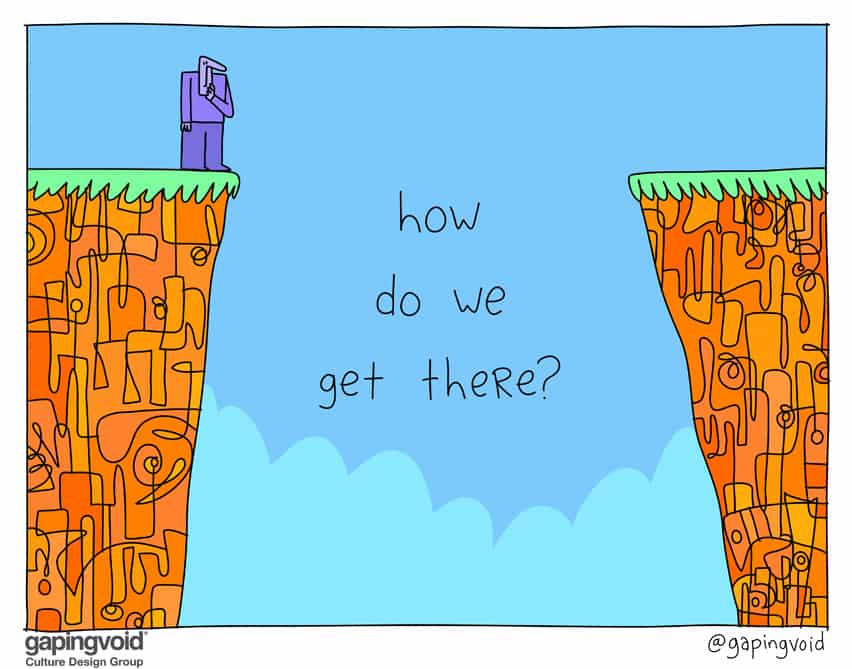
The car­toon above came to me after a Twit­ter exchange I had with my good friend, the fellow cartoonist-writer-creativity-guru-ninja-whatever, Aus­tin Kleon:

Hugh: If all your songs are songs about wri­ting songs, don’t expect anyone to lis­ten to them.

Aus­tin: The pro­blem with wri­ting about crea­ti­vity is that it’s often more luc­ra­tive than actually being creative.

Hugh: I know. If I had to write about crea­ti­vity day-in-day-out, I’d kill myself :D

Aus­tin: God, I can’t wait to start making some actual stu­pid art again.

Ha!

Both Aus­tin and I have both writ­ten books on crea­ti­vity. Mine did really well so far; I expect Austin’s, when it comes out next month, to become a mas­sive bes­tse­ller, if I’m still going to carry on belie­ving that there’s any jus­tice in the world.

i.e. I know my stuff, at least on a good day, and Aus­tin DEFINITELY does.

Yet somehow both he and I still feel as clue­less as anyone else, even if we do get paid to write books about on the sub­ject. Why? Because, actually:

Crea­ti­vity comes after the fact.

Kids come up to me and ask me all the time…

Kid: How do I get a “crea­tive” career-thing going like yours?

Hugh: Make something. Grab a piece of paper and a pen or wha­te­ver and get cracking…

Kid: What if it isn’t any good?

Hugh: Then you’re screwed.

Kid: Ok, what if it’s pretty good, but it’s still going to take me another twenty or thirty years before the world unders­tands it?

Hugh: Then you’re slightly less screwed.

At that point, they’re already sick of asking me any more ques­tions and so they move on, unhappy. Oh well…

The thing is, peo­ple think there’s some set of ideal con­di­tions out there, floa­ting inde­pen­dently in space, that somehow have be met, some magic fairy boxes that need to be tic­ked off, before you can go and “be crea­tive”, wha­te­ver that means.

“I’ve got to quit my job, leave my wife, move to India and become an opium addict yada yada yada…” “I’ve got to drop out of college, move to New York and carry on a for­bid­den and tumul­tuous les­bian affair with a Japa­nese nove­list twice my age  yada yada yada…”

Actually, no. The way to be crea­tive is to make stuff. You wake up in the mor­ning, have some break­fast, hit the work bench and get on it with it.

Or not. Maybe you’d rather just hang out, light a joint and watch Star Trek reruns. Your call.

You can’t plan for crea­ti­vity. You can only plan to do the work.

Whether it ends up being “crea­tive” or not, is deci­ded later. Long after you’ve finished the thing and moved on to something else.

That’s what I mean by it coming “after the fact.”

And so there we are.

Be Socia­ble, Share!

"Hugh's Daily Cartoon" Newsletter. A new cartoon sent out every weekday morning to your inbox [RSS version here.]. A wee chuckle to start your day off right etc.

Tags:

13 Responses to “Creativity Comes After The Fact”

  1. That’s a tough and very per­so­nal question..Am I crea­tive, what can I create and can I sus­tain that on a daily basis?

    At my agency, some are great at copy and can ideate but fail mise­rably when asked to come up with ideas to launch a new brand. And, it’s tough to unders­tand whether it takes talent or groo­ming or just exposure!

    I guess it’s a lot about knoc­king and lis­te­ning.. when it sounds right you will know. Until then keep knocking.

  2. It seems like ever­yone I knew in high school moved to Thai­land after college for a year, or “took time off” after high school ins­tead of get­ting right into it. I res­pect these choi­ces, but I have to won­der if I wasn’t able to flex more crea­tive muscle in the con­text of diving straight into school and work, and having to find crea­tive solu­tions to actual problems…instead of wai­ting around for inspiration.

    Even­tually it led to the kind of job that peo­ple ask the same kind of ques­tions about. How did you get there, what did it take, etc.

    It hap­pe­ned only after I went to work for a while, and that part you just can’t skip.

    • Hugh MacLeod says:

      Ian,

      Yeah, I know that choice you faced.

      I went straight into the work­force… to be honest, I was sick of han­ging around so I was glad to do it.

      Two deca­des later, I’m kinda wishing I spent more time in Thai­land or wha­te­ver… but I don;t think that would’ve hel­ped me in the end.

      I think it’s when you use “tra­vel” as a crutch, well, that has the same draw­backs as when you use anything as a crutch.

      • Because of the choi­ces I made, I’m able to see the world *because* of the work I do now, not at the expense of it.

        Five years ago, I would have never thought someone would value my work enough to send me around the country, let alone abroad. But I have the best of both worlds, and it’s because of diving right in.

        It’s just one proof point that I made the right choice…for me. I can’t speak for anyone else.

  3. Isn’t it bet­ter to spend some years behind the desk and then take some time off (no mat­ter how that tough that is) for Thai­land. By know, you will know both the sides and be more open to experiences.

    After school, it can be fun but I am sure how will come home with you.

  4. love both of the exchan­ges you pos­ted. think at the end of the day, sho­wing up and doing the work is all you can do. can’t stress about if it is good, worth while and or any of those things. all you can do is show up and do it. there is actually no way to really tell someone how to be crea­tive. we all are. what we need to learn is how to get out of our own way and let it out whiche­ver way it wants to come out.

    nothing more. nothing less. yet some­ti­mes the har­dest thing to do.

  5. […] Hugh Mac­Leod: The way to be crea­tive is to make stuff. You wake up in the mor­ning, have some break­fast, hit the work bench and get on it with it. […] […]

  6. > Kid: What if it isn’t any good?
    > Hugh: Then you’re screwed.

    Noooo !
    Hugh, the rest of the article is great(as is most of your stuff), but I really believe the best ans­wer to this ques­tion is “if it’s not good, do it again, work more. It’ll get better.”

    David W. Galen­son explai­ned in his book “Old Mas­ters and Young Geniu­ses” that geniu­ses are not always those who pro­duce great work when then start. About half of them pro­duce crap, and get bet­ter later.

    The trait of great artists is that they never give up.

    • Brandon T. says:

      Well, yes, encou­ra­ge­ment is good. If Aretha had stop­ped before sig­ning with Atlan­tic, think of how boring R&B would be. But, at the risk of soun­ding like a cur­mud­geon, there are far too many peo­ple out there who think that because they have a com­pu­ter and access to the inter­net, that makes them crea­tive. Really, though, someone should have told them, honestly, that their work was terri­ble, and they should pur­sue another line. This is where a men­tor or teacher comes in and can sepa­rate the wheat from the chaff…

  7. Stefan Loble says:

    Beyond just waking up and making stuff, it feels like there’s a road one has to walk, from which crea­ti­vity comes.

    Requi­res either some serious dis­sa­tis­fac­tion with the way things are; or des­pe­rate search for tonic to drown a wound. What would a per­fectly satis­fied, well-adjusted creative-type add to the world? “Here’s a pic­ture of why I’m totally on-board with what you guys came up with”!

    So, you can’t just move to India and have it hap­pen. You have to toil first, and that balance of toi­ling now for bet­ter stuff later is hard.

    (And just whi­ning isn’t an exit plan…)

  8. […] 3) Crea­ti­vity Comes After The Fact – gaping­void has become one of my favo­rite things to read in the mor­ning. I even have one of his car­toons as the lock screen pic­ture on my phone. This par­ti­cu­lar one really made me think… and then get to work. […]

  9. Sheila Foley says:

    This is all very inte­res­ting. A cou­ple of things I’d like to add to the dis­cus­sion: One is the abi­lity to learn from mis­ta­kes. Crea­ti­ves aren’t afraid to be wrong – their “mis­ta­kes” aren’t throw-aways. They’re part of the pro­cess. Crea­tive types aren’t easily dis­cou­ra­ged. They take risks and the­re­fore make lots of mis­ta­kes. They’re bound to hit on something good even­tually and a con­fi­dent crea­tive knows that. Secondly, there’s expe­rience. The broa­der range of expe­rience one has, the easier it beco­mes to con­nect one thing to another. What may seem totally unre­la­ted to the ave­rage obser­ver, is so obviously con­nec­ted in the mind/eye/heart of the crea­tive per­son. And the older you get, the easier it is to recog­nize that fact.

  10. Angike.com says:

    […] what Hugh Mac­Leod mean by it coming “after […]

Leave a Reply

Comment through Twitter