Archive for August, 2011

August 31, 2011

The Mainstream

Ignite Or Die

The Creative Act

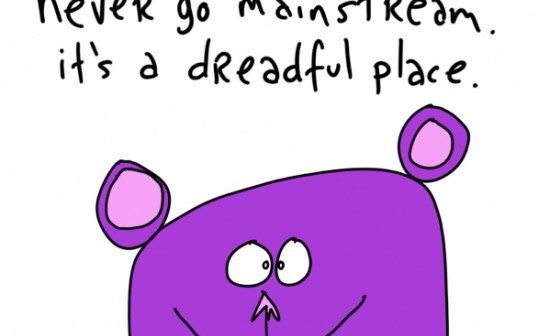
Never Go Mainstream
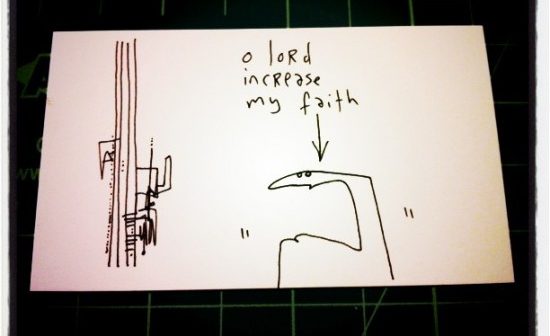

[Buy the print here etc.]

NEVER GO MAINSTREAM

Back when I was a kid and aspi­ring to be a pro­fes­sio­nal car­too­nist one day, I had this dread­ful fear han­ging over my head:

That the only way to become suc­cess­ful as a car­too­nist, was to go mains­tream. Cute and cuddly, warm and fuzzy. In the world of the big money car­too­ning, there was little room for “Edge”.

Check out the tra­di­tio­nal US Sun­day comics sec­tion of any news­pa­per, and you’ll see what I mean. Utter, cutey-pie dreck.

I just couldn’t see myself doing it. My stuff was just too “out there”, and when I tried to reign it in, it just made it worse.

Of course, that was before the Inter­net came along and chan­ged everything…

Any­body who courts the mains­tream deser­ves everything they get. There’s far more action in niches.

August 29, 2011

“Ambition is for amateurs”


[Orlando Gib­bons (1583 – 1625)]

So some­body asked me recently in an email inter­view, “What’s next for Hugh MacLeod?”

Which I ans­we­red:

There is no “Next”. There is only making more dra­wings and wri­tings, and trying to stay healthy and happy. “Ambi­tion” is for amateurs.

I think it’s too easy to con­fuse the AMBITION of doing something, with the actual DOING of something.

That con­fu­sion is the domain of the amateur…

August 28, 2011

Hello Dark Night of The Soul

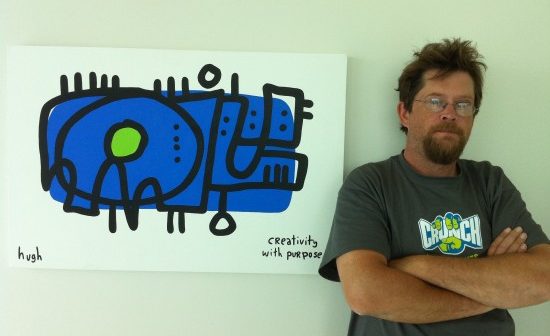
“My work doesn’t belong in art galleries, it belongs in cubicles.”

[“Crea­ti­vity With Pur­pose”: One of my recent can­va­ses etc.]

I get asked all the time: “Why don’t you show in art galleries?”

And I always ans­wer the same: “Because my work doesn’t belong in art galle­ries, it belongs in office cubicles.”

Even if you go back to the 1990’s, back when I was star­ting out, it was the same story. I always liked making art SPECIFICALLY for the work­place. I always liked making work that pushed that aspect of human exis­tence further in the right direction.

After family, the time you spend in your place of work is the most impor­tant arena of your exis­tence. That is where you go to find out, over time, who your true self really is.

And your true self needs art around it, your true self needs cons­tant remin­ding that your true self ACTUALLY exists.

Your true self needs TOTEMS around that INSPIRE it on a daily basis.

That’s what I hope the car­toons help arti­cu­late, help bring to the sur­face. Unlike most of the knuc­klehead art you see around the gallery scene…

Besi­des, it’s a niche most other artists don’t really think about–  they’re too busy trying to con­quer other worlds. Which is fine, even if those other worlds are already too crow­ded; already SATURATED with the froth of other knuckleheads.

“My work doesn’t belong in art galle­ries, it belongs in office cubicles.”

It’s not a bad life, I suppose…


August 26, 2011

“The King”


[Buy the print here etc.]

THE KING

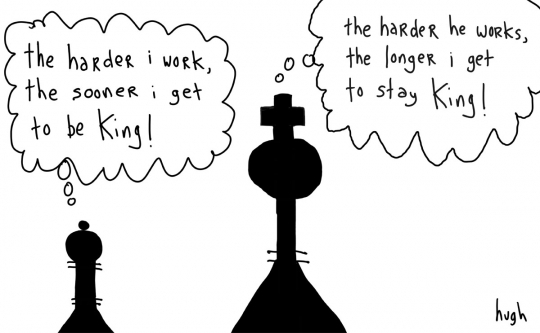
The thing about the pawn and the king in this car­toon is… well, they’re both right.

The good news is, they’re just not both right all the time.

Peo­ple often think that the moment they get to the top, their pro­blems are over. His­tory tells us the oppo­site, the Roman Empe­rors who las­ted more than a cou­ple of years before being assas­si­na­ted or killed in battle were the minority.

August 24, 2011

He thinks that just because…

The Treasure Factor
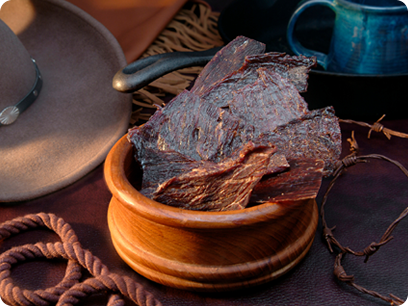
Not too far down the road from my house in Far West Texas, my friend, Glenn Short and his team make, and I kid you not, the best store-bought beef jerky I have ever tas­ted (And I have tas­ted A LOT over the years). The Lights Jerky Com­pany is phe­no­mi­nal, check it out.

After a few years strug­gling to get it off the ground, busi­ness is boo­ming. I met one of his peo­ple last night, drin­king beer over at The Rail­road Blues. He was just EXHAUSTED at the end of the day from bus­ting his ass, filling orders. It was, how you say, the right kind of exhaus­tion to have…

Out here in the Texas desert moun­tains, where it’s ALWAYS been a tough place to make a living, I’ve noti­ced three kinds of business:

1. THE LOST CAUSES. New ones open and close all the time. Well mea­ning peo­ple who don’t really get what they’re doing, don’t really get what their cus­to­mers are after, don’t really get much, in spite of their often valiant and kind-hearted efforts. Reti­red school teachers from Dallas, who never run a busi­ness before, who just moved out here recently because they liked the sce­nery, who SUDDENLY deci­ded to go into the res­tau­rant busi­ness or wha­te­ver. These pla­ces usually close down in less than nine months. They’re not uncommon.

2. THE COMMODITIES. Stuff you’d expect to see out here. Gas sta­tions. Con­ve­nience sto­res. Fast food joints. Nothing too spe­cial, but they pro­vide some nee­ded ser­vice, same as any where else. Nice local peo­ple wor­king there and all, but nothing to write home about.

3. THE TREASURED. These are the rarest birds. Pro­ducts that are not only INSANELY GREAT, but are done with such, ima­gi­na­tion, love, flair , or even just plain ol’ hard work and good man­ners, fai­lure JUST isn’t an option.

And trea­su­red they are. If you live out here long enough, you start to rea­lize soon enough that if you don’t ACTUALLY TREASURE the busi­nes­ses you love, I mean REALLY trea­sure them more than you would in a big city, say, these pla­ces will just close down even­tually, just blow out of town like tum­ble­weeds. Their uni­que magic will be gone, fore­ver, without nothing to take their place.

And peo­ple KNOW that.

Lights Jerky is one of these. So is The Pizza Foun­da­tion, The Marfa Book Com­pany, Harry’s Bar, The Murphy Street Raspa Com­paany, Novak’s Bar­ber Shop, Tacos Del Norte, The French Gro­cer and The Saddle Club, just to name a few.

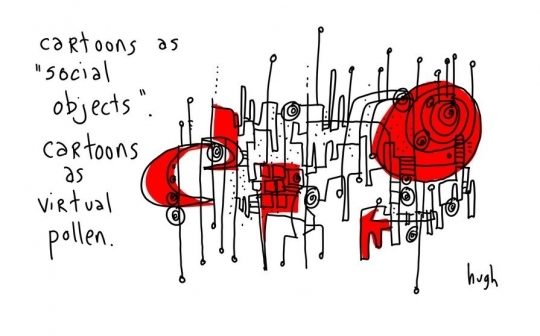
And yes, these busi­nes­ses are Social Objects. When something hap­pens in one of these pla­ces– some­body loses their job, or some­body gets sick etc– news tra­vels WAY fas­ter around town than with the other pla­ces. Because peo­ple ACTUALLY do care. BECAUSE they are trea­su­red, the social dyna­mic is far more intense than in say,  a natio­nal fast food chain.

And what is true in small-town West Texas is true in any big city. You don’t have to be Ama­zon or Apple or IBM or McDo­nalds to be a social object.  You can be a small jerky com­pany, bookshop or taco stand. As I’ve always said, “Mea­ning sca­les”.

But The Trea­sure Fac­tor HAS to be there, somehow.

Is your busi­ness trea­su­red? Or do peo­ple just give you money? Serious question…

August 23, 2011

The Whale

[This car­toon went out in the news­let­ter ear­lier today. You can buy the print here etc.]

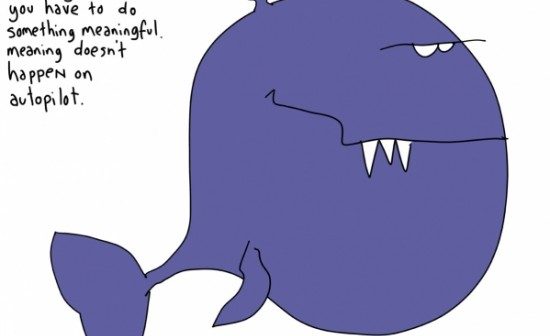
One day I drew a fun little pic­ture of a whale, just for the hell of it.

Then I added a line about “mea­ning” that I had writ­ten on Twit­ter ear­lier that day, just for the hell of it.

Somehow it worked.

Hey, I like whales…


“Because unless businesses and brands get their head around the Social Object concept, their marketing will fail, end of story.”

[Buy the print here etc.]

With my recent post, “Rec­laim Blog­ging: Why I’m giving up Twit­ter and Face­book” making all that fuss all around the Web, obviously I’ve been reflec­ting a lot on blog­ging in general.

What is blog­ging for?

More spe­ci­fi­cally, what is gapingvoid.com for?

Even more spe­ci­fi­cally, what is gapingvoid.com actually ABOUT?

Blog­ging is the same as careers: Every now and then it helps to take some time off, to reflect, to regroup and refo­cus. Which is EXACTLY what I’ve been doing these last cou­ple of days.

Having a big ol’ think.…

My conc­lu­sion?

Besi­des dra­wing and pos­ting car­toons, which I’ve always done and will always do until I die, I believe the focus of gaping­void should be something it’s rif­fed on nons­top for the last half-decade.

i.e. Social Objects.

i.e. Why Social Objects are, I believe, the future of marketing.

And why are they the future of mar­ke­ting, exactly?

Because unless busi­nes­ses and brands get their head around the Social Object con­cept, their mar­ke­ting will fail, end of story.

And Mar­ke­ting is too impor­tant to fail, not just for busi­nes­ses, but for society in general.

This is a con­ver­sa­tion that HAS to hap­pen, end of story. And where bet­ter to start this con­ver­sa­tion than on gaping­void? Exactly.

And yes, I expect some REALLY COOL art to be made in the process…

Rock on.

August 22, 2011

“Because you can’t live in a hammer.”

[One of my early biz­card dra­wings. New York, 1998.]

[The follo­wing was ori­gi­nally pos­ted in March, 2006. Appro­pos to a lot of the con­ver­sa­tions I’ve been having recently:]

Blogs are like ham­mers. They are tools for buil­ding stuff.

When you talk about buil­ding a house with a car­pen­ter, you don’t mind him tal­king about his ham­mer for a while.

Nobody minds indul­ging a crafts­man, within reason.

“This ham­mer is great for this,” he’ll gush. “This ham­mer is great for that…”

So you think yes, ham­mers are good things, and indeed his ham­mer looks like a par­ti­cu­larly fine example.

But even­tualy you’re going to inte­rrupt his joyous ode to ham­mers. After a cou­ple of minu­tes you’re going to abruptly change the subject:

“Cool. Now let’s talk about the ACTUAL HOUSE you’re going to build for me…”

And if the car­pen­ter is any good, he won’t have any pro­blem with that.

Blogging Disciples vs Blogging Peers: Some random thoughts on “Guru-nomics”.

It’s not  a bag gig, I suppose…

You have a suc­cess­ful blog, read by lots of peo­ple, where you dole out lots of advice on how to create a suc­cess­ful blog, read by lots of peo­ple. And you rake in the cash doing so.

i.e. You’re a “Guru”.

I’ve been there myself. I’ve sha­red TONS of my tricks of the trade over the years, which has indi­rectly hel­ped my bot­tom line no end… And I have to say, it’s a good fee­ling to think you’re actually hel­ping peo­ple in real and mea­ning­ful ways.

Sure, com­pa­red to how most peo­ple have to pay their bills, being a “guru” is not a bad gig, not a bad gig at all. And there’s some good ones out there, doing a splen­did job hel­ping peo­ple move their lives for­ward. No won­der why so many other peo­ple are also cha­sing after the very same gig, themselves.

But guru-dom has never sat well with me, somehow, no mat­ter how good it was for busi­ness. And for the lon­gest time I couldn’t quite put my fin­ger on it why that was.

Then recently I got tal­king to an old friend, some­body who spent a lot of time prac­ti­cing as an Eas­tern mys­tic, who stu­died under REAL gurus and knew all about guru­dom. The clo­set thing to a real Holy man that I ever had the pri­vi­lege of calling a friend.

Then one day he just gave it up com­ple­tely. Just totally stop­ped. As he explai­ned in his email:

I found enligh­ten­ment to be ove­rra­ted.  It turns out that when this comes about, all of the Karma in your life comes due at once… both good and bad. I’ve had to pay the sufi mas­ter three times to get out of town and leave me alone.

Many groups, end up in a sycophan­tic embrace and I found that to be dis­tas­te­ful, be care­ful. Since we live so many lives, There is plenty of time for this state to take effect. I’d advise anyone to take it slow. Howe­ver, there are a few good ones out there, who really aren’t into all these she­na­ni­gans.  At least that’s my experience.

Really believe that kno­wing the future crea­tes a boring life, no sur­pri­ses any more.  Remote vie­wing opens one up to things that one would rather not know. Powers of hea­ling, brings all kinds of sick peo­ple around from all over the place and you end up trip­ping on them.  Deci­ples, needy and clin­ging. More and more I think that it is all about gai­ning the abi­lity to hang in there and keep it together in the face of life’s shit-storms. I espe­cially like the abi­lity to make peo­ple laugh at the absur­dit­yof it all. You already have that power.

[…]

There is a big dif­fe­rence bet­ween being an influen­cer with a blog and being a guru. But the same kind of thing applies. I never tried it because I never really had anything mea­ning­ful to say. If I said it, then there always see­med to be a cer­tain “fals­ness” to it. The influen­cers have a can­no­ni­cal form, that requi­res tal­king more than lis­te­ning, and feig­ning lis­te­ning, which is taken as agree­ment, when maybe it’s not. Which is disho­nest. Cha­risma is a way of crap­ping on half the peo­ple you meet in such a subtle way, then they thank you for it.

Yep. That sums up a lot of my fee­lings. Something about the job-tile, “Guru” just kinda makes me queasy. I just don’t think I like the bag­gage, the “karma” that comes with it; I just don’t think I like the guru-nomics of it all.

I don’t want to write for DISCIPLES, I want to write for MY PEERS. There’s a dif­fe­rence, a BIG one.

i.e.  I don’t want to write about how I can help ran­dom peo­ple do great work, I want to TRY to do great work myself, and CELEBRATE other peo­ple who are ALREADY doing it.

You don’t get suc­cess­ful because some enligh­te­ned being told you how. You get suc­cess­ful because somehow cir­cums­tan­ces for­ced you to ACTUALLY put your balls on the line. And this has always been the case.

But maybe I’m weird for thin­king that…

August 21, 2011

“I’m sick to death of hearing the phrase, ‘Driving traffic to your site’.”

Well, it looks like my last post, where I announ­ced I was giving up Twit­ter and Face­book, cau­sed all sorts of brouhaha. Over 150 com­ments, and Lord knows how many hun­dreds of ret­weets and what­not on Twit­ter, Face­book, Goo­gle+ yada, yada, yada.

I’m not sure why all the fuss, to be honest.

More than a few peo­ple were con­cer­ned that by not doing the Twitter-Facebook thing, I wouldn’t drive so  many peo­ple to my blog.

To which I replied in the comments:

“I’m sick to death of hea­ring the phrase, ‘Dri­ving traf­fic to your site’.

Peo­ple should come to your blog, not because some­body drove them there, but because it was impor­tant for them to come there.

Other­wise you’re just was­ting your time, other­wise you’re just acting like ever­yone else.

And the trick to Web 2.0, as in busi­ness, is to be UNLIKE ever­yone else.”

Gran­ted, that might be a wee bit too purist for most peo­ple, still, Kathy Sie­rra left a great comment:

From John Mayer’s address to grads of Ber­klee College of Music:

And pos­sibly more alar­ming, Mayer rea­li­zed that pou­ring crea­ti­vity into sma­ller, less impor­tant, pro­mo­tio­nal out­lets like twit­ter not only dis­trac­ted him from focu­sing on more cri­ti­cal endea­vors like his career, it also narro­wed his men­tal capa­city for music and wri­ting inte­lli­gent songs.

“The tweets are get­ting shor­ter, but the songs are still 4 minu­tes long. You’re coming up with 140-character zin­gers, and the song is still 4 minu­tes long…I rea­li­zed about a year ago that I couldn’t have a com­plete thought any­more. And I was a twee­taho­lic. I had four million twit­ter follo­wers, and I was always wri­ting on it. And I stop­ped using twit­ter as an out­let and I star­ted using twit­ter as the ins­tru­ment to riff on, and it star­ted to make my mind sma­ller and sma­ller and sma­ller. And I couldn’t write a song.”

You see where I’m going with this?

Wha­te­ver. The issue really isn’t Twit­ter or Face­book, the issue is, if you’re spen­ding more time pro­mo­ting your stuff and chit-chatting to peo­ple about your stuff than your are ACTUALLY MAKING stuff, you’re doing something wrong, VERY wrong [Believe me, I’m as guiity of this as anyone. I have BEEN there, more than once.].

Quit your yak­kin’ and get busy. Quit was­ting time obses­sing about pim­ping your ass and chec­king your stats. Ins­tead, MAKE stuff. Make AMAZING stuff. Make stuff that is so good that peo­ple have no choice but to find out about it. Other­wise, you REALLY are just was­ting your time. This game is already TOO hard and TOO BIG a time suck to frit­ter away on what is, for the most part, a big ol’ distraction.

There. I’ve said my piece. This is hope­fully my last blog post on the sub­ject. I’m get­ting back to what I do best: Wri­ting books, dra­wing car­toons, selling art and hel­ping my clients kick ass. Amen.

[PS. I’m not com­ple­tely stu­pid and out out of touch; I do rea­lize that A LOT of my friends still use Twit­ter at the expense of everything else (inc­lu­ding RSS) and may need some time to adjust, so for now, we’ll still using my Twit­ter account to ret­weet links to my blog, just like Seth Godin does with his. But I won’t be spen­ding any per­so­nal time over there, either. In fact, I’ve given my log-ins to Laura (she runs my gallery ope­ra­tions) and asked her to handle it ins­tead. My per­so­nal online pre­sence will just be here on my blog, and of course the news­let­ter. But I’m pretty much done with everything else…]

August 19, 2011

Newsflash: Babson College is gapingvoid’s latest client.

So gaping­void has a new client: Bab­son College. Or to put it another way: gaping­void is now the ofi­cial car­too­nist for Bab­son College.

Bab­son is a small, pri­vate college in the wes­tern suburbs of Bos­ton, dedi­ca­ted to the study of entre­pre­neurship. In fact, it’s been con­si­de­red the top school for entre­pre­neurship in the country for the last 18 years in a row, bea­ting out Har­vard, Whar­ton, Yale, M.I.T. etc etc

Some ini­ti­tial thoughts:

The college pre­si­dent,  Len Sch­le­sin­ger is an inte­res­ting guy. He has divi­ded his career pretty equally in both aca­de­mia and com­merce. Over the years, the two have infor­med the other.  Click on his link and see for your­self, he has got­ten plenty of kudos in  both worlds. He was a pro­fes­sor at Har­vard Busi­ness School and a CEO of a well known com­pany (i.e. the parent com­pany of Victoria’s Sec­ret). Very few peo­ple are so infor­med by the limi­ta­tions of both, and also their lack of limitations.

He is also pretty much the big­gest collec­tor of gaping­void prints that we have. His walls are abso­lu­tely cove­red with them. He was collec­ting them like base­ball cards. So there was an pre-existing align­ment there.

We met for Chi­nese food the last time I was in New York and hatched an “Evil Plan”. Good times.

This is such an obvious gig for gaping­void, I can­not tell you. There are so many threads worth rif­fing on, I canot tell you. Edu­ca­tion and entre­pre­neurship are BOTH rich, deep veins. OF COURSE they are.

Is there ANYTHING in the world that is more ripe for dis­rup­tion than  Edu­ca­tion Industry (Yes, it IS an industry, sorry to break the news to my Mar­xist aca­de­mic friends)? I mean, really…

I have some thoughts on for­mal edu­ca­tion and entre­pre­neurship in gene­ral. See the car­toon above…

It’s ama­zing how this fits with a trend I’ve been noti­cing lately: When Jason (my busi­ness part­ner) and I talk to peo­ple in busi­ness who use the car­toons, it is always about the same thing: It helps them lead their orga­ni­za­tions. Com­mu­ni­cate bet­ter, and tell sto­ries that they feel peo­ple should be remin­ded of. Around the office, we’ve become fond of saying that the work helps lea­ders lead.

I am TRULY hono­red that someone of Len’s sta­ture is able to use my work to lead his busi­ness. Art with pur­pose, it’s why gaping­vid does what it does.

OK, I’m ready to rock out. Next steps: Anyone got any ideas where to start? I have a few thoughts myself, of course, but please feel free to share, either by email or by lea­ving com­ments below, thanks.

Let the aven­ture begin! w00t!!!

August 18, 2011

Note to Dewar’s

20110818-095101.jpg

There are two kinds of content.

20110818-094007.jpg

August 14, 2011

Your customer won’t take a bullet for you

Your cus­to­mer won’t take a bullet for you

[Today’s guest post is from the world’s most admi­red ex-blogger, the great Kathy Sie­rra.]

“Cus­to­mer Loyalty” is a fig­ment. Busi­ness “Loyalty Pro­grams” are nothing more than rewards-based mar­ke­ting. And by rewards (aka “incen­ti­ves”), I mean bri­bes. That we so easily refer to a cus­to­mer with a bagel punch card or vir­tual badge as more “loyal” is an exam­ple of just how far we’ve allo­wed cor­po­ra­tions to abuse the lan­guage around human relationships.

I would storm a bur­ning buil­ding to get my kids. THAT is loyalty.

I would even storm a bur­ning barn to get my horse.

But I won’t storm a bur­ning Best Buy no mat­ter how awe­some their Reward Zone program.

I’m not going to become more loyal to a busi­ness no mat­ter how well-executed their Super Awe­some VIP Exc­lu­sive Con­tent Access Sta­tus Rewards Achie­ve­ments Gami­fi­ca­tion pro­gram is. Not even if Banksy made their badges.

That I often DO buy (and some­ti­mes buy more) from the busi­nes­ses that offer for­mal Rewards Pro­grams does not imply I am loyal to those busi­nes­ses. I’ve nothing against my wallet-full of cof­fee cards (which I use, and appre­ciate). But that is not loyalty. I’m happy to “LIKE” your Face­book page for an entry in your iPad givea­way, but that is not loyalty.

I’m willing to com­ment, favo­rite, star, plus, and poten­tially even share your con­tent, but if I do it purely for the points/status/rewards, that is not loyalty. In fact, when you “incent” me to “engage” with your site, deep in my heart I unders­tand now that I have sold out. By giving me bribes/incentives, no mat­ter how much you call them “rewards”, you have com­mu­ni­ca­ted to some part of me that if I had to be incen­ted to buy/act/engage/whatever, it must have lac­ked value on its own.

This de-valuing effect can be true even if the thing really DID have intrin­sic value for me. In other words, even if I’d acti­vely wan­ted to do the thing-you’re-bribing-me-to-do, you’ve tain­ted it. Pos­sibly even wrec­ked it for me, even if I am not cons­ciously aware. (See Self-Determination Theory and the Over-Justification Effect for some of the poten­tial issues with gamification’s use of extrin­sic rewards)

The dar­ling of tra­di­tio­nal “Loyalty Pro­grams” is, of course, Fre­quent Flyer miles. But odds are most of you have taken a flight you didn’t want, on an air­line you hate, thanks to a Fre­quent Flyer plan. When we make tough choi­ces based on our “rewards” pro­gram, that’s not loyalty we’re fee­ling… it’s resentment.

A way to tell you’re hea­ding down a dark path is to ask:
“If we took away the incentive/rewards pro­grams, would our cus­to­mers behave in exactly the same way?”

If we have to pay to get it, it’s not loyalty.
That doesn’t neces­sa­rily make it wrong to use cus­to­mer incen­ti­ves, but don’t mis­take the results for actual loyalty.

So, how do we explain the com­pa­nies, brands, pro­ducts, ser­vi­ces, etc. that we do feel fier­cely loyal to? The ones that did NOT incen­ti­vize, bribe, coerce, coupon/Groupon us into choo­sing them over com­pe­ti­tors? The ones we talk about to friends NOT because we get a refe­rral bonus? Isn’t that true loyalty?

Almost. Sort of. If you tilt and angle it just so. Because I DO have a few pro­ducts I appear loyal to:

I would give up my iPad for Adobe InDe­sign.
I would give up sleep for the latest Neil Gai­man book.
I would give up carbs for my Astund Ice­lan­dic saddle.

And I’d give up all of the above to keep using my Mac.

That sure looks, sounds, smells, quacks like loyalty.

And it is.

But it is NOT loyalty to Adobe, Gai­man, Apple, or my Ice­lan­dic saddlemaker.

I’d walk through hot coals for those because I’m loyal to… myself.

The key to unders­tan­ding (and ulti­ma­tely bene­fit­ting from) true “cus­to­mer loyalty” is to recog­nize and res­pect that cus­to­mers – as peo­ple– are deeply loyal to them­sel­ves and those they love, but not to pro­ducts and brands. They are loyal to their own values and the (rela­ti­vely few) peo­ple and cau­ses they truly believe in. What looks and feels like loyalty to a pro­duct, brand, com­pany, etc. is dri­ven by what that pro­duct, ser­vice, brand says about who we are and what we value.

That doesn’t mean we can’t bene­fit from cus­to­mer loyalty. The moment we stop trying to mani­pu­late, coerce, incen­ti­vize, gamify cus­to­mers into being loyal to us is the moment we free our­sel­ves to con­si­der how to help them where their true loyalty lies. And it starts with the deep recog­ni­tion that:

If I buy from you it’s not because I like you but because I like myself.

As I said in my pre­vious post, the key is to help users become bet­ter at something they care about. My what-looks-like-rabid-loyalty to Apple, Adobe, Gai­man, and Astund is because they have all con­tri­bu­ted to Me Kic­king Ass in a mea­su­ra­ble, mea­ning­ful, sus­tai­na­ble, power­ful way. Yes, even author Neil Gai­man. (His work has not just enter­tai­ned and ins­pi­red me, but pro­vi­ded the foun­da­tion of my wed­ding cere­mony. Long story, ‘nother time.)

If you want to bene­fit from a customer’s loyalty to him­self, you can’t bribe it, you must earn it. Deserve it. Focus not on upgra­ding your pro­duct but upgra­ding your user’s capa­bi­li­ties. If you can’t enhance your pro­duct, enhance the con­text in which your pro­duct is used. Pro­vide bet­ter and more ins­pi­ring docu­men­ta­tion. Make You­Tube tuto­rials. Join forums and offer expert help where it’s most nee­ded. Use every nano­se­cond of your social media time to help peo­ple become bet­ter at something for them­sel­ves. Unders­tand and design for Social Objects. Relent­lessly ask, “How are we hel­ping our users kick ass? What can we ins­pire, amplify, teach, ena­ble, empower?”

There is always a way to help users be bet­ter at something, even if that thing seems dis­con­nec­ted from your pro­duct. Help them be bet­ter, smar­ter, stron­ger, fun­nier, more aware. Bet­ter coders, bet­ter shop­pers, bet­ter parents. Bet­ter desig­ners, bet­ter DJs, bet­ter citi­zens. Bet­ter puzzle-solvers, bet­ter pho­to­graphers, bet­ter wri­ters. Bet­ter joke-tellers, bet­ter con­ver­sa­tio­na­lists, bet­ter gar­de­ners. Bet­ter makers, bet­ter cooks, bet­ter car­too­nists. Bet­ter brains­tor­mers, bet­ter blog­gers, bet­ter run­ners. As Hugh once put it, “if you can’t figure this out, you’re just not being creative.”

Ins­tead of “rewar­ding the cus­to­mer” focus on “how can I make the user’s expe­rience and result more rewar­ding”? And by “rewar­ding”, I mean FOR REAL. Not because of a little dopa­mine hit they get from ear­ning your next vir­tual badge. I mean rewar­ding as in, “OMG look at this ama­zing thing I just made.” Rewar­ding as in, “That was one of the most sti­mu­la­ting con­ver­sa­tions I’ve had.” Rewar­ding as in, “It’s offi­cial then. I’m bad ass. Look at the what I am now able to do that I couldn’t before…”

Of the four pro­ducts I appear loyal to, none have ever given me an extrin­sic reward. No punch cards, frequent-purchasing dis­counts, or Exc­lu­sive Access VIP Sta­tus (Now! With Bet­ter Bad­ges!). No lea­der­boards, no con­tests, no dis­counts. But all have given me something far more valua­ble: endu­ringly rewar­ding experiences.

They have upgra­ded my per­so­nal skills, know­ledge, and capa­bi­li­ties. They have made my life bet­ter. They have made ME bet­ter. THAT is the ulti­mate cus­to­mer reward. When you give your users that, you still won’t have loyalty, but you’ll have something sus­tai­na­ble, robust, and honorable.

Those that unders­tand and sup­port the loyalty we have to our­sel­ves are the ones to whom we write glo­wing unsolicited/unrewarded reviews. They’re the ones we will not STFU about in our on– and off-line con­ver­sa­tions. They’re the ones whose logos we wear on our shirts, shorts, and car bum­pers. The com­pa­nies who we appear loyal to are those that best help us define, refine, and express who WE are.

[Foot­note: if you do want to give an extrin­sic reward to a valued cus­to­mer, the most power­ful, effec­tive, and appre­cia­ted way is ALWAYS an unex­pec­ted, sur­prise thank-you ack­now­led­ge­ment (which may or may not inc­lude a valua­ble or sym­bo­lic gift). Rewards that are expec­ted are per­cei­ved not as rewards but simply part of the product.]

–Kathy Sie­rra

“The Market For A Scotch To Believe In Is Infinite”

[One of the Dewars dra­wings I did while atten­ding TED Glo­bal etc.]

[Today’s guest post is by Jason Kor­man, my busi­ness part­ner since 2005, and CEO of gapingvoid]

“The Mar­ket For a Scotch to believe in is Infinite”

There are millions of cases at stake for the guys who get the mes­sa­ging right.

We’ve had Scotch on the brain lately. We’ve done wine, we’ve done suits and we’ve done tech, but Scotch has its own par­ti­cu­lar set of challenges.

What makes any bottle of scotch dif­fe­rent? And, does anyone care, any­way? There are, what Hugh’s dad used to call, the “whis­key bores” who drone on and on about all things whisky, but I’m told there aren’t that many of them left. So, what mat­ters to ever­yone else?

There is the realm of the sin­gle malts and high end scotches. But they seem to need to be mar­ke­ted more like Con­gac or Cham­pagne, a bit of bling, sexy pac­ka­ging, and hyped up associations.

For more broad mar­ket Scotch, the oppor­tu­ni­ties are much grea­ter and the cha­llenge much more com­plex. Scotch is a dis­tinctly mas­cu­line pro­duct. It is strong, it is inte­res­ting, is implies thought and inte­lli­gence. It s a pro­duct that wants to have meaning.

Given that, what we see mostly in Scotch mar­ke­ting is a reliance on ‘authen­ti­city’, with ever­yone trying to have the most authen­tic con­ver­sa­tion groun­ded in cen­tu­ries of his­tory. The ques­tion is really: is this rele­vant? Once a con­su­mer knows your  Scotch is ‘for real’, do they care enough to want to know the details? I’d guess, pro­bably not.

With alcoho­lic beve­ra­ges, what you do have is a desire from the mar­ket to want to know: Why? What do you stand for? Why do you exist? And does your brand repre­sent something that I believe in — does it share my world view.

J&B says, “Let’s Start a Party”. I know that they are trying to make an old brand youn­ger and rele­vant. But, OMG, does it seem disin­ge­nuous. It comes across as a little incon­sis­tent with what the pro­duct is about. It’s not tequila, its not vodka, it’s really NOT a party drink.  It feels like granny dan­cing on the table at your cousin’s wed­ding – kinda crin­ge­worthy and creepy. Oh, and in an ack­now­led­ge­ment that even they don’t buy into the party thing, they also tell the story about Mr. Jus­te­rini tra­ve­ling from Bologna to Lon­don in 1749. Not sure what they’re thin­king, but stream of cons­cious­ness brings me to paraph­rase the Artist For­merly Known as Prince… “Let’s party like its 1749″.

Chi­vas goes with “Live with Chi­valry”, and tells “The Story Behind the Legend”. It’s place cen­tric, it’s a nice story about a Scots­man tra­ve­ling to NY a hun­dred years ago. But, it sounds a lot like things we’ve heard before. More impor­tantly, they seem  uncon­cer­ned with rele­vance in 2011. Their ultra-produced videos are like Public Ser­vice Announ­ce­ments, urging peo­ple to be nice. Yawn.

As with both of the above, Dewars goes with the place cen­tric, authen­tic Scot­tish thing, so they cover that base. But it feels like a brand that wants more. Their mes­sa­ging is really very ‘of the moment’ and invol­ves peo­ple who are actually alive today — It focu­ses on the top bit of Maslow’s hie­rarchy. They want to find peo­ple and faci­li­tate peo­ple being self– actua­li­zed. The mes­sage is, as beings we are hap­pier doing things that we believe in.

A bright spark at Dewars had the idea of alig­ning with the TED con­fe­ren­ces. After all, Ted’s spea­kers do, by defi­ni­tion, embody the qua­li­ties that Dewars represents.

Enter Hugh. They also hired Hugh to draw at TED Edin­burgh and dis­till the spea­kers ideas into his style of illus­tra­tion.  Hugh likes to say that his goal is to draw a car­toon that rips your face off the first time you see it, and is still doing it and the tenth time.

One of those is pos­ted above.

We ask our­sel­ves: Is Hugh’s style too edgy, too dis­rup­tive, not art direc­ted enough, to be used in main stream media? How can a brand like Dewars bet­ter com­mu­ni­cate what it stands for than through one of Hugh’s cartoons?

In today’s world, where ever­yone is saying adver­ti­sing is dead, what they are really saying that adver­ti­sing the way it used to be done is dead. Giving peo­ple something they believe in, in a way that they can’t help but notice, is where the action really is. Get­ting noti­ced. Doing stuff that gets noti­ced, doing it smart,  and in a way that your audience will think is cool, is where its at. Have beliefs that are strong enough to build a move­ment, not just a brand.

We’ve got Scotch on the brain, and we’re liking it. A cate­gory ripe for disruption.

Jason Kor­man
CEO, gapingvoid.com


August 10, 2011

David’s little stone…

Entrepreneurship begins…

Own…

August 5, 2011

More To Life

[Buy the print!] [Subsc­ribe]

To paraph­rase Seneca, the tra­gedy isn’t that life is short, the tra­gedy is that we waste so much of it.

The other types of tra­gedy, the more vio­lent kind, never worry me too much, thank­fully. I never lost much sleep, worr­ying about wars or serial killers or whatever.

But the thought of get­ting to the end of my life and rea­li­zing that I had was­ted most of it, that froze my blood.

As it should…

August 1, 2011

All Products Are Conversations

[Buy the print!] [Subsc­ribe]

As the great Doc Searls famously wrote in The Clue­train, “mar­kets are con­ver­sa­tions”. So it stands to rea­son that pro­ducts are, as well.

Pro­ducts OF a dialogue.

Pro­ducts ARE a dialogue.

How you talk to your cus­to­mers affects how your pro­ducts get made. Of course they do. Tony Hsieh of Zap­pos unders­tands this very well. In mole­cu­lar terms, his com­pany is little more a call cen­tre and a warehouse full of shoes. But it is the social inte­rac­tion which makes the com­pany rock.

The social dynamic.

The con­ver­sa­tion.

Exactly.

A Generation Ago

Two

Success Corrupts