May 19, 2011

Note to Social Media Marketing Dorks: The hard currency of the Internet is “Social Objects”.

Send to Kindle


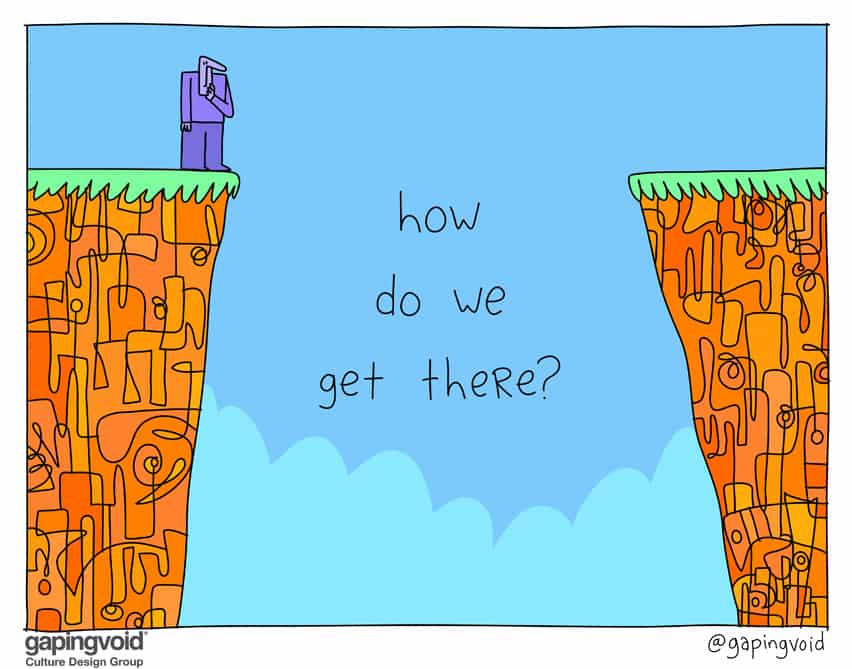
[One of my favo­rite recent “Social Objects”: a car­toon I did for Racks­pace.]

The Social Object, in a nutshell, is the rea­son two peo­ple are tal­king to each other, as oppo­sed to tal­king to some­body else. Human beings are social ani­mals. We like to socia­lize. But if think about it, there needs to be a rea­son for it to hap­pen in the first place. That rea­son, that “node” in the social net­work, is what we call the Social Object.

For as long as I’ve been invol­ved with the Inter­net, I’ve seen the SAME OLD DISCONNECT appear again and again AND AGAIN i.e. the dis­con­nect bet­ween how the Inter­net ACTUALLY works and how the social media mar­ke­ting dorks like to PRETEND how it works.

Case in point: From Steve Jones’ blog:

Today I recei­ved an e-mail that said “Like us on Face­book and win”. Later in the day I wal­ked into a store and on the door was a sign that said “Like us on Facebook”.

That’s like Billy Joel asking me to buy his album. It is like wal­king into a party and having someone say “Be my friend and I’ll buy you a drink”. In a word, it is pathetic.

Damn right it’s pathetic.

Note to Social Media Mar­ke­ting Dorks: The hard currency of the Inter­net is not Face­book “Likes” or Twit­ter “Ret­weets”, as flavor-of-the-month as they might be. By them­sel­ves, they’re worthless.

The hard currency of the Inter­net is “Social Objects”.

i.e. Social Objects for peo­ple to SHARE MEANINGFULLY with other people.

You’re either crea­ting them or you’re not. And if you’re not, you will fail, end of story.

[Con­ti­nue Reading…]

Be Socia­ble, Share!

"Hugh's Daily Cartoon" Newsletter. A new cartoon sent out every weekday morning to your inbox [RSS version here.]. A wee chuckle to start your day off right etc.

Tags: , , , , ,

17 Responses to “Note to Social Media Marketing Dorks: The hard currency of the Internet is “Social Objects”.”

  1. Joe McCarthy says:

    Agreed.

    Jyri Enges­trom also made a case for object-centered socia­lity — empha­si­zing the moti­va­ting power of objects (e.g., pho­tos on Flickr) vs. links (e.g., on LinkedIn) — a few years ago that I still often refer to … and I believe many of the peo­ple you’re calling out here would bene­fit from that post as well.

    • Hugh MacLeod says:

      Yeah, Jyri and I are old bud­dies from the early blog/geek dinner/meetup days. I cite him regularly.

      • Vivek Kumar says:

        Actually some of the early works were done by Karin Knorr Cetina in her clas­sic paper object cen­te­red socia­lity’ follo­wing the socio­lo­gist. Jyri men­tions her in his post. Also Jyri Senior has been a remar­ka­ble cri­ti­cal thin­ker of Social constructionism.

  2. cinderkeys says:

    If all you ever say is “Like me on Face­book, buy my album, subsc­ribe to my news­let­ter, etc.,” then yeah, that is pathe­tic. It’s pathe­tic and it will chase peo­ple away.

    On the other hand, you have to go for the sell at some point, don’t you?

  3. Greg Marquez says:

    Okay…I think I’m finally star­ting to understand.

    When I first read your wri­ting about social objects I think I was too focu­sed on the word object. I thought a social object was an actual object like your Cube Gre­na­des. Now I’m seeing that you mean anything, real or digi­tal which gives birth to and sus­tains social interaction.

    So a blog post, or a you­tube video, or a photo, or a book cover could be a social object but a box of Tide pro­bably not.

    My ques­tion now is: must social objects be brief? Do they have to be things which can be apprehen­ded
    in a brief amount of time. I’m thin­king of the cover of Seth’s latest book. No rea­ding requi­red at all just a mys­tery which gives rise to interaction.

  4. […] Mac­leod tal­king about social media mar­ke­ting and social objects right here. Join the […]

  5. Leah Carson says:

    Right, Hugh. This reminds me of seeing my niece’s “Like” Face­book post for Kohl’s Depart­ment Store. I thought: “I hope she got a nice cou­pon for that, ’cause it sure doesn’t enli­ven this discussion.”

  6. Bingoplayerz says:

    You are on spot with your social objects theory, it gave me some new insights.

  7. Jason Korman says:

    Cin­der­keys,

    Yes, at some point. The issue is a busi­ness must first esta­blish a rela­tionship, unders­tan­ding, find align­ment, with a pros­pect. If you first do these things, show that there is a rea­son and mea­ning in what you do, then you have given someone a rea­son to say “yes” when you pop the ques­tion. Asking follows relationship

  8. Kaplan says:

    very true Hugh, some­ti­mes we are taking social net­work adver­ti­sing a piece of cake, but the qua­lity of leads we get ? I am not so sure about it, though it is part of my mar­ke­ting plans

  9. Steve Jones says:

    First, thanks for the men­tion. It is a cool honor to be among the smart thin­kers who fre­quent gapingvoid.com.

    @cinderkeys — I think that crea­ting com­pe­lling con­tent that invol­ves peo­ple on an inte­rac­tive level IS asking for the sale. If I give you great value when you read my blog, watch my videos, look at my Flickr page, like me on Face­book, etc, then in a way I am asking for the sale without ever asking.

    Maybe the point is if you need to ask for the sale that overtly, you aren’t pro­vi­ding con­tent that is enga­ging enough in the first place.

  10. […] I’m tal­king about is the power of enga­ge­ment and crea­ting social objects, mixed in with sound stra­tegy and a little chutzpa, in order to get rea­ders behind your brand so […]

  11. Andy says:

    I’m not so sure about this. Saying it is pathe­tic to request a Like seems a little strong, and I won­der if there is a risk of over-analysing whether the ‘Like’ is asked for or not. Brian Clark over on Copy­blog­ger reques­ted peo­ple ‘like’ them [http://www.copyblogger.com/copyblogger-facebook/] and to me it see­med like a rea­so­na­ble request… in the same way that asking for refe­rrals, feed­back, or pay­ment are also all rea­so­na­ble ques­tions to ask… some­ti­mes in busi­ness and life, if you don’t ask, you don’t get.

  12. Deb Budd says:

    I’m in com­plete agree­ment about the pathe­tic “Like me!” pleas by busi­nes­ses and com­pa­nies who feel they have to bribe peo­ple to friend them. Lately, I’m seeing at least one a day (but I don’t get out much…). And Steve Jones has it abso­lu­tely right — you shouldn’t have to ask for a “Like” if you are giving good value or crea­ting the right oppor­tu­nity to share or start a con­ver­sa­tion. Peo­ple will “like” what they like.

  13. Great insight on what con­nects us. A major rea­son I wan­ted to create gtrot was to help improve the expe­rience with such a huge social object: tra­vel. It’s a great com­mo­na­lity to talk about where you’ve been, whether the next state over or across the world.

    We’re wor­king to make it easier for friends to con­nect over the tra­vel social object.

  14. TheWarehouse says:

    “Likes” — depending on the tar­get demo­graphic — are just as impor­tant to per­cep­tion mana­ge­ment as are the actual social objects…maybe.

    We live in a world, and func­tion on an Inter­net, whose par­ti­ci­pants (a per­cen­tage, any­way) throw all sorts of things that they would other­wise cri­ti­cally think about in the real world straight out the win­dow. Ergo, “Likes” = credibility.

    Put another way, rela­tionship buil­ding takes on a very dif­fe­rent essen­tial form online, and “Likes” are absor­bed quite fre­quently as votes and recom­men­da­tions, the­reby affec­ting perceptions.

    There is also the issue of an immu­ta­ble, omni­pre­sent defi­ni­tion of ‘mea­ning­ful’ and the salience of its appli­ca­tion in digi­tal media. The actual ‘object’ is pretty elusive.

  15. […] I’m tal­king about is the power of enga­ge­ment and crea­ting social objects, mixed in with sound stra­tegy and a little chutzpa, in order to get rea­ders behind your brand so […]

Leave a Reply

Comment through Twitter