Archive for 2010

December 28, 2010

not everybody’s cut out for “normal”

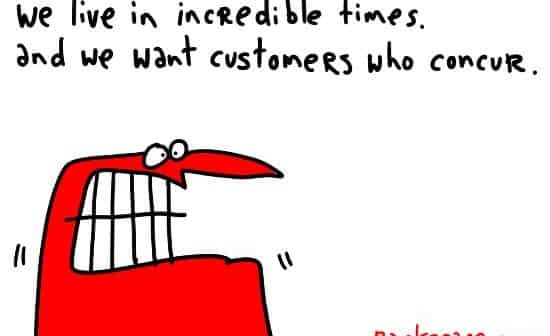
Another new car­toon for the Racks­pace series.…

Basi­cally, I took the old “George” idea and re-jigged it, adding the tra­de­mark Racks­pace red & black.

And hey, it worked.

I see this car­toon going in the slide deck of Rackspace’s recruiters.

We’re not a ‘nor­mal’ com­pany  etc. It’s OK not to be ‘nor­mal’ etc. ‘Nor­mal’ is boring etc.

It’s easy for a small com­pany to have a dis­tinct per­so­na­lity. Much har­der when the com­pany has grown a lot, like Racks­pace has done in the last few years.

Much har­der to NOT be normal…

[Com­mis­sion your own car­toon from gaping­void etc.]

December 27, 2010

rackspace: why not try to rip the face off the dragon?

[Down­load prin­ta­ble ver­sion here etc.]

This is my latest car­toon from the series I’m doing for Racks­pace.

One thing that Racks­pace is very proud of is their cus­to­mer base. Both in terms of qua­lity and quan­tity. Not only do they have some really wic­ked cus­to­mers, they have lots of them.

And no, I’m not just being nice because they’re my client. Some of them ARE awe­some. A lot of ama­zing com­pa­nies that you’ve heard of and admire.

So… what’s wrong with wan­ting more where that came from?

What is wrong with wan­ting THE BEST cus­to­mer base in the world, and adjus­ting your busi­ness plan accordingly?

And what is wrong with dec­la­ring that to the fric­kin’ world?

To be honest, I don’t just see this car­toon as an inter­nal moti­va­tio­nal pos­ter wha­tsit. I also see it as a full blown adver­ti­se­ment– one that could easily go into maga­zi­nes like Wired or Inc.

What’s wrong with dec­la­ring to the world, “Here’s what we’re going after with a ven­geance”, rather than the usual “Here’s why should buy our won­der­ful pro­duct” drivel?

And the car­toon cha­rac­ter: why not make him stres­sed out and antsy– like real entre­pre­neurs are– rather than the usual happy-happy-joy-joy that most adver­ti­se­ments run with?

Why not talk to peo­ple about the ACTUAL world we live in, rather than the irri­ta­ting fan­tasy world that Madi­son Ave created?

Why the hell not?

We’re all going to be dead in 100 years. In the mean­time, why not try to rip the face off the dragon?

Exactly.

December 20, 2010

“the high-end microaudience”: the most likely way to make money on the internet
[A dif­fe­rent angle on the Angel Gabriel etc. You can get the print here etc.]

This is why I love the internet…

In the old, pre-internet days, if you were a car­too­nist like me and wan­ted to be suc­cess­ful, you pretty much had to be famous.

Not hugely famous neces­sa­rily, but some­body with a pretty major publishing gig. Like Pea­nuts, Doo­nes­bury, Dil­bert, Gar­field or Bloom County, or some of The New Yor­ker heavy­weights like Stein­berg or Ronald Searle.

And those gigs were hard to come by. You nee­ded a big time publi­ca­tion syn­di­cate or media com­pany to back you. And then the news­pa­pers, the adver­ti­sers and the media lands­cape in gene­ral had to be on board as well.

And of course, all this requi­red a VERY large audience. Millions of peo­ple, lite­rally. Just so you could make an OK living.

As we all know, the more peo­ple you need to keep happy, the less likely that’s going to hap­pen, or at least, the less you can con­trol. Mass audien­ces are a fic­kle, unpre­dic­ta­ble bunch. And they have a nasty habit of igno­ring peo­ple like you com­ple­tely, and going for peo­ple like Jus­tin Bie­ber or Paris Hil­ton instead.

Which is why I never took this route. Too many varia­bles I couldn’t con­trol. And my work was never mains­tream enough, anyway.

Thank God the inter­net came along and chan­ged everything. Sud­denly I found myself making a damn good living, without having all those mains­tream hoops to jump through first. Just by dood­ling wee, non-mainstream car­toons all day, to what by old mains­tream stan­dards would be a TINY audience that I reach via this blog, Twit­ter and my news­let­ter.

This is made pos­si­ble because the web, as we all know, is  a SUPERB way to sell rela­ti­vely high-end pro­ducts. In my case, pri­vate, client-based com­mis­sions are worth THOUSANDS AND THOUSANDS of times more than the adver­ti­sing eye­balls that ulti­ma­tely pay for the news­pa­per cartoonist’s mort­gage. Of course they are. Not to men­tion, the com­mis­sions are fun and inte­llec­tually inte­res­ting to work on.

Which is why my advice for anyone trying to suc­ceed on the web is, make the highest-end pro­duct you can, and then tar­get the tiny hand­ful of peo­ple– the mic­roau­dience- who are likely to buy it. For­get the mas­ses. Tar­ge­ting the lat­ter is too much like trying to win the lot­tery– though great when it hap­pens (howe­ver unli­kely), there are just too many damn varia­bles outside your control.

Any ques­tions?

December 19, 2010

“sure, we all need money. but I think we need chemistry more.”

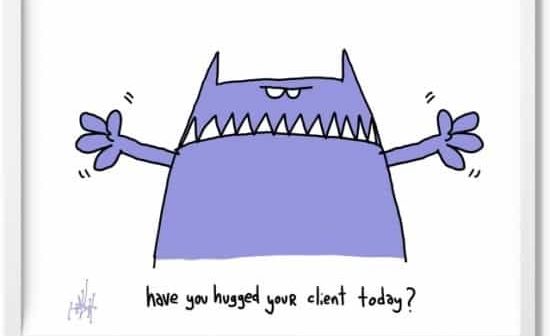
[“Hug­ged”, which went out ear­lier this year in the news­let­ter. You can buy the print here etc.]

I love the backs­tory to the “Hug” car­toon above:

My mother, in her day, was a very suc­cess­ful edu­ca­tion soft­ware con­sul­tant. “Have you hug­ged your client today?” was her line, not mine.

She always had about 6 – 10 Blue Chip clients on board at one time. Com­pa­nies like Shell, Exxon, Coco-Cola etc.

And no mat­ter what kind of day she was having, EVERY DAY she would make some kind of effort to demons­trate to each and every client that… she cared, that this stuff mat­te­red, that she was willing to go the extra mile.

And it wor­ked. It cer­tainly paid for me and my sister’s education.

“Hug­ging clients” is really a no-brainer.

Unless you don’t really like your clients. Unless you’re just in it it for the money.

Then it just feels sleazy and wrong.

There’s nothing wrong with insis­ting on good che­mistry, before you com­mit fully to wor­king with someone.

Sure, we all need money. But I think we need che­mistry more.

[P.S. Spea­king of che­mistry, I’m really grok­king the work I’m doing with Racks­pace at the moment. Thank CHRIST for peo­ple like Rob La Gesse etc.]


December 15, 2010

interview with @soniasimone

[“I tra­ded bore­dom for stress. And it was so worth it.” Great inter­view of @soniasimone, on beco­ming an entre­pre­neur etc.]

December 10, 2010

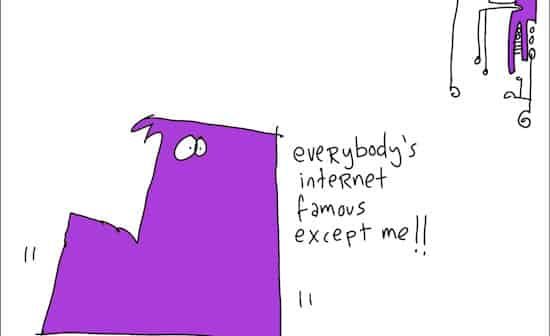
internet famous

December 8, 2010

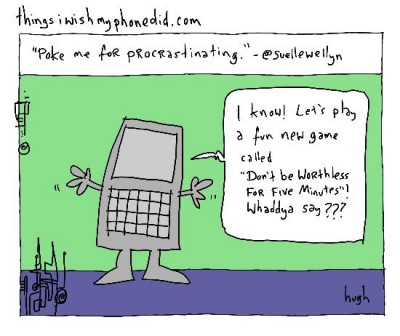
#thingsiwishmyphonedid: ideas requested

Over at Things I Wish My Phone Did, I’ve star­ted accep­ting other people’s idea sub­mis­sions for new cartoons.

The first one I used was from David Herrold, pic­tu­red above. Thanks, David!

Sure, Things I Wish My Phone Did star­ted life out as a small side pro­ject on behalf of my client, Line2, bit something tells me that it could be something much big­ger, something much more inte­rac­tive. There are a lot of peo­ple out there with strong ideas and opi­nions about “What a phone could be”.

All new ideas– both for new car­toons and ideas for where take the web­site– gra­te­fully recei­ved. Just ping me on Twit­ter, pre­fe­rably using the #Thing­sI­WishMyPho­ne­Did hash­tag. This could be huge. Thanks!

December 1, 2010

cube grenade: thoughtworks

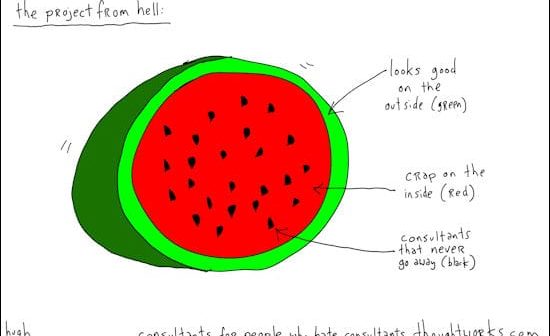
A “cube gre­nade” com­mis­sion I just com­ple­ted for Thought­works, the glo­bal IT con­sul­ting company.

Thought­works has this term, “Water­me­lon”, to desc­ribe a pro­ject that goes terribly wrong, that looks all well and good on the outside (green), but as the pro­ject comes to an end, turns out to be a huge ol’ expen­sive mess on the inside (red). I just took the idea and ran with it.

We’re going to turn this design into a 100 large fra­med prints, as Christ­mas pre­sents for their clients. A fun little “con­ver­sa­tion star­ter” to hang on their walls… which of course, is what the the whole cube gre­nade idea is all about. “Art With Pur­pose” etc.

Fun!

[Com­mis­sion your own cube gre­nade here etc.]

November 27, 2010

the futility of “keeping up with the e-joneses”

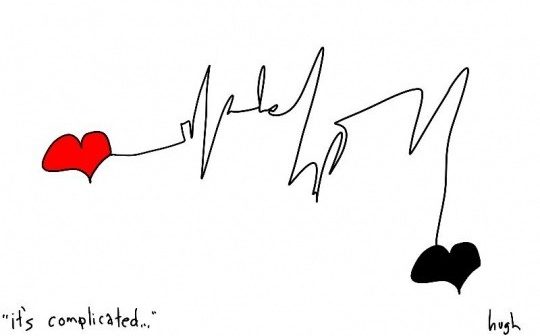
[“It’s Com­pli­ca­ted”. You can buy the print here etc.]

So somehow or other you found your­self online in a big way.

Somehow or other you deci­ded, like millions of other peo­ple, that if the future is online, it would be silly not to join in. So you decide to get with the program.

And so you get your­self hoo­ked up with the usual stuff… a blog, Twit­ter, Face­book, Flickr, Tumblr, and wha­te­ver Robert Sco­ble is using that week. And then wait for that afo­re­men­tio­ned future thing to start happening.

While you’re wai­ting for that future thing to begin, you can’t help noti­cing that cer­tain peo­ple in the same field as you– peo­ple far more suc­cess­ful and well-known than you, peo­ple who you aspire to be like one day– have fifty times the amount of Twit­ter follo­wers as you do. Or whatever.

So you spend the next two years of your life trying to get as many Twit­ter follo­wers as those peo­ple. Not only do you fail, meanwhile, your wife lea­ves you, your car is repos­ses­sed, and you have to move back in with your parents.

The futi­lity of “Kee­ping up with the e-Joneses”. You’re bet­ter off spen­ding that time and energy trying to have a “smar­ter con­ver­sa­tion”. Of course you are.

[Bonus link:] Seth has a few thoughts on the sub­ject, as well. Well worth a look.

November 25, 2010

“art with purpose. work with purpose”

[One of the cube gre­na­des I did for Racks­pace etc.]

Here’s something to think about this Thanksgiving:

A year and a half ago I coi­ned the term, “Cube Gre­nade”, and since then, we’ve tried to build a busi­ness around it.

Art that you hang in your cubicle, in order to affect change, in order to start a con­ver­sa­tion. Art that you “toss” into the work/corporate envi­ron­ment, that hope­fully cau­ses a small “explo­sion”. Hence the term, Cube Grenade.

“Art with pur­pose. Work with purpose”.

Exactly.

Thanks to the Inter­net, the nature of work is chan­ging in so many ama­zing ways, and we’re all so damn lucky to be caught right in the middle of it.

As a car­too­nist, my work is totally ins­pi­red and infor­med by this– this is exactly why the work took the direc­tion it did.

And your work, wha­te­ver it may be, should also be affec­ted in the same way. I can’t think of a bet­ter time to be alive; I really can’t.

So besi­des friends and family, what bet­ter rea­son is there to cele­brate Thanks­gi­ving? Seriously…

November 21, 2010

things i wish my phone did 12

Another car­toon from the ThingsIWishMyPhoneDid.com riff….

November 18, 2010

asylum

[Wel­come to my world­view etc…]

small is the new big

This car­toon was sent out today in the news­let­ter. The idea was ins­pi­red by the book by my friend, Seth Godin.

Read Seth’s ori­gi­nal 2005 blog post on the sub­ject. It’s con­si­de­red a classic.

We live in HUGELY exci­ting times. You do know that, right?

things i wish my phone did 11

Another car­toon from the ThingsIWishMyPhoneDid.com riff….

live or die

[down­load the prin­ta­ble ver­sion here etc.]

This is the latest cube gre­nade I just did for Racks­pace.

It’s one of my favo­ri­tes I’ve done so far. [More Racks­pace work is here.]

I hope you like it, but it’s OK if you don’t. Here’s why I’m partial:

  • I like the ele­gance of the drawing.
  • I like the way it’s tal­king about something spe­ci­fic to the busi­ness (i.e. the cloud), not just some vague, “Go Team!” cul­tu­ral platitude.
  • I like the direct honesty of it. “We live or die by the cloud” etc. is basi­cally the God’s honest truth; it doesn’t mat­ter if one agrees with it or not. That IS Rackspace’s busi­ness stra­tegy, in black and white.
  • It just works. Straight and to the point. It does everything a good car­toon ought to do.

I am enjo­ying my gig with Racks­pace. Even if it’s still early days, they’re let­ting me play around with a new, HUGE idea. Yes, I am stoked.

November 10, 2010

“if you want to be more successful, you have to take a leadership position on something that matters”

So this is my latest #Evil­Plan for my client, HNI Insu­rance.

I drew the car­toon above.

What I’m going to do is recom­mend to the CEO, Mike Nata­li­zio to get it made up into a stack of sig­ned, limi­ted edi­tion prints. Say, 30 or 50 of them.

Then get them framed.

Then send them off as gifts to the the 30 or 50 most influen­tial peo­ple in the truc­king busi­ness. As a con­ver­sa­tion starter.

“Let’s talk about the issues, People.”

The truc­king busi­ness is full of messy issues [e.g. peo­ple dying in road acci­dents every day, which HNI is in the front line of], so why not address them more openly, more forthrightly?

Like it says in “Tri­bes”, by Seth Godin, the way to suc­ceed is to be a leader.

HNI hired gaping­void because they wan­ted to be more successful.

And I’m saying right back, OK,  if you want to be more suc­cess­ful, you have to take a lea­dership posi­tion on something that matters.

Which means having a “smar­ter conversation”.

And these prints would be their ope­ning salvo.

None of this is roc­ket science, all that’s requi­red is that a deci­sion be made.

A deci­sion to be a lea­der. A deci­sion to have a smar­ter conversation.

Not roc­ket science.

Easy.

[PS: We’ll see what Mike says. At time of pos­ting this, Mike hasn’t seen the car­toon yet. I’m sur­pri­sing him! Heh.]

[The Smar­ter Con­ver­sa­tion archive is here.]

November 9, 2010

things i wish my phone did 10

Another car­toon from the ThingsIWishMyPhoneDid.com riff.…

November 7, 2010

iPhone suicide

Just when you thought it was safe to go back into the water: Another car­toon for hackthephonecompany.com.

Something deli­ciously wrong about hips­ters who get overly attached to their iPho­nes– or to any Apple pro­duct in gene­ral. A rich vein for any car­too­nist etc.

[The #hackthepho­ne­com­pany car­toon archive is here etc.]

cube grenade: fizz

I just did this cube gre­nade for Fizz, the well-known Word-Of-Mouth mar­ke­ting agency [They did all that ground-breaking stuff for Pabst Blue Rib­bon etc.].

This idea is so sim­ple… do I really have to explain it? Exactly.

[Com­mis­sion your own cube gre­nade here etc.]

a human being

Another car­toon for hackthephonecompany.com.

[Phone car­toon archive here.]

a big company can choose


[down­load the prin­ta­ble ver­sion here etc.]

Another cube gre­nade I just did for my client, Racks­pace.

They were a small com­pany not that long ago. They no lon­ger are. Figure it out.

[Racks­pace car­toon archive.]

November 5, 2010

hack the phone company!

The latest car­toon. The latest cam­paign from gapingvoid.

hackthephonecompany.com

AT&T’s mono­poly was bro­ken apart in 1984, when the com­pany was split into seven parts.

But for iPhone users, AT&T is pretty much a mono­poly again, with their exc­lu­sive deal with Apple.

AT&T, Veri­zon, Orange, T-Mobile, Vodaphone, it really doesn’t mat­ter. They’re gene­rally expen­sive, they’re res­tric­tive, often the ser­vice sucks, so you’re always trying to bypass what they have on offer– trying to hack your way around it.

Line2 with their VoIP ser­vice, is trying to do the same.

We all are.

Click on the link (or click here) and see what we’ve done. There’s just a fun car­toon right now–

It’s a start. We’re hoping to make this the start of something big­ger. Much big­ger. We want to “hack” the phone com­pany. So do you. So does every­body else.

[PS: Here’s a link to what NYT Tech wri­ter, David Pogue, has to say about Line2.]

the red bit

A cube gre­nade I just did for our ciient, HNI Insu­rance.

A lot of HNI’s truc­king clients ope­rate with pro­fit mar­gins of around 2%. Ouch.

I like the car­toon just because it’s bru­tally in-your-face and to the point. No mes­sing around.

Of course, the easiest way for their clients to inc­rease their mar­gin, is to lower their risk. Which is where HNI comes in. Ker-chiing.

[More HNI car­toons here etc.]

October 30, 2010

whimsy

yesterday we sent out the 200th cartoon on the newsletter. hurrah!

[You can buy the print here etc.]

Fri­day [yes­ter­day] mar­ked the 200th car­toon we sent out on the news­let­ter. We sent out the car­toon above. Very cool.

Thanks to every­body for sup­por­ting it. It’s been quite an adven­ture so far. Not to men­tion, a lot of fun. Rock on.

October 29, 2010

“ideas that do not risk offense, aren’t.”

[Moles­kine dra­wing from 2009: “Tried Mea­ning­ful”. You can see the enlar­ged image here. See more like this over at the Moles­kine archive etc.]

“Ideas that do not risk offense, aren’t.”

And yes, your busi­ness is an idea. Your pro­duct is an idea. The con­ver­sa­tion you’re trying to have with your mar­ket is also an idea.

Hey, I didn’t say any of this stuff was easy…

[#smar­ter­con­ver­sa­tions]

the REAL reason why brands screw up on social media

[I drew this car­toon back in New York, 1998. Backs­tory here.]

Mark Earls, one of the grea­test mar­ke­ting minds on the pla­net, is bored of social media. Or at least, the con­ver­sa­tion about social media.

So let’s try to get at least this thing really straight:

Social net­works are not chan­nels for adver­ti­sers or for the adverts/memes you, your clients or any of your so-called “influen­tials” create, social net­works are for all of the peo­ple who par­ti­ci­pate in the network.

Being a social crea­ture means you spend your life in social net­works; being part of a social net­work gives each indi­vi­dual a num­ber of bene­fits —  sha­red pro­tec­tion, sha­red resour­ces and most impor­tantly sha­red lear­ning. Our abi­lity to learn from each other (the appropriately-named Social Lear­ning) is one of our all-too-mutual spe­cies’ most cha­rac­te­ris­tic capa­bil­ties and the engine by which stuff gets pulled through popu­la­tions (from tech­no­lo­gies to health habits).

In other words, social media (and the brands that want to be part of it) are at their most power­ful when they offer two things:

Sha­red learning.

Sha­red teaching.

Great art teaches. Great artists teach. What do you teach? What does your busi­ness teach? What is actually lear­ned, impar­ted? Not just the prac­ti­cal stuff, but the deep, messy stuff about ourselves?

Just thought I’d ask…

[UPDATE] Darren left a great comment:

I fre­quently talk to peo­ple and com­pa­nies who are loo­king to take their first stab at social media pre­sence spe­ci­fi­cally for the pur­pose of adver­ti­sing their pro­duct or ser­vice. No! No! No! Its about enga­ging your audience in mea­ning­ful con­ver­sa­tion. Ine­vi­tably, they push for­ward, create a Face­book page and Twit­ter account, post for a few weeks. They have almost no fans or follo­wers and won­der why their 27 posts with 10% cou­pon codes brought no inc­rease in revenue!

Because their 27 posts and 10% cou­pon code pla­yed no part in sha­red lear­ning or sha­red teaching, that’s why.

[#smar­ter­con­ver­sa­tions]

wicked problem #47: the lucky trucker

So I just did this car­toon for my client, HNI.

Basi­cally, the truc­kers that are most pro­fi­ta­ble for any truc­king com­pany are gene­rally the most hard to insure. The ones who score highest on safety make less make less money for the com­pany… and then you’ve got these Feds coming in with “CSA 2010″, making it even more com­pli­ca­ted. Lucky truckers…

The car­toon by itself, is not that interesting.

The fact that HNI are the only peo­ple in the insu­rance industry willing to talk about it in the open, are willing to have a “Smar­ter Con­ver­sa­tion” about it, is inte­res­ting.

At least to me…

technology wants to be human

[The latest car­toon I did for PSFK…]

October 27, 2010

“if you’re david, fighting goliath, don’t let goliath choose the weapons”

Our client, Line 2, is a small VoIP start-up, aiming to take some busi­ness from Goliaths like AT&T.

So Line 2, like David in The Bible, has to choose its own wea­pons i.e. like the car­toon above. Heh.

[More Line 2 car­toons etc here…]

[PS: The “Don’t let Goliath choose the wea­pons” line is an idea I sha­me­lessly stole from my old buddy, Sigurd. Hence the quo­ta­tion marks etc.]

rackspace: die trying


[Down­load the prin­ta­ble ver­sion here.]

I did this print a few months back– I thought the sen­ti­ment would also make a good cube gre­nade for our client, Racks­pace. Et Voila…

[Bonus link] From Euan Sem­ple, 2006:

Maybe love does have a place in busi­ness after all. Maybe more and more of us will start to have the cou­rage to begin to talk about what really mat­ters to us about work and our rela­tionships with each other and to push back the ste­rile lan­guage of busi­ness that we have been trai­ned to accept. Maybe we will rea­lise that accep­ting love into the work­place reminds us of the ori­gi­nal pur­pose of work – not to maxi­mise sha­rehol­der value but to come together to do good things, to help each other and hope­fully to make the world a bet­ter place.

Maybe …. Oh and by the way if the above is too new age and namby pamby for you I rec­kon social com­pu­ting is capa­ble of tal­king 25% out of the run­ning costs of most busi­nes­ses – so there!

[@euan]

October 18, 2010

“how do do you amplify a start-up culture inside a big company?”

[Down­load the prin­ta­ble ver­sion here.]

A cou­ple of days ago my buddy, Robert Sco­ble (him­self a Racks­pace emplo­yee) twit­te­red the ques­tion, “How do do you amplify a start-up cul­ture inside a big company?”

A damn good ques­tion, Robert. I thought it would make a good piece of art, hence the car­toon above. More spe­ci­fi­cally, I thought it would make a good image to go on the back of  a Racks­pace busi­ness card.

Racks­pace is a big com­pany (3,000 emplo­yees), but not big enough where they can no lon­ger remem­ber when they were a small com­pany. So maybe it’s bet­ter to start a con­ver­sa­tion (which is what han­ding out a busi­ness card does, ideally) with a per­ti­nent ques­tion, rather than the usual “Here’s why you should buy our stuff” shpeel…

recently i gave up drinking booze and took up drinking green tea instead…

October 16, 2010

the hughtrain mkii

THE HUGHTRAIN MkII

1. The mar­ket for something to believe in is infi­nite. We are here to find mea­ning. We are here to help other peo­ple do the same. Everything else is secon­dary. We humans want to believe in our own spe­cies. And we want peo­ple, com­pa­nies and pro­ducts in our lives that make it easier to do so. That is human nature.

2. The most impor­tant word in mar­ke­ting is “com­pli­city”. It’s not enough for the cus­to­mer to love your pro­duct. They have to love your pro­cess as well.

3. Your cus­to­mers are beco­ming smar­ter about your mar­ket a lot fas­ter than you are. Thanks to the inter­net, your cus­to­mers are able to talk to each other. They are able to find bet­ter infor­ma­tion about your pro­duct than you are able of willing to give them, much quic­ker than you are capa­ble of giving them. The con­ver­sa­tion will hap­pen with or without you, you’re bet­ter off joi­ning in.

4. The pri­mary job of an adver­ti­ser is not to com­mu­ni­cate bene­fit, but to com­mu­ni­cate con­vic­tion. It’s not about what you have; it’s about why it matters.

5. A company’s pri­mary role is to func­tion as an “idea ampli­fier”. A company’s pri­mary role is not to make or do stuff. Making and doing are mere subsets.

6. The future of adver­ti­sing is inter­nal. The har­dest part of a CEO’s job is sha­ring his enthu­siasm with his collea­gues, espe­cially when a lot of them are making one-fiftieth of what he is. Selling the com­pany to the gene­ral public is a piece of cake com­pa­red to selling it to the actual peo­ple who work for it.

7. Your job is no lon­ger about selling. Your job is about firing off as many synap­ses in your customer’s brain as pos­si­ble. The more synap­ses that are fired off, the more dopa­mi­nes are relea­sed. Dopa­mi­nes are seriously addic­tive. The more dopa­mi­nes you release, the more the cus­to­mer will come back for more. Your cus­to­mer thinks he is coming back to you for sane, ratio­nal, value-driven rea­sons. He is wrong. He is coming back to feed.

8. Good-bye, Mes­sa­ges. Hello, Social Ges­ture. A well-executed mar­ke­ting cam­paign is an act of love.

9. Con­trol the con­ver­sa­tion by impro­ving the con­ver­sa­tion. Choo­sing to have a “smar­ter con­ver­sa­tion” with the mar­ket is not a mar­ke­ting deci­sion; it’s a moral decision.

10. The more porous the mem­brane that sepa­ra­tes your busi­ness from your mar­ket, the easier it is for both par­ties to be in align­ment. And the more porous the mem­brane, the easier it is to fix non-alignment.

[Ori­gi­nally published Novem­ber, 2006]

things i wish my phone did 09

[Down­load prin­ta­ble ver­sion here.]

[#Smar­ter­Con­ver­sa­tions]

crap jobs

[Down­load the prin­ta­ble ver­sion here etc.]

[#Smar­ter­Con­ver­sa­tions]

san antonio

[Down­load the prin­ta­ble ver­sion here etc.]

[#Smar­ter­Con­ver­sa­tions]

October 14, 2010

are you a beacon?

[“Adven­ture”. Buy the print here etc.]

Are you a beacon?

A bea­con is a navi­ga­tion sig­nal that tells you where you are when you’re lost at sea.

We spend a lot of our careers being lost at sea.… padd­ling away, not quite sure where we are, hoping to God that a big wave won’t come along and swamp our little boat.

And we look for bea­cons to guide us, to give us hope, to tell us where we are, to show us where the stan­dard is, to show us the way for­ward. Bea­cons can be peo­ple, pro­ducts, busi­nes­ses or even ideas.

“Life might suck right now, but one day I’ll land a kick-ass job as Crea­tive Direc­tor for Cris­pin Porter!”

“Life might suck right now, but one day I’ll write as good a novel as Jonathan Franzen!”

“Life might suck right now, but one day our pro­duct will be bet­ter than SAP or Oracle!”

These are beacons…

Obviously, if you or your pro­duct is a bea­con to other peo­ple in your own industry, you have a con­si­de­ra­ble advan­tage going for you. Not to men­tion, a really good rea­son to get up in the morning.

So in my typi­cal way, I’ll ask you, are you bea­con? If not, don’t you think you should be?

To be honest, I wasn’t really thin­king about you when I sat down to write this, sorry. I was actually thin­king about my client, Racks­pace. Are they a bea­con? I know they’re cer­tainly capa­ble of it.

I’m just thin­king out­loud, here…

October 12, 2010

30 – 60% off: the main reason to subscribe to the gapingvoid newsletter

Tens of thou­sands of peo­ple now get the Daily Car­toon News­let­ter. The list grows and grows, and every day we get lots and lots of mail from peo­ple sho­wing the love.

But the NUMBER ONE bene­fit to subsc­ribe is that each day, for 24 hours, the car­toon de jour– the print– is avai­la­ble at around 30– 60% off the usual price. Just the day it’s ini­tially published and after that, it goes to full price. So, all the hard­core print jun­kies are buying them on the issue day, and after that, they and ever­yone else pays retail.

There is a sec­ret offer code on the bot­tom of each email, that reveals the dis­count of the day. Just use it when you go to checkout.

Start the day with an ass-kicking car­toon and maybe save some money as well etc.

Sign up here, and join the club. Rock on.

October 6, 2010

fanatical

[Down­load the prin­ta­ble ver­sion here etc.]

Racks­pace likes to desc­ribe their cus­to­mer sup­port as “Fana­ti­cal” [It’s right there on their home­page. Go see.].

Which got me thin­king, what does being “fana­ti­cal” actually mean? What are its real-world implications?

So I drew a car­toon with my take on it…

[#Smar­ter­Con­ver­sa­tions]

October 5, 2010

just a paycheck

[Down­load the prin­ta­ble ver­sion here.]

I find something rather amu­sing about the idea of peo­ple at Racks­pace prin­ting out this cube gre­nade, and han­ging it up everywhere in their San Anto­nio office. It would sure send a mes­sage to the newbies…

HR may not be able to say things like this, but hell, I’m a cartoonist…

[#Smar­ter­Con­ver­sa­tions]

October 4, 2010

things i wish my phone did 06

[Down­load prin­ta­ble ver­sion here.] [thingsiwishmyphonedid.com] [#smar­ter­con­ver­sa­tions]

October 3, 2010

“don’t be the best in the world at what you do; be the only one in the world who does what you do.”

[Last Fri­day I was sig­ning prints– 175 of these pup­pies. SAP, the large, Ger­man enter­prise tech com­pany put in a very large order, to give out to cer­tain key peo­ple within the orga­ni­za­tion. Trying to have a Smar­ter Con­ver­sa­tion. Exactly.]

“Don’t be the best in the world at what you do; be the only one in the world who does what you do.”

That quote is me paraph­ra­sing Jerry Gar­cia, lead gui­tar of The Gra­te­ful Dead. The thought always reso­na­ted with me.

If peo­ple like what you’re doing, and you’re the only one who’s doing it, you win.

Which is why I like doing Cube Gre­na­des. Com­pa­red to what most peo­ple are selling out there, they’re fairly unique.

It’s also what makes blogs so power­ful a mar­ke­ting device. Peo­ple can just see your own uni­que shtick evol­ving right there on the page, over time. They’ll either get it even­tually or they won’t. No sales pitch nee­ded. No need to com­pare your­self to some­body else. No need to fit into some pre-existing model, if you don’t want to.

It has never been a bet­ter time to be unlike anyone else. I hope you’re already taking full advantage…

September 30, 2010

thingsiwishmyphonedid 04

[thingsiwishmyphonedid.com]

[#smar­ter­con­ver­sa­tions]

September 29, 2010

rackspace cube grenade 01

A cube gre­nade I drew for Rob La Gesse, Scoble’s boss over at Racks­pace. [UPDATE: Rob blogs about it here as well.]

[Feel free to down­load the high-res ver­sion here.]

Disc­lo­sure: I’m currently doing a wee bit of con­sul­ting work for Racks­pace. This car­toon was ins­pi­red after tal­king to La Gesse the other day. He tells me that with all their assets– and with over 3,000 emplo­yees, they have many– their cul­ture is the thing that they’re collec­ti­vely most proud of. Rock on.

[#Smar­ter­Con­ver­sa­tions]

#thingsiwishmyphonedid 02


[#Smar­ter­Con­ver­sa­tions]

do more

I just desig­ned this cube gre­nade for one of my clients, the insu­rance bro­ker HNI.

As always, it’s basi­cally something to be down­loa­ded [from here], prin­ted out and hung up round the office. A “con­ver­sa­tion star­ter” etc.

Most insu­rance com­pa­nies want to sell you a lot of insu­rance, the more the merrier. One part of HNI’s shtick is, well, “More” is not always the most help­ful thing for the client etc.

The guy in the car­toon looks so unhappy simply because the very thought of actually “Doing” something actually frigh­tens a lot of peo­ple. Which is why the world is filled with so many clock-watchers.

Though this was desig­ned for HNI, if the mes­sage has any value to your busi­ness, feel free to print it out as well, thanks.

September 28, 2010

how american family insurance, a $10 billion asset insurer is having a smarter conversation

[NB: This post was writ­ten by my busi­ness part­ner, Jason Kor­man. Expect to hear more of him round here in future etc. –Hugh]

Back in the Spring, we were approached by Troy Janisch, Digi­tal Mar­ke­ting Mana­ger at Ame­ri­can Family Insu­rance about crea­ting a Cube Gre­nade that encou­ra­ged their 8,000+ emplo­yees to par­ti­ci­pate in their social media program.

Troy said that they wan­ted their 3,800+ agents to build stron­ger ties with their com­mu­ni­ties and also engage other emplo­yees who the com­pany want to have a voice and share in the new vision for the business.

AmFam has a very par­ti­cu­lar mar­ket: Local com­mu­ni­ties in eigh­teen sta­tes in the West and Mid­west, selling home and life poli­cies to middle income fami­lies. For their local insu­rance agents, com­mu­nity is everything and the stron­ger their ties, the bet­ter their busi­ness– it’s that simple.

With this in mind, the goal was to have 50% of all agents online, using at least Face­book, but hope­fully some other tools by year’s end.

If you think about it, its hard to ima­gine a more ele­gant use of tools like Face­book for buil­ding business.

On our side, Hugh’s goal was to create a ‘con­ver­sa­tion star­ter’ – something that would, on the face of it, explain to the digi­tally uni­ni­tia­ted (a) why they should make deve­lo­ping online con­nec­tions, a top prio­rity, and b) remind the reps what buil­ding THEIR busi­ness is really all about. The solu­tion ulti­ma­tely was two dra­wings: “Busi­ness is Con­nec­ti­vity” above, and “We’re not in the insu­rance busi­ness, We’re in the Con­nec­tion Busi­ness”, below.

A few weeks ago, I chec­ked back in with Troy to see how things were going. For Troy, he wan­ted to nudge along a Smar­ter Con­ver­sa­tion on a num­ber of fronts and had a plan that not only called for the orga­nic spread of the Cube Gre­na­des through the busi­ness, but also, one that was an overt, front and cen­ter cha­llenge to the cul­ture of the busi­ness. As Troy said, his goal was to ‘Nudge the cul­ture For­ward’ i.e. “To Change the cul­ture from Sales Orien­ta­tion to one of Cus­to­mer Orientation,”

After com­mis­sio­ning the Cube Gre­nade, AmFam, put up an exhi­bit of about a dozen of Hugh’s more ins­pi­ring works. They inc­lu­ded: Into­xi­ca­ted, X,Y,Z and the clean ver­sion of “Qua­lity”. The exhi­bi­tion was put up in a “bold loca­tion” in their head­quar­ters in Madi­son, where it would be seen by all the emplo­yees over the period it was up.

While the spread of the Cube Gre­na­des is hap­pe­ning. Peo­ple are prin­ting them out, and put­ting them on their email sig­na­tu­res, the art exhi­bi­tion really got people’s atten­tion, and not in the way that was ori­gi­nally planned.

A lot of atten­tion was focu­sed on the “Qua­lity” image, one of Hugh’s most popu­lar car­toons, and one that was redrawn in a Safe for Work mode for soft­ware giant, SAP, ear­lier this year. It seems that in Madi­son, Wis­con­sin, “Fric­king”, is not yet quite Safe for Work, so it pro­vo­ked a lot of ‘dis­cus­sion’ about the appro­pria­te­ness of the piece. Howe­ver, this was the ope­ning that Troy wan­ted. He tur­ned the con­ver­sa­tion into what the idea of “Fric­kin’ Ama­zing” means to a com­pany like Ame­ri­can Family, and ulti­ma­tely, he had is objec­tive in the crosshairs: “Cus­to­mer Service”.

As Troy says “ Nobody starts the day thin­king that they will give bad cus­to­mer ser­vice, but it’s the cul­ture that makes the dif­fe­rence as to whether it gets deli­ve­red,” he con­ti­nued, “Ever­yone says that they have Cus­to­mer Ser­vice, and many do, but Cus­to­mer Ser­vice is not simply top down, it is how ever­yone actually acts, as oppo­sed to aspi­res to act.”

And the­rein lied the rub, and the notion of having a “Smar­ter Con­ver­sa­tion” inter­nally about Cus­to­mer Ser­vice, what’s wrong with it, and how to make it “Totally Fric­kin’ Ama­xing”, and more impor­tantly, how do you create a cul­ture that sup­ports peo­ple taking the risks neces­sary to deli­ver ‘Totally Fric­king Ama­zing Ser­vice”. Crea­ting that inter­nal dia­lo­gue is not something that hap­pens by itself, but if the goal is to nudge along the cul­ture of an 8,000 per­son busi­ness, dis­rup­tion is the order of the day.

We’ll be chec­king back in with Troy to see how things are pro­gres­sing. But as Troy says, “The Con­nec­ti­vity Cube Gre­nade is about remin­ding peo­ple at HQ that the busi­ness is out in small com­mu­ni­ties, which is the heart of their busi­ness’ and whether the folks are on the front line, or in the call cen­ter in Madi­son, every voice is part of the brand, and ever­yone makes a difference.”

September 25, 2010

things i wish my phone did dot com

Things I wish my phone did. Dot com. It’s a web­site we’re buil­ding for our client, Line2.

It should be up in a wee bit… we’re hoping to have a lot of fun with it– an “Idea Ampli­fier”, as it were.

Re. The car­toon above: No mat­ter how much you love your new state-of-the-art phone, it can’t love you back [For now, that is].

[Food for thought] From Seth Godin, May, 2007:

Now, of course, most blogs are one-person ope­ra­tions. Which means that suc­cess­ful blogs are often run by rest­less, outward-bound peo­ple in a hurry. And a lot of blog­gers either have day jobs or pas­sio­nate side­li­nes. I think that’s a good thing, even when they fail. It’s frus­tra­ting for me to hear, “stick to your blog­ging,” when peo­ple cri­ti­cize a pro­ject crea­ted by a blog­ger – because it’s part of the blog­ging, part of the lear­ning, part of what’s unfol­ding. I’d rather read a book that’s infor­med by the acti­vi­ties (not the repor­ting) of the wri­ter, and I’d rather read a blog that’s based on the suc­ces­ses (and fai­lu­res) of the blogger.

Which brings us to Hugh Mac­Leod and his work for Mic­ro­soft. Some cri­tics think he’s selling out. I don’t. I think he’s having a huge impact on an orga­ni­za­tion –from the outside– at the same time that he demons­tra­tes how just about any large orga­ni­za­tion can rethink its role in the world. And he’s doing it in front of all of us, without a net.

September 19, 2010

the idea amplifier

On Fri­day I was tal­king to Peter Sis­son, gapingvoid’s new client, the guy behind Tok­tumi and Line2.

We were tal­king about “The Cock­tail Party Rule”- what’s true at cock­tail par­ties is also true in mar­ke­ting i.e. If you want to be boring, talk about your­self. If you want to be inte­res­ting, talk about something else.

Luc­kily, Peter concurs…

The way I see it, a pro­duct is an “Idea Ampli­fier”. You have an idea about something– pho­nes or wha­te­ver– and you build a pro­duct as an expres­sion of that idea.

For exam­ple, Zap­pos’ cen­tral idea is not really about shoes per se, it’s about com­pany cul­ture and cus­to­mer ser­vice– “Deli­ve­ring Hap­pi­ness”, as its CEO, Tony Hsieh calls it.

Simi­larly, with Line2 the cen­tral idea is not about an iPhone app, it’s about, and I’m quo­ting Peter here, “What pho­nes could be”.

And what can a phone be? I’m curious to find out. I think we all are.