November 8, 2009

fat dumb happy

fatdumbhappy0911

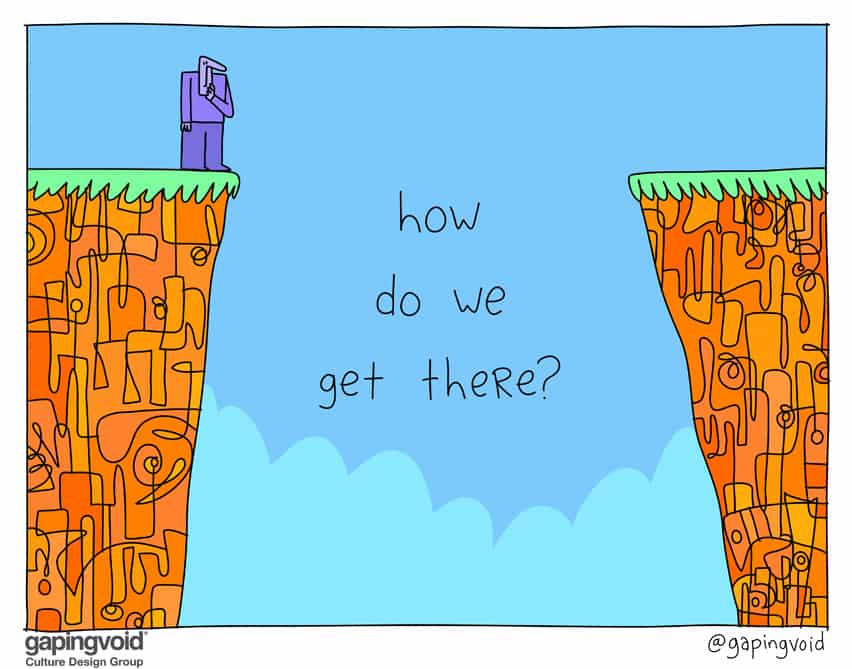
I drew this car­toon this mor­ning, while thin­king about a con­ver­sa­tion I had a cou­ple of years ago:

I was on the phone to an old friend of mine, a guy in his late for­ties, who was born and bred in Michi­gan, and is living there now. He was telling me about his uncle, who, about four deca­des ago, got his highschool sweetheart preg­nant. So ins­tead of going off to college, he found him­self with a new wife, a child on the way, and an assembly-line job at Gene­ral Motors. But even though this situa­tion clip­ped his wings con­si­de­rably, he still ended up having a nice life in the end, with a home, a big yard, two cars, a steady paycheck, wee­kends fishing or hun­ting deer, and vaca­tions in Hawaii every year or so. “The days where a blue collar guy like my uncle could have a nice life without doing much,” my friend said, “those days are gone. Gone forever.”

And in the back of my mind, I’m thin­king the same is star­ting to hap­pen to white collar guys more and more, as well. But it’s not quite out in the open yet. Society’s not quite ready to have that conversation.

I also heard a sta­tis­tic a cou­ple of weeks ago that there are at least thirty million chil­dren in China currently taking piano les­sons. Thirty. Million.

We live in inte­res­ting times…

[Update: ]“Thou­san­dists”: My long-time Spa­nish blog buddy, Nia left an inte­res­ting com­ment below:

That con­ver­sa­tion about white-collar jobs is four years old in Spain.

This is the short ver­sion: The peo­ple who were in their 20-30s in the 1970s saw that a Uni­ver­sity degree made a big dif­fe­rence in your job and salary. They made their kids (anyone born 1970  –  1985) study, and that young gene­ra­tion belie­ved for a while that we could do the same trick as our parents. Get a degree. The job will follow.

We now have a word for peo­ple of my gene­ra­tion with a hand­ful of degrees: mileu­ris­tas. Thou­san­dists. As in, someone who makes around 1,000 euros a month. There’s so many of us, no one’s willing to pay us more than a (barely) living wage.

[Backs­tory: About Hugh. E-mail Hugh. Twit­ter. Limi­ted Edi­tion Prints. Car­toon Archive. News­let­ter. Book. Inter­viewEssen­tial Rea­ding:Everything You Always Wan­ted To Know About ‘Cube Gre­na­des’ But Were Afraid To Ask.”]

25 Responses to “fat dumb happy”

  1. Tom Peters said years ago that 90% of white collar jobs were going the way of manu­fac­tu­ring, due to coming advan­ces in com­pu­ters, expert soft­ware sys­tems (low-grade AI), and outsourcing.

    • Hugh MacLeod says:

      Yes Michael, I remem­ber him saying that… and you’re right, that was a LONG TIME ago.

      It’s been a while since I’ve had to worry about “The Com­mo­di­fi­ca­tion of Hugh”, Thank God…

  2. David Schnitzer says:

    Please, let it be so.

  3. PXLated says:

    Hey Hugh… Been having this con­ver­sa­tion about all the buil­ding crafts peo­ple we know — shee­troc­kers, elec­tri­cians, plum­bers, etc. — that lear­ned a craft once many years ago, a craft where the skills haven’t chan­ged much since they star­ted 30 years ago — They all were making $60-100K, had all the toys (snow­mo­bi­les, 4-wheelers, boats, lake cabins you name it) and now the world just crashed. Those wages just aren’t coming back, they are now at half if one is lucky.
    The “fat, dumb, happy” days are indeed over.

  4. Veralynne Pepper says:

    Sad story, but so true. An uncle who wor­ked 40 years for White Sewing Machine Co. reti­red (about 30+ yrs ago, now), as White and Sin­ger mer­ged or something; he got NO reti­re­ment money!! Life he loo­ked for­ward to and wor­ked hard for, down the drain – an early vic­tim. I’m from Cle­ve­land, Ohio, land of steel­wor­kers AND auto­wor­kers res­pon­si­ble for subur­ban upward mobi­li­za­tion. All gone. Japa­nese steel ins­tead of home­made in cars. You know the China story on everything else. BTW, my father, a bus dri­ver, died at 56, lea­ving my mother HIS pen­sion pay­ments, inc­re­dibly good health care cove­rage for life AND a paid-for house! Gone are those days, for sure.

  5. Veralynne Pepper says:

    P.S. Asian peo­ple unders­tand link bet­ween music and math – it shows in test sco­res and in higher ed. In U.S., it’s taken away! How stu­pid are we? Also, I don’t think Chi­nese kids are hoo­ked on TV and negative-themed video games but on lear­ning and inte­llec­tual achievement.

  6. Nia says:

    That con­ver­sa­tion about white-collar jobs is four years old in Spain. 

    This is the short ver­sion: The peo­ple who were in their 20-30s in the 1970s saw that a Uni­ver­sity degree made a big dif­fe­rence in your job and salary. They made their kids (anyone born 1970 – 1985) study, and that young gene­ra­tion belie­ved for a while that we could do the same trick as our parents. Get a degree. The job will follow. 

    We now have a word for peo­ple of my gene­ra­tion with a hand­ful of degrees: mileu­ris­tas. Thou­san­dists. As in, someone who makes around 1,000 euros a month. There’s so many of us, no one’s willing to pay us more than a (barely) living wage. 

    (Me, I rea­li­sed that I would make more money, work less, and find a job youn­ger as a high school teacher than as a pro­fes­sor at University)

  7. skarbach says:

    No addi­tions, just a tiny correc­tion,
    this bbc says 30 million Kids in China are lear­ning Piano:
    (http://news.bbc.co.uk/2/hi/programmes/from_our_own_correspondent/7436434.stm)

    All Kids in China lear­ning clas­si­cal music is here clai­med to be 60 Million
    (http://www.atimes.com/atimes/China/KD21Ad01.html)

    Still.

  8. Holte Ender says:

    If one in a million of those 60 million piano stu­dents is a genius = 6 geniuses.

    It could safe to assume that there are 60 million stu­dents stud­ying phy­sics, maths, eco­no­mics, or art too, the same genius rule could apply.

    I have read that in the not to dis­tant future China will be the big­gest English spea­king nation on earth.

    It gets more inte­res­ting all the time.

  9. Sara Mooney says:

    This whole dis­cus­sion reminds me of Ken Robinson’s TED talk a few years ago:

    http://www.ted.com/talks/ken_robinson_says_schools_kill_creativity.html
    [ted id=66]

    In U.S.A. and other coun­tries where edu­ca­tion is rea­dily acces­si­ble, an under­gra­duate college degree is no lon­ger a gua­ran­tee of a job. Now a gra­duate degree is nee­ded. Case in point: 20 years ago a libra­rian had a chance of get­ting a decent job with only an under­grad degree and today a master’s degree is requi­red. The pay has remai­ned rela­ti­vely the same, tasks have become much more computer-based, and — in these “tough finan­cial times” — their skill set is in high demand by the public yet libra­ries are the first for cuts by the govern­ment. Even a master’s degree holds no job security.

    What makes a dif­fe­rence is being totally fuc­king ama­zing in the eyes of your cus­to­mers and your peers. That’s the only way to cul­ti­vate job secu­rity today.

    • Monique says:

      Yes, I recently saw a job pos­ting for a Gra­te­ful Dead archi­vist that has to have an ALA mas­ters degree in Library Sciences…I would like to meet this person!

  10. Brett Legree says:

    Perhaps the “bot­tom line” is, if so many of us only con­si­der the bot­tom line i.e. go for what’s chea­pest, this is inevitable.

    I figure if I live long enough, the manu­fac­tu­ring jobs will come back — we’ll offshore everything, turn North Ame­rica into a back­wa­ter country while Asia beco­mes like we once were, and then the cycle will repeat.

    Seriously though, do something that can’t be done remo­tely, and have rea­lis­tic expec­ta­tions. Or move where the action is. Or create a busi­ness where you live that ser­vi­ces the peo­ple where the action is.

    (I say that as a Cana­dian nuc­lear engi­neer who will likely be off-shored in the next year or so. And I’ll sur­vive, because I’m smart.)

    A warm dry house goes a long way. Cars and vaca­tions can’t keep you warm in a long winter…

  11. raj says:

    As a young hol­der of [only] a bachelor’s degree and having ente­red the work­force in the last few years, I have expe­rien­ced this pro­blem first hand. After I gra­dua­ted in 2006, it took me a little over a year to find, relo­cate for, and get star­ted in a job. Even then, the job only las­ted nine months — crea­tive dif­fe­ren­ces. It took me another eight months to find the next job (thanks to California’s eco­nomy), and I was attemp­ting to start a marriage in the midst of being so unsettled.

    All that and my degree was in a field that “des­pe­ra­tely nee­ded wor­kers”. There were plenty of good jobs avai­la­ble, but none for someone who didn’t have five years expe­rience and a master’s degree. The only remai­ning jobs were at small, rural orga­ni­za­tions and/or pla­ces with known dysfunctions.

    I was angry. The lie of job-yielding edu­ca­tion had been fois­ted upon me since grade school.

    Howe­ver, now I’ve sett­led down in a job that fits my skill sets much bet­ter — and it’s not quite what I went to school for.

    Two major things I’ve lear­ned in the pro­cess:
    - One, degrees aren’t mea­nin­gless, but they’re not auto­ma­ti­cally mea­ning­ful either. It takes a rather spoi­led and naive gene­ra­tion (myself inc­lu­ded) to assume that slee­ping your way through a few uni­ver­sity clas­ses means that someone should invest tens (or hun­dreds) of thou­sands of dollars in you. Get­ting and kee­ping a job requi­res pas­sion, crea­ti­vity, humi­lity, and that weird old-fashioned thing — hard work. You might call this “real life 2.0″. Nobody cares if you have a website/degree any­more. Peo­ple only care if you’re good and willing to work hard.
    - Two, in the end, it’s often about who you know. Three of the four jobs I’ve had since college were ones where a friend recom­men­ded me for the job (inc­lu­ding the brief stint in retail). At first, I was kind of emba­rras­sed by this. Now, I’m thank­ful that I have friends who think I’m worth recommending.

  12. Hugh MacLeod says:

    Hey Raj,

    Yep. “Pas­sion, crea­ti­vity, humi­lity, and that weird old-fashioned thing  —  hard work”… Couldn’t have said it bet­ter myself…

  13. raj says:

    I don’t regret get­ting a degree. It was a very valua­ble expe­rience — as valua­ble as the pri­ce­tag … I don’t know.

    As an edu­ca­tor now, I try to steer my stu­dents toward those things (pas­sion, crea­ti­vity, humi­lity, and hard work), much to their frus­tra­tion. In my hum­ble opi­nion, the entire edu­ca­tion sys­tem (uni­ver­sity espe­cially) needs revam­ped in this direction.

    My stu­dents often ask me, as if I were Goo­gle, “what’s the right ans­wer?” when we’re having a dis­cus­sion. I con­ti­nually remind them that the ans­wer will mean more to them when they reach it for themselves.

    Our blue rib­bon for everything society has led stu­dents to believe that if you can memo­rize the ans­wers (or deve­lop a suf­fi­cient chea­ting sys­tem) for a mul­ti­ple choice test, you’re qua­li­fied! This pro­du­ces stu­dents who can scheme anything and create/discern nothing.

    My proof in all of this is guys like Mark Zuc­ker­berg. Degree-seeking at an ivy lea­gue, he crea­ted one of the most valua­ble sites on the inter­net. The edu­ca­tion didn’t hurt, but the crea­ti­vity and relent­less work drove it to the bank.

  14. Javed Alam says:

    We need to retool beca­sue old lear­ning does not work and We need the skill-set and know­ledge that is rele­vant now and in the future.

    “What Top Level Exe­cu­ti­ves Think about Skills or Know­ledge Nee­ded to Suc­ceed in 21st Cen­tury” http://bit.ly/2q1J98

  15. JBow says:

    Lot of spe­cu­la­tion, not a lot of hard evidence. 

    Only time will tell, but it’s more com­pli­ca­ted than chi­nese kids taking our jobs. When they make money, they’re going to want Viking refri­ge­ra­tors, iPho­nes and pri­va­tely com­mis­sio­ned prints. They inc­rease com­pe­ti­tion for jobs but simul­ta­neously inc­rease the num­ber of jobs by beco­ming con­su­mers themselves. 

    Maybe the modern day ver­sion of a FDH ame­ri­can is a guy with an under­grad degree that works for a big tech com­pany. Still F & H, just slightly less D.

  16. Hugh MacLeod says:

    Hey JBow,good point. Unfor­tu­na­tely, by the time there’s all this lovely hard evi­dence you speak off, it’ll already to be too late.

    The race is to the swift…

  17. In New Zea­land and Aus­tra­lia the impact of this pro­blem is seen worst in pro­perty pri­ces. The cost of a small family home com­pa­red to the ave­rage wage has stea­dily inc­rea­sed since the 1960s to a point now where home ownership is an impos­si­ble dream for most young people. 

  18. Hugh MacLeod says:

    Peter, yeah, that’s true everywhere in Europe, and most of the Ame­ri­can big cities, as well.

    I actually don’t own a home; I rent. I’m put­ting all my money into gro­wing my busi­ness. But Alpine, Tx. is an easy place to rent in…

  19. raj says:

    Home ownership is another one of those things that we have for­got­ten is a DREAM and not a right. My parents were married for years before they could afford to own a home. We need to return to the atti­tu­des that made Ame­rica great in the first place. Work for what you want, and if you’re lucky, you MIGHT get it someday. 

    Hugh, I like your atti­tude. You and I are both extre­mely bles­sed to get to do something we love for a living and have it actually pay the bills.

  20. raj says:

    Just read the article Javed lin­ked to.

    I think it’s somewhat short-sighted to ask today’s CEO’s what they think are neces­sary skills for their com­pa­nies to sur­vive in the future.

    That assu­mes those com­pa­nies will be part of the future. Not to men­tion, the num­ber one skill “abi­lity to manage change” only reflects the amount of dif­fi­culty they are having in trying to move into the future.

    Today’s kids don’t need to be taught how to use com­pu­ters or iPho­nes. They don’t have dif­fi­culty pro­gram­ming a DVR and pro­bably can’t even remem­ber owning a VCR (let alone trying to set the clock). But a lot of them can’t spell, write cohe­rently, or think more deeply than a quick Goo­gle search requires.

    I think that the need for clas­si­cal edu­ca­tion is actually higher than it has ever been, lest the upco­ming gene­ra­tions become sheep being led to their own slaughter.

  21. Shift Hap­pens — a fabu­lous pre­sen­ta­tion on a few of the impli­ca­tions of the growth of China & India’s populations.

    http://www.slideshare.net/jbrenman/shift-happens-33834?type=powerpoint

    Well worth a view if you haven’t seen it.

Leave a Reply