April 22, 2009

does art have “users”?

Send to Kindle

studioexpJPEG.jpg
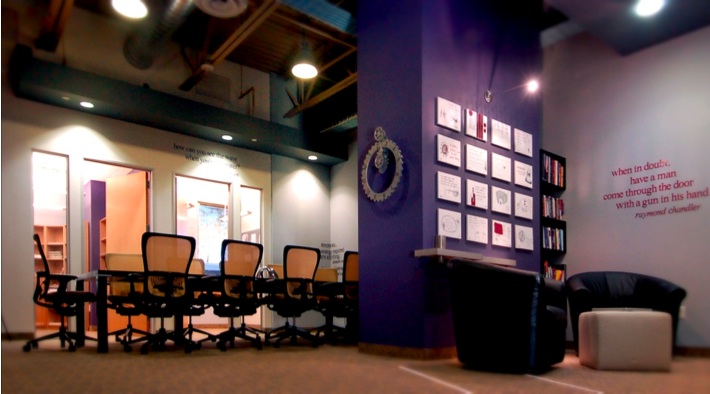
[Photo of The Expe­rience Stu­dio. Those six­teen small panels on the right are actually my car­toons.]
In my latest “Crazy Deran­ged Fools” news­let­ter that I sent out ear­lier today, I wrote about “The Kine­tic Quality”:

We’ve always seen the Kine­tic Qua­lity wor­king in mar­ke­ting, wor­king with brands. “By buying Brand X, I feel hip­per, coo­ler, sexier, more secure, more in con­trol” etc etc. But what I’m fin­ding out is, this also works with art. To me, the inte­res­ting thing about art is not the usual “Heroic, absinthe-soaked, vision quest lone indi­vi­dual archety­pal artist crap”, but how the art is USED by the per­son who has it han­ging on the wall. What’s it actually there for? Deco­ra­tion? Sho­wing off? A con­ver­sa­tion star­ter? An ice brea­ker? A way of telling a story? Something to brigh­ten up the room? A sym­bol of social sta­tus? An expres­sion of indi­vi­dual world­view? An expres­sion of emo­tion? A totem to remind one­self of something ins­pi­ra­tio­nal and/or impor­tant? Perhaps a bit of all these?
So I’m seeing two worlds collide here: The inter­nal, soli­tary part of making the art, and the exter­nal social part of how the piece of art is actually used.
Art? Used? Is art actually allo­wed to be “used”? Would the Art Police allow that? Ins­tead of calling them “Patrons”, can we call art buyers “Users” ins­tead? Would you be offen­ded if I called you that? There’s no wrong ans­wer…
Poten­tial Energy tur­ning into Kine­tic Energy. I guess one of the rea­sons I’ve always had such libe­ral licen­sing terms [“Want to use my stuff on your Power­Point Sli­des for free? Sure, go right ahead!!!.…”] is that I like seeing my work being USED. If peo­ple like my work, that’s great. But if they can actually find it tan­gibly use­ful, even better.

Soon after, Tony Kir­ton of The Expe­rience Stuido sent me the pho­to­graph above, with the follo­wing note:

We posi­tio­ned the your car­toons at the entrance of the stu­dio, to kick-start a rele­vant con­ver­sa­tion. Never failed!

It’s little men­tal trick that Kathy Sie­rra taught me– Don’t think of them as “Cus­to­mers” or “Patrons”, think of them as “Users”. Wha­te­ver thing you’re selling, it’s not what it does that’s inte­res­ting; it’s how peo­ple use it that’s inte­res­ting. “Peo­ple Mat­ter. Objects Don’t.” Exactly.

Be Socia­ble, Share!

"Hugh's Daily Cartoon" Newsletter. A new cartoon sent out every weekday morning to your inbox [RSS version here.]. A wee chuckle to start your day off right etc.

Tags: , , , ,

10 Responses to “does art have “users”?”

  1. John T Unger says:

    I’m not sure what to call my cus­to­mers… some­ti­mes, I call them buyers, some­ti­mes cus­to­mers, some­ti­mes “posse.” Users is as good as any other term and I do like the ideas behind it that you and Kathy bring to the term. It’s impor­tant, I think, to take the expe­rience of the art and it’s end use into con­si­de­ra­tion when crea­ting it.
    On the other hand, most of my art these days has an actual func­tio­nal com­po­nent… fire­bowls are for fires and socia­li­zing, chairs or fen­ces solve pro­blems of sea­ting or pri­vacy. But of course, a per­son can get a much chea­per fire­bowl, chair, fence. So the art is what makes the sale, or the con­nec­tion, the func­tion is just a mat­ter of good design.
    So I guess I very much think of peo­ple as “users” but I’m not sure I like the term as a label for them. In one to one con­ver­sa­tions with them, they’re peo­ple or friends. In terms of book­kee­ping, the buyer cate­gory is dif­fe­rent from the inquiry, pros­pect, maybe, never or repeat buyer categories.

  2. Tim Warren says:

    Couldn’t agree with you more.
    And on a slight tan­gent, your post kind of ties in with my ideas about Twit­ter: Twitter’s been suc­cess­ful because it’s not really about what it does (after all, it doesn’t really do that much), it’s much more about the ways peo­ple have *cho­sen to use it* — from inven­ting hash­tags, to dif­fe­rent sty­les of twee­ting, to crea­ting nume­rous apps around its API, and so on. Con­se­quently, users feel more invol­ved and inves­ted in its suc­cess, even perhaps feel a little affec­tion for it (to the extent of tole­ra­ting its glitches and break­downs, for ins­tance; even thro­wing ‘fail whale’ the­med parties) — more affec­tion at least, than I’d most peo­ple feel toward Face­book and its more top-down approach.
    The more peo­ple can involve them­sel­ves, inte­ract and influence what you offer, the bet­ter. Defi­ni­tely. Whether it’s art or anything else. That is to say, art doesn’t have to have a spe­ci­fic use,* but when it does it just makes the piece even bet­ter, makes the con­nec­tion even stron­ger.
    *actually, I’d tend to argue that all art is use­ful in some way, but this comment’s long enough already.

  3. Jake Edwards says:

    OH;
    but WHAT are they saying?

  4. Daniel Edlen says:

    So you send the news­let­ter and then repost the best part on your blog? Hmm, ;)
    I really like this con­cept as it is part of why peo­ple create I think. Why would one want to create to have their crea­tion sta­tic and dis­con­nec­ted from Life? Wha­te­ver pro­blems someone has with the word “user” or the word “crea­ti­vity” are point­less as they are just seman­tics. The subs­tance of what you’re saying is bri­lliant and won­der­fully dis­ti­lled as always.
    I know I want to build a whole triiibe of users of my social objects, blah blah blah. Words. Sheesh.
    Let the work, the crea­tions of our actions, be the point of con­nec­tion bet­ween peo­ple and peo­ple and their cul­ture.
    Peace.

  5. So if the pur­pose of art is to con­nect peo­ple with cul­ture, does that mean cul­ture is something other than art?
    Art has always been used and use­ful, espe­cially for pro­pa­ganda & PR. Some of the use of art is pretty intan­gi­ble though– chan­ging people’s lives, fee­lings, rela­tionships, unders­tan­ding of God and the world, through its beauty and impact on our per­cep­tions etc. Tra­di­tio­na­lists some­ti­mes call that “edu­ca­tion”- not sure that word covers it com­ple­tely.
    There’s always been a lot of bullshit surroun­ding art too, and posts like this are valua­ble for cut­ting through that– glad you’re doing all this, Hugh.

  6. michael says:

    Who else mis­ses Kathy’s blog and kick ass visuals? She had such an abi­lity to smack you with a salty visual to illus­trate her point.
    So how are users of Stormhoek USA going to kick some ass? Maybe that was the hook of your labels from days gone by? Anyone brin­ging a bottle of red with “buy this or the puppy gets it” wants to chat, star­ting with the red, then moving on to wha­te­ver is on the top of the prio­rity list.
    Cheers.

  7. I pre­fer ‘participant’

  8. Inte­res­ting pre­mise.
    From my per­so­nal view­point only, of course, as an art collec­tor (put­ting aside that I am an artist) I don’t like the word “user”. Mainly because I don’t think I use art. I buy art that affects me, and as it is on my walls (or floors or shel­ves) it con­ti­nues to affect me. I do nothing to the art­work, the effect one way from the art to me — so I sup­pose the art uses me! It’s not even deco­ra­tion because I simply put it in sight lines with little thought of anything else around it (which is why some is on floors).
    Which is not to say it’s a wrong word, might be per­fect for you as an artist. Daniel is right, it’s all seman­tics and per­so­nal reac­tion to a word.
    But I don’t like the word “patron” either, which seems old-fashioned and implies strictly a fis­cal rela­tionship.
    As an artist I haven’t really found a word that I am happy with. In my art busi­ness I use the words vie­wers and collec­tors interchan­geably. They’re the ones I’m most com­for­ta­ble with and I also feel “vie­wers” addres­ses those who admire the work and enjoy it at exhi­bi­tions even if they don’t buy it. Because frankly I think they’re impor­tant too! I create a visual object, so peo­ple loo­king at it is the most impor­tant fac­tor artistically.

  9. Of course art has users — and many uses.
    Anyone’s use of art is their reac­tion to it and what they do with that reac­tion. Some­ti­mes that is to be ins­pi­red, moti­va­ted, smile, be hap­pier that day, spark a tan­gen­tial thought.…and so on. Some­ti­mes the reac­tion is to buy the arti­fact and sell it again to make monet.
    Cave men used art for magic — so do we, it’s just dif­fe­rent magic.

  10. Sally Frank says:

    Does it even mat­ter?
    No artist paints or crea­tes thin­king about how a bazi­llion vie­wers or the sin­gle per­son that buys it could pos­sibly “use” their art.