If you’ve spent a lot of time around the New York literary party circuit in the last couple of decades, chances are you would’ve run into a very old friend of mine, the author and playwrite, Mark O’Donnell.
I met Mark at summer camp back when I was a kid. He was a camp councilor. Back then he was attending Harvard, where he and his twin brother, Steve, were heavily involved in the Harvard Lampoon, the great, old college humor magazine that spawned offshoots like National Lampoon, Spy Magazine and The Onion.
Mark’s specialty at camp was writing skits, which he’d get the kids to perform around th campfire. And damn, they were good. Funny and smart as hell. I still remember how much fun they were to put on. I still remember how much people loved them, both old and young.
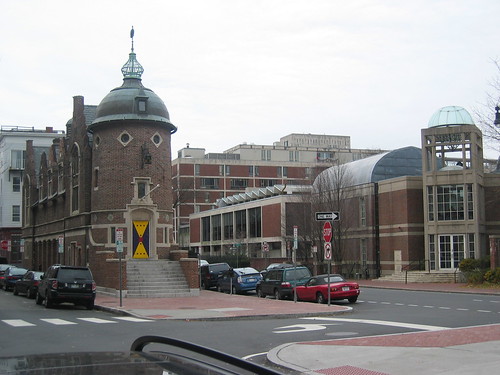
Fast forward ten years. I’m in college at UT Austin, though now I’m now back up East in Boston for a week, visiting family. I’m in the offices of the Harvard Lampoon, just hanging around the campus. The Lampoon was HQ’d in this really curious little building, that was donated to the college by William Randolph Hearst. Talking to the young president of the Lampoon and some other student staffers, I ask if they knew of Mark and Steve. Very much so, it turns out. Though they graduated a decade before, their names were still very much revered by folks there. I was told that Mark was off writing novels and plays, and Steve was now working as head writer for David Letterman. Both were living in New York.
So a few days later I phoned up the NBC Letterman office, asked for Steve, got put through, introduced myself, told him who I was and that I was looking for Mark etc. We talked for a bit, Steve gave me Mark’s number, I called him up, we talked for a whie, the next time I was in New York we hooked up and hung out; we’ve been friends ever since.
Ten Questions For Mark O’Donnell
1. After years of struggling as a classic New York humorist, you finally landed your first really big hit: Co-writer of “Hairspray, The Musical”, based on the John Waters film. The play won you a Tony Award, it now tours the world and has been made into a movie with John Travolta. I remember writing to congratulating you, and you wrote back, “And Hairspray is like only one per cent of what I’m proud of.” Perhaps, but it’s still pretty impressive stuff nonetheless. I also know you are still living in the same apartment you had when you first moved to New York in the late 1970s. Has your life really changed that much since Hairspray conquered the world?
It hasn’t changed at all, except I now have some security for my free-lancer old age. I’m certainly not famous, except to my friends. When I walked the red carpet at the Tony Awards, photographers kept asking me to get out of the way. Except one Japanese paparazzo, who said, “Over here, Mr. Dennehy!” He thought I was Brian Dennehy.
2. For the benefit of gapingvoid readers, let’s talk about the remaining 99% percent of your work. What else have you done that you’re proud of?
I joke that I’m obscure in many fields, but I am proud that I’ve published poetry, cartoons, plays, novels, essays and songs, even if I’m not well known as any one of those things. The diversity has been fulfilling. That Knopf and The New Yorker and Playwrights Horizons, the best in their respective arenas, have sponsored me — It makes me feel good, even if it’s our little secret.
3. I remember when your book, Vertigo Park came out. Basically, it was a collection of short humor pieces. One piece I remember in particular, “Marred Bliss”, actually got me to laugh out loud, something that rarely happens when I’m reading. It’s perhaps one of the top ten funniest things I have ever read in my life. Once you told me “Marred Bliss” was your “Party Trick”. Care to elaborate?
Basically, it’s characters talking in revealing Freudian slips: “I heard you were engorged, and I just slopped by to pave my regrets.” “Where is the strong, stabled man I’m taking to be altered?” It’s very funny, but only for ten minutes. It would get wearying after that.That’s why I call it a parlor trick. Also, it’s probably my most produced play, brief as it is.
4. You were also one of the first contributors to SPY, the famous satirical magazine. What was that like to work for, back in the early days?
It was wonderful, because my old Lampoon friend, Kurt Andersen, was the editor, so there was no “fear of teacher.” It was like a secret treehouse. He generously published a lot of my cartoons when other places weren’t biting, and when SPY became the capital of Hip, it was fun to go to its black-tie parties.
5. About a decade ago, I was living in New York when your novel, “Let Nothing You Dismay” came out. I remember hearing you being interviewed on New York Public Radio about it. One of those “Hey, I know that guy” moments. I really enjoyed the book. Though I’m straight, I remember really identifying with the main character, a gay, thirtysomething Manhattan guy whose life, shall we say, is going nowhere fast. The book chronicles his adventures during New York Christmas Holidays Party Season. He’s a guy who wants the same warm-and-fuzzy stuff we all do, but all he seems to have to show for his years living in “The Greatest City In The World” is underemployment, loneliness and alienation. You’re gay yourself, and as I’ve known you for a while, I did see some autobiography embedded in the story, however I didn’t see this book as “gay fiction”. There was something to it that captured the quintessential New York experience that transcends sex or sexuality- the high emotional price you pay for living there. You’ve lived in New York for over three decades, and I’m guessing, like all New Yorkers, you will have had plenty of painful, personal experiences similar to the main character. Was writing this book your way of working through those experiences?
GETTING OVER HOMER was my personal working-through-heartbreak novel. LET NOTHING YOU DISMAY is sheer imaginative speculation: the hero is five two, and I’m six two in height. I got the idea one Christmas season, when I went to two radically different parties in one day — an off-Broadway theatre’s, which had potato chips and wine in a box, and FORBES Magazine’s party, which had a live orchestra, tuxedoed waiters with hot hors d’oeuvres, and a glittering buffet. I thought you could paint a picture of all mankind in just a few strokes if you did it right. Also, the main character, because he’s short, aspires to higher things.
6. I remember meeting your twin brother, Steve, when he came up to the summer camp in New Hampshire to visit you for a few days. I remember seeing him wearing a tweed jacket, tie and slacks, and thinking, “Why is Mark all dressed up?” You guys were extremely identical in the twin department. And then yes, soon after you both graduated from Harvard and got jobs writing funny stuff for a living. Steve had his first big break writing for David Letterman [before that he wrote funny lines for a greeting card company]. Though you both have had nothing but love and mutual respect for each other over the years, your career took longer than Steve’s to reach the big time. Was that difficult for you, or did it not really matter?
We’ve never been competitors, we’re colleagues. His success is mine and vice versa. Does one doctor resent it when another doctor saves a life? Actually, it’s been up and down for us both, so no one’s ever “ahead.” We each believe in the other’s funniness, so the outside world’s response is beside the point.
7. Your humor, cartoons, and poetry have appeared in The New Yorker, Spy, Atlantic Monthly, the New York Times Magazine, you’ve published books, and your plays have been produced both on and off Broadway. I know you had a brief stint writing TV for Saturday Night Live, but if I were to sum up your oeuvre in three words, it would be “The Printed Page”. Your bother, however, opted for television, not just with Letterman, but also folk like Chris Rock and Seinfeld. I’m guessing you’re talented enough to have also gone down that road, had it appealed to you. But I’m guessing it didn’t. Thoughts?
I did write for SATURDAY NIGHT LIVE, and wrote assorted scripts that never got made. I’m a bit more bookish, I guess. Steve has thrived in TV, whereas I preferred books and plays. I joke that he’s the world’s most artistic comic and I’m the world’s most comic artist.
8. Wen you first started getting your name around New York, the world wide web didn’t exist. And now it does, very much so. Has the web affected your career? Has it made it harder? Easier? How has the world changed, from the perspective of the industry you’re in?
I’m techno-tarded, so the Web or whatever hardly affects me. The HAIRSPRAY screenplay had to be filed as an online attached document, that was, to me, a challenge. I expect I’ll have to handle it eventually.
9. This story really tickled me: After the success of Hairspray, you’re were working on a new John Waters musical, “CryBaby”, based on his film. A few months ago I sent you a note, telling you about how my “How To Be Creative” manifesto was going to be published as a book. I had no idea if you had yet come across it, at that point. And you wrote back, “One of our actors was browsing your website as we rehearsed CRYBABY, and was impressed I knew you. Qui peut savoir?” It seems to me, that when something you make gets successful [My most conservative estimate of how many people have read HTBC so far: Two million], it really takes on a life of its own. The author pretty much ceases to matter. You’ve got the author, you’ve got the piece of work, and suddenly you’ve got his THIRD THING that the work becomes, after it’s been seen and digested by enough people. Since Hairspray’s success, have you noticed this phenomenon?
Well, there’s a lot of HAIRSPRAY merchandise — Bloomingdale’s even did a fashion line — and high school kids everywhhere sing the score, but it was a collaboration between six people, and John Waters is the ultimate progenitor. I don’t take it personally, as you can with your strip. It’s how people introduce me now, though.
10. As your long-time fanboy, it’s really gratifying for me to see your work FINALLY getting the recognition it deserves. But as we both learned the hard way, “It don’t come easy”. Knowing what you know now, what advice would you have given yourself, years ago, when you first moved to New York as a young, aspiring writer just out of college?
Basically, don’t look down. I didn’t realize that the odds are against the struggling artist, but I assume talent, patience and work will vindicate those meant for whatever the dream may be.
And, as Yeats suggests, “Be secret and exult.” Take joy in what you do, even if as yet it goes unseen.
[The “Ten Questions” series archive is here.]