November 21, 2008

marketing as transformation

Send to Kindle

hardway7777.jpg
Back in 2004, I came up with pro­bably my favo­rite marketing-related insight ever:

“THE MARKET FOR SOMETHING TO BELIEVE IN IS INFINITE.”
We are here to find mea­ning. We are here to help other peo­ple do the same. Everything else is secon­dary.
We humans want to believe in our own spe­cies. And we want peo­ple, com­pa­nies and pro­ducts in our lives that make it easier to do so. That is human nature.

It was a real EUREKA! moment for me. Mea­ning. A-HA! That’s what we are always going to be willing to pay for. And somehow, even in a small way, your pro­duct has to be alig­ned with your customer’s never-ending search to find mea­ning in his or her own life.
Why does most mar­ke­ting fail, or at least, create unsa­tis­fac­tory results? Because most mar­ke­ting is obli­vious to this real human drive to find mea­ning.
Ins­tead, most mar­ke­ting appeals to rather tri­vial aspects of human exis­tence. Your bum will look sma­ller with this pro­duct. Your shoul­ders will look big­ger with this pro­duct. Your friends will be impres­sed if they see you using our pro­duct. Your living room will smell nicer with this pro­duct. You’ll save $13.42 if you use our pro­duct, ins­tead of their pro­duct. Yada, yada, yada…
But as we know, that’s not why we really buy most pro­ducts. Like I said in 2006:

If peo­ple like buying your pro­duct, it’s because its story helps fill in the narra­tive gaps in their own lives.
Human beings need to tell sto­ries. His­to­ri­cally, it’s the quic­kest way we have for trans­mit­ting use­ful infor­ma­tion to other mem­bers of our spe­cies. Sto­ries are not just nice things to have, they are essen­tial sur­vi­val tools.
And yes, the sto­ries we tell our­sel­ves are just as impor­tant than the sto­ries we tell other peo­ple.
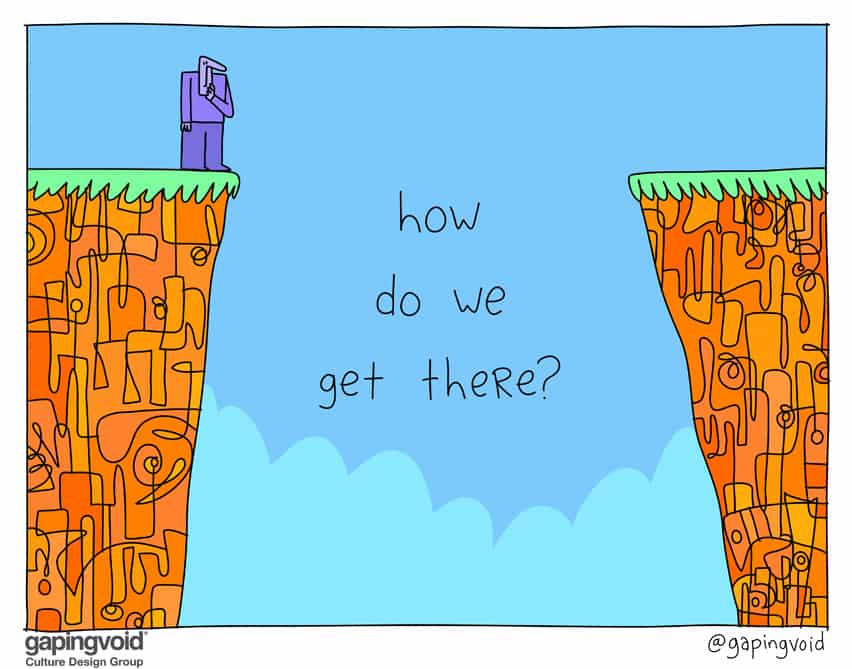
Ergo, mar­ke­ting is not about selling. Mar­ke­ting is figu­ring out where your pro­duct stands in rela­tion to per­so­nal narra­tive.
So where does your pro­duct fit into other people’s narra­tive? How does telling your story become a sur­vi­val tool for other peo­ple? If you don’t know, you have a mar­ke­ting pro­blem.
Narra­tive gaps. It’s all about the narra­tive gaps.

We find mea­ning, we fill in the narra­tive gaps, when we trans­form our­sel­ves. When we trans­form from unem­plo­yed sin­gle mother to world’s richest woman [Like what hap­pe­ned to Harry Potter’s JK Row­ling]. When we go from a size-12 dress to a size-6 dress. When we land our first real job pro­mo­tion. When we go from sin­gle horny guy to hap­pily married father of six. This need to cons­tantly trans­form our­sel­ves, from one state of being to another, never goes away. We are fluid crea­tu­res. We crave re-invention like we crave food or sex. And when we lose the capa­city to trans­form our­sel­ves, when we get stuck in a rut, is when life’s mea­ning starts to dry up.
Fine, I hear you say, that’s great if you’re selling “trans­for­ma­tive” stuff like exer­cise equip­ment or Tony Rob­bins semi­nars, but what about more pro­saic pro­ducts, like snacks or tooth­paste?
Sim­ple: Then your pro­duct exists in con­text of a much big­ger story– your custumer’s. Like being an extra in a much big­ger movie. Or a sin­gle sen­tence in a much big­ger book.
It’s OK to play a minor role. As social ani­mals, we are hap­piest when we feel we belong to something much lar­ger than our­sel­ves. A faith. A move­ment. A tribe. A noble calling. A Purpose-Idea.
And what is true for peo­ple, is also true for pro­ducts. They too are hap­piest when they belong to something much lar­ger than them­sel­ves. A faith. A move­ment. A tribe. A noble calling. A Purpose-Idea.
The peo­ple who ins­pire us the most are the peo­ple who aim higher than the limi­ta­tions impo­sed upon them. Triumph over adver­sity; it’s the oldest story in the world.
The pro­ducts that ins­pire us the most are the ones that also aim higher than the limi­ta­tions impo­sed upon them. Triumph over adver­sity; it’s the oldest story in the world.
So what’s your story going to be?

[Bonus Link:] Harold Jarche left a neat quote in the com­ments. From Neal Stephenson’s Anathem, page 414:

“So I loo­ked with fas­ci­na­tion at those peo­ple in their mobes [cars], and tried to fathom what it would be like. Thou­sands of years ago, the work that peo­ple did had been bro­ken down into jobs that were the same every day, in orga­ni­za­tions where peo­ple were interchan­gea­ble parts. All of the story had been bled out of their lives. That was how it had to be; it was how you got a pro­duc­tive eco­nomy. But it would be easy to see a will at work behind this: not exactly an evil will, but a sel­fish will. The peo­ple who’d made the sys­tem thus were jea­lous, not of money and not of power but of story. If their emplo­yees came home at day’s end with inte­res­ting sto­ries to tell, it meant that something had gone wrong: a blac­kout, a strike, a spree killing. The Powers That Be would not suf­fer others to be in sto­ries of their own unless they were fake sto­ries that had been made up to moti­vate them.”

Be Socia­ble, Share!

"Hugh's Daily Cartoon" Newsletter. A new cartoon sent out every weekday morning to your inbox [RSS version here.]. A wee chuckle to start your day off right etc.

Tags: , , , ,

12 Responses to “marketing as transformation”

  1. bonnieL says:

    Hugh, you are too fu**n right on the dime. As they said in a mid-1980’s Lowen­brau TV spot, “It doesn’t get any bet­ter than this.“
    b.

  2. And then I read Anathem, by Neal Stephen­son (p. 414):
    “So I loo­ked with fas­ci­na­tion at those peo­ple in their mobes [cars], and tried to fathom what it would be like. Thou­sands of years ago, the work that peo­ple did had been bro­ken down into jobs that were the same every day, in orga­ni­za­tions where peo­ple were interchan­gea­ble parts. All of the story had been bled out of their lives. That was how it had to be; it was how you got a pro­duc­tive eco­nomy. But it would be easy to see a will at work behind this: not exactly an evil will, but a sel­fish will. The peo­ple who’d made the sys­tem thus were jea­lous, not of money and not of power but of story. If their emplo­yees came home at day’s end with inte­res­ting sto­ries to tell, it meant that something had gone wrong: a blac­kout, a strike, a spree killing. The Powers That Be would not suf­fer others to be in sto­ries of their own unless they were fake sto­ries that had been made up to moti­vate them.”

  3. Douglas Karr says:

    Hugh, I think you just bri­lliantly applied my life story to the back of a busi­ness card!

  4. KAPITEL says:

    We live in a city of glass…a house of leaves.

  5. Rasul Sha'ir says:

    BAM!! There it is. Laid out in one post. GREAT nou­rish­ment for the wee­kend! Keep it comin’, Hugh. Keep it comin’.

  6. great work fella
    Friend of mine always says it ain’t mar­ke­ting if it doesn’t change the business!

  7. great work fella
    Friend of mine always says it ain’t mar­ke­ting if it doesn’t change the business!

  8. Anonymous Douchebag says:

    So you guys only sell your ser­vi­ces to com­pa­nies or pro­ducts you “really believe in”? Riiiiight.…

  9. Jeff Milam says:

    These are very obser­vant points Hugh — we are indeed about sto­ries and our com­mu­ni­ties (tri­bes) lend to our sto­ries a sig­ni­fi­cance far grea­ter than indi­vi­dual gain. I think that the mar­ke­ter is faced with a very inte­res­ting dilema in this rea­li­za­tion howe­ver. Will you be like the catho­lic church and fabri­cate a story in order create a house of cards from which you allow your cus­to­mers than hang them­sel­ves with ropes of delu­sion or will you take it upon your­self to lead your cus­to­mers at the price of a quick buck. To me, the most impor­tant aspect of this in the busi­ness world is honesty. Regard­less of what the story is, a busi­ness that can meet its cus­to­mers honestly will pre­vail. Social net­wor­king seems to be ope­ning up this pos­si­bi­lity as ambient awa­re­ness and stron­ger rela­tionship create in the con­su­mer a sense of clo­se­ness to a busi­ness or pro­duct and the­re­fore a grea­ter sense of accep­tance and loyalty. It is really almost surreal the ima­gine a world of honest busi­ness and loyal consumers…

  10. Daniel Edlen says:

    Moti­va­ting. Nicely said.
    My story is cele­bra­ting human crea­ti­vity and cul­ture.
    Oh, I’m not addic­ted to Twit­ter either… yet.
    Peace.

  11. […] help us make sense of the fee­lings evo­ked. Spe­ci­fi­cally, Hugh noted in a later post that peo­ple fill in narra­tive gaps with mea­nings they cons­truct from their own stories. It is on this point that the con­cept of per­so­nas becomes […]