November 1, 2008

creating blue monsters: “social objects” that articulate the purpose-idea

Send to Kindle

zzzzzz7654122.jpg
(Car­toon taken from The Hugh­train etc.)
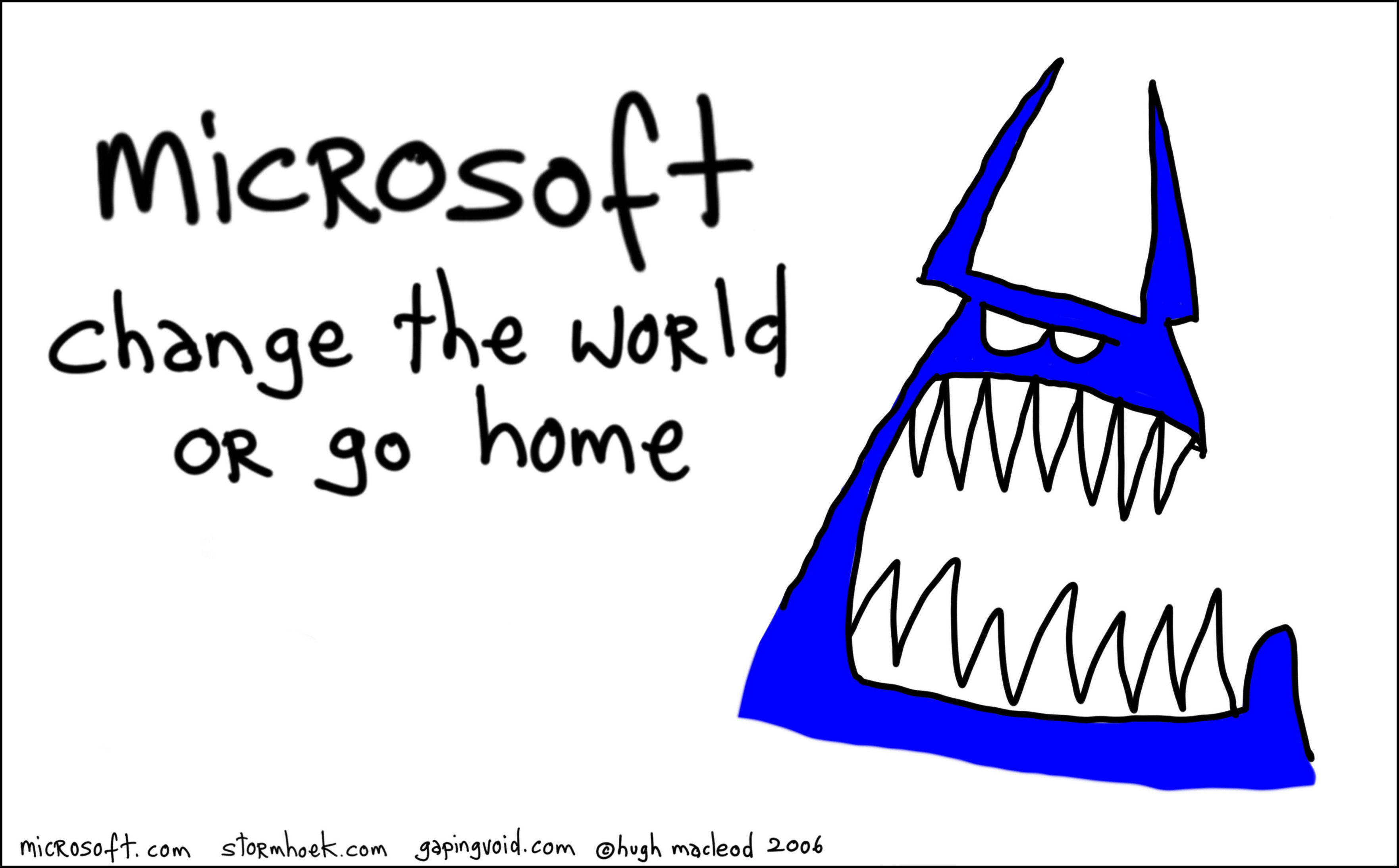
Like I said in my inter­view with Mark Earls, The Blue Mons­ter is a “Purpose-Idea”. As Mark, the man who first coi­ned the term explains it:

Put really simply, the Purpose-Idea is the “What For?” of a busi­ness, or any kind of com­mu­nity. What exists to change (or pro­tect) in the world, why emplo­yees get out of bed in the mor­ning, what dif­fe­rence the busi­ness seeks to make on behalf of cus­to­mers and emplo­yees and ever­yone else? BTW this is not “mis­sion, vision, values” terri­tory — it’s about real dri­ves, pas­sions and beliefs. The stuff that men in suits tend to get emba­rras­sed about because it’s per­so­nal. But it’s the stuff that makes the dif­fe­rence bet­ween suc­cess and fai­lure, because this kind of stuff brings folk together in all aspects of human life.

Real dri­ves, pas­sions and beliefs. Exactly.
The Blue Mons­ter line, “Change The World Or Go Home” is not roc­ket science or lite­rary bri­lliance. It just arti­cu­la­tes a sim­ple belief, a sim­ple pas­sion, a sim­ple drive THAT ALREADY EXISTED, long before The Blue Mons­ter ever came on to the scene. That’s all it was ever meant to do.
msbizcard999aaa.jpg
[The Mic­ro­soft Blue Mons­ter etc.]
Whether you agree or disa­gree with it doesn’t mat­ter, the impor­tant bit is that peo­ple within Mic­ro­soft believe it. Unlike a con­ven­tio­nal ad cam­paign, it’s not about you. It’s about them.
Why is something like this poten­tially valua­ble to a busi­ness? Simply put, if you believe something pas­sio­na­tely enough, for long enough, arti­cu­late it well enough, and your actions are alig­ned, cre­di­ble and con­sis­tent with your belief for long enough, it’s just a mat­ter of time before other peo­ple start belie­ving it, too. And next thing you know, you have an inte­res­ting con­ver­sa­tion going on, both inside and outside the com­pany. And as Doc Searls famously said, “Mar­kets are con­ver­sa­tions”. Ker-Chiing.
Again, none of this is roc­ket science. Tal­king to peo­ple never is.
When peo­ple ask me what exactly is a Blue Mons­ter, I tell them, it’s not neces­sa­rily a car­toon. It’s simply a social object that allows one to more easily arti­cu­late the Purpose-Idea. No more, no less.
I’ve been asking myself for years, what comes after con­ven­tio­nal, Madison-Avenue-style adver­ti­sing, now that we live in a post-TV, post-advertising, post-message world? “Crea­ting Blue Mons­ters” is the clo­sest I’ve ever come to fin­ding an actual ans­wer.
Besi­des dra­wing the car­toons, hel­ping other com­pa­nies create Blue Mons­ters is how I intend to spend the remain­der of my career.
Car­toons and Blue Mons­ters. I really do have the world’s grea­test job. Rock on.
[More Blue Mons­ter back­ground rea­ding here.]


Be Socia­ble, Share!

"Hugh's Daily Cartoon" Newsletter. A new cartoon sent out every weekday morning to your inbox [RSS version here.]. A wee chuckle to start your day off right etc.

Tags: , , , , , ,

13 Responses to “creating blue monsters: “social objects” that articulate the purpose-idea”

  1. David Damore says:

    What a great way of brin­ging an IDEA to paper. WOW!
    Will be lin­king to this from Twit­ter.
    Does the link in here > “(Car­toon taken from The Hugh­train etc.)” need the “www.”?

  2. juliejulie says:

    Blue Ocean Stra­tegy, Blue Mons­ters? Could we try pur­ple, maybe?
    This looks inte­res­ting. I’ll keep my eye on you, Mr. Hugh.

  3. Hi Hugh,
    Love the post mate, this is exce­llent. I’ve dealt with orga­ni­sa­tions, trying to help them find ‘Blue Mons­ters’ for a cou­ple of years and find it really empo­we­ring and cha­llen­ging. It cer­tainly does rock.
    Your Blue Mons­ters are a simi­lar con­cept to the idea of Gene­ra­tive Work­pla­ces, which I think Peter Senge out­li­nes in his ‘The 5th Dis­ci­pline’ book (I could be mis­ta­ken). The gene­ral idea being that when peo­ple are in total sync (not just with the exe­cu­ti­ves ‘boiler-plate’ vision, values blah blah blah)with an orga­ni­sa­tions being, great things hap­pen.
    Love the post, good luck roc­kin on!!!

  4. Catherine says:

    Utterly Bri­lliant post…

  5. “if you believe something pas­sio­na­tely enough, for long enough, arti­cu­late it well enough, and your actions are alig­ned, cre­di­ble and con­sis­tent with your belief for long enough, it’s just a mat­ter of time before other peo­ple start belie­ving it, too.“
    This is finally hap­pe­ning for our orga­ni­za­tion. It is ama­zing to watch my pas­sion blos­som in other hearts, to have peo­ple of autho­rity that I res­pect believe that we CAN change the world with this pro­ject. Kind of scary, too.

  6. John Dodds says:

    You do know who I’m going to blame when we see the ine­vi­ta­ble surge in the logos and mis­sion sta­te­ment businesses?

  7. Douglas Karr says:

    This even whitt­les down to search engi­nes and web sites or blogs. I tell folks all the time that 50%+ per­cent of their visi­tors are going to come from Search Engi­nes. Are they ans­we­ring the ques­tion that brought that per­son there? If they don’t, you just lost an oppor­tu­nity.
    Every page must have purpose.

  8. Mike Wagner says:

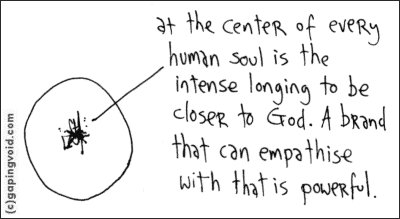
    This makes sense to me. Augustine’s “god sha­ped vacuum” can also be thought of “a Blue Mons­ter sha­ped vacuum” inside ever­yone of us.
    So does “the Word become flesh” equate in some fashion to “social objects” and “com­mu­ni­ties of pur­pose”?
    Is “living the brand” as lea­ders and emplo­yees equal to the incar­na­tion of the brand?
    My mind races.
    I’ve had a theo­logy of bran­ding for some time but it’s not usually something my clients will pay for. Grin.
    Keep creating…a brand worth com­mit­ting to,
    Mike

  9. theology…of adver­ti­sing?

  10. dazed says:

    I enjoy your blog very much. I usually agree with 98% of what you write. And enjoy the other 2%.
    While I don’t deny that the nature of adver­ti­sing will change, I am going to take issue with your asser­tion that we live in a “post-TV world”.
    The ‘TV is dead’ argu­ment is a fashio­na­ble and with all due res­pect, rather lazy one that’s unfoun­ded in com­pe­lling and per­sua­sive evi­dence.
    As the IBM report “The End of tele­vi­sion as we know it” points out:
    1. TV con­tent is MORE POPULAR THAN EVER with con­su­mers des­pite the avai­la­bi­lity of myriad alter­na­ti­ves, inc­lu­ding digi­tal music subsc­rip­tions, film DVD ren­tal ser­vi­ces,
    sate­llite radio and mas­si­vely multi-player video games. Total TV con­sump­tion hours have con­ti­nued to grow, with the ave­rage U.S. hou­sehold esti­ma­ted to spend 1826 hours with its TV in 2005 (the equi­va­lent of more than five hours per day. Hours vie­wed from con­tent down­loads and TV DVDs can be added to this tra­di­tio­nally mea­su­red
    con­sump­tion.
    2. TV con­sump­tion GREW at a 1.6 per­cent com­pound annual growth rate (CAGR) for the period 1996
     – 2003. Even after the point of mass broad­band adop­tion, vie­wership inc­rea­sed year-to-year in 2005 by 2.5 per­cent
    3. Going for­ward, analysts pre­dict TV usage to GROW by an ave­rage of 1.7 per­cent per annum through 2008
    And from Think Box in the UK:
    1. The total amount of broad­cast TV watched in Sep­tem­ber 2008 was UP 2.4% on Sep­tem­ber 2007, accor­ding to the latest figu­res from the Broad­cas­ters’ Audience Research Board (BARB)
    2. The ave­rage indi­vi­dual watched an ave­rage of 3 hours 31 minu­tes of broad­cast TV a day in Sep­tem­ber, UP 42 minu­tes a week on the same month last year.
    3. This pat­tern of growth is being dri­ven by INCREASED vie­wing of com­mer­cial broad­cast TV
    4. Com­mer­cial TV vie­wing was up 4.7% in Sep­tem­ber 2008 com­pa­red to the same month last year and com­mer­cial impacts were up 9.8%
    5. Peo­ple watched an ave­rage of 48 minu­tes MORE com­mer­cial TV a week in Sep­tem­ber 2008 com­pa­red to Sep­tem­ber 2007.
    6. Young peo­ple (16-24s) watched 2.8% MORE broad­cast TV than Sep­tem­ber 2007 (4.9% more com­mer­cial TV), and 11.7% MORE com­mer­cial impacts.
    TV will surely change.
    But the evi­dence actually shows vie­wing going up, NOT down — which your argu­ment for a post-TV world would require.
    The claim that we live in a post-TV world simply doesn’t withs­tand scrutiny.

  11. hugh macleod says:

    Hey Dazed, good points.
    When I say post-TV, I don’t mean peo­ple are watching more or less TV. I’m thin­king more in terms of Cul­ture.
    There was a time when TV was the main cul­tu­ral dri­ver in society. It was where the action was. I no lon­ger think it that is the case.

  12. dazed says:

    Ah — that’s a much more inte­res­ting argu­ment!!
    And on that one I think I agree.
    Steady vie­wership plus pro­li­fe­ra­ting chan­nels means that The Audience has been blown apart into tiny pie­ces. And with it the power of TV as an aggre­ga­tor of peo­ple, inte­rests, pas­sions and alle­gian­ces.
    Whe­reas we once all vie­wed into the same mirror to see our­sel­ves reflec­ted, now we each view into our own sepe­rate mirror.
    Which all rather begs the ques­tion whether the notion of one Cul­ture is — while not dead — at least seve­rely dimi­nished, at least in the deve­lo­ped, Wes­tern world.
    If we no lon­ger look into a com­mon mirror and simply choose our own indi­vual one, what beco­mes of us? Do we lose our sense of con­nec­ti­vity, mutua­lity, and inter­de­pen­dence?
    The whole web-y stuff has obviously acted as an aggre­ga­tor of inte­rests. But has it just given each of us even more oppor­tu­nity to create our own indi­vual cul­ture? My feed, my cul­ture, if you will.
    What hap­pens to a society when there is no lon­ger one com­mon camp­fire for every­body?
    Does this actually mat­ter? Or is it just interesting?

  13. hugh macleod says:

    Dazed, well, like Chair­man Mao said, when asked what he thought of the long-term effects of the French Revo­lu­tion, “It’s too early to tell”.