Archive for November, 2008

November 29, 2008

desertmanhattan update


[40-second video, no audio.]
PB260147.JPG
[“Desert­Manhat­tan”. India ink, pen­cil and acry­lic on can­vas. 4x8 ft. Click on image to enlarge etc.]
PB260141.JPG
[Close-up view. Click on image to enlarge etc.]
The final ink layer is about half done, which by my rec­ko­ning makes the whole thing about 75% com­ple­ted. Quite plea­sed with it, so far. Quite exci­ted to have it finally finished, one of these days…
The last 25% of a large dra­wing is always the har­dest. You’re so anxious to get it over and done with, the temp­ta­tion to take “short­cuts” gets har­der and har­der to resist. Star­ting a big pain­ting is easy. Finishing one is a nightmare.

November 26, 2008

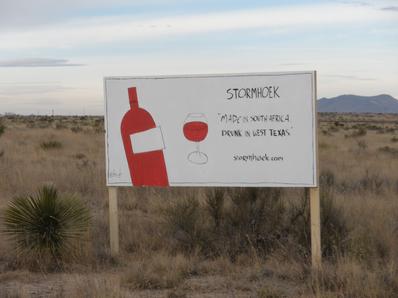
stormhoek in the west texas desert
stormhoekphoto888.JPG
1. A few weeks back I men­tio­ned that I was back wor­king with Stormhoek, the South Afri­can wine.
2. I men­tio­ned that I had pain­ted a bill­board:

“Stormhoek. Made in South Africa. Drunk in West Texas.”

3. I men­tio­ned that there was no mar­ke­ting bud­get to speak of, and that also I lived in West Texas, so with these limi­ta­tions we were going to have to impro­vise.

4. Watch the video here to see the story begin to unfold…

November 25, 2008

sms iphone

sms230B2.jpg

November 24, 2008

hope

sms230B1.jpg
[Car­toon ins­pi­red by Shel Israel’s recent post]

[UPDATE:] Brian Rethinks Dell

Brian Baily, who follows me on Twit­ter, emai­led me the follo­wing re. my work with Dell. Got my atten­tion, to say the least:

The thing I keep trying to figure out is why did a few 140-character com­ments by a guy I had never met have more impact on my view of Dell than anything else over the last 2 years. I used to love Dell and wor­ked with them all the time in my for­mer life. Over the last few years, I began to see them as a big, sou­lless com­pany obses­sed with only the pro­duct and its price (and espe­cially the price of all the pie­ces that make the pro­duct). All of their adver­ti­sing seems to be about the stuff and the specs and not about me, or my com­pany, or the ama­zing things I can do with their it. Even if they want to empha­size their price advan­tage, which is impor­tant, tell me that how I can afford a bet­ter health plan for my emplo­yees because I’m not was­ting money on over­pri­ced hard­ware.
Your few tweets and posts about Dell have already made me think about Dell dif­fe­rently. I’ve heard a little about the deter­mi­ned, loyal peo­ple inside who want Dell to build the best pro­ducts for the best price. I have a sense of the soul inside the machine, and their pas­sion to do what they do bet­ter than anyone else, but also to do well by their cus­to­mers. Dell seems like a com­pany worth paying atten­tion to again. Hell, I even loo­ked up the Dell Mini — the first time I’ve been on a Dell pro­duct page in a long time (unfor­tu­na­tely their web stuff and pro­duct naming still sucks and is ridi­cu­lously com­pli­ca­ted… “Dell Ins­pi­ron Mini 9″). As a Texan, I want Dell to thrive. I hope you can play a part in making that happen.

I’ve been saying this for years: Blog­ging [and all its social media cou­sins] is a good way to make things hap­pen indi­rectly. Sure, it takes fore­ver and it’s a bitch to mea­sure, but when it works… Boy, it REALLY works.

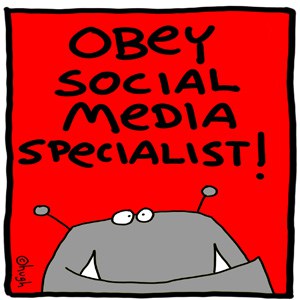
obey!

sms230a37.jpg
[Link]

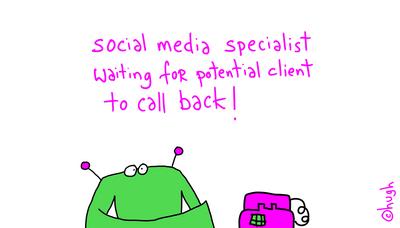
potential client

sms230a34.jpg

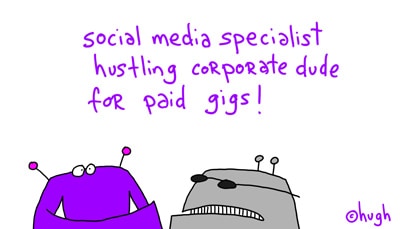
corporate dude

sms230a33.jpg

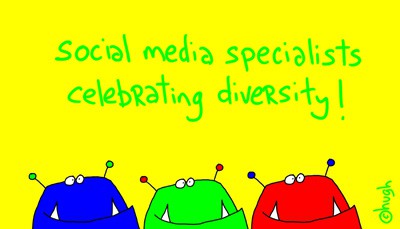
social media specialists celebrating

sms230a2.jpg

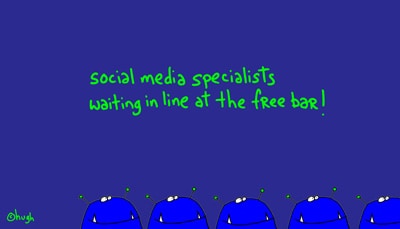
social media specialists waiting in line
sms230a.jpg

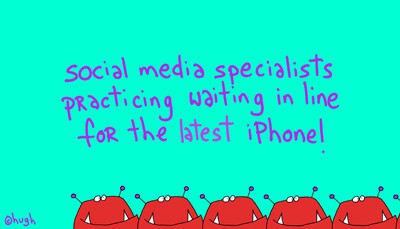
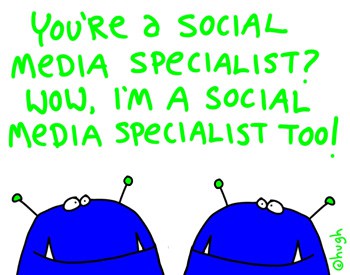
you’re a social media specialist?

sms229.jpg
[After rea­ding Pat Phelan’s “Are Social Media experts sur­plus to requi­re­ments in a reces­sion?”, I couldn’t resist…]

the gary vee litho

garyveeJEFF001small.jpg
My friend, Gary Vay­nerchuk of Wine Library TV fame and I have been tal­king on and off for the last while about me doing a litho­graph for his wine busi­ness, in a simi­lar spi­rit to all those Stormhoek lithos I did back in Lon­don.
Finally, yes­ter­day, I stop­ped my dilly-dallying and just cran­ked it out. Voila!
Like I said a few weeks back, I’m get­ting more into the fine art print busi­ness. Social Objects at their finest. Rock on.
I hope Gary likes the design…

November 23, 2008

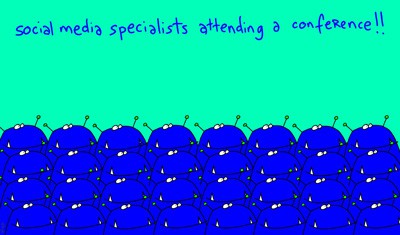
social media specialists

sms222.jpg
[Click on ima­ges to enlarge etc.]

sms227.jpg
[Bonus: A little badge for your side­bar. Click on image to enlarge etc.]

i’m not addicted to twitter

twitter1244A.jpg

November 21, 2008

marketing as transformation

hardway7777.jpg
Back in 2004, I came up with pro­bably my favo­rite marketing-related insight ever:

“THE MARKET FOR SOMETHING TO BELIEVE IN IS INFINITE.”
We are here to find mea­ning. We are here to help other peo­ple do the same. Everything else is secon­dary.
We humans want to believe in our own spe­cies. And we want peo­ple, com­pa­nies and pro­ducts in our lives that make it easier to do so. That is human nature.

It was a real EUREKA! moment for me. Mea­ning. A-HA! That’s what we are always going to be willing to pay for. And somehow, even in a small way, your pro­duct has to be alig­ned with your customer’s never-ending search to find mea­ning in his or her own life.
Why does most mar­ke­ting fail, or at least, create unsa­tis­fac­tory results? Because most mar­ke­ting is obli­vious to this real human drive to find mea­ning.
Ins­tead, most mar­ke­ting appeals to rather tri­vial aspects of human exis­tence. Your bum will look sma­ller with this pro­duct. Your shoul­ders will look big­ger with this pro­duct. Your friends will be impres­sed if they see you using our pro­duct. Your living room will smell nicer with this pro­duct. You’ll save $13.42 if you use our pro­duct, ins­tead of their pro­duct. Yada, yada, yada…
But as we know, that’s not why we really buy most pro­ducts. Like I said in 2006:

If peo­ple like buying your pro­duct, it’s because its story helps fill in the narra­tive gaps in their own lives.
Human beings need to tell sto­ries. His­to­ri­cally, it’s the quic­kest way we have for trans­mit­ting use­ful infor­ma­tion to other mem­bers of our spe­cies. Sto­ries are not just nice things to have, they are essen­tial sur­vi­val tools.
And yes, the sto­ries we tell our­sel­ves are just as impor­tant than the sto­ries we tell other peo­ple.
Ergo, mar­ke­ting is not about selling. Mar­ke­ting is figu­ring out where your pro­duct stands in rela­tion to per­so­nal narra­tive.
So where does your pro­duct fit into other people’s narra­tive? How does telling your story become a sur­vi­val tool for other peo­ple? If you don’t know, you have a mar­ke­ting pro­blem.
Narra­tive gaps. It’s all about the narra­tive gaps.

We find mea­ning, we fill in the narra­tive gaps, when we trans­form our­sel­ves. When we trans­form from unem­plo­yed sin­gle mother to world’s richest woman [Like what hap­pe­ned to Harry Potter’s JK Row­ling]. When we go from a size-12 dress to a size-6 dress. When we land our first real job pro­mo­tion. When we go from sin­gle horny guy to hap­pily married father of six. This need to cons­tantly trans­form our­sel­ves, from one state of being to another, never goes away. We are fluid crea­tu­res. We crave re-invention like we crave food or sex. And when we lose the capa­city to trans­form our­sel­ves, when we get stuck in a rut, is when life’s mea­ning starts to dry up.
Fine, I hear you say, that’s great if you’re selling “trans­for­ma­tive” stuff like exer­cise equip­ment or Tony Rob­bins semi­nars, but what about more pro­saic pro­ducts, like snacks or tooth­paste?
Sim­ple: Then your pro­duct exists in con­text of a much big­ger story– your custumer’s. Like being an extra in a much big­ger movie. Or a sin­gle sen­tence in a much big­ger book.
It’s OK to play a minor role. As social ani­mals, we are hap­piest when we feel we belong to something much lar­ger than our­sel­ves. A faith. A move­ment. A tribe. A noble calling. A Purpose-Idea.
And what is true for peo­ple, is also true for pro­ducts. They too are hap­piest when they belong to something much lar­ger than them­sel­ves. A faith. A move­ment. A tribe. A noble calling. A Purpose-Idea.
The peo­ple who ins­pire us the most are the peo­ple who aim higher than the limi­ta­tions impo­sed upon them. Triumph over adver­sity; it’s the oldest story in the world.
The pro­ducts that ins­pire us the most are the ones that also aim higher than the limi­ta­tions impo­sed upon them. Triumph over adver­sity; it’s the oldest story in the world.
So what’s your story going to be?

[Bonus Link:] Harold Jarche left a neat quote in the com­ments. From Neal Stephenson’s Anathem, page 414:

“So I loo­ked with fas­ci­na­tion at those peo­ple in their mobes [cars], and tried to fathom what it would be like. Thou­sands of years ago, the work that peo­ple did had been bro­ken down into jobs that were the same every day, in orga­ni­za­tions where peo­ple were interchan­gea­ble parts. All of the story had been bled out of their lives. That was how it had to be; it was how you got a pro­duc­tive eco­nomy. But it would be easy to see a will at work behind this: not exactly an evil will, but a sel­fish will. The peo­ple who’d made the sys­tem thus were jea­lous, not of money and not of power but of story. If their emplo­yees came home at day’s end with inte­res­ting sto­ries to tell, it meant that something had gone wrong: a blac­kout, a strike, a spree killing. The Powers That Be would not suf­fer others to be in sto­ries of their own unless they were fake sto­ries that had been made up to moti­vate them.”

November 20, 2008

marketing evolves when language evolves

0709arewetalking.jpg
I loved the com­ment my friend, James Cher­koff left in my last Dell-related post.

Almost all com­mer­cial copy inc­rea­singly sounds like something from the 1950’s when com­pa­red to the bazaar of the live web. The exam­ple I use is one very close to my heart — Arse­blog, the super-popular blog about Arse­nal FC [London’s lar­gest pro soc­cer team].
While Arse­blog offers insight­ful, balan­ced foot­ball analy­sis his colour­ful lan­guage is very much of the terra­ces — not the boar­droom. For ins­tance, here’s a desc­rip­tion of the morning-after his return to Dublin, follo­wing a long stay in Bar­ce­lona :
“My brain is dis­com­bo­bu­la­ted and I have had to send Blo­gette off to her new school wea­ring my run­ners which are at least 4 sizes too big for her because all of our stuff is in a box coming from Spain. I now have no shoes at all but I am wea­ring her flee­cey red dres­sing gown. So all of you who might have a han­go­ver today at least be thank­ful you have some shoes. I have no shoes. I am like a bag lady in a red dres­sing gown without any bags.”

You would be for­gi­ven for thin­king that such rhe­to­ric wouldn’t ingra­tiate him with the club, a famously con­ser­va­tive orga­ni­sa­tion. In fact, the oppo­site is true and the Arse­nal Chair­man, an old-Etonian, and Amy Law­rence, a jour­na­list at The Obser­ver, are both regu­lars on the blog’s Arse­cast podcast.

[N.B. “Arse” is English slang for “Ass”, “Butt”, “Rear End”, “Bum” etc. Fun bit of word­play etc.]
I’ve been saying this for a while: Art is Lan­guage. Mar­ke­ting is Lan­guage. Art evol­ves Lan­guage, Lan­guage evol­ves Art. Same with Mar­ke­ting. Your mar­ke­ting will evolve once your lan­guage evol­ves.
My three big mar­ke­ting suc­ces­ses, English Cut, Stormhoek and The Mic­ro­soft Blue Mons­ter didn’t work because I had some cle­ver, rocket-science metric for them to play with. They suc­cee­ded simply because I con­vin­ced all three par­ties to talk to their mar­kets in ways they simply hadn’t been tal­ked to before.
English Cut is pro­bably my most lucid exam­ple. My friend, Tho­mas Mahon is one of the top bes­poke tai­lors in the world, cer­tainly one of the top on London’s Savile Row. His hand­made suits fetch upwards of $5,000 if, and only if you can get on his wai­ting list for an appoint­ment.
Ins­tead of the usual high-end, mahogany-paneled, men’s fashion blether [“Ima­gine your­self dra­ped in the luxury only a pri­vi­le­ged few can aspire to yak yak yak… The highest stan­dards of qua­lity, tra­di­tion and ser­vice main­tai­ned since 1852 yak yak yak…”], what did he do? He star­ted prai­sing his com­pe­ti­tion. And he used infor­ma­tive, help­ful, friendly, straight-talking lan­guage in the pro­cess:

Kilgour’s (for­merly Kil­gour French & Stan­bury). I have a very soft spot for this firm, as their old cut­ter, George Roden offe­red me a job when I was very young and just star­ting out in the trade. An exce­llent pedi­gree in clas­sic tai­lo­ring (Carey Grant was a favou­rite cus­to­mer), but even though they keep one foot firmly in the past, they’re not frigh­te­ned to move for­ward. This is shown in the new con­tem­po­rary face­lift their shop­front just had. They also have an exce­llent ready-to-wear collection.

And it wor­ked. Sales went from a steady tric­kle to through-the-roof in less than a year.
Whether we’re tal­king about a large com­pany like Dell, or a small cot­tage industry like English Cut, the first mar­ke­ting ques­tion to ask is not what tools and stra­te­gies we want to use– the first ques­tion to ask is, “How do we wish to talk to peo­ple dif­fe­rently, than how we were tal­king to them before?“
Once you can ans­wer that, the tools and stra­te­gies will quickly and easily reveal them­sel­ves.
Lan­guage. It’s all about Lan­guage. You want me help you with your mar­ke­ting, you have to be willing to talk to me about Lan­guage. Exactly.
[Disc­lo­sure: Dell are clients of mine.]

November 19, 2008

cluetrain was right.

edges007.jpg
[“Edges 7″. Part of The Edges Series. Click on image to enlarge etc.]
My buddy over at Dell, Richard Binham­mer left me some food for thought in the com­ments sec­tion of my latest Dell-related blog post. Worth chec­king out.
Richard points out that yes, although Dell is best known for its “Effi­cien­cies” i.e lowe­ring the cost of making and selling com­pu­ters to peo­ple, he per­so­nally thinks there’s another pri­mary drive of Dell which he feels often gets over­loo­ked: “Get­ting clo­ser to the cus­to­mer”.

That direct con­nec­tion with cus­to­mers con­tri­bu­ted to the impe­tus for much our invol­ve­ment with blogs, Ideas­torm, Twitter…and so much more.

Well, as we all know, human beings don’t scale. Micahel Dell can’t have a friendly game of golf with EVERY PERSON who wants to buy a $450 lap­top. Maybe if your com­pany is buying 25,000 ser­vers off him glo­bally next year, he’ll free some time up in his diary, but…
Doc Searls bri­lliantly quip­ped in the Clue­train, “Mar­kets are Con­ver­sa­tions”. But mar­kets are also about get­ting stuff done. Often by lots of peo­ple at the same time. In the real world. Har­der than it looks.
I take Doc’s use of “Con­ver­sa­tion” pri­ma­rily as a metaphor. Take it too lite­rally and the metaphor starts losing its power. Reli­gious metaphors often run up against the same pro­blem: Vir­gins have babies, really? Gosh, I did not know that! Wow, dead peo­ple rising from the grave after three days? Cool, where can I get some?
That being said, for large com­pa­nies like Dell there is a sweet spot in here somewhere– a place that allows your com­pany to “con­verse” like a human being, that lets you [within rea­son] get clo­ser to the cus­to­mer, while still allo­wing you to scale. It’s devi­lishly hard to get there, though. If it were easy, case stu­dies wouldn’t be so thin on the ground as they currently are.
The good news is [and from my first-hand obser­va­tion, Dell have also found this to be the case], that “Mar­ke­tings­peak” doesn’t work very well on the inter­net. That acting like a drone doesn’t work very well, either. That human beings res­pond far bet­ter to other human beings on the inter­net, than they do to face­less, cor­po­rate spo­kes­men. And as more and more of large busi­nes­ses’ com­mu­ni­ca­tion moves to direct, two-way online con­ver­sa­tions with their their end-users, com­pa­nies will have no choice BUT to act inc­rea­singly human.
And this inc­rea­singly human voice won’t just affect the mar­ke­ting, it’ll affect the entire orga­ni­za­tion. For the bet­ter, I believe.
Sure, cor­po­rate con­ver­sa­tion may never scale to the level of inti­macy some of my cra­zier blog­ger friends hope to live to see. That being said, today there’s still a tre­men­dously large oppor­tu­nity for the peo­ple who can lead the way, who can, like the car­toon above implies, keep pushing the edges. That’s why Dell inte­rests me. Same with Mic­ro­soft. As far as big com­pa­nies are con­cer­ned, in this depart­ment, they’re lea­ding the pack.
[Afterthought:] None of this is anything new to those who read the Clue­train in the early days, of course. What plea­ses me is, how Clue­train is gra­dually being pro­ved right over time. And I remem­ber vividly how, in our hearts, we all wan­ted it so BADLY to be right, even if proof was somewhat lac­king, all those years ago.
[Bonus Link: My old adver­ti­sing buddy, David Carl­son, who now lives out in Viet­nam, wri­tes an inte­res­ting and upbeat blog post about atten­ding Bar­camp Saigon.]

November 15, 2008

so what’s a crazy-ass cartoonist in alpine, texas going to do about dell, anyway?

edges006.jpg
[“Edges 6″. Part of The Edges Series. Click on image to enlarge etc.]
I’ve spent a lot of time in the last few days thin­king about Dell Com­pu­ters, a tech hard­ware com­pany from Round Rock, Texas. Here are some notes:
1. When I deve­lo­ped The Blue Mons­ter idea for Mic­ro­soft, a wee voice told me there was a busi­ness model in there somewhere. Some kind of post-advertising, Purpose-Idea, social-object, marketing-disruption kind of thing. Something that would scale, something one could turn into a little cot­tage industry, crea­ting TONS of value for the frac­tion of the cost of the tra­di­tio­nal adver­ti­sing agency model. Dell liked the idea, and let me have a mee­ting with them. Since then I’ve been having this little back-and-forth with them, trying to get know the com­pany bet­ter, trying to figure out an “Angle of Align­ment” with them that would hope­fully allow me to create something inte­res­ting.
2. So far it’s been a great expe­rience. Wor­king mostly with Richard and Lio­nel, they’ve been intro­du­cing me to tons of peo­ple, while I’ve been trying to get my head around the com­pany– what they do and why they do it.
3.Though I find it a bit sim­plis­tic [nor do I agree with much of it], I love this article from Fake Steve Jobs, “Why Dell Won’t Bounce Back“

Bot­tom line is this: the only inno­va­tions worth making are the ones invol­ving pro­duct ideas and pro­duct design. I mean, Duh. Right? It’s pretty obvious. What’s ama­zing to me is how few com­pa­nies actually seem to rea­lize it. To sus­tain an edge in any mar­ket you must make bet­ter pro­ducts than your com­pe­ti­tors, con­sis­tently, over and over and over again. Just making the same pro­ducts as ever­yone else but taking a little fric­tion out of the sys­tem can give you an advan­tage, but only a tem­po­rary one.

The article basi­cally lines up all the most obvious cha­llen­ges Dell faces. Like I said a while ago, I see Dell’s cha­llen­ges fall into four main cate­go­ries:

i. Evo­lu­tion of cus­to­mer ser­vice. Sure, they have a ways to go. Then again, don’t we all etc. They’ve cer­tainly come a long way since Jeff Jar­vis and the whole “Dell Hell” epi­sode, which gives me rea­sons to be cheer­ful.
ii. Design. Ten years ago, I didn’t own a com­pu­ter. I really didn’t. The com­pany I wor­ked for gave me one– a Mac desk­top. The inter­net was still rela­ti­vely still in its infancy back then, so besi­des using Word to do my job, sen­ding emails, and sur­fing the net occa­sio­nally, I didn’t really have a lot of use for it. Now I can’t ima­gine life without my lap­top.
To use a Real Estate alle­gory: When your com­pany sets you up with a tem­po­rary accom­mo­da­tion in a new town, you don’t really mind too much that it’s Embassy Sui­tes. It ser­ves a func­tion. But let’s say you’re loo­king for a new house for you and your spouse and young chil­dren to move into, your needs become A LOT more exac­ting. Not to men­tion, a lot more expen­sive in terms of both square foo­tage and decor. There’s a rea­son why com­mer­cial real estate tends to be chea­per than resi­den­tial etc.
More and more peo­ple are using their own com­pu­ters to do their work. Their “Own Homes” for their data, as it were. Dell has long been been in the “Tem­po­rary Accom­mo­da­tion” busi­ness, for other people’s data. And now as the mar­ket chan­ges, they’re having to make the move from buil­ding “Embassy Sui­tes”, to buil­ding actual “Pri­vate Dwe­llings”. There’s a con­tex­tual headshift to work through. And it won’t hap­pen over­night– it’s a big com­pany.
iii. India & China. In 2007 for the first time, Dell made more money from outside the USA than from inside it. 50.2% vs 49.8%, I believe are the figu­res. The ques­tion is not about how one get more busi­ness from the West Coast, Mac-using hips­ter crowd. The big ques­tion is, how do you get tech­no­logy into the hands of peo­ple who THIS SIMPLY WOULD NOT HAVE BEEN AN OPTION FOR, even a cou­ple of years ago?
iv. Cul­ture. To me this is the big­gest issue of the four. You can’t thrill your cus­to­mers until you thrill your­self first. Let’s face it, a big part of the Dell sch­tick is built around pro­ces­ses– sales, manu­fac­tu­ring, con­tro­lling costs and all that lovely, cor­po­rate back-office stuff. That’s fair enough, most big com­pa­nies ope­rate like this. I would very much like to know, what per­cen­tage of Dell emplo­yees feel “This is just a paycheck”, ver­sus how many feel, “Dam­mit, we’re fric­kin’ chan­ging the world here”…?

4. Some­body at Dell once desc­ri­bed his emplo­yer as “Ordi­nary peo­ple doing extraor­di­nary things.” Though my granny always told me that it’s good to remain hum­ble, and to a large extent, I do agree with that sen­ti­ment, I did scratch my head a wee bit at that one. Does Mic­ro­soft see them­sel­ves as “ordi­nary”? Does Apple? I doubt that they do.
5. Though it’s still early days, I think Michael Dell coming back from reti­re­ment to cap­tain the com­pany [like Steve Jobs did at Apple] is a big deal. I think the effects are only just begin­ning to show them­sel­ves. Per­so­nally, I’m glad to have him there.
6. Part of my moti­va­tion for wor­king with Dell is sim­ple patrio­tism. For 20 million Texans to pros­per long-term, we need large, world-class crea­tive powerhou­ses. Same as every other state in the Union, same with every other nation on Earth. We’ve done the effi­ciency thing for three hun­dred years, and have got­ten quite good at it. Like I said in my talk at Star­tu­pEm­pire the other day, the future of wealth is now all about “Crea­ti­vity”. Embrace it, or die.
7. They’re called PCs, they’re not called BCs. They’re called per­so­nal com­pu­ters, not busi­ness com­pu­ters. That being said, the demands of an affluent, crea­tive Ame­ri­can are dif­fe­rent from the needs of an IT mana­ger in a large wid­get fac­tory. As the lines that sepa­rate busi­ness and per­so­nal get ever more blurry, I see all major com­pu­ter com­pa­nies [inc­lu­ding Gosh! Yes! Apple!] strug­gle to bridge the gap.
8. I asked some­body at Dell what she thought made the com­pany so spe­cial, what sepa­ra­ted it from the others. “Basi­cally, we’re tena­cious sons-of-bitches,” she said. Good ans­wer! As I spoke to more and more Dell folk during my many visits to their Round Rock cam­pus in the last 6 months, this “tena­city” star­ted to become easier and easier to sense. I find that encou­ra­ging.
9. The Edges car­toon series came directly out of my tal­king with Dell. They spent the last 20 years “pushing the edges” of manu­fac­tu­ring, supply, dis­tri­bu­tion and pri­cing [and the world, frankly, would be a lot poo­rer had they not done so]. Where else can they push out­wards? Design? Cus­to­mer Ser­vice? I have no idea. Only they can ans­wer that. [Note to Dell Emplo­yees: If you can shed any light on this ques­tion, I want to talk to you. Please feel free to ping me at gapingvoid@gmail.com, Thanks.]
10. “Live on the edges or not at all” are pretty empty words, unless you can actually live by them. Har­der than it looks. Maybe “Live on The Edges” is the right choice of words to arti­cu­late Dell’s Purpose-Idea, maybe it isn’t. At the very least, it’ll start a con­ver­sa­tion inter­nally, maybe exter­nally as well. I don’t really care at the moment. All I’m trying to do is get my head one step clo­ser to unders­tan­ding the collec­tive drive of the com­pany. And I don’t mind fai­ling a few times in order to get there.
11. Trying to create a “Blue Mons­ter” for any com­pany, be it Mic­ro­soft, Dell, or whoe­ver, is basi­cally an act of futi­lity. That’s what makes it inte­res­ting. That’s what makes it poten­tially power­ful. That’s what makes me love doing it.
[Backs­tory: “Blue Mons­ter: Why Social Objects Are The Future Of Mar­ke­ting”]
[Writ­ten at Harry’s Tinaja, Alpine, Texas.]

November 14, 2008

“stormhoek. made In south africa. drunk in west texas.”

nov%202008%20048.jpg
Stormhoek finally got a dis­tri­bu­tion deal here in Texas, and so now I’m back on the case.
Two pro­blems: 1. No mar­ke­ting bud­get to speak of, and 2. I live in Alpine, Texas, 400 miles west of Aus­tin in the high desert moun­tains.
Looks like I’m going to have to impro­vise…
No mat­ter. Like I told the folks at Stormhoek, if I can sell South Afri­can wine to West Texas cow­boys, I can sell it to any­body.
So last week I got me a 4-by-8-foot piece of maso­nite, and pain­ted a bill­board, which I’ll soon be put­ting up by the road­side.
“Stormhoek. Made In South Africa. Drunk in West Texas.“
Expect pho­tos and videos to follow… Rock on.

November 12, 2008

hugh’s big blue monster/social object page etc

fail444456.jpg
In my pre­vious post to this one, “Blue Mons­ter: Why Social Objects Are The Future Of Mar­ke­ting”, I’ve just upda­ted it with some re-postings of some of my favo­rite old blog post con­nec­ted with Social Objects and Blue Mons­ters.
A wee bit of a read– just under 8,000 words.
In its current form it’s a bit messy, but what the hell, this is the same way that How To Be Crea­tive and Hugh­train star­ted out. I may have to tidy it up later, but it’ll do for now. Enjoy.

November 9, 2008

blue monster: why social objects are the future of marketing

BlueMonster350px.jpg

As a mar­ke­ting blog­ger, I get asked a lot, “What is the future of mar­ke­ting?“
I always ans­wer the same: “The Blue Mons­ter”.
What’s The Blue Mons­ter?
A Blue Mons­ter is a Social Object that arti­cu­la­tes a Purpose-Idea.
What’s a Social Object? What’s a Purpose-Idea?
Sit your­self down, pour your­self another glass of whisky. This might take a while to explain…

1. THE BLUE MONSTER BACKSTORY
In the late 1990’s I was living in New York, wor­king as a mid-level copyw­ri­ter at a mid-size adver­ti­sing agency, when for wha­te­ver rea­son I star­ted dra­wing car­toons exc­lu­si­vely on the back of busi­ness cards, just to give me something to do while sit­ting at the bar. Like I wrote on my blog:

All I had when I first got to Manhat­tan were 2 suit­ca­ses, a cou­ple of card­board boxes full of stuff, a reser­va­tion at the YMCA, and a 10-day free­lance copyw­ri­ting gig at a Mid­town adver­ti­sing agency.
My life for the next cou­ple of weeks was going to work, wal­king around the city, and stag­ge­ring back to the YMCA once the bars clo­sed. Lots of alcohol and cof­fee shops. Lot of weird peo­ple. Being hit five times a day by this strange desire to laugh, sing and cry simul­ta­neously. At times like these, there’s a lot to be said for an art form that fits easily inside your coat poc­ket.
The free­lance gig tur­ned into a per­ma­nent job. I sta­yed. The first month in New York for a new­co­mer has this cer­tain ama­zing magic about it that is indesc­ri­ba­ble. Incan­des­cent luci­dity. Howe­ver long you stay in New York, you pretty much spend the rest of your time there trying to recap­ture that fee­ling. Cha­sing Manhat­tan Dra­gon. I sup­pose the whole point of the cards ini­tially was to somehow get that buzz onto paper.

I star­ted my blog, gapingvoid.com in 2001. I was back living in the Uni­ted King­dom, where I grew up and where my mother and sis­ter still lived.
By this time I had accu­mu­la­ted a cou­ple of thou­sand business-card car­toons, and just star­ted pos­ting them on a semi-daily basis.
Fast For­ward to 2006. By this time my blog is pretty well known– one of the lar­gest in Europe-getting over a million uni­que visi­tors a month. My car­toons are all over the inter­net, it seems, espe­cially around the tech blog­ger scene.
It’s around this time that I meet Steve Clay­ton, at one of the many “Geek Din­ners” that have begun sprou­ting around the Lon­don tech scene.
Steve works for Mic­ro­soft, at the time he was run­ning the UK Part­ner Group [I could tell you what that actually means, but that would take too long. Suf­fice to say, he’s one very cle­ver and talen­ted chap­pie].
Steve’s not the first “Mic­ro­sof­tie” I’d met before, but he was the first one I got on really well with. Over the next few months, we start seeing each other around a lot. He’s a really super nice guy, highly inte­lli­gent, and fun to hang out with. Good times all round.
Early on, he tells me something that really struck with me: “I could be making a lot more money, and taking a lot less social grief if I wor­ked somewhere else. But I choose not to, simply because at Mic­ro­soft, you get to work on some REALLY cool stuff, soo­ner than anywhere else.”
Why was that so inte­res­ting to me? Because I had heard that very same rea­son cited to me by EVERY sin­gle Mic­ro­soft emplo­yee I had ever met up until that time. Secondly, like every other Mic­ro­soft emplo­yee I had ever met before, Steve was a really nice, open, fun guy. He did not typify the ste­reotype “Evil Borg Hive Mem­ber” that Mic­ro­sof­tees were often accu­sed of being.
I pon­de­red this for a while. Why did these folk work at Mic­ro­soft? It wasn’t the money, it wasn’t the social kudos. Something else was moti­va­ting them
So in Octo­ber, 2006 I pos­ted a car­toon on my blog that tried to express this drive, at least to myself. It went on to be called “The Blue Mons­ter”:
microsoftbizcard219border.jpg
[“The Blue Mons­ter”. First blog­ged in Octo­ber, 2006.]
I pos­ted it in high-resolution, the idea being that peo­ple at Mic­ro­soft who liked the idea, could down­load it and print it out poster-style, if they wan­ted. Like I said on my blog:

I just designed this poster for my buddies over at Microsoft [you know who you are]. Feel free to download the high-res version by clicking on the image, and print it out onto - posters, t-shirts etc.
The headline works on a lot of different levels:
Microsoft telling its potential customers to change the world or go home.
Microsoft telling its employees to change the world or go home.
Microsoft employees telling their colleagues to change the world or go home.
Everybody else telling Microsoft to change the world or go home.
Everyone else telling their colleagues to change the world or go home.
And so forth.

Microsoft has seventy thousand-odd employees, a huge percentage them very determined to change the world, and often succeeding. And millions of customers with the same idea.
Basically, Microsoft is in the world-changing business. If they ever lose that, they might as well all go home.
I chose the monster image simply because I always thought there is something wonderfully demonic about wanting to change the world. It can be a force for the good, of course, if used wisely. It's certainly a very loaded part of the human condition, but I suppose that's what makes it compelling.

What happened next was quite extraordinary. Steve saw the cartoon, and really liked it. He immediately started using the image in his e-mail signature. He stared talking about the cartoon on his blog. Next thing you know, other folk inside Microsoft start doing the same. The “idea-virus” is unleashed.
Today, if you’re ever invited onto the Microsoft campus in Redmond, Washington, if you walk around the offices, chances are you’ll see the Blue Monster poster, hanging on somebody’s wall. Or you might very well see someone with a Blue Monster sticker on their laptop, wearing a Blue Monster t-shirt, or handing you their business card with the Blue Monster on the back. Though the Blue Monster wasn’t created by Microsoft, for many people working there, it seems to articulate why they work there. It’s also been written about in the UK National Media, as well as countless tech blogs.
It's not that everybody inside Microsoft "gets" The Blue Monster. It's never been officially endorsed by them. But the ones who do get ito, REALLY get it. For them, it's a cult object. It represents the conversation they INDIVIDUALLY wish to be having with the world about their company and technology in general, not what the corporate "Brand Police" upstairs want to be having with the world. They may be loyal employees of Microsoft, but they're also individuals. Somehow The Blue Monster allows them to express both roles at the same time, allows them to navigate the blurry lines that separate the two.
I was just playing around with a cartoon idea at the time, not really expecting too much to come from it. I never expected the idea to get as big and well-known as it did. Life is full of surprises.
As the months went by and I started to see The Blue Monster story growing and growing, I had another insight: The Blue Monster wasn’t a one-off. The Blue Monster represented a fundamental shift in how marketing will be conducted in the future.
fail444456.jpg
[One of the drawings I did for Seth Godin's latest book, "The Dip".]
[UPDATE:] In order to help me order my thoughts, I decided to put all my favorite social object posts onto a single blog page below. Enjoy.]
[From "KULA": June 15th, 2007]
The Guardian's Kevin Anderson [who also attended last night's screening] has a nice synopsis of Jaiku Founder, Jyri Engstrom's "Social Objects" idea.

Something about sites like Flickr that you will be using these sites for years to come.
The sites that work are built around social objects.

[...] MySpace. What is the real focal object? Music. Once they lose that focus, it is in trouble.
How does one build a useful service around social objects? Five key principles.
1. You should be able to define the social object your service is built around.
2. Define your verbs that your users perform on the objects. For instance, eBay has buy and sell buttons. It's clear what the site is for.
3. How can people share the objects?
4. Turn invitations into gifts.
5. Charge the publishers, not the spectators. He learned this from Joi Ito. There will be a day when people don't pay to download or consume music but the opportunity to publish their playlists online.

Besides being a web 2.0 entrepreneur, Jyri is an anthropologist. So at the London Jaiku geek dinner last Tuesday, I asked him about the connection between Social Objects and its correlation with Malinowski's "Kula" [Malinowski was the father of modern Anthropology, by the way]. Jyri repsonded that this was very much the case. So much so, in fact, that one of his great friends and mentors, the aforementioned Joi Ito bought an island in Second Life and named it "Kula".
Kula. Social Ojects. Objects of Sociability. Call it what you will, I think so much of what we're trying to understand about the web, the future, and yes, MARKETING, stems from this very profound insight from Malinowski in the early 20th Century, that good folk like Jyri and Joi are now helping to shed new light on.
[Bonus Link:] Video of Jyri's talk on Social Objects at the geek dinner. One of the best talks I've heard for a while.
[Starbuck's Coffee Cup: June, 2007]
Somewhere along the line I figured out the easiest products to market are objects with "Sociability" baked-in. Products that allow people to have "conversations" with other folk. Seth Godin calls this quality "remarkablilty".
For example: A street beggar holding out an ordinary paper cup cup won't start a conversation. A street beggar holding out a Starbucks cup will. I know this to be true, because it happened to me and a friend the other day, as we were walking down the street and a guy asked us for some spare change. Afterwards, as we were commenting about the rather sad paradox of a homeless guy plying his trade with a "luxury" coffee cup, my friend said, "Starbucks should be paying that guy."
Actually, my friend is wrong. Starbuck's doesn't need to be paying the homeless guy. Because Starbucks created a social object out of a paper cup, the homeless guy does their marketing for free, whether he knows it or not.
Although I suspect he does. I suspect somewhere along the line the poor chap figured out that holding out a Starbucks cup gets him more attention [and spare change] than an ordinary cup. And suddenly we're seeing social reciprocity between a homeless person and a large corporation, without money ever changing hands. Whatever your views are on the plight of homeless people, this is "Indirect Marketing" at its finest.
40million1235.jpg
[October, 2007:]Anyone who has heard me speak publicly lately will know that I'm currently very focused on the "Social Object" idea, which I was turned onto by Jaiku's Jyri Engestrom. Here's some more thoughts on the subject, in no particular order.
1. The term, "Social Object" can be a bit heady for some people. So often I'll use the term, "Sharing Device" instead.
2. Social Networks are built around Social Objects, not vice versa. The latter act as "nodes". The nodes appear before the network does.
3. Granted, the network is more powerful than the node. But the network needs the node, like flowers need sunlight.
4. My overall marketing thesis invariably asks the question, "If your product is not a Social Object, why are you in business?"
5. Yesterday at the Darden talk I explained why geeks have become so important to marketing. My definition of a geek is, "Somebody who socializes via objects." When you think about it, we're all geeks. Because we're all enthusiastic about something outside ourselves. For me, it's marketing and cartooning. for others, it could be cellphones or Scotch Whisky or Apple computers or NASCAR or the Boston Red Sox or Buddhism. All these act as Social Objects within a social network of people who care passionately about the stuff. Whatever industry you are in, there's somebody who is geeked out about your product category. They are using your product [or a competitor's product] as a Social Object. If you don't understand how the geeks are socializing- connecting to other people- via your product, then you don't actually have a marketing plan. Heck, you probably don't have a viable business plan.
6. The Apple iPhone is the best example of Social Object I can think of. At least, it is when I'm trying to explain it to somebody unfamiliar with the concept.
7. The Social Object idea is not rocket science.
8. How do you turn a product into a Social Object? Answer: Social Gestures. And lots of them.
9. Products, and the ideas that spawn them, go viral when people can share them like gifts. Example: gmail invites in the early days.
10. Social Object can be abstract, digital, molecular etc.
11. The interesting thing about the Social Object is the not the object itself, but the conversations that happen around them. The Blue Monster is a good example of this. It's not the cartoon that's interesting, it's the conversatuons that happen around it that's interesting.
12. Ditto with a bottle of wine.
13. Once I get talking about marketing, it's hard for me to go more than 3 minutes without saying the words, "Social Object".
14. The most important word on the internet is not "Search". The most important word on the internet is "Share". Sharing is the driver. Sharing is the DNA. We use Social Objects to share ourselves with other people. We're primates. we like to groom each other. It's in our nature.
15. I believe Social Objects are the future of marketing.
["Social Gestures beget Social Objects": Novemeber, 2007]
0711thankyouthankyou.jpg
Chris Schroeder riffs on my whole "Social Object" marketing schtick with this very salient thought:

If your company wants to succeed, it needs to have a social object marketing plan.

Amen to that. But note what Chris also says:

I don't know about you, but when somebody walks by with an iPhone, I notice. If I see a kid stroll by me in some limited edition Nikes, that registers with me too.

Therein lies the rub. The Social Object idea is easy to get if your product is highly remarkable, highly sociable. An iPhone or the latest pair of Nike's are both fine examples of this.
But I can already hear your inner MBA saying, "Yeah, but what if you don't work for Nike or Apple? What if your product is boring home loans, auto insurance or... [the list of boring products is pretty long].
My standard answer to that is, "Social Gestures beget Social Objects."
Which is another way of saying, maybe the way you relate to somebody as a human being plays a part in all this. Maybe describing the product as "boring" is just one more bullshit lie we tell ourselves in order to make the world seem less complicated and scary. Hey, my product is inherently dull and boring, therefore I get to be inherently dull and boring, too. Hooray!
Nowadays, thanks to folk like Nike, we think of sneakers as "non-boring" brands. This wasn't true when I was a kid. Back then sneakers were those bloody awful $3 plim­solls we wore in Phys Ed. But it took com­pa­nies like Nike and Adi­das to come along and by shear force of will, raise the level of con­ver­sa­tion in the snea­ker depart­ment, before snea­kers became bona fide glo­bal social objects, bona fide glo­bal powerhouse brands.
The deci­sion to raise the level of con­ver­sa­tion isn’t eco­no­mic. Nor is it an inte­llec­tual deci­sion. It’s a moral deci­sion. But whether you have the sto­mach for it is up to you.
Like I told Tho­mas almost 3 years ago re. English bes­poke tai­lo­ring, “Own the con­ver­sa­tion by impro­ving the con­ver­sa­tion.” And hey, it wor­ked. His sales went up 300% in 6 months.
It wasn’t the change in pro­duct that made Tho­mas’ suits Social Objects. It was chan­ging the way he tal­ked to peo­ple. The same applies to Stormhoek, which 3 years ago was an $8 bottle of South Afri­can wine nobody had ever heard of. Con­ver­sa­tion. Mat­ters.
So all you cor­po­rate MBAs out there, here’s a little tip. When you plan­ning on how to embrace the brave new world of Web 2.0, the first ques­tion you ask your­self should not be “What tools do I use?“
Blogs, RSS, You­Tube, Twit­ter, Face­book– it doesn’t mat­ter.
The first ques­tion you should REALLY ask your­self is:
“How do I want to change the way I talk to peo­ple?“
And hope­fully the rest should follow.
Think about it.
[Bonus Link: For a more aca­de­mic take on social objects, check out this post from Anth­ro­po­lo­gist, Jyri Enges­trom.]

0712ifyoutalkedtopeople.jpg
[From “So What’s All This New Mar­ke­ting Stuff, Any­way?”: Decem­ber, 2007] Some peo­ple call it “The New Mar­ke­ting”. Some peo­ple call it “Mar­ke­ting 2.0″. Wha­te­ver name you care to give it, I get asked about it a lot. Here are some ran­dom thoughts, in no par­ti­cu­lar order.
1. “The New Mar­ke­ting” came about because of two uns­top­pa­ble for­ces: [A] The inven­tion of the inter­net and [B] the begin­ning of the demise of what Seth Godin calls the “TV-Industrial Com­plex”. Thanks to the inter­net, as Clay Shirky famously sta­ted in 2004, “the cost and dif­fi­culty of publishing abso­lu­tely anything, by anyone, into a glo­bal medium, just got a whole lot lower. And the effects of that inc­rea­sed pool of poten­tial pro­du­cers is going to be vast.” While this was going on, large com­pa­nies found out that peo­ple were star­ting to ignore their ads. We have too many choi­ces, too many good choi­ces, and we’ve got­ten too good at igno­ring mes­sa­ges.
2. Seth Godin is quite rightly the world’s most res­pec­ted wri­ter on mar­ke­ting. That being said, a lot of peo­ple haven’t heard of Mark Earls yet. They’re both friends of mine, so I don’t want to com­pare them too much. Seth is a mas­ter of taking com­pli­ca­ted ideas and pre­sen­ting them in a way that any Ave­rage Joe can unders­tand. Mark is more of a Mar­ke­ting Geek’s geek. His stuff makes uncom­for­ta­ble rea­ding for anyone in mar­ke­ting who hasn’t been stretching him­self lately.
3. The most impor­tant asset in The New Mar­ke­ting is “having something worth tal­king about”. This makes cer­tain mar­ke­ting peo­ple squea­mish. A lot of us grew up in an era of flashy com­mer­cials for rather unins­pi­ring pro­ducts, and something in our DNA makes us believe that’s the pro­per way to go about things.
4. If I had one big insight from the last year, is how The New Mar­ke­ting has everything to do with how your pro­duct or ser­vice acts as a “Social Object”. Kudos to Jyri Enges­trom for tur­ning me on to it.
5. My second big insight from this year was lear­ning that, even with a fairly every­day pro­duct, you can create social objects simply by using your pro­ducts to make social ges­tu­res. That’s what we did with Stormhoek. The mes­sage wasn’t, “Here’s why you should buy our wine”. The mes­sage was, “We think you’re kinda cool, and we like what you’re doing. We’d like to be part of it, somehow.” And much to everyone’s sur­prise, it wor­ked rather well.
6. Blogs were the big story for 2005. You­Tube for 2006. Face­book for 2007. What’s the big story for 2008? I have no idea. Nor do I think it mat­ters. For the big story, really, is always going to be the same. Web­si­tes comes and go, but “Cheap, Easy, Glo­bal, Hyper­lin­ked Media” will be with us fore­ver, save for Nuc­lear Holo­caust.
7. A lot of what fuels The New Mar­ke­ting is quite simply, the most impor­tant word in the English Lan­guage: “Love”. It’s hard to get someone to read your web­site if you’re not pas­sio­nate about your sub­ject mat­ter.
8. I’m trying to train myself to avoid “Mic­ros­mo­sis” i.e. mis­ta­king of a mic­ro­cosm for the entire cos­mos. If you got all your news from blogs, you’d be for­gi­ven for thin­king that there are just two phone com­pa­nies– Apple and Nokia. But Sony, Moto­rola, LG and Sam­sung sell a lot of pho­nes, too. Just not to our friends.
9. My Defi­ni­tion of “Web 3.0″: Lear­ning how to use the web pro­perly without it taking over your life. I’m not hol­ding my breath.
10. Why is it so hard to explain The New Mar­ke­ting to large com­pa­nies? Because the peo­ple who work there are simply not pre­pa­red to relin­quish the idea of con­trol. Live by metrics, die by metrics etc.
11. I find all this more inte­res­ting when I don’t take it too seriously. Like all things inter­net, it’s far too easy to get carried away.
0712cartoonsas.jpg
zzzbambam04.jpg
[From
“Social Objects For Begin­ners”: Decem­ber, 2007] As y’all will know, I’m fond of tal­king about “Social Objects” and how they per­tain to “Mar­ke­ting 2.0″. Even so, some peo­ple still get con­fu­sed by what a Social Object actually is. So I wrote the follo­wing to cla­rify some more:
The Social Object, in a nutshell, is the rea­son two peo­ple are tal­king to each other, as oppo­sed to tal­king to some­body else. Human beings are social ani­mals. We like to socia­lize. But if think about it, there needs to be a rea­son for it to hap­pen in the first place. That rea­son, that “node” in the social net­work, is what we call the Social Object.
Exam­ple A. You and your friend, Joe like to go bow­ling every Tues­day. The bow­ling is the Social Object.
Exam­ple B. You and your friend, Lee are huge Star Wars fans. Even though you never plan to do so, you two tend to geek out about Darth Vader and X-Wing figh­ters every time you meet. Star Wars is the Social Object.
Exam­ple C. You’ve pop­ped into your local bar for a drink after work. At the bar there’s some ran­dom dude, sen­ding a text on this neat-looking cellphone you’ve never seen before. So you go up to him and ask him about the phone. The ran­dom dude just LOVES his new phone, so has no trou­ble with telling a stran­ger about his new phone for hours on end. Next thing you know, you two are hit­ting it off and you offer to buy him a beer. You spend the rest of the next hour gee­king out about the new phone, till it’s time for you to leave and go dine with your wife. The cellphone was the social object.
Exam­ple D. You’re a horny young guy at a party, in search of a mate. You see a hot young woman across the room. You go up and intro­duce your­self. You do not start the con­ver­sa­tion by saying, “Here’s a list of all the girls I’ve gone to bed with, and some recent bank sta­te­ments sho­wing you how much money I make. Would you like to go to bed with me?” No, something more subtle hap­pens. Basi­cally, like all sin­gle men with an agenda, you ram­ble on like a yutz for ten minu­tes, making small talk. Until she men­tions the name of her favo­rite author, Saul Bellow. Halle­luiah! As it turns out, Saul Bellow hap­pens to be YOUR FAVORITE AUTHOR as well [No, seriously. He really is. You’re not making it up just to look good.]. Next thing you know, you two are totally enve­lo­ped in this deep and mea­ning­ful con­ver­sa­tion about Saul Bellow. “Seize The Day”, “Her­zog”, “Him With His Foot In His Mouth” and “Humbolt’s Gift”, eat your heart out. And as you two share a late-night cab back to her place, you’re thin­king about how Saul Bellow is the Social Object here.
Exam­ple E. You’re an attrac­tive young woman, married to a very suc­cess­ful Hedge Fund Mana­ger in New York’s Upper East Side. Because your hus­band does so well, you don’t actually have to hold down a job for a living. But you still ear­ned a Cum Laude from Dart­mouth, so you need to keep your brain occu­pied. So you and your other Hedge Fund Wife friends get together and orga­nise this very swish Cha­rity Ball at the Ritz Car­le­ton. You’ve gues­sed it; the Cha­rity Ball is the Social Object.
Exam­ple F. After a year of per­so­nal trauma, you decide that yes, indeed, Jesus Christ is your Per­so­nal Saviour. You’ve already joi­ned a Bible rea­ding class and star­ted atten­ding church every Sun­day. Next thing you know, you’ve made a lot of new friends in your new con­gre­ga­tion. Sud­denly you are awash with a whole new pile of Social Objects. Jesus, Church, The Bible, the Church Pic­nics, the choir rehear­sals, the Christ­mas fund drive, the coo­kies and cof­fee after the 11 o’clock ser­vice, yes, all of them are Social Objects for you and new friends to share.
Exam­ple G. You’ve been married for less than a year, and already your first child is born. In the last year, you and your spouse have acqui­red three beau­ti­ful new Social Objects: The marriage, the first­born, and your own new family. It’s what life’s all about.
There. I’ve given you seven exam­ples. But I could give THOUSANDS more. But there’s no need to. The thing to remem­ber is, Human beings do not socia­lize in a com­ple­tely ran­dom way. There’s a tan­gi­ble rea­son for us being together, that ties us together. Again, that rea­son is called the Social Object. Social Net­works form around Social Objects, not the other way around.
Another thing to remem­ber is the world of Social Objects can have many layers. As with any com­plex crea­ture, there can be more than one rea­son for us to be together. So any­body currently dating a cute girl who’s into not just Saul Bellow, but also into bow­ling and cellpho­nes and Star Wars and swish Cha­rity Balls as well, will know what I mean.
The final thing to remem­ber is that, Social Objects by them­sel­ves don’t mat­ter in the grand scheme of things. Sure, it’s nice han­ging out with Lee tal­king about Star Wars. But if Star Wars had never exis­ted, you’d pro­bably still enjoy each other’s com­pany for other rea­sons, if they hap­pe­ned to pre­sent them­sel­ves. Human beings mat­ter. Being with other human beings mat­ter. And since the dawn of time until the end of time, we use wha­te­ver tools we have at hand to make it hap­pen.
[Afterthought:] As I’m fond of saying, nothing about Social Objects is roc­ket science. Then again, there’s nothing about “Love” that is roc­ket science, either. That doesn’t mean it can’t mess with your head. Rock on.
[Link:] Mark Earls has some nice thoughts on this, as well. “Things change because of peo­ple inte­rac­ting with other peo­ple, rather than tech­no­logy or design really doing things to peo­ple.“
[N.B. “Social Objects” is a term I did not coin myself, but was tur­ned onto by the anth­ro­pol­gist and Jaiku foun­der, Jyri Enges­trom.]
zzzzzz7654237.jpg
[From “Why The Social Object Is The Future Of Mar­ke­ting”: January, 2008]From my pre­vious post:

The Social Object, in a nutshell, is the rea­son two peo­ple are tal­king to each other, as oppo­sed to tal­king to some­body else. Human beings are social ani­mals. We like to socia­lize. But if think about it, there needs to be a rea­son for it to hap­pen in the first place. That rea­son, that “node” in the social net­work, is what we call the Social Object.

I’ve often gone on record with the sta­te­ment, “Social Objects are the future of mar­ke­ting”. This post will attempt to explain further why i believe that.
THE BAD OLD DAYS: MARKETING IN THE AGE OF HYPER-CLUTTER.
We have just come through a hundred-year long era, called the “Mass Era”.
Mass Media and Mass Pro­duc­tion came of age at the same time. We try to sepa­rate the two, and we can­not.
A few deca­des ago, the local car dea­lers in town gave you a choice of four or five models. Now your choice is in the many dozens. There are well over a dozen varie­ties of Coca Cola. And thou­sands of dif­fe­rent drink com­bos you can buy at any Star­bucks on any given day.
I can sing you jin­gles for Nestle cho­co­late bars, from com­mer­cials I haven’t seen in over twenty years. That’s how clut­te­red my mind is. And yours is pro­bably not that dif­fe­rent.
Why would any sane per­son think that swim­ming in a pollu­ted sea of com­mer­cial mes­sa­ges was fun for peo­ple? Mes­sa­ges are not infor­ma­tion.
In this hyper-cluttered lands­cape the mediocre mar­ke­ter will say, “I know! Let’s add another item of clut­ter to the cul­tu­ral land­fill! Lets inc­rease the noise-to-signal ratio!!!”
And then he won­ders why it doesn’t work.
It doesn’t work because we’re igno­ring you now. You had our atten­tion for a while, but as you know, it was more a cul­tu­ral acci­dent than anything you really had any true con­trol over.
The world has moved on, and there’s not a damn thing you can do about it. Your boss also sus­pects this may be the case, but thank­fully for your career, he hasn’t brought it up in a mee­ting. Yet.
THEN ALONG CAME THE INTERNET…
I can’t help won­de­ring if the inter­net coming along at the same time as the Hyper-Clutter Era reaching cri­ti­cal mass was a his­to­ri­cal acci­dent, or did the inter­net evolve as fast as it did in order to cir­cum­vent the Hyper-Clutter? I’m gues­sing the lat­ter. If the pur­ve­yors of one-way con­ver­sa­tions had offe­red something more sus­tai­na­ble and satisf­ying, maybe our need to “talk to real human beings” again would not have been so pro­noun­ced.
Now, when you buy something, you don’t phone up the com­pany and order a brochure. You go onto Goo­gle and check out what other peo­ple– peo­ple like your­self– are saying about the pro­duct. In terms of com­mu­ni­ca­tion, the com­pany no lon­ger has first-mover advan­tage. They don’t ask your com­pany for the brochure until your pro­duct has already jum­ped through a series of hoops that SIMPLY WERE NOT there twenty years ago.
YOU NO LONGER CONTROL THE CONVERSATION. THEN AGAIN, MAYBE YOU NEVER DID.
Human beings are much bet­ter at recog­ni­zing the linear, rather than recog­ni­zing the ran­dom and expo­nen­tial.
1 Oh No! There’s a sabre-tooth tiger hea­ding my way!
2. Run!
That is linear. Our cave­man ances­tors found it a most use­ful qua­lity.
We run an ad. Sales go up. So taking the Cave­man cue, we frame it in a linear fashion to explain to our­sel­ves the cause and effect.
“Peo­ple liked our ad so much, they drop­ped what they were doing, sped down to Wal-Mart and bought our pro­duct!”
If only.
What hap­pe­ned was pro­bably more ran­dom. You saw an ad for Brand X. A few days later you’re having cof­fee over at your friend, Pam’s house. She has Brand X on her kitchen coun­ter.
“I saw that ad for it the other day,” you say. “Is the stuff any good?”
“Yeah,” she says. “It’s not bad.”
So the next time you’re in the super­mar­ket, you see the pro­duct, and buy it. Ker-chiing.
The ad didn’t make the sale. Your friend made the sale, not the ad. The ad merely star­ted a con­ver­sa­tion.
This is what they call “Word-Of-Mouth”. When it works, it works very, very well. The main pro­blem is, it rarely does. The mar­ke­ter has little con­trol of the out­come.
But the marketer’s boss doesn’t want to hear it. The mar­ke­ter wants to tell his boss this, even less. So we cons­truct mytho­lo­gies to dis­guise the fear. Dis­guise the unk­nown. Dis­guise the ran­dom, in the world where UNCERTAINTY AND RANDOMNESS MUST NOT BE ALLOWED TO TAKE OVER THE MATRIX. EVER.
YOU AND PAM, HAVING COFFEE.
Pam just sold you a box of Brand X. Pam doesn’t work for Brand X, Pam gets no com­mis­sion from Brand X, so why did she make the sale, inad­ver­tently, or other­wise?
Go back to what I said in my last post about Social Objects:

The final thing to remem­ber is that, Social Objects by them­sel­ves don’t mat­ter in the grand scheme of things. Sure, it’s nice han­ging out with Lee tal­king about Star Wars. But if Star Wars had never exis­ted, you’d pro­bably still enjoy each other’s com­pany for other rea­sons, if they hap­pe­ned to pre­sent them­sel­ves. Human beings mat­ter. Being with other human beings mat­ter. And since the dawn of time until the end of time, we use wha­te­ver tools we have at hand to make it happen.

When you and Pam met for cof­fee, you inte­rac­ted with each other in the con­text of what anth­ro­po­lo­gists call “Object-Centerd Socia­lity”. In other words, you did not socia­lize in a vacuum, you socia­li­zed around objects, you socia­li­zed around things. You tal­ked about the Cubs game last week. You tal­ked about how Billy was doing in Third Grade. You tal­ked about this great movie you just saw. You tal­ked about great Pam’s cof­fee was. And yes, you tal­ked, howe­ver briefly, about Brand X. All these things you tal­ked about, an anth­ro­po­lo­gist would call “Social Objects”. And the thing is, you came over just to chew the fat with Pam. Tal­king about Billy or the movie or the Cubs game was not part of any pre-agenda. You could’ve tal­ked about other things– books, records, home fur­nishings, it doesn’t mat­ter– and you would’ve enjo­yed your cof­fee with Pam just as much.
Yes, a lot of socia­li­zing is ran­dom. Ergo, yes, a lot of mar­ke­ting is also ran­dom.
SO WHERE DOES SOCIAL OBJECTS FIT IN, FROM NOW ON?
From now on you won’t have the TV Com­mer­cials to rely on to start your con­ver­sa­tions. Peo­ple are igno­ring you. Mass media has simply got­ten too expen­sive. The only way your pro­duct is going to spread is by word of mouth. The only way it’s going to get word of mouth is if there is something in it for the per­son tal­king about it.
The per­son you want tal­king about is not doing it for the money. She’ll only talk about it if it ser­ves as a Social Object. A “hook” to move the con­ver­sa­tion along. A hook she can use it as a way to relate to her fellow human beings.
THE BAD NEWS IS, MOST PRODUCTS ARE BORING. THE GOOD NEWS IS, MOST WORD-OF-MOUTH IS BORING.
If you’re an ave­rage mar­ke­ter, chan­ces are that Alas! you don’t sell Mer­ce­des’ or Apple iPods for a living. You pro­bably sell some fairly pro­saic, uti­li­ta­rian pro­duct. Like Brand X.
Obviously, if your pro­duct is more conversation-worthy, like a Mer­ce­des or an iPod, your job will be easier. Nice work if you can get it.
But let’s face it, ave­rage peo­ple are never going to sit down and have a deep and mea­ning­ful con­ver­sa­tion about Brand X. But hey, maybe over cof­fee, a cou­ple of little soon-forgotten sen­ten­ces from some­body like Pam, is enough to make the sale.
I’m fond of saying, “If your pro­duct is not a Social Object, why are you in busi­ness?”
But of course, as Pam just pro­ved, your pro­duct, Brand X, IS INDEED a social object. Just maybe your team needs to hone its thin­king a little bit.
[Bonus Link from Jyri Enges­trom:] “Why some social net­work ser­vi­ces work and others don’t — Or: the case for object-centered socia­lity.“
aaa123457000.jpg
[From “The Social Mar­ker– The Social Object on Ste­roids etc.” January, 2008] You all will be fami­liar with my wri­tings on Social Objects by now.

The Social Object, in a nutshell, is the rea­son two peo­ple are tal­king to each other, as oppo­sed to tal­king to some­body else. Human beings are social ani­mals. We like to socia­lize. But if think about it, there needs to be a rea­son for it to hap­pen in the first place. That rea­son, that “node” in the social net­work, is what we call the Social Object.

Inc­rea­singly I’ve been using a term, “Social Mar­ker” to desc­ribe a cer­tain type of Social Object. I’ve found it espe­cially use­ful for explai­ning cer­tain ideas to mar­ke­ting folk.
When two peo­ple meet, the first thing they try to do is place each other in con­text. A social con­text. So they insert some hints into the con­ver­sa­tion:

“I used to know your Uncle Bob.“
“I work at Saatchi & Saatchi’s.
“I’ve been rea­ding Mal­colm Glad­well for years.“
“I’m a mem­ber of Soho House.“
“I was rea­ding Doc Searls’ blog the other day.“
“I was college room­ma­tes with your ex-girlfriend.“
“I was sam­pling some fine Islay sin­gle malts the other eve­ning.“
“I bought some Ver­sace shirts from Barney’s last week.“
“You’re a Red Sox fan too?“
“I think Andy Warhol is ove­rra­ted.“
“I think Led Zep­pe­lin is unde­rra­ted.“
“I was having din­ner with some guys from Gold­man Sachs.“
“My wife thinks the Upper West Side is really good for schools.“
“San Tro­pez is too expen­sive in February.”

Let’s say, for sake of argu­ment, that you never heard of me before, but I knew all about you. And let’s say, for exam­ple, you were also the world’s grea­test Bos­ton Red Sox fan. And let’s say I saw you in a cof­fee shop. And let’s say I went over to your table, like a stal­ker [You don’t know me from Adam, remem­ber].
And let’s say the first thing out of mouth was a short list of five names:
“Carl Yastr­zemski. Carl­ton Fisk. Rico Petro­ce­lli. Fred Lynn. Dwight Evans.“
Yes, gran­ted, that would be pretty strange beha­vior. That being said, because you knew every sin­gle fac­toid about the 1975 World Series there was to know, you would know exactly who and what I was tal­king about. Right away, you would know that we sha­red a con­text, even though I had only given you five names and nothing else. Which would make you more likely to invite me to sit down at your table and start a con­ver­sa­tion.
Every ecosys­tem has its own, uni­que set of social mar­kers– nouns that serve as social shorthand, stuff you use to let other peo­ple know ASAP that you know what you’re tal­king about, that you are a fellow “citi­zen” in a cer­tain space.
When I visit San Fran­cisco I am always sur­pri­sed how often the name of my friend, Robert Sco­ble comes up in ran­dom con­ver­sa­tion, unpromp­ted by myself. Why is that? Why is he so well known? Is his blog REALLY that good? Is he REALLY that smart and inte­res­ting?
Well, I could give a whole stack of rea­sons to explain why I think Robert’s suc­cess is well-deserved. But one major rea­son that his blog’s traf­fic is so high, and his name so well-known, is that his per­so­nal brand has somehow mana­ged to become a Social Mar­ker inside the Sili­con Valley ecosys­tem. The same could also be said for Mike Arring­ton, Loic Le Meur or Mark Zuc­ker­berg. Drop­ping their names into ran­dom con­ver­sa­tions allows peo­ple to quickly and effi­ciently con­tex­tua­lize them­sel­ves.
Something simi­lar hap­pe­ned to me a cou­ple of years ago. A artist friend of mine was hit­ting on a girl, another artist, in a bar in New York’s Lower East Side. For wha­te­ver rea­son, the sub­ject of “Art and the Inter­net” came up. So my friend star­ted telling the girl about this other friend of his, this guy living over in England, who drew these weird little car­toons on the back of busi­ness cards…
“That is SO uno­ri­gi­nal,” the girl inte­rrupts, rolling her eye­balls. “Who does he think he is, Hugh Mac­Leod?“
Heh. Small world. Yes. She was using me as a Social Mar­ker.
Social Mar­kers are a prime form of social shorthand, that peo­ple use to STAKE OUT the ecosys­tem they’re occup­ying. So why do I find this such a use­ful term for mar­ke­ters? Because obviously, if your pro­duct is a Social Mar­ker in your industry ecosys­tem [the way the iPhone is in the mobile world, or Star­bucks is in the cof­fee world, or Ama­zon is the book world, or Goo­gle is in the search world, or Whole Foods is in the super­mar­ket world, or Vir­gin is in the air­line world, or English Cut in the bes­poke world etc etc] you will have an AMAZING com­pe­ti­tive advan­tage to call your own.
And if the pro­duct your com­pany makes is not a Social Mar­ker, I guess the first ques­tion would be, “Why the hell not?” Quit your job and start over.
[Update:] Neal makes a really good point in the com­ments: Really inte­res­ting thought, Hugh, but bad pro­ducts could also be a social mar­ker — “ah, yes, I was rip­ped off by that buil­ding com­pany too” or “oh — you’ll be disap­poin­ted by that mobile phone as well”. I’d sug­gest there’s also a varia­ble here about posi­tive v nega­tive that you should think about before quit­ting that job :)
[Bonus Link] US News & World Report: “Selling in a Post-Meatball Era– The quest for ‘social objects’ that create their own Web buzz.” Seth Godin in a great inter­view to plug his new book, Meat­ball Sun­dae. “Social Object” given a small men­tion etc.


zzzzsteak20A.jpg
[From “Free Car­toons As Social Objects”: May, 2008] When I first star­ted put­ting up car­toons onto gaping­void in 2001, they were in a small, 400-pixel-wide for­mat, just like the “Love Let­ter” car­toon you see above.
Then about 2 years ago, I star­ted pos­ting them in high-resolution, like the “Dino­saur” car­toon below [Click on the image and the high-res ver­sion will pop up].
dinosaur001A.jpg
This meant peo­ple could actually down­load the ima­ges and start using them for their own stuff. Like I said in my licen­sing terms,

Hey, if you want to put the work up on your web­site, blog, or stick it on paper, t-shirts, busi­ness cards, stic­kers, home­made gree­ting cards, Power­point sli­des, or wha­te­ver, as far as I’m con­cer­ned, as long as it’s just for your own per­so­nal use, as long as you’re not trying to make money off it directly, and you’re giving me due attri­bu­tion, I’m totally cool with the idea.

As a “Social Object”, a car­toon that one can actually print out and hang on their cube wall, or put on a t-shirt, a busi­ness card etc is far more power­ful and use­ful than say, YET ONE MORE IMAGE you can find on the inter­net and e-mail en masse to your friends.
i.e. The car­toon itself hasn’t chan­ged, but the inte­rac­tion bet­ween it and the “End User” is sud­denly far more mea­ning­ful.
So of course, the next layman’s ques­tion is, “Yes, but… how do you mone­tize it?“
And of course, the ans­wer is, “Indi­rectly”.
For exam­ple, in Octo­ber, 2006 I post the Mic­ro­soft Blue Mons­ter car­toon. Within a few months Mic­ro­soft is somehow paying me a lot of money to do other dra­wings for them. Without the for­mer, the lat­ter would never have hap­pe­ned. And without the lat­ter, Sun Mic­rosys­tems would never have approached me. Everything feeds into everything else. Exactly.
In other words, I don’t create the online car­toons as “pro­ducts” to be sold. I create the car­toons as “Social Objects”, i.e. “Sha­ring Devi­ces” that help me to build rela­tionships with.
As with all things, the REAL value comes from the human rela­tionships that are built AROUND the social object, not the object in itself.

I’ll quote my friend, Mark Earls one more time. This is from his second book, “Herd”:

“Cova is surely right to sug­gest that much of modern con­su­mer beha­viour is social in nature. We do it not just in a social con­text (tan­gi­ble and imme­dia­tely pre­sent or over dis­tan­ces) but for social rea­sons — that is the object or acti­vity is the means for a group or tribe to form or inte­ract. This also echoes a lot of what Dou­glas Atkin desc­ri­bes in his study of cult brands — brands which have deve­lo­ped a cult sta­tus (like Apple, and Ford’s bes­tse­lling pic­kup) seem to serve an underl­ying social need within each indi­vi­dual (just as reli­gious cults do): a need to belong. The real draw is pro­bably not the brand but… other people.”

And I’ll also ask my favo­rite ques­tion, one more time: If your pro­duct is not a “Social Object”, how on earth do you manage to stay in business?

zzzzzz7654122.jpg
(Car­toon taken from The Hugh­train etc.)
Like I said in my inter­view with Mark Earls, The Blue Mons­ter is a “Purpose-Idea”. As Mark, the man who first coi­ned the term explains it:

Put really simply, the Purpose-Idea is the “What For?” of a busi­ness, or any kind of com­mu­nity. What exists to change (or pro­tect) in the world, why emplo­yees get out of bed in the mor­ning, what dif­fe­rence the busi­ness seeks to make on behalf of cus­to­mers and emplo­yees and ever­yone else? BTW this is not “mis­sion, vision, values” terri­tory — it’s about real dri­ves, pas­sions and beliefs. The stuff that men in suits tend to get emba­rras­sed about because it’s per­so­nal. But it’s the stuff that makes the dif­fe­rence bet­ween suc­cess and fai­lure, because this kind of stuff brings folk together in all aspects of human life.

Real dri­ves, pas­sions and beliefs. Exactly.
The Blue Mons­ter line, “Change The World Or Go Home” is not roc­ket science or lite­rary bri­lliance. It just arti­cu­la­tes a sim­ple belief, a sim­ple pas­sion, a sim­ple drive THAT ALREADY EXISTED, long before The Blue Mons­ter ever came on to the scene. That’s all it was ever meant to do.
msbizcard999aaa.jpg
[The Mic­ro­soft Blue Mons­ter etc.]
Whether you agree or disa­gree with it doesn’t mat­ter, the impor­tant bit is that peo­ple within Mic­ro­soft believe it. Unlike a con­ven­tio­nal ad cam­paign, it’s not about you. It’s about them.
Why is something like this poten­tially valua­ble to a busi­ness? Simply put, if you believe something pas­sio­na­tely enough, for long enough, arti­cu­late it well enough, and your actions are alig­ned, cre­di­ble and con­sis­tent with your belief for long enough, it’s just a mat­ter of time before other peo­ple start belie­ving it, too. And next thing you know, you have an inte­res­ting con­ver­sa­tion going on, both inside and outside the com­pany. And as Doc Searls famously said, “Mar­kets are con­ver­sa­tions”. Ker-Chiing.
Again, none of this is roc­ket science. Tal­king to peo­ple never is.
When peo­ple ask me what exactly is a Blue Mons­ter, I tell them, it’s not neces­sa­rily a car­toon. It’s simply a social object that allows one to more easily arti­cu­late the Purpose-Idea. No more, no less.
I’ve been asking myself for years, what comes after con­ven­tio­nal, Madison-Avenue-style adver­ti­sing, now that we live in a post-TV, post-advertising, post-message world? “Crea­ting Blue Mons­ters” is the clo­sest I’ve ever come to fin­ding an actual ans­wer.
Besi­des dra­wing the car­toons, hel­ping other com­pa­nies create Blue Mons­ters is how I intend to spend the remain­der of my career.
Car­toons and Blue Mons­ters. I really do have the world’s grea­test job. Rock on.
[To Be Continued.…]

November 6, 2008

the cocktail party rule

excellence224-thumb.jpg
True Story: A friend of mine, call her “Jane”, is a really good cor­po­rate blog­ger. Really good. She’s won awards. Her work has been fea­tu­red in the mains­tream media. She’s a pio­neer. She’s a rocks­tar.
Any­way, last week one of her company’s major com­pe­ti­tors star­ted their own blog, basi­cally trying to emu­late Jane‘s work, or perhaps more impor­tantly, Jane‘s suc­cess.
What did Jane do? She was cool about it. On her blog she wrote them a “Wel­come to the neigh­borhood” post. “Good luck with your new blog­ging adven­ture” etc. Oh, and she also prai­sed one of her competitor’s pro­ducts, which truth be told, is a really good pro­duct for that industry.
Well, no soo­ner had she pos­ted it, than one of the senior suits wrote a group email to every­body, bera­ting her for “Adver­ti­sing one of our competitor’s pro­ducts, ins­tead of tal­king about our own exce­llent pro­ducts”.
Sigh. What the poor suit doesn’t rea­lize, of course, is that on a basic, pri­mal level, how you talk about your com­pe­ti­tion actually says a lot more about you, than tal­king about your­self ever will.
I call this The Cock­tail Party Rule– what’s true at cock­tail par­ties is also true in mar­ke­ting: “If you want to be boring, talk about your­self. If you want to be inte­res­ting, talk about something other than your­self.“
If you have the cojo­nes to actually say “Nice job!” in public to some­body in the same busi­ness as you, it means you’re pro­bably secure enough about your own sch­tick. It means you’re not exactly worried about your own pro­duct. And peo­ple can tell. Ani­mals can smell fear, or the lack the­reof.
I’ve seen this hap­pen in the art world, many times. It’s the great artists who are the big­gest fans of other great artists. It’s the hacks and no-hopers who go around calling the great artists “ove­rra­ted”.
Jane explai­ned her actions to the suit, and the logic behind them, the suit grum­bled a bit, then con­ce­ded. Cri­sis aver­ted.
Nothing I haven’t seen before. It’s human nature to want the bene­fits of this brave new world of ours, without wan­ting it to have to actually exist, without having to do anything dif­fe­rently them­sel­ves. At least at first. Edu­ca­tion is expensive.

November 5, 2008

election cartoon: waiting in line

inline2222.jpg

November 3, 2008

“crowd surfing”: ten questions for edelman’s david brain

zzzbambam35cc.jpg
When I lived in Lon­don last year, one of my best pals was David Brain, CEO of Edel­man Europe [The lar­gest pri­vate, glo­bal PR firm in the world]. Our sch­tick was to meet for break­fast about twice a month, and just talk about the crazy world hap­pe­ning around us. Some­ti­mes we’d invite other friends along, like Steve Clay­ton or Lee Tho­mas. Other times we’d meet at The Groucho Club after work, drink some beers, and hatch new sec­ret evil plans. It was fun times all round.
“Crowd Sur­fing”: 10 Ques­tions for Edelman’s David Brain
1. Let’s cut to the chase. You just co-authored a book with Mar­tin Tho­mas, “Crowd Sur­fing”. Please give us the sch­piel.
Mar­tin and I were inte­res­ted in how com­pa­nies and orga­ni­sa­tions were mana­ging to deal with the new empo­we­red con­su­mer. There’s been a lot writ­ten about the crowd, but less about how the peo­ple inside big com­pa­nies deal with it. As you know we have some expe­rience of this with Edel­man clients, so at the heart of the book is a series of inter­views with some inte­res­ting peo­ple who have to jug­gle the often con­flic­ting demands of the crowd and the com­pany.
2. What made you want to write this par­ti­cu­lar book? You’re already busy enough, you’re already doing well enough pro­fes­sio­nally, so what was the motive? What was the con­ver­sa­tion you wan­ted to start with peo­ple, that wasn’t hap­pe­ning already?
Well, someone once told me that a great way to start a con­ver­sa­tion was to create a ‘social object’.…and to some degree this is my social object. There is something about publishing a book that allows you to have a dif­fe­rent type of con­ver­sa­tion with clients, collea­gues and pros­pects, and that has pro­ven to be the case. We are now tal­king to many clients for whom this stuff was in the ‘too dif­fi­cult’ bas­ket, and somehow tal­king about case stu­dies from the book has made that easier. I also felt that the cor­po­rate side of the story has been under­pla­yed. The heroes of this book are not blog­gers or con­su­mer acti­vists but the peo­ple inside firms who have chan­ged their com­pa­nies (some­ti­mes at sig­ni­fi­cant career risk) to bet­ter serve the new con­su­mer. Peo­ple like Microsoft’s Steve Clay­ton and Dell’s Richard Binham­mer.
3. It seems both the Mic­ro­soft Blue Mons­ter and the folks I’m currently wor­king with at Dell [Lio­nel, Richard, Bruce etc] fea­ture hea­vily in the book. What was it about these sto­ries that spar­ked your inte­rest?
Some­ti­mes it is easy for an entre­pre­neur or small busi­ness to be in tune with their cus­to­mers or sta­kehol­ders, because their scale (or lack of it) means ever­yone is close to the cus­to­mer (an obvious point I know, but size does some­ti­mes mat­ter). The big­ger a firm gets the more dif­fi­cult that beco­mes . Big com­pa­nies need robust pro­ces­ses and struc­tu­res to orga­nise, to do what it is they do, and that can mean that the peo­ple inside can some­ti­mes begin to focus on those pro­ces­ses and struc­tu­res to the exc­lu­sion of the cus­to­mer or the crowd. Dell and Mic­ro­soft have both wor­ked really hard to find ways to bring the crowd inside the firm (at the cost of sig­ni­fi­cant dis­rup­tion) so that they don’t make that mis­take. For me, where the crowd meets the orga­ni­sa­tion is where the real action is.
4. We’ve had this con­ver­sa­tion many times before in pri­vate, allow me to take it public: You and I both believe that in this hyper-digital, post-Cluetrain world of ours, the PR industry has a huge oppor­tu­nity, simply by taking huge chunks of busi­ness away from what was tra­di­tio­nally the domain of the large adver­ti­sing agen­cies. I’m thin­king the work Edel­man did for Dove’s Cam­paign For Real Beauty would be a good exam­ple of this. Care to ela­bo­rate on the busi­ness model?
Everything these days is work in pro­gress. Cus­to­mers and sta­kehol­ders know that about the com­pa­nies and brands that are part of their life, and yet many of those com­pa­nies still seem to over-use the mass com­mu­ni­ca­tion vehic­les of the indus­trial age, pre­sen­ting a per­fect ‘image’ or a ‘lifestyle’ and loo­king for aspi­ra­tion or appro­val. So much adver­ti­sing, direct mar­ke­ting and pro­mo­tion (and some PR to be fair) is a one-way street and that just does not fit the world I see around me. PR, or good PR at least, was always about things like rela­tionship, influence and dia­lo­gue (in the old days focu­sed more on the elite few maybe, but now with the many as well) and so PR now has an even more cen­tral role in hel­ping com­pa­nies align with sta­kehol­ders and cus­to­mers by pro­perly enga­ging with them. Thank­fully many firms and brands are seeing this and many PR peo­ple (in agen­cies and in-house) are embra­cing this new man­date and the res­pon­si­bi­lity that comes with it. Every day the false cer­tain­ties pedd­led by the old-school adver­ti­sing agen­cies look more and more out of place and time.
5. You weren’t always in PR. You also have back­grounds in adver­ti­sing and jour­na­lism. Like you once told me, “Any­body who’s any good at this busi­ness, usually ended up wor­king in it by acci­dent.” What’s your story? How did you end up in it?
You have a good memory. It was indeed a dis­tress purchase. I was briefly in jour­na­lism but got tur­fed out by the reces­sion of the mid 80s, and had to par­lay my trai­ning into something to pay the bills. I have also been in adver­ti­sing (in Asia in the 90’s) and client side, but have always come back to PR, which I guess shows a lack of ima­gi­na­tion to some extent.
6. You’re not just a PR flack, you actually run a pretty siza­ble busi­ness. What’s the toughest part of your job as CEO?
Fin­ding good peo­ple. At Edel­man in Europe, Middle East and Africa we now have just under a 1,000 peo­ple across wholly owned offi­ces in 14 coun­tries, and we always have vacan­cies for talent. You have hel­ped us find peo­ple in the past as you remem­ber, and one of the best things for us about social media has been the abi­lity to spot talent and peo­ple who ‘get it’ by what they say and do online.
7. When we think of PR, we think of the ste­reoty­pi­cal smoothie in an Ita­lian suit, sch­moo­zing away at some fancy spon­so­red event [See “Pic­kaxe” car­toon above]. But as we both know, Glo­bal PR is actually a pretty sophis­ti­ca­ted busi­ness. Again, back to a con­ver­sa­tion we’ve had more than once, the big cha­llenge for PR firms in the next decade is all about beco­ming more cul­tu­rally and tech­ni­cally diverse, AWAY from the typi­cal smoothie archetype, towards something more hard­core, valua­ble and inte­res­ting. How does Edel­man Europe see the cha­llenge? Do you see a “new breed” of PR prac­ti­tio­ner emer­ging?
I do see a new breed. PR used to be based on the top-down prin­ci­ple of mana­ging a few rela­tionships with senior jour­na­lists or sta­kehol­ders. These res­pec­ted autho­ri­ties would say good things about your busi­ness or firm and the world would gra­te­fully receive their view and act accor­dingly. Well as you know, that world got blown up and the new democ­ra­ti­sed world of the enfranchi­sed con­su­mer and the occa­sio­nal angry crowd has for­ced busi­nes­ses (and the PR peo­ple and firms that advise them) to open up. It used to be in this busi­ness that you could trade on who you know, and now it has swung much more to what you know as well. I can’t ima­gine hiring peo­ple these days who are not acti­vely enga­ged in the con­ver­sa­tion or com­mu­nity in some form . You can’t fake this stuff. And so that means we always look for tech­ni­cal skills, peo­ple with a wide set of inte­rests and a pas­sion for something (other than work). Richard Edel­man calls this ‘Living in Colour.…the idea that if you only live for the office and home you become a little grey. And if you cut off from the world in that way, you are much less use to our clients, who are loo­king for insight and advice and con­nec­tion.
8. Of all the glo­bal pla­yers, it seems to me that Edel­man got seriously inte­res­ted in the impli­ca­tions of Web 2.0 soo­ner than the other big guys. Hence Richard Edel­man hiring Steve Rubel etc. What was it about 2.0 that ini­tially got Edel­man all exci­ted, where did you see the oppor­tu­nity for your busi­ness, and what was par­ti­cu­larly uni­que about the com­pany that allo­wed you to arrive there first?
It really was Richard Edel­man. He was ban­ging on about this stuff five years ago when I joi­ned the firm, and I was pro­bably the lea­ding nay­sa­yer at the time (I may even have expres­sed the view that blog­ging was like CB radio). The Trust Study, the big sur­vey we do each year, had given us some clues when it sho­wed that a ‘per­son like me’ was beco­ming a cre­di­ble source of infor­ma­tion on com­pa­nies and orga­ni­sa­tions. ‘A per­son like me’ is now glo­bally the num­ber one cre­di­ble source of infor­ma­tion on companies…the CEO is the seventh most cre­di­ble! And once we got our heads around that and the seis­mic chan­ges of which that was just one part, the rest was about put­ting our money where our mouth was. And Richard hired peo­ple who got it, like Steve Rubel, and we inves­ted in research and we bought digi­tal agen­cies for their tech­ni­cal and crea­tive skills, and we adap­ted their ways into the mains­tream of the firm and invi­ted in peo­ple like you who addres­sed our teams and our clients. And of course trai­ning, trai­ning, trai­ning. But we did make some bloody big mis­ta­kes along the way as every­body knows, and boy, did we ever learn from them!
9. Edel­man is privately-owned. All your big, main com­pe­ti­tors [Weber Shand­wick etc] are sub­si­dia­ries of the large, publicly-owned adver­ti­sing con­glo­me­ra­tes [Inter­pu­blic, WPP etc]. Pros? Cons?
Every sha­rehol­der is in the firm, and that means that what’s right for the clients, the peo­ple and the busi­ness is never dilu­ted by Wall Street or some bully-boy adver­ti­sing suit. When I wor­ked at some of the advertising-company-dominated, publicly-owned firms you could never point out advertising’s limitations…you were muzz­led. We can say pre­ci­sely what we think is right for the client without worry– and no other PR firm of scale is in that posi­tion. On the money front, because we don’t have outside sha­rehol­ders blee­ding cash out of the firm, we can re-invest in inte­llec­tual pro­perty like research, and in new pro­ducts and trai­ning. I really can’t think of any cons.
10. What advice would you give to a bright young thing wan­ting to break into the PR busi­ness? More spe­ci­fi­cally, what advice would you give today, that you wouldn’t have given say, a decade ago? In other words, for a young per­son just ente­ring the trade, how has the world chan­ged in the last ten years?
Be invol­ved and have a voice. When I got into this busi­ness in the early Juras­sic period those two things were much more dif­fi­cult to do. But society has chan­ged and it is easy to express opi­nions and debate and join with like-minded peo­ple to pur­sue your inte­rests. It does not all have to be online, but obviously much of it is now. And we look for that. Someone who is inte­res­ted and pas­sio­nate about something and who con­tri­bu­tes. I still expect new joi­ners to be pas­sio­nate about news, cul­ture and poli­tics in the tra­di­tio­nal sen­ses too, but what you read through your aggre­ga­tor and via your com­mu­nity is as impor­tant as what you can buy at the news stand (OK not the most ori­gi­nal point, but you would be ama­zed how many peo­ple still come to inter­views with no views on news and no unders­tan­ding or par­ti­ci­pa­tion in social media). One other thing that has struck me about peo­ple joi­ning the busi­ness now, espe­cially in the US and the UK, is that they are ama­zingly con­ser­va­tive about their careers. Many look to pro­gress through the ranks in small linear steps, I guess because the busi­ness has become so big and so struc­tu­red. One of the most dif­fi­cult things is to find peo­ple who will take a risk and go live in the Middle East or Mos­cow or China and I find that so hard to unders­tand having lived and wor­ked outside my country for seven years … something which broa­de­ned my hori­zons significantly.

the dell mini

295dellmini.jpeg
The kind folks at Dell recently gave me a new Mini to try out. Here are my notes.
1. It’s inex­pen­sive, light, small, and fun to use. I call it my “cof­fee shop com­pu­ter”- it’s good for tra­ve­ling, it’s good for sur­fing the web, wri­ting docs and sen­ding emails from Star­bucks. It’s good for very basic pro­grams– Mozi­lla, Skype, etc, it’s not desig­ned for something heavy like Pho­toshop. It all depends on what your needs are. I use it as an on-the-go alter­na­tive to my main com­pu­ter, not a repla­ce­ment for it. The small key­board I found a bit fiddly at first, but I soon got used to it. Now I’m fine with it. I like it A LOT more than I thought I was going to. I own four com­pu­ters– it turns out this is the one I now use the most, without ques­tion.
2. Before this came along, my main workhorse was a Mac lap­top. I toted that everywhere. Now I just leave it my office. Macs are great com­pu­ters, don’t get me wrong, but they’re expen­sive and with the excep­tion of the Mac­book Air, a lot hea­vier to lug around than the Mini. Because of the price, the pros­pect of losing a Mac on the road is a lot more daun­ting than losing a Mini. Last month when I flew to Ams­ter­dam I just took the Dell Mini along with me– I left the Mac behind– and got on just fine.
3. Of all the com­pu­ters I’ve ever owned, this by far has got­ten the most atten­tion from ran­dom mem­bers of the public. Peo­ple come over to me all the time when I’m out and about, ama­zed that a pro­per com­pu­ter could be so small. It gets the most atten­tion from women– they like that a com­pu­ter could fit in their hand­bag. They like the pros­pect of not having to lug something lar­ger and hea­vier around with them.
4. As Dell is a client of mine, I find it encou­ra­ging that they could come up with something that cre­dibly com­pe­tes with Mac­book Air on its own terms, rather than just making a chea­per, less ele­gant ver­sion of the lat­ter. Before I got the Mini, I was thin­king of buying a Mac­book Air. I no lon­ger am.
5. From what I know about the iPhone and the Black­berry [i.e. quite a bit, but nothing too extreme], I’d much rather surf the web with the Mini, than with a phone. Sure, the Mini doesn’t fit into my jeans poc­ket like a phone can, but it does fit easily inside my denim jacket’s inside poc­ket. That’s not a bad com­pro­mise.
6. A lot of the time I simply don’t feel like sch­lep­ping my back­pack around. I have this much sma­ller bag that I use most of the time, just big enough to carry around some pens, a small note­book and blank busi­ness cards to draw car­toons on. The Mini is small enough to fit into that, which I’m REALLY plea­sed about.
7. All in all, I’m very happy with it. I think Dell might have a wee hit on their hands with this one. Good news.
8. I was under no obli­ga­tion from Dell to blog about the com­pu­ter. They didn’t ask me too, nor did they even drop any subtle hints my way. I cer­tainly wasn’t plan­ning on blog­ging about it, but I men­tio­ned on my Twit­ter feed a few times that I had a new Mini, and a lot of peo­ple star­ted asking me ques­tions. In order to ans­wer them pro­perly, I deci­ded a blog post was in order.
9. Would I buy one myself with my own money, had Dell not be so gene­rous? Sure. Having used it for just over a month, I now can’t ima­gine not having it around. Rock on.

November 1, 2008

creating blue monsters: “social objects” that articulate the purpose-idea

zzzzzz7654122.jpg
(Car­toon taken from The Hugh­train etc.)
Like I said in my inter­view with Mark Earls, The Blue Mons­ter is a “Purpose-Idea”. As Mark, the man who first coi­ned the term explains it:

Put really simply, the Purpose-Idea is the “What For?” of a busi­ness, or any kind of com­mu­nity. What exists to change (or pro­tect) in the world, why emplo­yees get out of bed in the mor­ning, what dif­fe­rence the busi­ness seeks to make on behalf of cus­to­mers and emplo­yees and ever­yone else? BTW this is not “mis­sion, vision, values” terri­tory — it’s about real dri­ves, pas­sions and beliefs. The stuff that men in suits tend to get emba­rras­sed about because it’s per­so­nal. But it’s the stuff that makes the dif­fe­rence bet­ween suc­cess and fai­lure, because this kind of stuff brings folk together in all aspects of human life.

Real dri­ves, pas­sions and beliefs. Exactly.
The Blue Mons­ter line, “Change The World Or Go Home” is not roc­ket science or lite­rary bri­lliance. It just arti­cu­la­tes a sim­ple belief, a sim­ple pas­sion, a sim­ple drive THAT ALREADY EXISTED, long before The Blue Mons­ter ever came on to the scene. That’s all it was ever meant to do.
msbizcard999aaa.jpg
[The Mic­ro­soft Blue Mons­ter etc.]
Whether you agree or disa­gree with it doesn’t mat­ter, the impor­tant bit is that peo­ple within Mic­ro­soft believe it. Unlike a con­ven­tio­nal ad cam­paign, it’s not about you. It’s about them.
Why is something like this poten­tially valua­ble to a busi­ness? Simply put, if you believe something pas­sio­na­tely enough, for long enough, arti­cu­late it well enough, and your actions are alig­ned, cre­di­ble and con­sis­tent with your belief for long enough, it’s just a mat­ter of time before other peo­ple start belie­ving it, too. And next thing you know, you have an inte­res­ting con­ver­sa­tion going on, both inside and outside the com­pany. And as Doc Searls famously said, “Mar­kets are con­ver­sa­tions”. Ker-Chiing.
Again, none of this is roc­ket science. Tal­king to peo­ple never is.
When peo­ple ask me what exactly is a Blue Mons­ter, I tell them, it’s not neces­sa­rily a car­toon. It’s simply a social object that allows one to more easily arti­cu­late the Purpose-Idea. No more, no less.
I’ve been asking myself for years, what comes after con­ven­tio­nal, Madison-Avenue-style adver­ti­sing, now that we live in a post-TV, post-advertising, post-message world? “Crea­ting Blue Mons­ters” is the clo­sest I’ve ever come to fin­ding an actual ans­wer.
Besi­des dra­wing the car­toons, hel­ping other com­pa­nies create Blue Mons­ters is how I intend to spend the remain­der of my career.
Car­toons and Blue Mons­ters. I really do have the world’s grea­test job. Rock on.
[More Blue Mons­ter back­ground rea­ding here.]

notes on russian kettlebells

kettlebells1111.jpg
For the last few weeks, I’ve been having fun with my latest hobby– Rus­sian Kett­le­bells. Here are some ran­dom thoughts:
1. They’re pretty bru­tal to play with; the good news is they’re great for both car­dio and strength. Unlike gyms or exer­cise clas­ses, they’re cheap and don’t require huge amounts of time. 30 minu­tes and a bit of flat grass in the park is all you need.
2. Back in New York in 1998, I was wor­king with free weights and doing Kung Fu clas­ses, pretty much every day (My Kung Fu teacher roc­ked). I was a mons­ter. I liked it. Since then, I’ve been loo­king for that groove again, and fai­ling for the most part. I think the rea­son is, to train that obses­si­vely for so long is unsus­tai­na­ble. That being said, it was a good coping mecha­nism for the stress of that city. Now my needs are much sim­pler.
3. I was tur­ned on to kett­le­bells by a mas­ter blacks­mith in Scot­land, who makes his own. “A gym in the palm of your hand”, is how he desc­ri­bed it. Like the “car­toons drawn on the back of busi­ness cards” for­mat, the utter sim­pli­city of the idea appea­led to me. Life is com­pli­ca­ted enough.
4. Kett­le­bells are easy to hurt your­self with, if you’re not good at res­pec­ting your limi­ta­tions. The few few weeks I had them, my ini­tial enthu­siasm for my new hobby taught me a few pain­ful les­sons. Now I watch my lower back like a laser.
5. Unlike free weights, they have a cer­tain qua­lity that makes trai­ning with them rather “Play­full”. I like that. So much of modern exer­cise is sheer drud­gery. Ins­tead, here’s a fun You­Tube video of some guys on a beach, “pla­ying” with kett­le­bells. It’s like watching a bunch of guys tos­sing around a fris­bee, only hea­vier [No, you don’t need to toss them around like the guys on the beach. For the more basic kett­le­bell moves, go here. And for super-advanced, “Kett­le­bell Jug­gling”, look at this video.].
6. I use 35-pounders for upper body stuff, 55-pounders for lower body. Doesn’t sound too heavy until you try it, then you find out really quickly.
7. There’s a wealth of good lear­ning mate­rial online, but this book, besi­des being an amu­sing read, I found very help­ful. My favo­rite line: “Burn fat without the disho­nor of aero­bics.” Heh.
8. They’re called “Rus­sian” kett­le­bells, although they’ve been used all over Europe for cen­tu­ries. They’re still used in Scot­tish High­land games, for ins­tance, but the Rus­sians are the ones who use them the most, it seems. A 55-pounder has been a basic, tra­di­tio­nal trai­ning tool in the Rus­sian Mili­tary for well over a hun­dred years.
9. Kett­le­bells are more about “the impor­tance of func­tio­nal strength, rather than purely aesthe­tic gains”. Hence their appeal to the Rus­sian mili­tary.
10. I have no big plans with this. No mas­sive ambi­tion re. feats of strength. I just want an exer­cise that (A) works for me and (B) easy to do every day. So far, so good.
11. Yes, Rus­sian kett­le­bells are social objects.
[Update:] To qua­lify as a RKC Ins­truc­tor, you have to pass the RKC Snatch Test with a 24 kilo kett­le­bell. This You­Tube video shows what’s invol­ved. Har­der than it looks etc. Also, Snatch Tes­ting video at the 2007 World Cham­pionships in Miami. Ouch.