my conversation with dell

permanent332.jpg
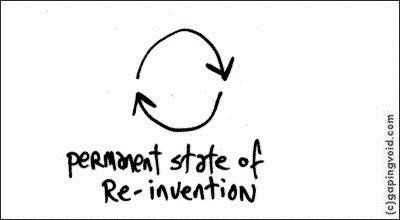
Four years ago in “The Hugh­train” I published the car­toon above, with the follo­wing thought beneath it:

: There’s only one thing har­der than star­ting a new busi­ness: Re-inventing an old one.
Start-ups are fine and dandy, most peo­ple rea­ding this will know all about them.
But what about Start-Agains? Are they an exer­cise in futi­lity or a tre­men­dous oppor­tu­nity?
THOUGHT: The future of adver­ti­sing is clients inc­rea­singly asking their agen­cies to help re-invent not just their brands, but their actual com­pa­nies. The future is agen­cies being inc­rea­singly una­ble to deli­ver on this.
Out of this wrec­kage a new industry will emerge…
So how do com­pa­nies, busi­nes­ses, brands etc re-invent them­sel­ves?
Big, big ques­tion. Worth a for­tune to know the ans­wer.
Actually, the answer’s pretty sim­ple: The same way humans re-invent them­sel­ves.
I know. It shouldn’t be that sim­ple, but it is.

1. I’ve been thin­king about this a lot lately. I like the entry, though four years later, I’m not sure how com­for­ta­ble I still am with the sta­te­ment, “Actually, the answer’s pretty sim­ple: The same way humans re-invent them­sel­ves. I know. It shouldn’t be that sim­ple, but it is.“
Cor­po­rate re-invention may be in sim­ple in retros­pect, but when it’s hap­pe­ning in real time it’s a tough, nasty, bru­tal busi­ness [Ask IBM if you don’t believe me]. Not for the faint of heart. But that’s what makes it so damn inte­res­ting. And poten­tially luc­ra­tive.
2. In the early 2000’s I had got­ten quite disi­llu­sio­ned with tra­di­tio­nal, Madi­son Ave­nue adver­ti­sing, the industry I had ente­red when I left college [Though let’s be honest, it had never thought that highly of me, either, but that’s a story for another day].
Thank­fully, with the advent of The Clue­train, blogs and what later went on to be called “Web 2.0″, it see­med a new world order was emer­ging. The Inter­net was chan­ging things; just none of us knew exactly how. But it was damn exci­ting new rea­lity to con­tem­plate.
In 2004, I first star­ted arti­cu­la­ting a belief that I still hold true today– that good, well-executed com­mu­ni­ca­tion via blog­ging can make a huge dif­fe­rence in the for­tu­nes of a com­pany, large or small [I went on to explain it as “The Porous Mem­brane”]. And this time, the empha­sis would not be a one-way mes­sage, but in a two-way “Con­ver­sa­tion”.
Of course, “Con­ver­sa­tion” is just a metaphor. When was the last time you wan­ted to phone up Hershey’s and have a long, deep, sti­mu­la­ting con­ver­sa­tion with one their emplo­yees about 75-cent candy bars? No, some­ti­mes you just want to put your money on the coun­ter of the con­ve­nience store and buy your kids a little treat. And. That. Is. Enough. Human beings don’t scale. Our capa­city for deep-and-meaningful is limi­ted. “Con­ver­sa­tion” is just con­ve­nient shorthand to bet­ter explain how mar­kets– sup­pliers and buyers– relate to each other as human beings, not just as num­bers on the spreadsheet. But that’s all it is. That’s all it needs to be.
Since I’ve become aware of this new world of Web 2.0, I’ve always been inte­res­ted in tes­ting its limi­ta­tions, espe­cially when it comes to mar­ke­ting. So I’ve always been on the loo­kout for new oppor­tu­ni­ties in this area of busi­ness.
3. Ear­lier this year I star­ted a con­ver­sa­tion with Dell. So far the con­ver­sa­tion is still going on. Some folks inside the com­pany had seen The Mic­ro­soft Blue Mons­ter and won­de­red if there was anything in this kind of thin­king that could help their com­pany. I’m gues­sing the ans­wer might be “No”. The Blue Mons­ter came out of pretty uni­que, ran­dom cir­cums­tan­ces. Which of course, is the whole point. Ergo, I’m not really inte­res­ted in a car­too­ning gig with Dell per se. I am, howe­ver, inte­res­ted in the com­pany.
4. It seems to me that, like a lot of large tech com­pa­nies of a cer­tain age, Act One in the Dell drama has reached its end. The war to get com­pu­ters onto the desk­tops of the deve­lo­ped world, cheaply and easily, has been lar­gely fought and won by com­pa­nies like Dell, Mic­ro­soft, HP and Apple.
Mis­sion Accom­plished.
But what hap­pens in Act Two? How do large tech com­pa­nies like Dell have to re-invent them­sel­ves in order to make the grade? To keep their ever-growing army of cus­to­mers and sha­rehol­ders rela­ti­vely con­tent? Seriously. I want to know.
5. What needs to hap­pen in order for Dell to become a bet­ter com­pany? What needs to change? What needs to remain the same? These are huge ques­tions. Like I said, it’s worth a for­tune to any­body who can come up with good ans­wers.
6. What is “The Con­ver­sa­tion” that needs to hap­pen? You tell me.
Over the last few years, I’ve had a few ideas about mar­ke­ting and the inter­net. English Cut, Stormhoek and The Blue Mons­ter were oppor­tu­ni­ties for me to prove them. And for the most part, I suc­cee­ded. Dell might be another oppor­tu­nity. I’m not sure yet.

Comments

  1. Hugh, Like me, you must love a trainw­reck. I guess that’s when strong, deci­sive action led by someone fear­less can make the big­gest impact.
    Seems to me Dell has lost the trust of many dif­fe­rent sta­kehol­ders. I’m most fami­liar with their sha­rehol­ders’ disap­point­ment. Who’s the big­gest com­pany to admit to deli­be­rate accoun­ting mani­pu­la­tion, post Sarbanes-Oxley? They’ve been inco­rri­gi­ble.
    Good luck fin­ding a way to sell folks on their sup­po­sed regret and redemption.

  2. Hey Fran­cine, Thanks for that.
    I don’t regard it as a train wreck. I regard it as the usual grim-meathook rea­li­ties of run­ning a large, publicly tra­ded com­pany. Like I said, not for the faint-of-heart.
    But that’s what makes it so inte­res­ting. This ain’t no taco stand.

  3. Well, Madonna has rein­ven­ted her­self into a multi-million dollar cor­po­ra­tion. I find ins­pi­ra­tion in her huts­pah. Now, ins­tead of sex-vixon, she is glam mom. Works for me. The world is being rein­ven­ted, as we read. Per­so­nally, I think Dell should put dots on all their com­pu­ters. Or maybe plaids. Or stri­pes… Not just the packaging.

  4. Inte­res­ting post… obviously there are a lot of us inside Dell wrest­ling with some of the issues you raise.
    A cou­ple of points from my pers­pec­tive:
    –in my expe­rience social media done right (through blog outreach, Twit­ter our own blogs, etc. help change cus­to­mer per­cep­tions bet­ter than anything I’ve ever seen. But, sca­ling the work invol­ved isn’t easy.
    –social media at any level will never be a subs­ti­tute for qua­lity pro­ducts and great ser­vice.
    We have lots of work left to do. We have to get bet­ter at con­nec­ting our cus­to­mers with peo­ple and con­ver­sa­tions that are impor­tant to them. Maybe it’s not re-inventing – it’s just evolving.

  5. hugh macleod says:

    Hey Lio­nel, thanks for stop­ping by :)
    Evol­ving vs Re-Inventing, the debate con­ti­nues ;-)
    Luc­kily, yours is a big com­pany. Lots of room for both! :D

  6. Hugh, good post.
    Lio­nel — your second point is really impor­tant. “social media at any level will never be a subs­ti­tute for qua­lity pro­ducts and great ser­vice.“
    So true, so true. Social media is really impor­tant in terms of how com­pa­nies engage emplo­yees, cus­to­mers, part­ners, etc., in a dif­fe­rent kind of con­ver­sa­tion than we have pre­viously. But it doesn’t replace the fun­da­men­tals of doing busi­ness well. Some of us stuck in the social media world for­get that at times.
    Good work, btw, on all fronts.

  7. I think it always comes back to basics. If it’s a *real* pro­duct it will sell. And it has to be bac­ked by inte­grity.
    Of course pro­mo­tion is impor­tant (you obviously know that bet­ter than I), but word-of-mouth, low level pro­mo­tion can easily grow to a grounds­well.
    If I were advi­sing I’d say Dell needs to find something they, as a com­pany, can *believe* in. When the peo­ple doing the work believe, Apples hap­pen.
    Whether one likes/agrees with Apple they DO make money. Again not the only mea­sure of suc­cess, but that’s another thread.

  8. A very thought­ful, well put post. I like that you held your ground: I’m not inte­res­ted in making a car­toon for Dell — but I am inte­res­ted in the company…that’s a great point! That’s your value. Your not car­bon cop­ying your approach to hel­ping these com­pa­nies out — your let­ting some oxy­gen in, some chance to hap­pen and unfold, some hard work and crea­ti­vity no doubt — and a keen inte­rest in the pro­cess and the com­pany. From that come the great ideas, a chance for great work and real value! kudos.

  9. I’ve said before that busi­ness is like sex — not war or sports. (see here for a lon­ger ver­sion) http://thesmallbusinesscoach.com/blog/2006/03/20/business-is-like-sex-not-sports-or-war/
    Now you’ve given me another van­tage point. Perhaps re-inventing a busi­ness is like put­ting the zip back in a marriage.
    When com­pa­nies suc­ceed wildly peo­ple usually focus on what they are doing. But that’s only half the story — it’s also the con­text in which they are doing it. They were able to exploit some aspect of that con­text that reso­na­tes with cus­to­mers in a big way. Some­ti­mes they do this on pur­pose and some­ti­mes they just get lucky. When the con­text chan­ges but they don’t rea­lize it then they’re scre­wed (see we’re back to the sex ana­logy).
    If they even need to rein­vent them­sel­ves, it’s because the con­text has chan­ged. They may or may not be good enough, or lucky enough to exploit the new con­text given their old baggage.

  10. I wor­ked at Dell five years ago. Perhaps some has chan­ged since then, but I wouldn’t know.
    When I was at Dell, peo­ple were rewar­ded for making pro­fit. Every metric, every mee­ting, everything was cen­te­red around it.
    A change wouldn’t come easy. Metrics are deeply ingrai­ned in the cul­ture there. We were told to help the cus­to­mer, but we were rewar­ded mone­ta­rily by doing the oppo­site. For exam­ple, if we had an esca­la­tion that we could solve, we were told to help the cus­to­mer right then and there so as to leave them with a good expe­rience. Our paychecks depen­ding on metrics that were pro­fit based though, so hel­ping the cus­to­mer actually hurt our effi­ciency and the­re­fore our poc­ket­books. The highest paid sales reps ten­ded to have a lot of esca­la­tions they did not solve. It was really anno­ying.
    I know mee­ting quar­terly pro­jec­tions is impor­tant, but if the result of this profit-based cul­ture is a high num­ber of inci­dents that lead to bad PR and lost busi­ness, perhaps this should be ree­xa­mi­ned.
    I left Dell because I wan­ted to help peo­ple, and I was tired of sol­ving issues crea­ted by other sales reps while watching their paychecks get fat­ter.
    Not sure how much of this has been resol­ved in the past five years, but that’s just my two cents. I care about Dell because it is an Aus­tin com­pany and I know a lot of peo­ple who work there, so I hope your evil plans work, Hugh.

  11. There’s something mis­sing here…something about Dell kno­wing who they are and what they want to be. Without that, the re-inventing con­ver­sa­tion results in a gene­ric answer/solution/reason for being.

  12. There’s something mis­sing here…something about Dell kno­wing who they are and what they want to be. Without that, the re-inventing con­ver­sa­tion results in a gene­ric answer/solution/reason for being.

  13. what’s next ?
    once all you have within the bor­ders of the wes­tern bor­ders is a satu­ra­ted mar­ket, with exhaus­ted peo­ple who can’t take a sin­gle bit more of pro­pa­ganda, all that remains is the outside world.
    but the outside world is way more dif­fi­cult, wild geo­graphies, lan­gua­ges and tantrum-throwing govern­ments.
    it’s more dif­fi­cult for sure, but the rewards can be immense.
    Europe wasn’t in a good shape 50 years ago.
    can we stop being so fuc­king lazy and start cons­truc­ting the rest of the world ?
    the idea that there’s little else to do is false, there’s plenty to do, and plenty of money out there to be made.
    we only need to start moving our lazy asses.

  14. Hugh
    Beau­ti­ful — dif­fi­cult — ques­tions. As to Num­ber 6, the big one, an easy ans­wer would be to adopt the cri­te­ria for lea­dership arti­cu­la­ted by Peter Koes­ten­baum: Vision, Ethics, Cou­rage, and Rea­lity. Which is lac­king and needs to be bols­te­red. If any aren’t there the “win­dow” of great­ness clo­ses.
    A tougher ans­wer might be this: can the com­pany handle its “disc­re­pan­cies,” the gaps bet­ween the way it says it gets things done and the way it really gets things done. What are the “undis­cus­sa­ble” issues at Dell, the ones that peo­ple are afraid to talk about with those who can actually address the pro­blem? Rein­ven­tion is a pro­duct of facing the lack of inter­nal con­gruence bet­ween an illu­sion of a cer­tain iden­tity and actual per­for­mance. I bet you are just the guy to help peo­ple find the cou­rage to face what is. That’s the trans­for­ma­tion. Just fin­ding, accep­ting, and dea­ling with…what is.

  15. I call it as impro­ving the old one. I will have one idea on my mind which is already inven­ted. I try to add many things to it like making it more use­ful. Cadi­llac arri­ved like that.
    It is same as rein­ven­ting know?!

  16. Great to see the first com­ment coming from my friend and foren­sic accoun­tant Fran­cine.
    I guess I don’t need to tell you this but the big pro­blem with com­pa­nies like Dell is that they have a long his­tory of suc­cess and often take the risk averse approach — ie — If it ain’t irre­trie­vably broke, don’t fix it. See it all the time.
    And actually, they’re not doing badly at the moment. Their direct outreach pro­gram has gone really well and they’re get­ting favo­rite sta­tus in some of the cloud com­pu­ting envi­ron­ments I see cuz they can turn on a dime where the likes of Sun are lea­den foo­ted.
    It ain’t all about mar­ke­ting though — they need to step up to the plate in a lot areas, part of which Fran­cine iden­ti­fied. Lots of other stuff they could be doing.

  17. Will Ross says:

    “the feint of heart” — what a poe­tic phrase!
    I feint love
    You res­pond with affec­tion
    I CRUSH YOU WITH FULL FRONTAL RAGE!!
    Can the heart really feint?
    Having wor­ked at DEC/ Digital/ Compaq/ HP for 20 years, I really should have something use­ful to con­tri­bute. But from the trenches, each new gene­ral comes along with their new ideas, they all look plau­si­ble and then sud­denly something works.
    Hard to tell why, though one can always ratio­na­lise. I have two ratio­na­li­sa­tions for our recent uptick:
    1. luck
    2. bet­ter dis­ci­pline in exe­cu­tion, inc­lu­ding a clear choice of how the com­pany will orga­nise and what it will and will not do. (It’s sur­pri­sing how IT can delude a com­pany into thin­king it can orga­nise by some sort of matrix rather than clear lines of res­pon­si­bi­lity. Repor­ting and mana­ge­ment are not the same!)
    Why SHOULD a com­pany con­ti­nue after its Mis­sion is Accom­plished, any­way?
    Because it has built a capa­bi­lity that is valua­ble in another con­text. It is easiest to start with a deep unders­tan­ding what the com­pany is capa­ble of. Then look for a mar­ket. This seems to be the approach that Lou Gerst­ner took with IBM and Mark Hurd with HP.
    So the first con­ver­sa­tion is cor­po­rate psychoanalysis.

  18. Hugh:
    A most exce­llent post. This is the kind of com­men­tary that keeps us thin­king all day – and crea­tes its own “con­ver­sa­tion.“
    Keep this flow of sti­mu­la­ting con­ver­sa­tion coming. I’ve mis­sed it.

  19. Seems to me that it’s the usual bran­ding vs. com­mo­di­ti­za­tion pro­blem. As long as Dell make com­mo­di­ties (PCs) they have no social object to hang a story around. We know what a PC is and what we want from it. Either Dell give it to as cheaply as pos­si­ble or they can’t.
    If Dell want a social object / brand makeo­ver they have to make pro­ducts that are dif­fe­ren­tia­ted in a way worth tal­king about. With English Cut and Stormhoek you had a novel story : “a tai­lor / wine that blogs”. With Dell, “a com­pu­ter com­pany that blogs” isn’t going to fly.
    Who’s making a dif­fe­ren­tia­ted PC today? (Apart from Apple who are at a whole other level.) Basi­cally Asus. They have great sto­ries : a whole new form-factor, a whole new price, new tech­no­lo­gies (solid state disks), Linux really making things chea­per, etc.
    Dell used to have two good sto­ries : “chea­per because we sell direct without dea­lers” and “you can cus­to­mize on our web-site and our super-lean pro­cess will build to your design in a day”. The first story is pro­bably no-longer avai­la­ble. Doesn’t *every­body* sell direct? The second seems to have gone AWOL. “Cus­to­mi­za­bi­lity” could be an idea that Dell still owns. The right web-site, a cute user-interface, could turn com­pu­ter shop­ping into an inten­sely per­so­nal Build-a-bear kind of emo­tio­nal expe­rience. Dell could offer wider variety of periphe­rals, acces­so­ries etc. They could invest in and pro­mote their supply-chain, gain green cre­den­tials through offe­ring you the chance to build “low car­bon foot­print” PCs from local or lower-polluting sour­ces. They could create an Etsy-like mar­ket for case­mod­ders etc.
    But they need to have *something* to tell a story about.

  20. buy — rent — give away free. they should head in this gene­ral direc­tion i reckon

  21. Your com­ment about rein­ven­ting a com­pany being as tough as rein­ven­ting a per­son struck a chord with me. Change is hard for most of us when it hap­pens around us, and it can be doubly cha­llen­ging when we are actually making a cons­cious effort to take our lives or our busi­nes­ses in a new direc­tion.
    Recently, I asked the ques­tion What is your rela­tionship with change? Even those of us in Gene­ra­tion X and Y, who tend to embrace change, have to admit that it can be a frigh­te­ning pros­pect when we admit that the direc­tion we chose might not be where we end up, both in busi­ness and in life.
    Still, it takes guts to try ins­tead of doing what you’ve always done to get what you’ve always got­ten. Life rewards those who move in the direc­tion of grea­test courage.

  22. They need to satisfy cus­to­mers, to do that they have to innovte pro­cess. Right now they are empty PR.

  23. Hugh, I’m curious what exactly they want you to do? Their direc­tion or lack there of baf­fles me.
    Although a rein­ven­tion can be many things or have many mea­nings, set­ting the course of a com­pany the size of Dell is a tall order. A tall order that a CEO and a board of direc­tors are paid to envi­sion and carry out.
    Com­pa­nies hire con­sul­tants all the time, that’s not a big deal, howe­ver it stri­kes me that if they don’t have an idea of what direc­tion they need to go in, the mana­ge­ment needs to change before anything mea­ning­ful can occur.
    It would be a dif­fe­rent story if they had an idea and nee­ded exper­tise in get­ting there, but it’s com­ple­tely another when they ask someone to tell them where they need to be. The old quote from Wayne Gretzky applies here. The rea­son for his suc­cess was that he didn’t chase the puck, he ska­ted to where he thought the puck was going to be.
    Clearly their pre­sent lea­dership is una­ble to do this, so unless you plan on taking up per­ma­nent resi­dency at Dell, they’ll still have trou­ble long-term. That is unless they have a clear vision and just don’t know how to get there (enter Hugh), which takes me back to my ope­ning line/question.

  24. What I’m hea­ring from their cus­to­mers is “They lie and their cus­to­mer ser­vice is a farce.” Yeah… so how does one re-invent that?
    Good Luck with them Texans (LOL yeah I know it’s my home state and I’m dieing to go back home to visit … They talk dif­fe­rent, They walk with a deter­mi­na­tion, They know they’re a nation unto them­sel­ves. … They’re dang stub­born … and If they are con­vin­ced an idea is sup­pose to work, they’ll not let go until the last second … but this is only true of the nati­ves. Be cer­tain you’re lining this info up with a native. Imports & 2nd gen-ers are another story.)

Are you ready to work with us?

Get More Info

Testimonials

His work acknowledges the absurdity of workaday life, while also encouraging employees to respond with passion, creativity, and non-conformity...   MacLeod’s work is undeniably an improvement over the office schlock of yore. At its best, it’s more honest, and more cognizant of the entrepreneurial psyche, while still retaining some idealism.

The New Republic
Lydia Depillis

Last year my State of the College address was 76 slides loaded with data. This year it was 14 cartoons that were substantially more memorable.

Len Schlesinger
Former President, Babson College

"There are only two daily newsletters that I look forward to opening and reading every time they show up to my inbox: Seth Godin's and gapingvoid."

Tony Hsieh
CEO, Zappos

Hugh MacLeod is a genius.  Genius.

Seth Godin
Best Selling Author

In moments of indecision I glance at the wall [to Hugh's work] for guidance.

Brian Clark
@copyblogger
 
  • The New Republic
  • Len Schlesinger
  • Tony Hsieh
  • Seth Godin
  • Brian Clark
prevnext