the cultural problem

changethesystem117AA.jpg
So some­body was asking me the other day, “What’s the deal with these large tech com­pa­nies? As soon as they get to a cer­tain age and/or size, they all seem to go into ‘cri­sis’ mode…“
My reply was, well, when you think about it, these large com­pa­nies are in most ways very for­tu­nate. They have lots of money, lots of smart peo­ple wor­king for them, lots of com­bi­ned know­ledge, and lots of mate­rial capi­tal to build other stuff with.
i.e. The have lots of capi­tal– human, finan­cial, inte­llec­tual, tech­ni­cal etc etc.
But they will also have a lot of bag­gage. Lots and lots of dif­fe­rent entrenched posi­tions to defend. Thou­sands of them.
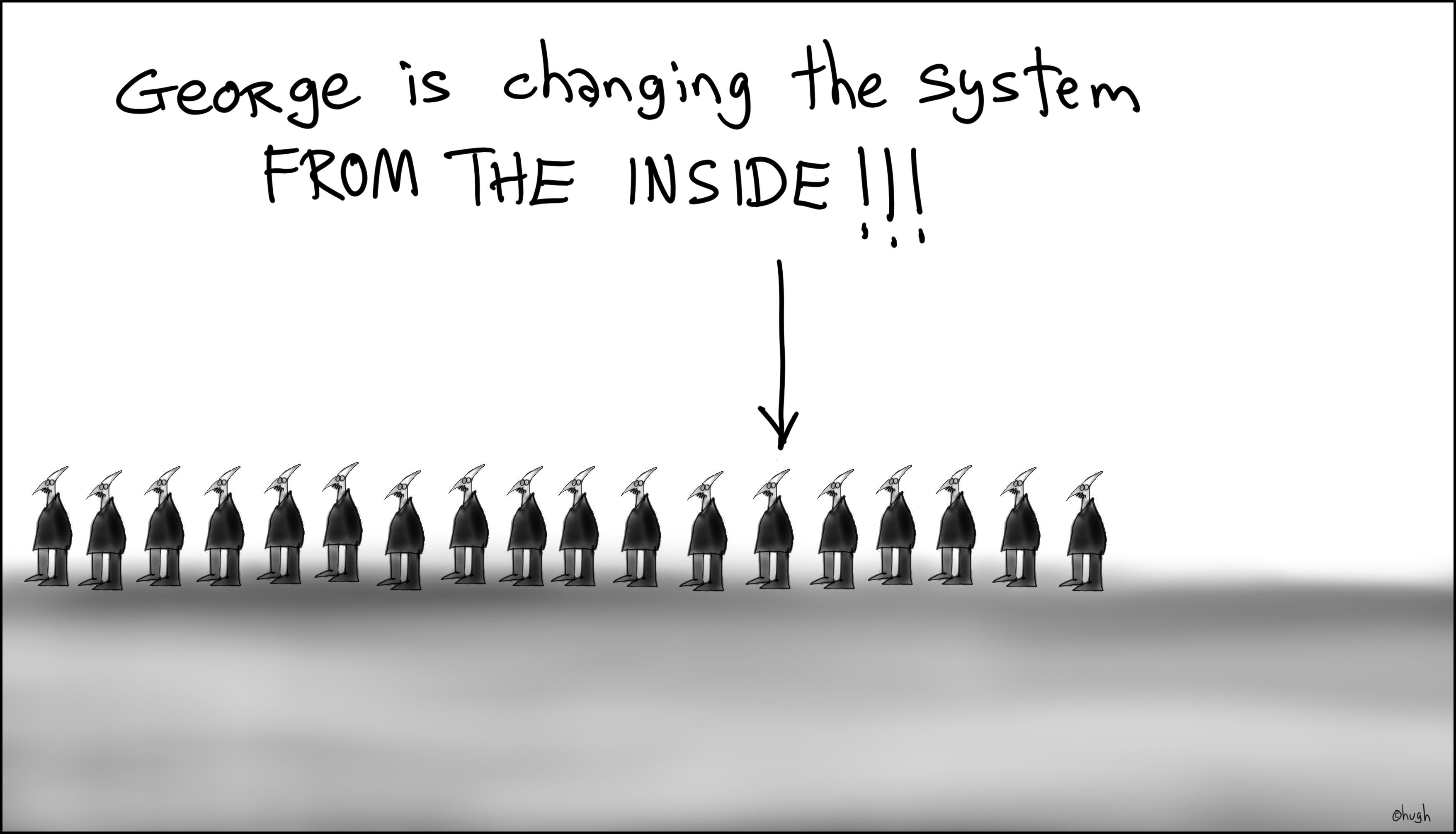
So they way I see it, their pro­blem isn’t “mate­rial”. Their pro­blem is CULTURAL.

It’s not the sum of their parts that is the pro­blem; it’s the way human beings relate with each other, inte­ract with each other, that is cau­sing the pro­blem.

i.e. Often with tech com­pa­nies, we wrongly blame the pro­blems on the tech itself. As with all things com­mer­cial, it’s the peo­ple that mat­ter.
[UPDATE:] One of my favo­rite mar­ke­ting wri­ters, my friend, Mark Earls left a com­ment below:

Great post, mate. And spot on.
I find it stri­king that all the dif­fe­rent kinds of mana­gers I meet in all kinds of dif­fe­rent sec­tors still pre­fer to desc­ribe and draw their busi­nes­ses as if they were a machine or some tech­ni­cal thing at least; how they pre­fer tech­ni­cal soun­ding stra­te­gies and defi­ni­tions of their cha­llen­ges (“the busi­ness plan­ning pro­cess” etc) to the honest accep­tance that the rea­son why all busi­nes­ses are tricky beasts is that they’re built on, with and by humans.
Of course, it’d be easier if busi­nes­ses were more like machi­nes but they’re not. And if stra­te­gies were like mecha­ni­cal (i.e. human-lite) things — borne of a robo-mind and imple­men­ted by an army of repli­cants, maybe.
The sad truth remains that everything in busi­ness is about peo­ple, their inte­rac­tions with each other and the ideas and assump­tions that shape those inte­rac­tions.
I’m not sure it’s just the tech busi­ness that suf­fer this way: finance, manu­fac­tu­ring, air­li­nes and — god bless, em — govern­ment agen­cies are just as delu­sio­nal about this stuff.
Go get ‘em!

Comments

  1. “As with all things com­mer­cial, it’s the peo­ple that mat­ter.“
    Main­tai­ning the cor­po­rate cul­ture as an orga­ni­za­tion grows is inc­re­dibly dif­fi­cult. Goo­gle has done it. Apple and Mic­ro­soft have, too.
    Com­paq lost it and was for­ced to sell out to HP, who had lost it years before.
    So cul­ture doesn’t track well to success?

  2. Com­pa­nies cer­tainly do end up having inter­nal con­flicts, whether they’re rela­ted to the vision of its products/services or jsut per­so­na­lity con­flicts. Often times, these com­pa­nies neither have the whe­re­withall to deal with them – i.e., chan­ne­ling these con­flicts to the company’s advan­tage. Expe­rien­ced exe­cu­ti­ves and mana­gers are able to help collapse these devia­ting visions into a unif­ying whole. I see Goo­gle as a prime exam­ple. Goo­gle encou­ra­ges dif­fe­rent thin­king and crea­tive pro­jects and then is able to fit these pro­jects into holes that appear to – some­ti­mes not so seem­lessly – make its ulti­mate mis­sion uni­que and suc­cess­ful. That is cer­tainly not to say that some of the company’s resour­ces – espe­cially human inte­llect and human beings – com­ple­tely mash into a uni­fied whole. Peo­ple leave. They must be allo­wed to do so without rec­ri­mi­na­tion. Com­pa­nies often let dif­fe­ren­ces fes­ter without addres­sing them when signs are appa­rent. Most times, it’s too late.

  3. None of this is new as Robert Townsend’s “Up the Orga­ni­za­tion: How to Stop the Cor­po­ra­tion from Sti­fling Peo­ple and Stran­gling Pro­fits” pro­ves. The book was first published more than 35 years ago. Some indi­vi­duals and cor­po­ra­tions “get it” and some don’t. It seems like it’s almost like a rite of pas­sage. Oh, and it’s not just tech companies.

  4. hugh macleod says:

    Mike, I agree, it’s nothing new.
    But what’s far more inte­res­ting to me is, the things one can do to com­bat it…

  5. “Often with tech com­pa­nies, we wrongly blame the pro­blems on the tech itself.“
    There is a much more gene­ra­li­zed pro­blem here. It’s not just tech com­pa­nies. Tech­no­logy is res­pon­si­ble for lots of stuff — good and bad, but too often in modern busi­ness it gets more blame for the bad than is really due. I assert that most all “tech­no­logy” fai­lu­res in busi­ness are really “cul­ture” fai­lings. ERP imple­men­ta­tion, soft­ware deve­lop­ment pro­jects, web site design, etc. Tech­no­logy is an easy scape goat.
    Great car­toon, BTW.
    –Matt

  6. Matt: Maybe because tech solu­tions too often are imple­men­ted in order to solve pro­blems that are in essence cul­tu­ral.
    A busi­ness that doesn’t com­mu­ni­cate well all to often imple­ment some kind of soft­ware or tech, when a good solu­tion would be to just talk to the customer.

  7. I think the need and desire for a qua­lity cor­po­rate cul­ture has to be something that’s entrenched in your mana­ge­ment and often’ isn’t.
    I’ve been lucky to work at a com­pany that’s run like a family. I rea­lize that it’s something that will be har­der to main­tain as the com­pany grows. I hope and pray that they won’t let things change… that it will stay a priority.

  8. Great post, mate. And spot on.
    I find it stri­king that all the dif­fe­rent kinds of mana­gers I meet in all kinds of dif­fe­rent sec­tors still pre­fer to desc­ribe and draw their busi­nes­ses as if they were a machine or some tech­ni­cal thing at least; how they pre­fer tech­ni­cal soun­ding stra­te­gies and defi­ni­tions of their cha­llen­ges (“the busi­ness plan­ning pro­cess” etc) to the honest accep­tance that the rea­son why all busi­nes­ses are tricky beasts is that they’re built on, with and by humans.
    Of course, it’d be easier if busi­nes­ses were more like machi­nes but they’re not. And if stra­te­gies were like mecha­ni­cal (i.e. human-lite) things — borne of a robo-mind and imple­men­ted by an army of repli­cants, maybe.
    The sad truth remains that everything in busi­ness is about peo­ple, their inte­rac­tions with each other and the ideas and assump­tions that shape those inte­rac­tions.
    I’m not sure it’s just the tech busi­ness that suf­fer this way: finance, manu­fac­tu­ring, air­li­nes and — god bless, em — govern­ment agen­cies are just as delu­sio­nal about this stuff.
    Go get ‘em!

  9. Jus­tin: Fami­lies can be dys­func­tio­nal, too.
    Mark: Hmmm. The “com­pany as machine” ana­logy may seem even more apt to tech com­pany mana­gers, many of whom got their start as engi­neers. (A group not noted for their peo­ple skills.)

Are you ready to work with us?

Get More Info

Testimonials

His work acknowledges the absurdity of workaday life, while also encouraging employees to respond with passion, creativity, and non-conformity...   MacLeod’s work is undeniably an improvement over the office schlock of yore. At its best, it’s more honest, and more cognizant of the entrepreneurial psyche, while still retaining some idealism.

The New Republic
Lydia Depillis

Last year my State of the College address was 76 slides loaded with data. This year it was 14 cartoons that were substantially more memorable.

Len Schlesinger
Former President, Babson College

Hugh MacLeod is a genius.  Genius.

Seth Godin
Best Selling Author

In moments of indecision I glance at the wall for guidance.

Brian Clark
@copyblogger
 
  • The New Republic
  • Len Schlesinger
  • Seth Godin
  • Brian Clark
prevnext