May 12, 2008

mark earls and the “purpose-idea”

Send to Kindle

headup337.jpg
When I’m tal­king with clients about mar­ke­ting, it’s very hard for me to go more than a few minu­tes without men­tio­ning the term, “Purpose-Idea”.
The “P.I.” is not a term I coi­ned myself. That cre­dit goes to my friend, mar­ke­ting hero and fre­quent pod­cast part­ner, Mark Earls. He wrote about the P.I. in his semi­nal mar­ke­ting book, “Wel­come To The Crea­tive Age”.
Marks begins his the­sis by saying that actually, when you think about it, tal­king about “The Brand” is pretty mea­nin­gless. Ima­gine lots of mee­tings cram­med full of suits yak­king on about “Core Brand Values”, “Living The Brand” and all that mar­ke­ting waf­fle, and you kinda get the idea. I’ve been in those mee­tings and they suck.
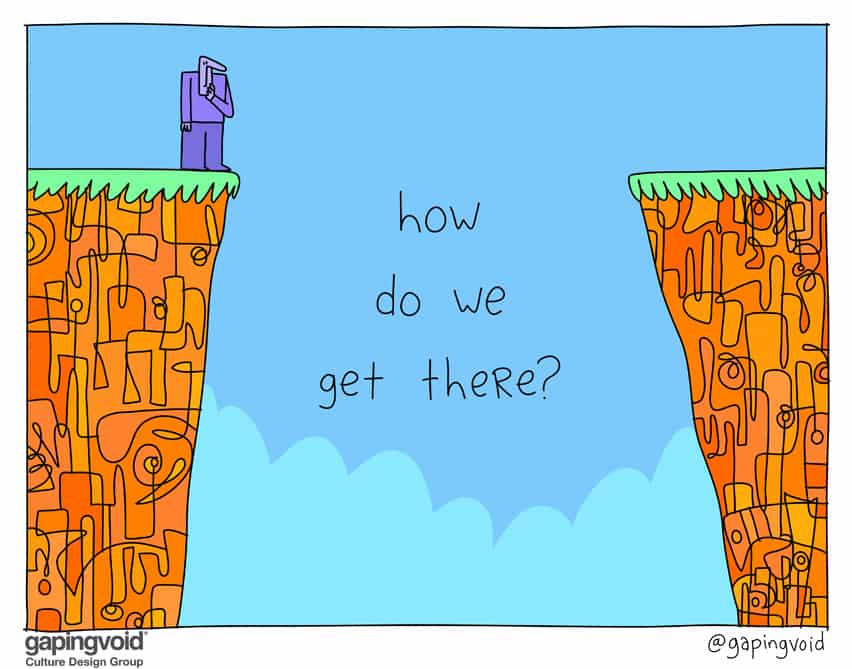
What’s far more inte­res­ting, Mark says, is the rea­son we all get out of bed in the mor­ning. The thing that dri­ves us as indi­vi­duals, as a com­pany. Ask your­self, what is our com­pany for? Is all our pro­fes­sio­nal life about just selling alu­mi­num wid­gets for 16.7% mar­gin, or is there some sort of higher mea­ning invol­ved? What are we trying to change? To improve upon? To dis­rupt?
Why are we here?
Mark then goes on to say how much more fun, inte­res­ting and pro­fi­ta­ble it is for a com­pany when what it does has a sense of sha­red pur­pose, an idea it can believe in. This is the “P.I.“
The Blue Mons­ter i.e. “Change The World Or Go Home” is a P.I., the Mic­ro­soft tagline, “Your Poten­tial, Our Pas­sion” is not.
Why not? Because that’s not how peo­ple talk in real life. Sure, the word, “pas­sion” may be in the line, but it burns with about as much pas­sion as a wet Klee­nex. Which is why it comes off being con­tri­ved and phony at worse, boring and unins­pi­red at best.
I’m not trying to go after Mic­ro­soft, here. They’re still bud­dies of mine, I con­ti­nue to like, admire and res­pect them. But there’s so much real, genuine pas­sion under the hood of that car, I just WISH they could do a bet­ter job of let­ting the rest of us see it more often. I find their tagline a sorely mis­sed oppor­tu­nity.
I would guess that the chea­pest and easiest way to bet­ter arti­cu­late this pas­sion, My Friends in Red­mond, is to spend more time thin­king about what your Purpose-Idea ACTUALLY IS, as oppo­sed to what you think peo­ple outside the com­pany might want to hear. I’d recom­mend any Mic­ro­soft emplo­yee who knows me, to go read Mark’s book. Rock on.
[Disc­lo­sure: I con­si­der myself a friend of Mic­ro­soft. They’ve been clients of mine in the past, they’ll hope­fully be clients of mine in the future, they are not not clients of mine at the moment. It’s all good.]


Be Socia­ble, Share!

"Hugh's Daily Cartoon" Newsletter. A new cartoon sent out every weekday morning to your inbox [RSS version here.]. A wee chuckle to start your day off right etc.

Tags: , , , ,

34 Responses to “mark earls and the “purpose-idea””

  1. vruz says:

    that, and “The Brand Gap“
    amazon.com link for the book:
    http://is.gd/fv7
    I think they nail it when they write (roughly as follows)
    “a brand is the gut fee­ling some­body has about you“
    (or your pro­duct, or your ser­vice, or your com­pany)
    I agree Mic­ro­soft should let the good side be more visi­ble. But then we go back to the argu­ment I made com­men­ting in this blog a few weeks ago:
    Abo­lish cul­ture of terror so the good, pas­sio­nate guys can speak.
    Peo­ple will never see how good and pas­sio­nate they are other­wise.
    And then the gut fee­ling will start to slowly change.
    Rea­ding Mr Clay­ton repl­ying to my com­ment the other day is cer­tainly a great start.

  2. Now that “there’s a com­pu­ter on every desk­top” MSFT is trap­ped in “now what?” mode.

  3. John Dodds says:

    I share your admi­ra­tion of that book and am ama­zed that com­pa­nies don’t take the first sim­ple step of ensu­ring that their mar­ke­ting reflects their stra­tegy (pur­pose). Microsoft’s busi­ness stra­tegy is not directly anything to do with other people’s poten­tial so why they say that in their tagline is, I agree, a mys­tery.
    If a com­pany knows and belie­ves in a stra­tegy that enthu­ses its staff and cus­to­mers, the mar­ke­ting should lite­rally fall out of it. If it doesn’t, I have to ques­tion if that com­pany either knows or belie­ves in what its pur­pose is.

  4. sara says:

    Inte­res­ting! I ima­gine very few peo­ple have even heard of Microsoft’s tagline.
    I’ve been thin­king about tagli­nes since last week when I read this post: http://brainsonfire.com/blog/2008/05/06/never-pick-a-tagline-that-just-anyone-can-use-ever/

  5. Rasul Sha'ir says:

    Great con­ver­sa­tion. The book The 22 Immu­ta­ble Laws of Bran­ding http://www.amazon.com/22-Immutable-Laws-Branding-World-Class/dp/0887309372 (a little dated as you read through it, though)has a simi­lar gem to what vruz quo­ted as to what a brand is. It said that “what you think your brand is doesn’t really mat­ter. It’s only what your cus­to­mer thinks your brand is that mat­ters.” So now the ques­tion is how does the per­cep­tion of what you want your brand to be become that in the eyes and minds of your customers/audience?

  6. You’re abso­lu­tely right, Hugh — and you’ve espe­cially hit the nail on the head there at the end, when you talk about what Mic­ro­soft thinks about what other peo­ple think about what they think (ad infi­ni­tum …).
    This calls to mind one of my favo­rite quo­tes about the crea­tive pro­cess — said ori­gi­nally by Arthur Miller about wri­ting, but just as appli­ca­ble, in my mind, to ANYTHING you’ll try to put your guts into:
    “The wri­ter must be in it; he can’t be to one side of it, ever. He has to be endan­ge­red by it. His own atti­tu­des have to be tes­ted in it. The best work that any­body ever wri­tes is the work that is on the verge of emba­rras­sing him, always.”
    The antithe­sis of what Miller is tal­king about is “Your Poten­tial, Our Passion” — or Sara Lee’s ludic­rous “Nobody Doesn’t Like Sara Lee”. THAT’s what you’re gonna hang your hat on? THAT’s what’s gonna get you out of bed in the mor­ning? No.
    Chan­ging the world? Hell, yes.

  7. vruz says:

    @john
    Ins­tead of ‘tagli­nes’ and ‘P.I.s’ Guy Kawa­saki, in “The Art of the Start” talks about “man­tras”.
    His star­tup chec­klist item #2 is:
    “MAKE MANTRA. For­get mis­sion sta­te­ments; theyʼre long, boring, and irre­le­vant. No
    one can ever remem­ber them — much less imple­ment them. Ins­tead, take your mea­ning
    and make a man­tra out of it. This will set your entire team on the right course.“
    he gives some real life exam­ples:
    * Authen­tic ath­le­tic per­for­mance (Nike)
    * Fun family enter­tain­ment (Dis­ney)
    * Rewar­ding every­day moments (Star­bucks)
    * Think (IBM)
    and some pos­si­ble fic­ti­tious man­tras:
    Coca-Cola
    Real Mis­sion Sta­te­ment:
    “The Coca-Cola Com­pany exists to bene­fit and refresh ever­yone it touches“
    Hypo­te­ti­cal Man­tra:
    “Refresh the world“
    Red Cross
    Real Mis­sion Sta­te­ment:
    “To help peo­ple pre­vent, pre­pare for and res­pond to emer­gen­cies“
    Hypo­te­ti­cal Man­tra:
    “Stop suf­fe­ring“
    He draws an impor­tant dis­tinc­tion bet­ween a tagline and a man­tra.
    “A final thought on man­tras: Donʼt con­fuse man­tras and tag lines. A man­tra is for your
    emplo­yees; itʼs a gui­de­line for what they do in their jobs. A tag line is for your cus­to­mers;
    itʼs a gui­de­line for how to use your pro­duct or ser­vice. For exam­ple, Nikeʼs man­tra is
    “Authen­tic ath­le­tic per­for­mance.” Its tag line is “Just do it.”
    Looks like the con­cept of P.I. seems to fall clo­ser to the man­tra than the tagline.
    cheers,
    vruz

  8. vruz says:

    @Rasul
    Now quo­ting lite­rally from “The Brand Gap” pdf pre­sen­ta­tion by Simon + Asso­cia­tes Adver­ti­sing,
    based on Marty Neumeier’s book.
    A BRAND IS A PERSON’S FEELING ABOUT A PRODUCT, SERVICE OR ORGANISATION.
    it’s a PERSON’S gut fee­ling, because brands are defi­ned by indi­vi­duals, no com­pa­nies, mar­kets, or publics.
    it’s a GUT FEELING because peo­ple are emo­tio­nal, intui­tive beings.
    in other words:
    IT’S NOT WHAT YOU SAY IT IS
    IT’S WHAT THEY SAY IT IS

  9. vruz says:

    appa­rently Marty Neu­meier has a new book in the oven:
    ZAG
    http://www.zagbook.com/

  10. vruz says:

    @tim and @hugh
    just like “DO NO EVIL“
    doesn’t auto­ma­ti­cally trans­late into
    “DO GOOD ONLY”…
    “CHANGE THE WORLD” doesn’t auto­ma­ti­cally
    trans­late into
    “CHANGE THE WORLD FOR BETTER“
    change the world how ?
    in which way ?
    for whose bene­fit ?
    There’s no doubt Mic­ro­soft has already suc­ce­ded at chan­ging the world, beyond anybody’s wil­dest dreams.
    Is that enough ?
    If one’s really being honest and authen­tic, what’s the actual impact you want to make in the world ?
    Why not saying it ? Just say it !
    If a brand is a gut fee­ling, the P.I./mantra, is a deed you’re bound to.
    It’s a con­tract, a vow if you will…
    There shouldn’t be small let­ter, legal gaps or phi­lo­sophi­cal tricks in it.
    It has to be AUTHENTIC, unfa­kea­ble, and true by the light of day.
    How about:
    “MAKE A BETTER WORLD, OR GO HOME“
    or
    “CHANGE THE WORLD FOR BETTER” ?

  11. michael n says:

    omg, go read derrida http://tinyurl.com/5vrgh8; “It has to be AUTHENTIC, unfa­kea­ble, and true by the light of day.” nau­sea is a gut fee­ling, but these mantra/vow/PI things mis­take a string of words with a metaphy­si­cal idea of pre­sence and being. but then again, i don’t work in marketing.

  12. Hugh–
    I dig the thought pro­cess behind the ques­tion of a com­pany and it’s exis­ten­tial pur­pose. Many com­pa­nies attempt to embrace what I refer to as mar­ke­ting phi­lo­sophy, but only skin deep. Rea­lis­ti­cally, they are usually more worried about making that 16.7% mar­ket share. That’s a shame, but pro­bably neces­sary for most orga­ni­za­tions.
    Crea­ting a clear mani­festo for a com­pany is admi­ra­ble. Goo­gle aims to orga­nize and make acces­si­ble all the worlds infor­ma­tion. I like that. Not every com­pany has such a gran­diose pur­pose. Some of us have to clean toi­lets. That’s life. But it’s still valua­ble at a con­su­mer level. I’m just not sure how an orga­ni­za­tion can embrace it in layman’s terms. And for a com­pany such as mic­ro­soft to con­dense the gamut of ini­tia­ti­ves they have as such; well it gets a lot tougher.
    Long story short, I agree with the idea that a com­pany should be mar­ke­ting with clear cut rea­sons that the orga­ni­za­tion exists. But I also think it’s much more dif­fi­cult to imple­ment than you may give it cre­dit for. $.02.

  13. Jon Husband says:

    Web 2.0 in the world of busi­ness and work … re-discovering core orga­ni­za­tio­nal deve­lop­ment (OD) prin­ci­ples, one at a time ;-)

  14. scott r says:

    The pro­blem isn’t as much the P.I. sta­te­ment as it is imple­men­ting said sta­te­ment. Phi­lo­sophy is all well and good, but action is what carries the “brand.” “Do as I say not as I do” has been the de facto, invi­si­ble, man­tra of most com­pa­nies inc­lu­ding Mic­ro­soft for as long as I can remem­ber.
    The best slo­gan, catchph­rase, “man­tra,” is use­less if busi­ness prac­ti­ces don’t jibe. Mic­ro­soft can say what it wants, but it feels like they’re actually punishing us when we don’t want to upgrade to Vista. And while the Nike brand is all well and good, exploi­ting wor­kers to shave a cou­ple bucks off the cost only under­mi­nes their mar­ke­ting stra­tegy.
    “Put your money where your mouth is,” is a more appro­priate cor­po­rate man­tra these days than anything slse.

  15. Hugh, it’s not the Mic­ro­soft peo­ple who know you who need to read Mark’s book, it’s the Mic­ro­soft peo­ple who don’t :)

  16. Nathan, with res­pect, I think we moved beyond the “com­pu­ter on every desk­top” approach quite some time ago. Our suc­cess or other­wise is deba­ta­ble but that era is behind us for sure.

  17. Michael says:

    I’d dif­fe­ren­tiate a “tag line” — (the latest Mic­ro­soft one being a fairly typi­cal and by no means the worst bland ho-hum adver­ti­sing crea­tion) with a rall­ying call that con­nects and builds a sense of pur­pose within the com­pany (“a com­pu­ter on every desk­top” would fit that, imj). Tag lines for the most part seem to be a solu­tion in search of a ques­tion … I’m not sure why they’re even nee­ded much these days.
    I actually wrote the tagline for Gla­xoS­mith­Kline when it became GSK some years back. It’s still there (a minor miracle in itself) — but I do won­der just whose behaviour/perception it actually influences.

  18. peter Cervieri says:

    here’s a great video inter­view with mark:
    http://www.scribemedia.org/2008/05/08/following-the-herd/

  19. vruz says:

    @michael
    who let the Derrida lec­tu­rers out of the men­tal ins­ti­tu­tion ? :-)
    no, seriously, if I were to decons­truct you, Michael, there wouldn’t be much core subs­tance left to analyse.
    so why bother ?
    now be a good boy and take your pill.
    sleep well.
    goodnight.

  20. vruz says:

    @peter good poin­ter, thanks !

  21. I should start by saying that I don’t work in mar­ke­ting. Are tagli­nes not just balo­ney on some level? Not to sound totally cyni­cal here, but is ever­yone not mas­si­vely over-thinking this? My good­ness, inc­lu­ding a link to Derrida? Does it actually mat­ter what Mic­ro­soft uses as their tag line? Most pro­ducts I trust, I have no idea what their tagline is. I love Wheat Thins. Do they have a tagline? Who gives a crap? Most con­su­mers of most pro­ducts, like Microsoft’s, are not super advan­ced life forms. They’re my mom Shir­ley. Or my cou­sin David. I can’t ever figure out what the heck they’re thin­king, much less figure out what tens of millions of Shirley’s and David’s are thin­king. Maybe mar­ke­ters should stop all the inte­llec­tua­li­zing and just drop tagli­nes alto­gether. Maybe have a nice pic­ture on the box, a mocked-up pic­ture of a family enjo­ying them­sel­ves using the pro­duct, and then con­cen­trate every other last dime on making the pro­duct great. In other words, spend less time crea­ting fun tagli­nes and more time figu­ring out how to make Vista suck less. If the pro­duct is good, espei­cially in this inter­net age, and if it has a sim­ple mar­ke­ting mes­sage, I believe it’ll sell itself.

  22. michael n says:

    “core substance” – wait, let me “decons­truct”: reco­ve­ring catho­lic, arts­cene hanger-on, beco­mes web 2.0 clue­tard? every­body now…
    seriously, give us a man­tra for something. what you were trying to say, through a post-liberation theo­logy idiom, is that you want to invest a thing with an idea big­ger than itself; this is reli­gious thin­king, simply put. this is a mar­ke­ting stra­tegy? tweett­weet: hallmark’s calling.

  23. Manager Mom says:

    Ooo, I’m gonna like this blog. as a mar­ke­ting per­son, I’ve some­ti­mes got­ten strange looks when I say in mee­tings that con­su­mers don’t give a crap about what WE think the brand is. It’s about what THEY think the brand means to them…and you have to build on that, not stick your head in the sand and try to change it.
    Or you wind up with a stea­ming pile like “Not Your Father’s Oldsmobil.”

  24. vruz says:

    @all
    adding to the ter­mi­no­logy…
    Marty Neu­meier in ZAG (http://www.zagbook.com) uses *YET ANOTHER TERM* to desc­ribe roughly the same thing as P.I. and man­tra. (I think)
    He calls it the ‘true­line’.
    (as oppo­sed to the ‘tagline’)
    @michael
    what makes you hang out with reco­ve­ring catho­lic clue­tards ? that’s so out of fashion !!
    (even worse, among dan­ge­rous peo­ple, with peri­lous artis­tic ten­den­ces, aren’t you afraid it’s catchy ?)
    because you’re worth it !
    now I like you, you’re funny :-)
    love,
    vruz

  25. vruz says:

    @Madrugada
    pre­ci­sely, we’re not tal­king about tagli­nes here.
    that’s what Hugh is saying: tagli­nes don’t mean a thing.
    P.Is are an enti­rely dif­fe­rent ani­mal.
    ignore the com­ments and over-intellectualisation in the com­ments area.
    the article itself is worth a re-read :-)
    on Mic­ro­soft : I agree Mic­ro­soft have an awful lot of work to do, both tech­no­lo­gi­cally fixing the ‘flagship pro­duct’ and inter­nally, resha­ping the orga­ni­sa­tion itself.
    but they can’t close doors and go on vaca­tion to find them­sel­ves in a dis­tant beach, and magi­cally return rene­wed and afresh after a cou­ple of weeks. the machine has to keep cran­king all the while they make these changes.

  26. Mic­ro­soft may have pas­sion, but they lack focus to chan­nel it.
    Microsoft’s pro­ducts affect us every­day. Sequel ser­ver runs our data­ba­ses. Win­dows runs our desk­tops. Web­si­tes are writ­ten in ASP.NET. Many peo­ple use office every sin­gle day. These are every­day parts of our lives. They fuel our eco­nomy and pro­gress our society.
    Why then, do I see Mic­ro­soft jum­ping into every sin­gle mar­ket pos­si­ble? Why does Sil­ver­light exist? Why are they trying to squash Goo­gle? Why can’t they just take the pro­ducts that they have a vir­tual mono­poly on and actually make them flaw­less? Why must we suf­fer through duds like clas­sic ASP, Win­dows Millen­nium, and now Vista?
    If you are truly pas­sio­nate about your pro­duct, you see it as a moral impe­ra­tive to make your pro­ducts as rele­vant to your cus­to­mers as pos­si­ble. There may be pas­sio­nate indi­vi­duals at Mic­ro­soft, but their lack of inte­rest in relea­sing solid pro­ducts con­cerns me.

  27. vruz says:

    @Michelle
    There’s a reig­ning view for some, that com­pa­nies have no morals.
    Their only legal obli­ga­tion is to their owners/shareholders.
    It’s the indi­vi­duals, from inside and outside of the orga­ni­sa­tion who need morals and get­ting their voi­ces heard.
    Indi­vi­duals can have a pro­tes­tant “work ethic”, secu­lar ethics, or plain catho­lic guilt.
    But wha­te­ver it is, cus­to­mers and emplo­yees want their voi­ces heard.
    Because it’s a mar­ket, and there’s value in what these cus­to­mers and emplo­yees do.
    Stic­king to the mini­mum requi­red by law is not enough.
    It’s only in the best inte­rest of the com­pany –and the mar­ket as a whole– to serve them well.

  28. boston rose says:

    wel­come to my CUBE OF DESTINY?!!!!!!!!?!!!!!!!
    HAHAHAHAHAHAHAHAHAHAHAHAHAHHAHAA
    oh gosh my sto­mach hurts.

  29. To Vruz, I see what you’re saying. Hugh’s posts are often about huma­ni­zing the mar­ke­ting pro­cess, about put­ting a human face on num­bers, which I like a lot. This one’s no dif­fe­rent, which is a good thing. I’m glad you asked me to reread the post.

  30. I am a pro­fes­sor in the Middle East where I teach my local/national/indigenous stu­dents to think of the story and how it will effect peo­ple.
    This post and the dra­wing with it are nothing short of exactly what my stu­dents just can­not wrap their heads around.
    Funny so sim­ple but so dif­fi­cult to grasp.
    Maybe we try too hard?

  31. Phil Gomes says:

    This pic is going up on my wall. Immediately.

  32. […] to the auto­no­mous work. This is where Mark Earls’ con­cept of the Purpose-Idea is cri­ti­cal. Here is how Hugh Mac­Leod sum­ma­ri­ses it: What’s far more inte­res­ting, Mark says, is the rea­son we all get out of bed in the mor­ning. The […]

  33. […] you want to thrive in this hybrid eco­nomy, you’ll need a pur­pose that goes way beyond making money. You’ll also need to be genui­nely gene­rous — not just […]

  34. […] you want to thrive in this hybrid eco­nomy, you’ll need a pur­pose that goes way beyond making money. You’ll also need to be genui­nely gene­rous — not just […]