January 22, 2008

meatball sundae [part two]

Send to Kindle

11444661502zzzzz6-thumb.jpg
Recently I did an inter­view of Seth Godin about his new book, “Meat­ball Sun­dae”. As Seth desc­ri­bed it:

Meat­balls are com­mo­dity pro­ducts, built in a fac­tory, adver­ti­sed all over. Stuff we need. All the same. Ave­rage pro­ducts for ave­rage peo­ple. Unre­mar­ka­ble, but impor­tant. The back­bone of our world so far.
The sun­dae is the new mar­ke­ting. Blogs and Face­book and goo­gle and crowd­sour­cing and all the stuff that we get exci­ted about. It works great if you’ve got a social object or a pur­ple cow. But put the sun­dae on a meat­ball and…

There’s a pas­sage in the book that really got me thin­king, all to do with ice cream:

Willie Wonka isn’t dead, but he’s bald
In the heart of the newly hip Union Square neigh­borhood in New York City is a brand-new land­mark: Max Bren­ner [Cho­co­late by the Bald Man]. Max (I’m told that’s not his real name) pur­por­tedly runs a chain of inc­re­dibly expen­sive cho­co­late cafés based in Aus­tra­lia. He’s got almost a dozen shops there, with other out­lets in Israel, Sin­ga­pore, and the Phi­lip­pi­nes. The chain is pro­fi­ta­ble and gro­wing fast.
This is the place to come if you want to order the Warm Cho­co­late Soup, which comes with crunch cho­co­late waf­fle balls, straw­be­rries, and marsh­ma­llows and costs ten dollars. Or, for the ambi­tious, The Cho­co­late Mess, which is a warm cho­co­late cake eaten with spa­tu­las straight from the pan, with a moun­tain of whip­ped cream, ice cream scoops, cho­co­late chunks, tof­fee cream, warm cho­co­late sauce, and pos­sibly, tof­fee bana­nas. It’s $12.75 for one per­son or $37 for four.
Max’s is pac­ked, with lines of up to thirty minu­tes for a table. And most tables are filled with adults, not kids.
Just down the street from a Max’s, you’ll find the much more rea­so­nably pri­ced Sun­daes and Cones ice cream shop, which is pretty much empty.
Why?
If I want something ordi­nary, then it bet­ter be cheap. I can get cheap and ordi­nary by the gallon at Costco. On the other hand, today’s spoi­led con­su­mer is willing to pay almost anything for the exc­lu­sive, the note­worthy, and the indul­gent.
Sun­daes and Cones isn’t cheap and it isn’t expen­sive. The ice cream is deli­cious, but not revo­lu­tio­nary. They sell a good ice cream cone at a fair price. And that’s no lon­ger enough.

A cou­ple of days ago I wrote Seth the follo­wing e-mail:

Sud­denly the thought occurs to me, that perhaps there’d be fewer ‘Meat­ball Sun­daes’ out there if the Web 2.0-consultant-guru types spent less time trying to sell luc­ra­tive, hot-fudge-and-whipped-cream con­sul­tancy gigs to the meat­ball fac­to­ries.
[Ice Cream Metaphor:] The thing that made Tho­mas and English Cut work so well was, well, he’s not selling meat­balls. He’s not even selling Bas­kin Rob­bins. Heck, he’s selling something that makes even Ben & Jerries look kinda down­mar­ket. And the hot fudge I bring to the table ain’t too shabby, either. On a good day, at least ;-)
Your pas­sage in the book about the two ice cream shops in Union Square was totally correct. The trou­ble is, too many peo­ple are loc­ked into the mass-market, neither-cheap-nor-remarkable brac­ket, so they’re not ready to lis­ten to you pro­perly yet.
I love your ideas, you know that, but I’m gues­sing it may take twenty, thirty, even fifty years for “Society” to fully absorb the brunt of your mes­sage. Luc­kily you have loads of smart, book-buying peo­ple out there who do get it…
We live in inte­res­ting times.

Seth wrote back to me the following:

THAT is the entire point of the book.
Phew! Someone got it!

Twenty years? Fifty years? Which is why Seth says what he’s tal­king about is not evo­lu­tio­nary, but revo­lu­tio­nary. Make of it what you will…

Be Socia­ble, Share!

"Hugh's Daily Cartoon" Newsletter. A new cartoon sent out every weekday morning to your inbox [RSS version here.]. A wee chuckle to start your day off right etc.

Tags: , , ,

64 Responses to “meatball sundae [part two]”

  1. Adriana says:

    Agree. About a year ago or so, I admit­ted to myself that it will take a long time for the future to be the way I desc­ribe it based on what I see on the web. The main change since 2003 when I star­ted to say things like ‘adver­ti­sing is dead’ and ‘user rulez!’ is that today peo­ple don’t look at me as if I were crazy. Ok, ok, they ask for metrics, which is arguably worse.. but you get my drift. :)
    The con­ver­sa­tions I am having with some peo­ple in the busi­ness are along the lines — we won on the subs­tance but it’s going to take a while for busi­ness and their ways to shift and it’s not going to be pretty. There’ll be cor­po­rate Molo­tovs, mark my words.
    So anyone who can pac­kage the change (and the hot-fudge) for com­pa­nies, I’d say — good on you and good luck. I’ll just keep gathe­ring more bott­les. :)

  2. alan p says:

    Union Square is always where the new new thing is but a few blocks down is something like Johnny Roc­kets, with meat­balls *and* sun­daes. Not too well hyped, but the inge­nues love it and its always full (um…thinks — not been in 2 years..is it still there ;)
    PS best thing about Union Square is the Bar­nes & Noble

  3. Sonia Simone says:

    My only pro­blem with MS, which I think is terri­fic and am on my way to rerea­ding for the third time, is that the metaphor implies that the meat­ball is the pro­duct. The meat­ball is actually the way the com­pany con­ducts itself.
    My day job at the moment is with a pain­fully MS com­pany. Their pro­duct is an inc­re­di­ble social object, enti­rely remar­ka­ble and worthy of a ten-foot tall pile of whip­ped cream. But they use meat­ball tac­tics and they have meat­ball reac­tion time, so they are a meat­ball com­pany.
    Being the only per­son in a 250-person com­pany who knows how the whip­ped cream dis­pen­ser works is not that much fun, to tell you the truth.

  4. I lost you somewhere.
    The Little Tai­lor (as I think of it) sells ultra­lu­xury goods to the super-rich. OK, I’m not against it in prin­ci­ple — as long as there’s an upper class, there will be peo­ple selling to them.
    But it’s a teeny-tiny mar­ket in a rela­tive sense. We can’t all sell to the Big­gestHeads. There’s just not that many of them ove­rall. And it’s far tougher than it looks des­pite the fables that are told about it.
    But this seems like bad advice to me: “today’s spoi­led con­su­mer is willing to pay almost anything for the exc­lu­sive, the note­worthy, and the indulgent.” — i.e. CHASE THE WHIMS OF THE WEALTHY!
    As far I can make out, the whole thing is a bunch of baf­fle­gab wrap­ped around some pretty tawdry pre­mi­ses, basi­cally telling ever­yone they can get rich via being a merchant to the already rich. That’s a losing game for almost ever­yone, mathematically.

  5. jill says:

    So if your pro­duct is neither cheap nor remar­ka­ble, no amount of mar­ke­ting is going to make a silk purse out of it?
    Which takes us back to the ‘you bet­ter make your pro­duct remar­ka­ble, or you can’t mar­ket it effec­ti­vely’.
    Am I get­ting it? Or just get­ting con­fu­sed with ana­logy over­load. I guess I bet­ter order the book forthwith.

  6. hugh macleod says:

    Mathe­ma­ti­cally, Seth Fin­kles­tein, there’s also Wal­mart for your suit-buying plea­sure. I hear theirs are not quite as flat­te­ring on the per­son, though ;-)
    In all serious­ness to your point, though, Seth Godin’s the­sis that the “neither-cheap-nor-remarkable” space is an unte­na­ble posi­tion to hold, I believe is going to cause HUGE social pro­blems throughout the deve­lo­ped world in the next cen­tury.
    So “Mathe­ma­ti­cally”, what alter­na­ti­ves are you offe­ring, any­way? I’m hea­ring abs­tract objec­tions, but not real-world solu­tions, from you.

  7. Indeed, and Wal-Mart is the other extreme — it sells to the mas­ses at a razor-thin pro­fit mar­gin and makes it up on volume. Also very hard to do, by the way. But they are suc­cess­ful at it.
    I sup­pose the point I’m trying to make is that the impli­cit mes­sage — we can all be well-off selling to the multi-moneybags if we just Buy This Book or Read This Blog — is not true, and very mani­pu­la­tive (yes, I know, those words aren’t sta­ted expli­citly, but that’s the subtext).

  8. Mark says:

    I’m not sure that ‘remar­ka­ble’ needs to be tar­get­ted to the top 1% of society. It’s wha­te­ver is ‘remar­ka­ble’ to the par­ti­cu­lar com­mu­nity you serve.
    I bake bread. Really good bread and the abso­lute best bread in my small prai­rie city. But it’s not the best bread in the world —  I still make the pil­gri­mage to northern Cali­for­nia to buy from the mas­ters and would love to go to France some­day to expe­rience their bread. But my focus is on making the very best bread my local cus­to­mers have ever had.
    There are lots of peo­ple who feel it’s not worth the effort to come by my place once a week to buy bread. But there are a good num­ber of peo­ple who do and that’s who I’m focus­sed on.
    I think Seth’s point is not that you have to go after the top 1% of society, but being the very best at your niche is the way to go. That or be able to scale huge. :-)

  9. hugh macleod says:

    Seth, if selling a pro­duct that is “neither cheap or remar­ka­ble” works for you, I’d say go write a book about it. There are millions of peo­ple trying make a living doing exactly that, and given the state of the eco­nomy, would love nothing bet­ter than to have someone come along and give them a few tips. Espe­cially if they, them­sel­ves don’t have to change anything.
    But I don’t think you trying to put words in my mouth helps your [lac­king in real-world exam­ples] argument.

  10. hugh macleod says:

    Mark, I agree, one does not to be in the top 1% income brac­ket to be “remar­ka­ble”. Thirty years ago, French bread was con­si­de­red remar­ka­ble. Heck, McDonald’s was con­si­de­red remar­ka­ble 40 years ago.
    Timing is everything, as always.

  11. @Mark — But my point is that it’s a sim­ple fact that ever­yone CAN’T be “the very best at your niche” — by defi­ni­tion, only a small num­ber of peo­ple can be the very best. Half of the group is below ave­rage. So the mani­pu­la­tion comes in get­ting the “marks” to buy into some blather to feed a delu­sion which must be untrue for almost all of them (most peo­ple believe they are above ave­rage, and they can’t all be right).
    @Hugh — It’s about what WON’T work for almost ever­yone. It seems like you’re mis­sing what I’m saying enti­rely. I’m telling peo­ple they can’t build a suc­cess­ful busi­nes from a few tips — and there isn’t a mar­ket to hear that :-(
    Sigh, sorry if I offen­ded you with my gloss above — just trying to get to the idea.
    Any­way, you seem to be asking me how to solve social ine­qua­lity as inten­si­fied by glo­ba­li­za­tion.
    The few sketchy ans­wers I have, gene­rally are not met with appro­val by the “Web 2.0″ type pushers. For exam­ple I just wrote a news­pa­per column with heavy advo­cacy of trade unions, even for white-collar pro­fes­sio­nal wor­kers. I do think that’s part of the ans­wer, but it’s not a popu­lar view in cer­tain circles.

  12. Mark says:

    Seth, do you have a link to your article? I’d be inte­res­ted in rea­ding it.

  13. http://www.guardian.co.uk/technology/2008/jan/03/internet.digitalvideo
    “The idea of collec­tive bar­gai­ning, of labour for­ming an orga­ni­sa­tion to off­set the power of the modern cor­po­ra­tion, recei­ves such dis­dain that it shows something revea­ling under a pseudo-populist mask, and which poli­ti­cal inte­rests are really being served.”

  14. hugh macleod says:

    I’m not asking you solve long-term, geo­po­li­ti­cal pro­blems, Seth. I’m just curious how you’d run a small suit busi­ness or an ice-cream store, without per­fo­ra­ting your own per­so­nal brand of Mathe­ma­tics. I’m not sure if I get how tra­des union will help an ailing “neither-cheap-or-remarkable” busi­ness like Sun­daes and Cones… unless, I sup­pose, you can get enough peo­ple to think of buying from them as an act of poli­ti­cal com­ra­dery ;-)
    PS I read and enjoy Seth F’s wri­tings in The Guar­dian a lot, even if we never agree on cer­tain other mat­ters ;-)

  15. Kart Upsalo says:

    Only after rea­ding Sonia Simone’s com­ment above, it struck me that MS also stands for Meat­ball Sun­dae.
    Won­der if it’s plain coin­ci­dence or divine conspiracy.

  16. Hugh, thanks for the com­pli­ment, obviously I read your stuff too some­ti­mes :-) . Note my point was that in regard to “what alter­na­ti­ves are you offe­ring, any­way”, my reply is *in part* “strong unions”. This indeed doesn’t help the pres­su­res faced by small busi­nes­ses. Maybe they need some sort of policy as in done in Japan — I’ll leave it at that because it’s a really com­plex topic and defi­ni­tely not my area of exper­tise. I *do* know, howe­ver, that it’s evan­ge­list non­sense to tell peo­ple to chase the “remar­ka­ble”, because that can’t work OVERALL.

  17. Sonia Simone says:

    This goes back to an old Funky Busi­ness dic­tum (and I’m sure someone pro­mo­ted it before that) to go narrow rather than going wide. Super rich is one way to go narrow, but there are a lot of other options. We can’t all sell to that par­ti­cu­lar teeny mar­ket, but the Web makes it pos­si­ble to sell something to some inte­res­ting sli­ver that no one else is paying atten­tion to. Once you can do that on a glo­bal scale, your mar­ket can be pretty dam­ned focu­sed and still work, espe­cially if your com­pany is teeny as well.
    I don’t agree that the remar­ka­ble can’t work ove­rall. Dry clea­ners can be remar­ka­ble. Tire sto­res can be remar­ka­ble. Day­care cen­ters can be remar­ka­ble. And they’re going to have to be. English Cut is just one of a million exam­ples of how to do it. But every small busi­ness is going to need to figure this out in a way that makes sense for it and its customers.

  18. Adriana says:

    @seth well, your point seems to be pre­di­ca­ted on exis­tence of ‘mains­tream’ or ‘mass mar­ket’ and there you’d be right — we can’t all be cha­sing remar­ka­ble. Howe­ver, that assump­tion is no more than the indus­trial age han­go­ver.
    Pro­ducts can be remar­ka­ble to someone somewhere, that’s one of the many things inter­net has demons­tra­ted, in good and bad ways. The trick is fin­ding those who care about your pro­duct. I’d see it as simi­lar to making a pro­duct or ser­vice that you would want to use yourself.

  19. hugh macleod says:

    Adriana, Seth F.‘s assump­tion that “only rich peo­ple buy our suits” is patently untrue. But I doubt he cares. He’s already got the “class” issue embed­ded in his argu­ment.
    In terms of tur­no­ver and pro­fit, we make no more than a lot of small busi­nes­ses. But because of the $4000 price tag, we need a much sma­ller cus­to­mer base than say, the afo­re­men­tio­ned Union Square ice cream busi­nes­ses, or a cock­tail bar in the same neigh­borhood.
    But the cock­tail bars that stay in busi­ness in Union Square, are the ones that other peo­ple talk about. The ones that become the social mar­ker. The rest whither on the vine and go out of busi­ness, with or without tra­des union inter­ven­tion.
    This stuff is true whether the stuff you’re selling cost 4 grand or 4 dollars a unit. I’m not sure what Seth’s pro­blem is with that.

  20. Laura says:

    This is more of a ques­tion than a com­ment, but I’m curious about your thoughts on how this ‘sell to spoi­led con­su­mers’ stra­tegy will hold up as the eco­nomy fal­ters. We’ve all been watching the ‘home as ATM’ phe­no­me­non shri­vel up, and watching ban­kruptcy and default rates and cre­dit card balan­ces go through the roof, and I can’t help but think that some of this is due to the insa­tia­ble desi­res of all those ‘spoi­led con­su­mers.’ If they can’t buy as much any­more, will busi­ness stra­te­gies like $12.75 pie­ces of cake start to shri­vel up too? Con­su­mers have so far pro­ven that they’re willing to go into debt to have those expen­sive pie­ces of cake, but at some point, they won’t be able to go into debt any farther. What hap­pens then? Does ‘sell to spoi­led con­su­mers’ work in a full-on recession?

  21. cmoreno says:

    am in the pro­cess right now of con­vin­cing a client that she needs to embrace what’s uni­que about her pro­duct, and ignore the mass mar­ket cacophony.
    …and last week i gave her seth’s book as a gift. i hope she gets it as well.

  22. Hugh, the mar­ket for $4000 hand-tailored Savi­lle Row suits is rich peo­ple. If that point is in any way con­ten­tious, it shows we are in a fan­tasy­land of pedd­ling dreams to the dis­con­ten­ted, not the rea­lity of what that mar­ket is (which implies who can effec­ti­vely serve it, and limits how many). If you want to pre­tend it’s in any way mea­ning­ful to try to con­vert that con­ver­sa­tio­nal sta­te­ment into an abso­lute of there exists no non-rich per­son who has ever in his­tory bought a $4000 hand-tailored Savi­lle Row suit, and knock down that straw­man, well, it says something about the des­pe­rate illu­sion that needs to be main­tai­ned.
    My point, made repea­tedly, is that mathe­ma­ti­cally, we can­not all be “remar­ka­ble”. That’s worse then trying to all be above ave­rage. Any ove­rall solu­tion has to be something else (and as I’ve repea­tedly disc­lai­med, I do not have all the answers).

  23. hugh macleod says:

    Seth, it’s like you’re saying to me, “Selling stuff other peo­ple want to talk about [i.e. remar­ka­ble] is not a valid stra­tegy because we can­not ALL make stuff like that… because mathe­ma­ti­cally there’s not enough time avai­la­ble for every­body on the pla­net to talk about every­body else on the planet’s stuff in an evenly dis­tri­bu­ted way…”?
    Hmmmm… Sounds like it’s the same beef you had with the blogopshere’s “A-List”… in other words, I think your beef is with power laws, not ice cream sto­res and tailors.

  24. Hugh, I’m saying “Having a busi­ness model that requi­res being “remar­ka­ble” is a stra­tegy that mathe­ma­ti­cally, intrin­si­cally, WILL NOT WORK the vast majo­rity of the time, because the mar­ket can­not sup­port it and ever­yone can’t be “remar­ka­ble”. Further, and this may be the core of the disa­gree­ment, telling peo­ple to pur­sue such a stra­tegy may do the vast majo­rity more harm than good — espe­cially if an evan­ge­list leads them to make a poor esti­mate regar­ding if they even have a rea­so­na­ble chance.
    Now, attack-of-the-strawman, what didn’t I say? I DID NOT SAY “No per­son in the entire world could ever make such a stra­tegy work”. I also didn’t say “There is something immo­ral with the busi­nes­ses who end up making that stra­tegy work” (I’ve spe­ci­fi­cally disc­lai­med that sen­ti­ment — though I don’t think it’s par­ti­cu­larly God’s grace either). It’s *rare*. Not impos­si­ble. But *unli­kely*.
    My beef is the cherry-picking of ice-cream sto­res as if the idea of cha­sing pro­vi­ding luxury goods to the wealthy repre­sen­ted some sort of “revo­lu­tio­nary” idea that would take “twenty, thirty, even fifty years” to comprehend.

  25. Jake says:

    Heh. Inte­res­ting stuff guys, thanks.
    I ope­ned up the com­ments thread with a ques­tion simi­lar to Laura’s in mind, namely, isn’t going for ‘remar­ka­ble’ pro­ducts depen­dent on selling only to the ultra-rich during an eco­no­mic boom?
    After all, there’s nothing like a bit of nega­tive equity to focus the mind and make you think you can eek out your Marks and Spencer’s off-the-peg suit for another few months.
    I found Adriana’s com­ment, “Pro­ducts can be remar­ka­ble to someone somewhere” really help­ful to get my head round this.
    Come rising taxes and rent, hell even if I got made redun­dant, I rec­kon I’ll still pay out for a remar­ka­ble cup of cof­fee from my local Ita­lian deli. I wouldn’t buy them so often, sure, but when I did spend money on going out for cof­fee there before buying cof­fee anywhere else.
    For me, the cof­fee place is about value;what mat­ters to me. I like the me that drinks, eats and chats there.
    Though I also think it is about authen­ti­city: tap­ping into something genuine that hasn’t been ruth­lessly engi­nee­red to meet some lazy brand consultant’s unders­tan­ding of my “needs”. Unlike the Star­bucks 400m away from it, the deli was there before I star­ted wor­king in the neigh­borhood and will be there if my demo­graphic has no dis­po­sa­ble income in the coming years.

  26. Paul says:

    Got to love it Hugh! You can really get the jui­ces flo­wing. This thread was so delight­ful, so many great points Sonia and Adriana. I nearly burst out laughing when I rea­li­zed Hugh was using the defi­ni­tion of ‘remar­ka­ble’ 1– worth noti­cing or com­men­ting on; and Seth was using 2– unu­sual or excep­tio­nal — Encarta World English Dic­tio­nary.
    Before the duel should we agree on the defi­ni­tion of ‘sword’?

  27. Kim Klaver says:

    Seth — agreed that obviously, ever­yone can not be remar­ka­ble. Nor can they all be lower end. But more peo­ple pro­bably could be remar­ka­ble, than what are right now, think? So the more peo­ple work at beco­ming remar­ka­ble, the more might attain it, or at least improve their offe­ring and maybe enjoy the very pro­cess of get­ting bet­ter — even kick-ass good.
    “Remar­ka­bi­lity” is also a func­tion of the times and luck…better for peo­ple to strive at get­ting really good at what they do than not, think?
    Makes life bet­ter for the rest of us ave­rage types, who can at least bene­fit from the remar­ka­ble ones, and buy a Mac, an iPhone or cho­co­late soup.
    P.S. I have bought hand made tai­llo­red suits since my first busi­ness. I was not rich — I just went light elsewhere in my life.

  28. Kim Klaver says:

    Seth — agreed that obviously, ever­yone can not be remar­ka­ble. Nor can they all be lower end. But more peo­ple pro­bably could be remar­ka­ble, than what are right now, think? So the more peo­ple work at beco­ming remar­ka­ble, the more might attain it, or at least improve their offe­ring and maybe enjoy the very pro­cess of get­ting bet­ter — even kick-ass good.
    “Remar­ka­bi­lity” is also a func­tion of the times and luck…
    Even if only others are remar­ka­ble and say, I am not, it makes life bet­ter for the rest of us ave­rage types. At least bene­fit from the remar­ka­ble ones, and buy a Mac, an iPhone or cho­co­late soup.
    P.S. I have bought hand made tai­llo­red suits since my first busi­ness. I was not rich — I just went light elsewhere in my life.

  29. John says:

    It depends on your neigh­borhood.
    For some of us, ice cream from Wal-Mart is the cheap route while ice cream from Dairy Queen is a treat (we don’t have to wash the dishes).
    In my mid-western town, anyone who spent $4,000 on a suit would be seen as an extra­va­gent fool and would loose all cre­da­bi­lity. On the other hand, when I tra­vel to New York to meet with invest­ment ban­kers, I can see they have to wear tai­lo­red suits to keep cre­da­bi­lity in their world. Few peo­ple will take advice on how to invest billions of dollars from someone in a Wal-Mart suit.

  30. Sonia Simone says:

    I cate­go­ri­cally reject the idea that not ever­yone can be remar­ka­ble. Not ever­yone is willing to be remar­ka­ble. Many peo­ple are afraid to be remar­ka­ble. But ever­yone, inc­lu­ding peo­ple with all man­ner of limi­ta­tions, can be remar­ka­ble. In fact, ever­yone already is, but they may not be acting on it or they may not be com­mu­ni­ca­ting it effec­ti­vely.
    Unders­tan­ding that and taking action on it is the key to sur­vi­ving the eco­no­mic aste­roid that is hurt­ling toward us right this minute.
    In my ines­ti­mably hum­ble opinion.

  31. Evan Donn says:

    Seth — I think you’re con­fu­sing the terms ‘remar­ka­ble’ and ‘best’. Obviously there’s not room for more than one ‘best’ busi­ness in any spe­ci­fic niche, but that does not mean there isn’t room for mul­ti­ple ‘remar­ka­ble’ busi­nes­ses — being the best is just one way to be remar­ka­ble.
    For ins­tance, given Mark’s bread making exam­ple above — “the abso­lute best bread in my small prai­rie city” — if I want to open a bread making busi­ness in his town I don’t need to attempt to deth­rone him in order to be remar­ka­ble. Maybe I can start a bread making blog and give weekly bread making semi­nars at my shop, so I become known as the place to go to learn about what makes really good bread ‘really good’. I not only become ‘remar­ka­ble’ but I also grow the local mar­ket for fine breads by edu­ca­ting cus­to­mers — which impro­ves not only my busi­ness but also Mark’s. As the local mar­ket grows there’s room for other ‘remar­ka­ble’ bread makers to start up — maybe one spe­cia­li­zes only in whole grain breads from orga­nic ingre­dients sour­ced locally, another makes the best sour­dough — I don’t know much about bread making but I’m sure someone who does could come up with many more ways to be ‘remar­ka­ble’ within that niche, without having to be the ove­rall ‘best’. But if you can’t come up with a way to be ‘remarkable’ — you just want to open a bread store — lower pri­ces won’t be enough to pull cus­to­mers away from the others because price isn’t what draws cus­to­mers to them… unless maybe your pri­ces are ‘remar­kably’ low.
    “Half of the group is below ave­rage” doesn’t apply here — that assu­mes a homo­ge­ni­zed com­mo­dity mar­ket where we can make abso­lute mea­su­re­ments to deter­mine where a given pro­duct falls in some qua­lity con­ti­nuum. The pro­blem is that In order to make that kind of mea­su­re­ment you have to dis­re­gard all of the aspects which make one pro­duct or busi­ness dis­tinc­tive from another in the same niche — which means you can only accu­ra­tely deter­mine if a busi­ness is above or below ave­rage if it is, in fact, com­ple­tely unre­mar­ka­ble. And I think that’s the point here — if you can find something to make your busi­ness remar­ka­ble you pull your busi­ness out of that homo­ge­ni­zed com­pa­ri­son matrix.

  32. Paul — Good insight on the two defi­ni­tions of “remar­ka­ble”. And I’d go further and say there’s an impli­cit issue as to whether there’s a con­fu­sion bet­ween “1 — worth noti­cing or com­men­ting on” and “2– unu­sual or excep­tio­nal”. That is, like the dif­fe­rent bet­ween noto­riety and fame — one might nai­vely assume they’re both good, but that’s not always so in rea­lity.
    Kim — Sadly, it’s not so sim­ple. It’s like “self-improvement”. Can ever­yone improve them­sel­ves? Sure. But there’s a very big mar­ket in selling the *idea* to peo­ple, and too many times all that hap­pens is that a con-man gets richer and a suc­ker gets poo­rer. I think a big pro­blem is that there’s not nearly as much money in selling real self-improvement as super­fi­cial self-improvement. The catch is that “work at beco­ming remar­ka­ble” is NOT COSTLESS, and some­ti­mes it’s a lot more pro­ba­ble that all that will become remar­ka­ble is someone’s else bank balance.
    Evan — It think it’s not quite “best” but more like “in the very upper reaches”. Only 1 per­son can be number-one, but only 10% can be in the top ten per­cent, so there’s still a mathe­ma­ti­cal issue. If you have a sys­tem which is very lop­si­ded (per niche), where most of the rewards go to a tiny elite (per niche), telling ever­yone (inte­res­ted in the niche) to try to get into the elite (per niche) isn’t wor­ka­ble ove­rall. Alter­na­tely, if you have a model of a diver­sity of niches — and that’s a com­mon uto­pian dream — it’s really impor­tant to ask how rea­lis­tic and wor­ka­ble it is given the mar­ket. And the ans­wer to that is deeply com­pli­ca­ted, often invol­ving broad govern­ment indus­trial policy (peo­ple do not like to hear this point, but it’s a sim­ple truth). Evan­ge­lists peddle it as roughly a fan­tasy of posi­tive thin­king, which is non­sense. Every­body can’t stand out from the crowd, some­body has to be the crowd.

  33. hugh macleod says:

    Remind me never to let you near any star­fish, Seth ;-)
    http://muttcats.com/starfish.htm

  34. How did the guy in the story make a living so he could walk on the beach all day mes­sing with star­fish? And was there someone run­ning around to con­fe­ren­ces giving talks on how citizen-starfish-throwers were revo­lu­ti­zing beach main­te­nance? Did they have a book like “The Star­fish — the five-armed path to busi­ness suc­cess by going with the flow and depen­ding on the kind­ness of ran­dom inter­ven­tion”? So much left out of the story … :-)

  35. Hrishi Mittal says:

    Seth, the guy saved fish on wee­kends (he did ser­ver main­te­nace for the labour union blogs on week­days). If you want to attend this year’s Beach 2.0 con­fe­rence, email me. Then, I’ll also put you on my ‘per­mis­sion list’ to send you my star­fish ebook before I release it for the ‘ave­rage’ peo­ple.
    Mathe­ma­ti­cal analy­sis of a beau­ti­ful story?
    Remar­kably prosaic.

  36. Sonia Simone says:

    Hrishi, you made me laugh, thank you.
    The star­fish story has been pas­sed around enough that it’s lost some of its power, but I still find it a very use­ful thing to keep in mind.

  37. Carman Pirie says:

    “Every­body can’t stand out from the crowd, some­body has to be the crowd.” — Seth Fin­kels­tein
    I think we’ve arri­ved at a rather ele­gant solu­tion to this whole debate… Hugh, Seth Godin, and others (many of whom likely read gaping­void) can focus on making stuff / doing stuff worth tal­king about. Seth, you and who­me­ver else wants to join you can play the part of ‘the crowd’ / ‘the ave­rage’. We can regroup in 10 years and see how it has wor­ked out for all involved.

  38. Car­man, the ans­wer to “every­body can’t be above ave­rage” isn’t “OK, *I’ll* be above ave­rage and *you* can be below ave­rage!”. Or rather, you might think it’s an aswer, but it’s mis­sing the point, while at the same time pro­ving the point (in that peo­ple tend to think they rank higher than they really are).
    I shouldn’t do this stuff. It doesn’t do any good :-( .

  39. Glenn says:

    Re: “Every­body can’t stand out from the crowd”. The crowd can keep ele­va­ting itself (the entire crowd) and get­ting bet­ter and bet­ter. In fact one could claim that this has been hap­pe­ning to civi­li­za­tion since the begin­ning of time and at an ever acce­le­ra­ting pace.

  40. hugh macleod says:

    I kinda see “Remar­ka­bi­lity” in much the same way as one sees the tra­di­tio­nal Chris­tian con­cept of“Sainthood”: We each have within our­sel­ves the capa­city to attain it, whether we achieve it even­tually or not.
    And in my opi­nion, this has a lot more to do with how we choose to govern our­sel­ves when cer­tain events occur, rather than some abs­tract law of mathematics.

  41. Lady Sonia says:

    Now I Get It, Finally Saw It Lady Sonia

  42. Lady Sonia says:

    I shouldn’t do this stuff. It doesn’t do any good :-( .
    Now I Get It, Finally Saw It Lady Sonia
    I kinda see “Remar­ka­bi­lity” in much the same way as one sees the tra­di­tio­nal Chris­tian con­cept of“Sainthood”: We each have within our­sel­ves the capa­city to attain it, whether we achieve it even­tually or not.

  43. Glenn, yes, eco­no­mics growth rocks — howe­ver, it’s still a pretty slow pro­cess ove­rall on a year-to-year basis. It’s little com­fort if you’re unem­plo­yed, to hear that civi­li­za­tion is marching on. Note there are times — reces­sion, depres­sion, the Dark Ages — when the direc­tion goes back­wards for a while.
    Hugh — but that’s very much my point here from the oppo­site side, that there’s a con­fu­sion bet­ween a kind of moral per­so­nal state (“Remar­ka­bi­lity” or “Sainthood”), and having a suc­cess­ful niche busi­ness. And this is very mani­pu­la­tive and decep­tive at heart. Because there’s no way ever­yone can have a suc­cess­ful niche busi­ness. But con­fu­sing it with inter­nal quasi-moral qua­li­ties then gene­ra­tes the res­ponse that peo­ple who don’t make a niche busi­ness work, fai­led because they weren’t good enough peo­ple — and of course the obvious solu­tion is to buy even more stuff from the guru and follow the guru’s preaching with grea­ter vigor. To reduce it to the bare mini­mum: It’s like being told that you didn’t win the lot­tery because of nega­tive thin­king, and you need to think hap­pier thoughts to win it (and here’s how …).
    Attack-of-the-strawman: What DIDN’T I say? I DID NOT say that indi­vi­dual effort has abso­lu­tely and utterly no effect on busi­ness suc­cess. I said it’s a mathe­ma­ti­cal fact that ever­yone can’t have a suc­cess­ful niche business.

  44. hugh macleod says:

    I agree with you, Seth. Like I said, that’s why there’s Wal-Mart.

  45. Sigh … I can just repeat what I said a few mes­sa­ges ago: “the ans­wer to “every­body can’t be above ave­rage” isn’t “OK, *I’ll* be above ave­rage and *you* can be below ave­rage!”. Or rather, you might think it’s an aswer, but it’s mis­sing the point, while at the same time pro­ving the point (in that peo­ple tend to think they rank higher than they really are). I shouldn’t do this stuff. It doesn’t do any good :-( .“
    By the way, Wal-Mart is sup­por­ted by indus­trial policy that dis­fa­vor niche busi­ness. That’s not a mathe­ma­ti­cal fact, but a deli­be­rate poli­ti­cal choice, see
    http://www.democracynow.org/2008/1/18/free_lunch_how_the_wealthiest_americans
    “And I tell about a man named Jim Weak­necht who owned a little store in the Poco­nos of Pennsyl­va­nia. He sold fishing tac­kle, hun­ting gear, stuff like that. And the way he made his living in his little tiny store, enough that he was able to have his wife stay at home and raise their three kids full time, was by char­ging less than a com­pany called Cabela’s. Well, then Cabela’s came to town. This little city of 4,000 peo­ple made a deal to give Cabela’s $36 million to build a store. That’s more than the city bud­get for that town for ten years. It’s $8,000 for every man, woman, and child in that town to have this store. And even though he char­ged lower pri­ces, he was pretty quickly run out of busi­ness“
    BUT HE MUST NOT HAVE BEEN “REMARKABLE”! :-(

  46. Pag says:

    Seth, you’re right about one thing: a blog that would evan­ge­lize “Create ave­rage pro­ducts, sell them at an ave­rage price and do ave­rage mar­ke­ting and you’ll get ave­rage sales!” wouldn’t be very popu­lar. Peo­ple don’t want to learn how to get ave­rage results, they want to know how to get great results. Espe­cially when ave­rage results means going ban­krupt, as is often the case in entre­pre­neurship.
    If you saw a great artist’s blog who was telling rea­ders tech­ni­ques to make great pain­tings, would you write com­ments about how “Not ever­yone can be an above ave­rage artist, so stop giving advice on how to make great art”? Ulti­ma­tely, not ever­yone can be great but you sure won’t become great if you don’t even try.
    Any­way, what would be your advice to that Jim Weak­necht you men­tio­ned? Pray to the men of Washing­ton to give him spe­cial laws to pro­tect his busi­ness? That’s not likely to hap­pen. Offe­ring ave­rage pro­ducts at a low price obviously wasn’t enough for him, so what should he have done?

  47. hugh macleod says:

    OK, in order keep Seth F. happy, your pro­duct can be:
    1. Cheap and remar­ka­ble.
    2. Cheap and unre­mar­ka­ble.
    3. Remar­ka­ble but not cheap.
    4. Neither cheap or remar­ka­ble.
    Feel free to pick one of these mathe­ma­ti­cally sound, all-inclusive options.
    That’ll be $3,000, please ;-)

  48. Pag, I think it’s more like if I saw “Learn how to be a great artist” blog, which was telling peo­ple they could be great artists if they bought the latest book “Elvis Miche­lan­gelo”, about how you should be a Miche­lan­gelo free spi­rit in an Elvis world. Oh, and pos­sess trans­cen­dent insights into the human con­di­tion, as that’s what makes a great artist. I might say that while one can cer­tainly hone talent, it’s dubious that you can learn to have trans­cen­dent insights, espe­cially from a hust­ling blog­ger, it doesn’t work that way.
    Repeat: “The catch is that “work at beco­ming remar­ka­ble” is NOT COSTLESS, and some­ti­mes it’s a lot more pro­ba­ble that all that will become remar­ka­ble is someone else’s bank balance.“
    Regar­ding the guy squee­zed out of his niche busi­ness by policy favo­ring big busi­ness, I think it’s some­ti­mes bet­ter to admit I have no idea of how to solve a pro­blem for someone in spe­ci­fic, than to give “advice” that’s highly likely to be wrong and do more harm than good, and has a fla­vor of bla­ming peo­ple for their eco­no­mic trou­bles. Do note, by the way, there were *spe­cial* *laws* to favor the big com­pe­ting busi­ness, which makes it very silly to argue the other direc­tion is beyond the pale.
    (Do I need an attack-of-the-strawman pre-emptive rebut­tal here? This is too long already)

  49. steve says:

    Coming to the party this late means most everything has been said. But I don’t think I saw this point. Though Adriana went in this direc­tion.
    Dif­fe­rent groups of peo­ple will find dif­fe­rent things remar­ka­ble. So the taste will be remar­ka­ble to one per­son who is willing to pay $8 for a cof­fee or ice cream. Loca­tion will be the remar­ka­ble thing for someone else who can walk 30 seconds to a shop next door to get cof­fee, not as good, not as expen­sive, but much more con­ve­nient. Cheap will be remar­ka­ble for someone making mini­mum wage. Ser­vice and fami­lia­rity may be the fac­tors that mat­ter for others. Kno­wing your cus­to­mers by name is another type of remar­ka­bi­lity.
    I haven’t read MS (but have read Sco­ble) and went to the com­ments to figure out what exactly the ori­gi­nal post was saying. If selling to the ultra-rich by being remar­ka­ble (qua­lity and cost) is the pre­mise, well, that’s fine for those who can pull that off. But it seems in that con­text Seth F makes sense. But since I live in Ancho­rage, it doesn’t mat­ter how good the ice cream or cof­fee at Union Square is.
    But I still can go to Alan p’s favo­rite store, even in Ancho­rage.
    So, as Seth F. says, only a tiny per­cen­tage can be ‘remar­ka­ble’ (as in the best’) in taste or choice ingre­dients. But those who are ave­rage or below ave­rage in taste or fit, can be best at price, loca­tion (lots of room here — John’s bakery takes advan­tage of this), ser­vice, decor, free par­king, atm, wifi, fami­lia­rity (MacDonald’s and Star­bucks), etc.
    But if a busi­ness has nothing (not even loca­tion) that is remar­ka­ble to anyone, then they pro­bably will go out of busi­ness. But even if someone is remar­ka­ble, but not good with the books, they will also go out of business.

  50. This is a great dis­cus­sion!
    I agree with Steve that dif­fe­rent groups of peo­ple will find dif­fe­rent things remar­ka­ble.
    I am a wine edu­ca­tor, and while every seat in my recent class on wine and food pai­ring was taken, there were tens of thou­sands of peo­ple in Albany who had something more impor­tant to do. No, I’m not tar­ge­ting the super-rich, but I am remar­ka­ble to peo­ple who enjoy wine and food.
    I also think there can be many remar­ka­ble pro­ducts without deci­ma­ting the ‘crowd.‘
    Each remar­ka­ble pro­duct can have its own niche. There is a cus­to­mer that needs to buy a highly pri­ced wine, there is a cus­to­mer that needs a low cost wine that someone else tells them tas­tes good, there is a cus­to­mer that wants to be inun­da­ted with infor­ma­tion and become their own expert.
    Maybe wine is too easy, its a pretty remar­ka­ble social object all on its own.
    Kath­leen Lisson

  51. Darcy Moen says:

    A VERY inte­res­ting thread going here.
    One should be REMARKABLE in their niche, but it is not the sec­ret requi­red ele­ment to ensure suc­cess.
    One should have an eye on QUALITY, but having the ulti­mate in qua­lity will not be the sole ele­ment ensu­ring suc­cess.
    PRICE is rela­tive, and means many things to many peo­ple of ALL social strata.
    VALUE will be deter­mi­ned by the con­su­mer or purcha­ser of any good, ser­vice or pro­duct.
    You can be the bar none unsur­pas­sed, NUMBER ONE, the uber-best in your mar­ket, and still, there will be a por­tion (minor, major or equi­li­brium) of your mar­ket that could ‘give-a-shit’ about you, your busi­ness, your price, your qua­lity, your con­ve­nience, your product/service/business.
    Even as you grow your busi­ness, either car­ving out new mar­ket share, or earning/taking/out-competing mar­ket share from others in your mar­ket, there comes a point I call: Big Fish, small pond.
    Big Fish, small pond occurs when your uni­que­ness can­not or will not be sup­por­ted by your own mar­ket. At this point, you can either down­size to fall in line, or move to a big­ger mar­ket. Drop a shark in a swim­ming pool, and he will eat all the folks. At some point, he either has to decide to eat his own poop, or move onto a new pool. Big fish, small pond.
    Eco­no­mies do not deter­mine at what point you achieve big fish small pond, nor does qua­lity, price…it’s cus­to­mers who deter­mine this as they vote with their dollars and their feet rela­tive to your com­pe­ti­tion or mar­ket.
    Mar­ke­ting will do much to acce­le­rate growth, or spread word, but mar­ke­ting can­not delay the ine­vi­ta­ble when you hot the wall of big fish, small pond. THIS is the point where logic defies rea­son, and a new pro­cess takes over. Tis new pro­cess is: Pas­sion.
    Pas­sion will fuel you through the dar­kest days of start up. Pas­sion will sus­tain you through the roughest eco­no­mic times. Pas­sion will carry you through the most nega­tive nay­sa­yers. Pas­sion is some­ti­mes its own reward. Pas­sion IS pay­ment itself. Pas­sion can­not be explai­ned.
    Crea­tive genius unders­tands pas­sion. The need to create, the need to pro­duce, the need to endure, are all based upon the intan­gi­ble pas­sion.
    Pas­sion is what dri­ves you to do what you do, how you charge for it, why you give it away. Pas­sion is what gives strength to say: ‘I don’t give a shit what anyone else thinks, says, feels, or does’ and allows one to endure until they are dis­co­ve­red, become fashio­na­ble, or become mains­tream, or not.
    Pas­sion can­not be given, taken, legis­la­ted out of exis­tence, taxed, or nego­tia­ted. Either you have it, or you don’t and is the sec­ret ele­ment that IS mini­mum requi­re­ment for suc­cess. There is no com­pe­ti­tive defense against it, and all mar­ke­ting is either fuled by it, or imper­vious to it. Pas­sion will allow the big fish, to sur­vive in any pond.
    Be Passionate.

  52. Steve says:

    Sorry Darcy, I don’t believe in any sil­ver bullets. Pas­sion is a fac­tor, a big one, but you can’t tell me that Den­nis Kuci­nich doesn’t have pas­sion, or that Ralph Nader doesn’t have pas­sion, but that didn’t get them into the White House. I think the point Seth F. was making all along is that there are mathe­ma­ti­cal limits. All the ath­le­tes who make it to the Olym­pic games have pas­sion, but only one per event gets the gold.
    And in the right mar­ket peo­ple can suc­ceed through total acci­dent with no pas­sion at all. Pas­sion is one of many fac­tors that mat­ter in com­bi­na­tion with all the rest.

  53. Darcy Moen says:

    Brea­king free of any stan­dard, and choo­sing to ignore or refuse to ack­now­ledge rank is libe­ra­ting. Being an olym­pic class ath­lete and NOT run­ning the race, doesn’t mean one is any less a gold stan­dard.
    Or put­ting it another way: One can win gold in the spe­cial olym­pics, but you are still retarded.

  54. Sonia Simone says:

    The guy who was run out of busi­ness by Cabela’s does not prove that niche mar­ke­ting doesn’t work, it pro­ves that you can’t go niche in meats­pace if you’re trying to com­pete with a giant retai­ler that floods that niche. We already knew that, we found that out deca­des ago when Wal­mart des­tro­yed thou­sands of mom & pops. New mar­ke­ting is, in part, exactly about how to com­bat that situa­tion.
    Get­ting online makes it pos­si­ble for the Poco­nos guy to focus on one weird thing – I don’t know, maybe the per­fect embo­di­ment of some par­ti­cu­lar fishing lure – and sell it in Tokyo and Dubai and Pra­gue. It gives him a space to com­pete in that Cabela’s can’t follow, they’re too big and not agile enough.
    Yes, I’m afraid the guy in the Poco­nos wasn’t remar­ka­ble. And yes, I’m afraid that’s what did him in. He may have been exce­llent, but exce­llent is not remar­ka­ble. (Remar­ka­ble isn’t even neces­sa­rily tied to good, although of course that’s pre­fe­ra­ble.)
    You keep tal­king about this giant cost of remar­ka­bi­lity. Are you saying that Seth Godin or Hugh Mac­leod or I don’t know who are selling $50,000 semi­nars on how to be remar­ka­ble – that this “remar­ka­ble” thing invol­ves a costly invest­ment and that it can’t be done without sin­king a lot of money into… what exactly?
    I dis­pute your asser­tion that “remar­ka­ble is not cost­less.” Seth’s blog is free. His new book is about $12 on Ama­zon. It can fairly easily be obtai­ned from the library for free. He has a half dozen impor­tant ebooks that are free. Hugh’s blog is free.
    The advice on where marketing/PR/communication is going and how to get there is mostly free or extre­mely cheap. The infras­truc­ture to start, say, a blog or Squi­doo lens or Face­book account costs nothing or next to nothing.
    And these sour­ces of infor­ma­tion have thou­sands of ideas for non-technical busi­nes­ses to become remar­ka­ble and gain some ammu­ni­tion against the giant mega­corps.
    If your dry clea­ner knew the name of every cus­to­mer and gree­ted them by that name, it would be remar­ka­ble. Some remar­ka­ble things are expen­sive and some are free.
    If the alter­na­tive is “what a bum­mer, Wal­mart and Cabe­las and Tar­get and Home Depot are just going to put me out of busi­ness any­way, guess I’ll get a job there for $8 an hour and if I’m super lucky I might get health insu­rance,” screw that. I’ll go to the world­wide mar­ket and take my chan­ces on remar­ka­ble, thanks.

  55. Darcy Moen says:

    Sonia said: ‘If your dry clea­ner knew the name of every cus­to­mer and gree­ted them by that name, it would be remar­ka­ble. Some remar­ka­ble things are expen­sive and some are free.‘
    Sonia, I con­sult with a lot of dryc­lea­ners with another one of my web sites. I can tell you, when I had my dryc­lea­ning shop, I little radio fre­quency chips that I could attach to clothes before clea­ning. These chips allo­wed me to track how often a gar­ment came in, who wor­ked on it, how much in reve­nue it gene­ra­ted for my com­pany, who it belon­ged to, what work we had done on it in the past, etc. I had pla­ced a sen­sor in my front coun­ter so that when you step­ped up to drop off your soi­led clothes, my Point of Sale sys­tem could read the chip in your pants and ever­yone could great you by name. To be able to do this one remar­ka­ble feat, it cost me 50 grand for the com­pu­ter and soft­ware sys­tem alone.
    This was just ONE of many sys­tems and pro­ces­ses that made this little dryc­lea­ning shop not just remar­ka­ble, if was frea­king ama­zingly astoun­ding.
    But, in the end, the only one who really cared, was the owner of this little shop. The inno­va­tion, the cons­tant stri­ves to per­fec­tion, it was all for no other rea­son than: can it be done? I dunno, let’s try this and find out.‘
    The cost of such inno­va­tion is falling. It doesn’t take much to create a new pro­cess. Michael Ger­ber taught me that. Typi­cally, the only invest­ment is time. Anything else is simply a cost of doing busi­ness. Sure, I spent a few bucks on print and paper to design the Pic­to­graph sys­tem I devi­sed to bring mis­sed spots or stains on one gar­ment in one hun­dred pro­ces­sed down to one gar­ment out of 10,000 pro­ces­sed. I spent $2,000 on that inno­va­tion. I could have done it for less, but it was money I was going to spend any­way. Today, with the amount of open source tools avai­la­ble for free, I still inno­vate, and yes, the invest­ment is mostly ‘time’. Time beco­mes expen­sive when I’d rather be doing something else, or when it’s time that should be spent ear­ning reve­nue.
    There is nothing that will stop someone deter­mi­ni­ned to get it done. ‘Damn the tor­pe­does’ is a way of life to some.

  56. Sonia Simone says:

    “But, in the end, the only one who really cared, was the owner of this little shop.” There’s the heart of it.
    Fair enough that time is not an insig­ni­fi­cant invest­ment. It depends on what your oppor­tu­nity cost is, though.

  57. Paul says:

    Darcy and Sonia, yes time is an invest­ment. But if it’s not inves­ted things do not hap­pen, things do not get built, something is not lear­ned, and there is no for­ward pro­gress. Peo­ple too often, espe­cialy on the West side of the pond, want it NOW. They NEED it NOW. My friend calls it the ‘nar­co­tic of now’; the belief in an ins­tant fix, ‘the blue pill’ that takes you out of what you can’t stand into what you dream of, or wha­te­ver. Ins­tant gra­ti­fi­ca­tion with no invest­ment. And if they don’t get it ins­tantly it’s obviously bogus or a scam.
    If you make only 100 suits a year you can take the time, invest it, to make it *right* and you’ll be happy and the cus­to­mer will be happy.

  58. Jessica says:

    aewdsa saf wefrasf adsf sdaf

  59. James Parr says:

    A cou­ple of peo­ple have already tried the defi­ni­tion thing above but I’d say that it bears repea­ting in pretty sim­ple terms because imo it chan­ges the debate somewhat:
    When Seth (Godin) says ‘remar­ka­ble’ I’ve always taken him to mean remar­ka­ble in the most straight­for­ward sense — i.e. worth remar­king upon. By this yards­tick I’d argue that pretty much anyone can be remar­ka­ble (or at least a heck of a lot more than would be the case if remar­ka­ble meant lite­rally the top 10% quality-wise).
    Using this as a goal (/mantra/credo/mission/etc) would be prac­ti­cally bene­fi­cial for a lot of orga­ni­sa­tions, and that’s what I’ve always taken Hugh’s social object sch­tick and Sonia Simone’s remar­ka­ble com­mu­ni­ca­tions mes­sage to be about.
    I think I unders­tand your point Seth F, and I do take on-board that ever­yone belie­ving they’re the best doesn’t make them the best. What I’d pos­sibly disa­gree with though is the gene­ral thrust of your argu­ment. It seems to me that you’re essen­tially saying Hugh, Seth G et al are selling peo­ple snake oil (although I don’t pre­sume you mean that as a dig, rather a cri­ti­que) whe­reas I believe if peo­ple do think about the mes­sage (and adapt cer­tain things to fit their spe­ci­fic busi­ness when requi­red) then the advice given is actually excep­tio­nally prac­ti­cal and usa­ble.
    Just my thoughts anyhoo, where I work I preach the Be Remar­ka­ble thing daily, and Seth F is cer­tainly not the first dis­sen­ter (should that be here­tic?!) I’ve encountered.

  60. Susan says:

    Hugh,
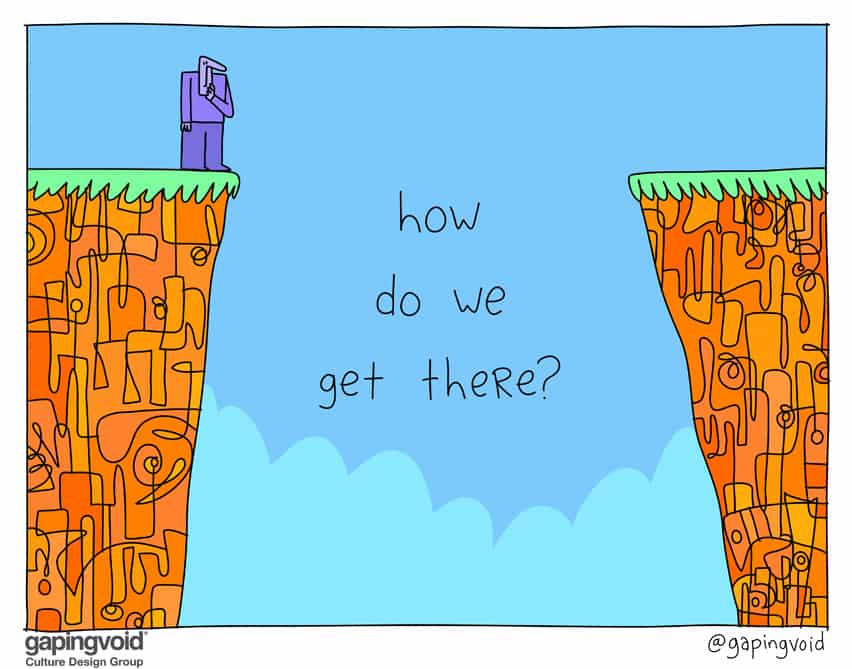
    the car­toon at the top of this post is fan­tas­tic! Has nobody else com­men­ted on it? It sums up my last rela­tionship per­fectly. I shall pin it on my wall and look at it if I ever have doubts about wal­king away. Thank you Hugh!

  61. Be remar­ka­ble or end up remar­ka­ble?
    There is a sys­te­mic con­fu­sion by Seth G/Hugh M with the use of these terms.
    Ending up remar­ka­ble is the pro­duct of sur­vi­vorship — and the inhe­rent bias with the story that goes along with it.
    Be remar­ka­ble is a nice catchy mar­ke­ting line: it is devoid of con­tent, who wants to be unre­mar­ka­ble? Its illu­sio­nary mea­ning or con­tent is due to the phrase being sys­te­mi­cally con­fu­sed with end up remarkable.

  62. hugh macleod says:

    *Sigh* Michael Webs­ter, “Remar­ka­ble” is just a metaphor. If you know of a bet­ter one, use it.

  63. The point being mis­sed is The Dip. IN the The Dip, Godin wrote that you should choose to be the Best of Breed in your Niche. As the bread chef said, he stri­ves to be the best bread chef in his area. Bingo.
    Now the part about kno­wing you can’t get ever­yone is also key. You need to know your cus­to­mers / mar­ket­place / niche / audience. You need to be authen­tic. You need to have a rela­tionship with them.
    Blog­ging won’t help Wal-Mart. And there pro­bably won’t be another Wal-Mart. It sells meat­balls — com­mo­dity items or as Godin says ave­rage things to ave­rage peo­ple.
    In sales, you have to show value. If you think you are selling a com­mo­dity (a meat­ball), then so will your mar­ket­place. No value means deci­sions are based on price (or outs­tan­ding rela­tionships).
    The Pur­ple Cow is about crea­ting a Remar­ka­ble ser­vice or pro­duct to stand in a Blue Ocean, a new mar­ket­place. A Pur­ple Cow allows you (the chance) to tell a story about your pro­duct that others will spread (Idea Virus).
    I hope I explai­ned all this clearly and correctly. It’s in my head right, but not always on paper right.

  64. […] Seth’s Meat­ball Sun­dae book, and this was rein­for­ced by the blog post/interview with Seth on Hugh McLeod’s (@gapingvoid) web­site.  Ever since, I’ve been intri­gued by the very thought of a chocolate […]