June 17, 2007

but what if i fail

Send to Kindle

fail444456.jpg
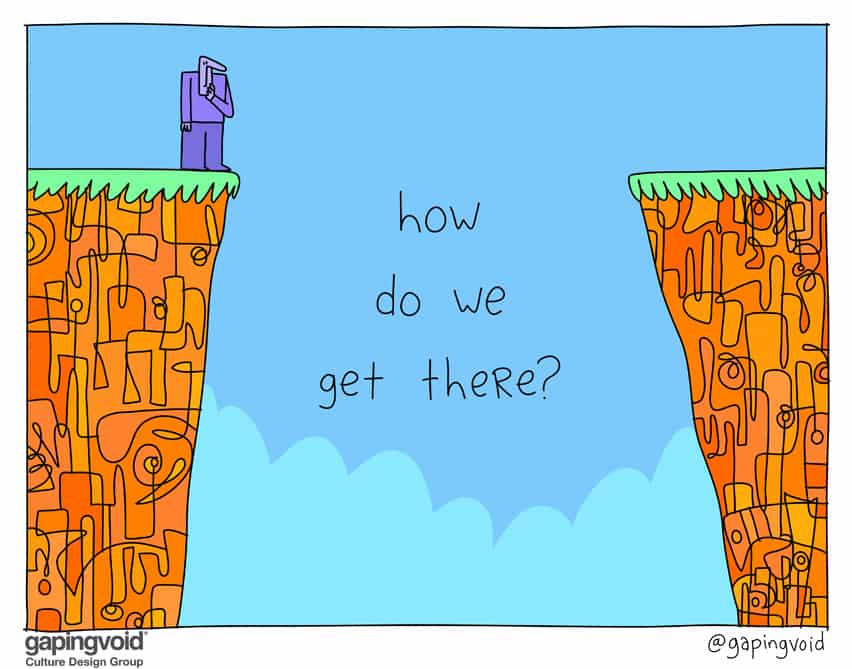
[One of the dra­wings I did for Seth Godin’s latest book, “The Dip”.]
Social Objects and Home­less Peo­ple
So I’ve been thin­king some more about Jyri’s Five Prin­ci­ples of Social Objects, espe­cially how they apply to gapingvoid:

1. You should be able to define the social object your ser­vice is built around.
In gapingvoid’s case, that would be the car­toons for the most part. The straight wri­ting part I’m less con­cer­ned about.
2. Define your verbs that your users per­form on the objects. For ins­tance, eBay has buy and sell but­tons. It’s clear what the site is for.
The verb that springs to mind is “share”. Not only do peo­ple re-publish them on their blogs, they’re also allo­wed to upload them onto other media for free: pos­ters, t-shirts, stic­kers, wha­te­ver works for them. My licen­sing terms are pretty open.
3. How can peo­ple share the objects?
The key word here is “re-publish”. Microsoft’s Steve Clay­ton is pro­bably the most well-known of my “re-publishers”, as he’s always using the Blue Mons­ter car­toon for dif­fe­rent things.
4. Turn invi­ta­tions into gifts.
Again, the Blue Mons­ter car­toon would serve as a good exam­ple. Mic­ro­soft emplo­yees hand out Blue Mons­ter sch­wag as an invi­ta­tion to start a con­ver­sa­tion about Mic­ro­soft. The Blue Monster’s main func­tion is not about the mes­sage, the Blue Mons­ter is about the social ges­ture.
5. Charge the publishers, not the spec­ta­tors.
D’accord. The peo­ple who put the car­toons on their busi­ness cards are doing the paying, not the peo­ple recei­ving them.

Somewhere along the line I figu­red out the easiest pro­ducts to mar­ket are objects with “Socia­bi­lity” baked-in. Pro­ducts that allow peo­ple to have “con­ver­sa­tions” with other folk. Seth Godin calls this qua­lity “remar­ka­blilty”.
For exam­ple: A street beg­gar hol­ding out an ordi­nary paper cup cup won’t start a con­ver­sa­tion. A street beg­gar hol­ding out a Star­bucks cup will. I know this to be true, because it hap­pe­ned to me and a friend the other day, as we were wal­king down the street and a guy asked us for some spare change. After­wards, as we were com­men­ting about the rather sad para­dox of a home­less guy plying his trade with a “luxury” cof­fee cup, my friend said, “Star­bucks should be paying that guy.“
Actually, my friend is wrong. Starbuck’s doesn’t need to be paying the home­less guy. Because Star­bucks crea­ted a social object out of a paper cup, the home­less guy does their mar­ke­ting for free, whether he knows it or not.
Although I sus­pect he does. I sus­pect somewhere along the line the poor chap figu­red out that hol­ding out a Star­bucks cup gets him more atten­tion [and spare change] than an ordi­nary cup. And sud­denly we’re seeing social reci­pro­city bet­ween a home­less per­son and a large cor­po­ra­tion, without money ever chan­ging hands. Wha­te­ver your views are on the plight of home­less peo­ple, this is “Indi­rect Mar­ke­ting” at its finest.
And of course, the way I mar­ket my car­toons and my other various enter­pri­ses is not all that dis­si­mi­lar…
[Bonus Link:] A won­der­fully thought-provoking pod­cast inter­view of Seth Godin. Disc­lo­sure: He kindly gives me a brief men­tion about 23.15 minu­tes into it.

Be Socia­ble, Share!

"Hugh's Daily Cartoon" Newsletter. A new cartoon sent out every weekday morning to your inbox [RSS version here.]. A wee chuckle to start your day off right etc.

Tags: , , ,

15 Responses to “but what if i fail”

  1. But what if I fail? Oh, another cliché quote coming on; to paraph­rase : “Reach for the stars. You may not get one, but you’ll come up with more than a hand­ful of mud.”

  2. Greg says:

    The Star­bucks cup ins­pi­red two reac­tions in me. Firstly (and I’m not proud of this) I thought “well if he can afford to get cof­fee at Star­bucks, he’s not doing too bad”. But then I rea­li­sed that subli­mi­nally the cof­fee cup was rein­for­cing the idea that my change would go towards cof­fee rather than alcohol or worse. Now if he held out a recep­tacle that loo­ked like a little house maybe…

  3. Jem Stone says:

    I don’t know if that is the most offen­sive or auda­cious or bri­lliant blog post i’ve ever read.

  4. Andy Roberts says:

    It may be me, but if it’s the car­toons which are the social objects then what does it mean when the wri­ting appear to be about something com­ple­tely unre­la­ted?
    I’ve had a go at appl­ying Jyri’s 5 prin­ci­ples too.

  5. phil jones says:

    “And sud­denly we’re seeing social reci­pro­city bet­ween a home­less per­son and a large cor­po­ra­tion,“
    Bit of a stretch, isn’t it? Shouldn’t you *ask* the guy if he really does make more with the Star­bucks cup before you fly off dra­wing further conc­lu­sions based on “I sus­pect he does”

  6. Alisha says:

    I agree that the Star­bucks cup made you pay more atten­tion than a plain white cup would — which is what com­pa­nies pay adver­ti­sing com­pa­nies HUGE bucks for. How many times have you watched a com­mer­cial and sit and won­der what the heck it was all about — but the point is, you were still thin­king about it after it was over.
    of course thin­king about a home­less guy after you are past him doesn’t do HIM any good unless you plan to mail him a check. Just an inte­res­ting tangent.

  7. […] be the ima­gi­na­tive pac­ka­ging, ‘orga­nic’ or ‘eco-friendly’ label, an aspi­ra­tio­nal aura, a ‘social object’ or any other qua­lity that lifts the pro­duct above merely what it says on the label, merely what it […]

  8. […] mea­ning mat­ters can also be good in another sense, as something peo­ple will talk about — as a social object, if we borrow the term from Hugh […]

  9. […] read a blog post recently by Hugh McC­leod, where the author sug­ges­ted that, if you’re doing a start-up for any […]

  10. […] is a social object. There, I said it. Music brings peo­ple together. Now dig some John […]

  11. […] since Hugh Mac­leod spoke to me about social objects, and poin­ted me towards what Jyri Enges­trom had writ­ten, I’ve been fas­ci­na­ted by the concept. […]

  12. […] Ran­gas­wami, musing about social objects and why social objects are crea­ted by our sto­ries, lives and sha­red expe­rien­ces, not the […]

  13. […] the brand in-house”.  In a car­toon and blog post by @gapinvoid, he desc­ri­bes pro­ducts as “social objects”.  I really love this way of thin­king about pro­ducts and ser­vi­ces (which is why I repeat it often). […]

  14. […] at top of post drawn by the super-talented Hugh McLeod at Gaping Void. Visit. Enjoy. Purchase. 0 Like Pos­ted in Life in Gene­ral, Per­so­nal, WTF? | Tags: […]

  15. […] book is a social object, to riff on Hugh McLeod’s con­vers­tion. Not only that, it’s a fetish item or physical […]