May 16, 2007

only talented people

talented554.jpg
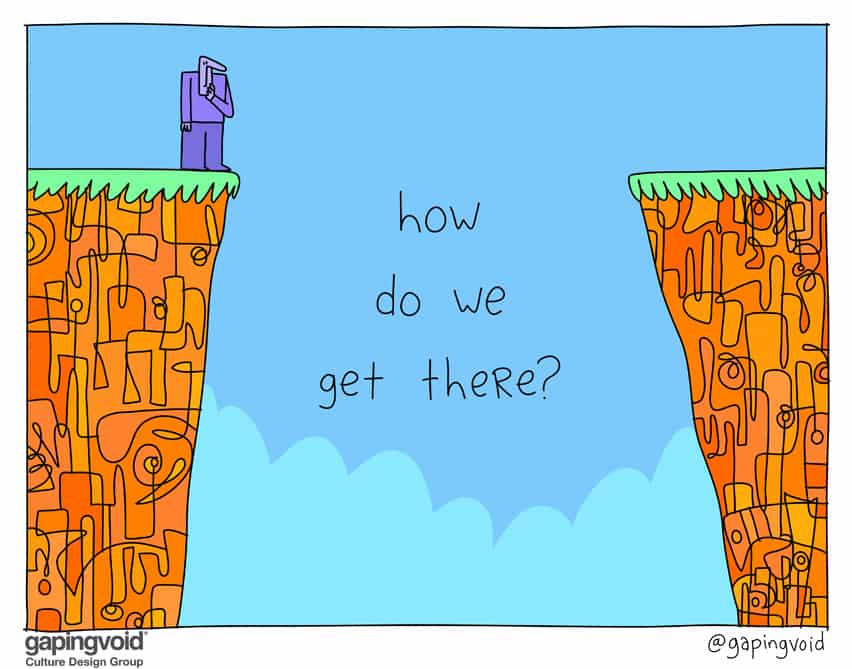
[One of the car­toons I did for Seth Godin’s new book, “The Dip”.]
Zaka­mundo left the follo­wing com­ment here:

Hugh, you say “there are some seriously smart, good peo­ple wor­king [at Mic­ro­soft] who yes, can still change the world for the bet­ter”.
You may well be right. But the ques­tion that the recent court action poses, and the ques­tion that the com­ments on this thread sug­gests, and the ques­tion that even you appear defen­sive on, is this:
Can these peo­ple change Mic­ro­soft for the bet­ter?
Now it might be that Mic­ro­soft is great, and peo­ple don’t rea­lise it — then ‘all’ MS needs is a good and con­sis­tent mar­ke­ting exer­cise. But it is a big cor­po­ra­tion, and its inten­ded audience (um, almost ever­yone?) will have per­cep­tions with sig­ni­fi­cant iner­tia. And thats assu­ming MSFT can stay on-message all the time — can they aspire to match the impact and values of Apple’s mar­ke­ting for ins­tance?
Or it might be that Mic­ro­soft as a cor­po­ra­tion is pos­ses­sed by a cor­po­rate cul­ture that gene­ra­tes exter­nal beha­vior that is jea­lous of others, patro­ni­sing to its clients and bull­ying to those sma­ller. In which case the exter­nal audience’s per­cep­tions are roo­ted in rea­lity, and the Blue Mons­ter crowd have a pro­blem on their hands.
I spent 15 years wor­king in invest­ment ban­king (deri­va­ti­ves trading) — full of hugely inte­lli­gent, focus­sed peo­ple. Some were great, and really did want to effect posi­tive change from within. What I found fas­ci­na­ting, and somewhat depres­sing, was the lon­ge­vity and all-pervasiveness of the cor­po­rate cul­ture — dif­fe­rent at each of the 3 ins­ti­tu­tions I wor­ked for, but per­sis­tent at each one.
One exam­ple I can give : I too tried to change orga­ni­sa­tions from within, and was a major spon­sor of the ‘new’ com­mu­ni­ca­tion tools of wikis, chat and blogs at the most recent bank that emplo­yed me. Huge amounts of my mana­ge­ment time and effort went into this, and yet each time I took my foot off the gas, the use of these tools would eva­po­rate. There was a rather obvious lack of overt senior mana­ge­ment sup­port for the use and dis­tri­bu­tion of these tools, and that com­pany is still stuck in the email age.
The way cor­po­rate life works is that change needs to come from the top down, as well as the bot­tom up. Feve­rish acti­vity in the middle is at risk of being was­ted. I think it is a plea­sant diver­sion to dream of a bet­ter, fai­rer worlds, with cor­po­rate char­ters drawn up as a res­ponse to Clue­train mani­fes­toes, but my expe­rience and obser­va­tion is that it’s just not how it works. Am more than happy to be pro­ved or per­sua­ded other­wise.
Sorry for the rant,
Z

Here’s my reply:

No worries about the rant. That’s what the blo­gosphere is for ;-)
I disa­gree with you, though, at least par­tially. I think small chan­ges can lead to big chan­ges. Though exactly how is not always imme­dia­tely obvious from the onset [And we have thou­sands of years of mytho­logy– everything from Homer, to Jesus, to King Arthur, to Star Wars– telling us the exact same thing].
What I like about the Blue Mons­ter [and what I’ve liked from the very begin­ning] is that nobody owns the con­ver­sa­tion– Not me, not MSFT, not the anti-MSFT crowd, not the media. It has a life of its own– which is what keeps it inte­res­ting…

[This entry has been added to the Blue Mons­ter series.]

28 Responses to “only talented people”

  1. Maggie Leber says:

    What I like about the Blue Mons­ter [and what I’ve liked from the very begin­ning] is that nobody owns it– Not me, not MSFT, not the anti-MSFT crowd, not the media. It has a life of its own– which is what keeps it inte­res­ting…
    So, you’re saying that it’s open source? :-)
    You might want to care­fully make clear when you’re refe­rring to “The Blue Mons­ter” (i.e. the image and the mico-meme it repre­sents), and when you’re refe­ring to MSFT itself; the dis­tinc­tion is unc­lear.
    Recent events sug­gest a re-sloganing though: “We’re Mic­ro­soft and you’re not: Go home and don’t change our world”
    The timing of MSFT’s recent attack is inte­res­ting re: the court deci­sion on what is paten­ta­ble. It seems to me that MSFT has deci­ded that their port­fo­lio has just taken a huge hit in value and it’s time to hold a fire sale; using FUD to scare off the millions of peo­ple out there trying out Linux in the face of losing even more con­trol over thier sys­tems to Vista.

  2. hugh macleod says:

    “Recent events sug­gest a re-sloganing though: “We’re Mic­ro­soft and you’re not: Go home and don’t change our world””
    Mag­gie, I find that remark narrow-minded and glib. Espe­cially coming from a Sun-Certified pro like your­self. ;-)

  3. Zakmundo says:

    hihi
    funny — I get the fee­ling that we want to agree, but don’t know how…
    I enti­rely agree with you that “small chan­ges can lead to big chan­ges”. Of course. Our world today is dif­fe­rent to our world yes­ter­day. The but­terfly effect, Schum­pe­ter etc are all valid. I also agree that ownership of the BM series is dis­tri­bu­ted (although with your fin­ger­prints more than others on it… :-) )
    The ques­tion I was addres­sing in my post was : can the BM series and those asso­cia­ted with it result in chan­ges that make Mic­ro­soft a ‘bet­ter’ com­pany?
    Think of cor­po­ra­tions as chao­tic sys­tems with a power­ful rever­sion to the mean (as in ave­rage) cor­po­rate cul­ture. Over time, the mean will change. Some­ti­mes slowly (=orga­nic change). Some­ti­mes quickly (=cor­po­rate M&A, or the res­ponse to dis­rup­tive tech­no­logy).
    I think the pro­blem here is not the ack­now­led­ge­ment that a sum of small chan­ges is impor­tant, but how the inten­ded result (a ‘bet­ter’ mic­ro­soft) can result from these sum of small chan­ges. The chao­tic sys­tem gets in the way, and ser­ves to amplify, les­sen or dis­tort the effects in unin­ten­ded and unan­ti­ci­pa­ted ways.
    Get this : ima­gine that the only senior mana­gers to really unders­tand the BM mes­sage were the MSFT law­yers. Pow! lets take on the world! FOSS? Lets shut it down! Linux? Patent infrin­ge­ment!
    Am joking, but the above is con­sis­tent with the small change leads to big change train of thought.
    The BM mes­sage is great, I think it should work for MSFT in loads of posi­tive ways, as many on this blog and elsewhere have said. But on its own, in a vacuum or bub­ble, it will be hard. It needs visi­ble buy-in from beneath and above. Maybe my expe­rience of cor­po­rate life was a par­ti­cu­larly poor one, in which case I apo­lo­gise — I would pre­fer to be less shac­kled by the expe­rience.
    I do admire Blue Mons­ter, and the moti­ves behind it. I wish it well.

  4. hugh macleod says:

    Thanks for the kind words, Zak.
    Nothing I ever did worthwhile star­ted out with a known, pre­dic­ta­ble out­come.
    And fun­nily enough, the same holds true in all the great epics, to bring up the sub­ject of mytho­logy again. Funny how life is like that ;-)
    PS: Mag­gie, I own the dra­wing, but I don’t own the con­ver­sa­tions that take place around it.… the lat­ter being where the real action is.

  5. dblwyo says:

    Hugh & Z: thanks. An inte­res­ting dis­cus­sion. Have to say my decade+ of invol­ve­ment at IBM, the mothership of tech tan­kers, con­firms Z’s expe­rien­ces. Being one of the bomb-throwing dis­si­dents thruout the 90s I was able to get a huge amount of inte­res­ting new work done three times. Next turn of the cul­ture crank meant prior round got dis­car­ded and we had to start over. AFter lea­ving I’ve kept in close touch and Pal­mi­sano has taken them thru another (at least) two turns. Des­pite 65% of the peo­ple being new since ’00 and des­pite really enor­mous chan­ges in the busi­ness and staf­fing pat­terns the cul­ture is the same as it was in the early 90s. Early on some­body com­men­ted on the trib tab fac­tor — which is what you’re rel­ying on.
    It’s a noble attempt, very glad to see you taking the shot, it does tell you there are smart peo­ple who want to change the way MS does busi­ness but until a con­cer­ted effort is made by folks who see it as in their inte­rest and in the organization’s inte­rest you’ll be pushing and pulling on a rub­ber band.
    Friend of mind had a simi­lar expe­rience as a senior exec at GM in the late 90s to early ‘00s. When they held mee­tings the Buick guys were more worried about bea­ting out the other divi­sions des­pite every­body kno­wing that they were a frog being boi­led by their own over­bur­dens and the mar­ket.
    Best of Luck.

  6. hugh macleod says:

    dblwyo, I get your point, totally.
    As they say, “You can lead a horse to water, but you can’t make him drink…”
    Obviously, if MSFT mana­ge­ment want to get into the frog-boiling busi­ness, there’s little I can do to stop them. But their sha­rehol­ders [and sta­kehol­ders] won’t thank them kindly, if that’s what they ulti­ma­tely decide.

  7. Michael Neel says:

    The only rea­son this story is get­ting the press is the name Mic­ro­soft. This is the soft­ware world with patents folks. It’s an arms race and you need rattle those sabers or find your­self facing seve­ral pointy ends.
    IBM sues Ama­zon because it claims a patent on the “online cata­log”. This is because Ama­zon didn’t want to pay IBM when it asked. All this while clai­ming to be fore reform: http://www.nytimes.com/2006/09/26/technology/26patent.html?ex=1316923200&en=fc65e7ee30c4fb61&ei=5088&partner=rssnyt&emc=rss
    There is no logic left to the legal world of soft­ware — trying to apply it is patently insane.

  8. Adriana says:

    I agree with Zaka­mundo 100% espe­cially with this bit:
    “The way cor­po­rate life works is that change needs to come from the top down, as well as the bot­tom up. Feve­rish acti­vity in the middle is at risk of being was­ted.”
    Yes, and yes again. I see change as a labo­rious and slow buil­ding of a momen­tum (fin­ding the genie and the neck of the bottle), which must be based on the unders­tan­ding that you CANNOT change a sys­tem from within. What you can do is build a para­llel alter­na­tive system/process/network with the notion of bypas­sing the exis­ting one. Do this by doing things that work i.e. small pro­jects under the radar, borro­wing the moti­va­tion and dyna­mics for them from the internet…(tools, auto­nomy, sim­pli­city). Then stand back and watch the bad bits of the com­pany and its cul­ture fight it. Whe­ne­ver I get this far with my clients and the change to their com­pa­nies, it always invol­ves get­ting them into their dis­com­fort zone. There is no ‘safe’ way of doing this. Think of it as a con­tro­lled implo­sion.
    I also know what Hugh means, small things/changes can impact even a big entrenched sys­tem but gene­rally they tend to be too minute and the­re­fore too fra­gile. Occa­sio­nally they start a snow­ball or tap into something big­ger and cause a fun­da­men­tal shift. This howe­ver does not offer com­pa­nies much con­so­la­tion as it can­not be easily unders­tood, let alone repli­ca­ted.
    The change may be dri­ven by peo­ple from within a sys­tem (and yes, they have to be at the top as well as bot­tom) but they really have to unders­tand that they can’t use the sys­tem and its dys­func­tio­nal pro­cess to change it. There is too much resis­tance and by the time they crack it, the outside world has over­ta­ken the com­pany by a long way. And that is no route to inno­va­tion.
    In my expe­rience, the peo­ple who become part of change I try to bring to com­pa­nies have what I call an ‘oh fuck it’ moment. They have tried to use the appro­ved pro­ces­ses, imple­ment tools and gene­rally do things by the book. They run against a wall and atti­tu­des that firmly hold it in place. When they rea­lise this — it’s time for ‘oh fuck it, I am going to do this any­way’. And that’s when we get really star­ted. :)

  9. Zakmundo says:

    Hugh — one last thought. I have no truck with this “Hugh/MSFT is being assi­mi­la­ted by MSFT/Hugh” (delete as appropriate)rubbish. But I am curious as to how you square the area of busi­ness that inte­rests you most — The Glo­bal Mic­ro­brand — with Mic­ro­soft. In a sim­plis­tic world the two would be mutually exc­lu­sive (cue cute Venn dia­gram with circ­les as far away as pos­si­ble from each other). Good or bad, Mic­ro­soft is an uber glo­bal MACRO brand. But maybe I don’t unders­tand.…
    Maybe you don’t square it — maybe you don’t even feel you need to, and any­way I would be the first to say that the world isn’t sim­ple.
    Penny for your thoughts, although I’ve already taken up a fair amount of your time today,
    Z

  10. Sabrina says:

    so, uhm, about that dra­wing (it frea­kin’ made my heart skip a few beats)… how do you know that? how can you tell? how can you ever be sure?
    i mean, do mediocre peo­ple ever rea­lise they are mediocre? is there such thing as rea­li­sing one’s medioc­rity?
    *where’s the spell check button?*

  11. Hugh:
    Having lived the cor­po­rate life my whole career I agree with most of what has been said here. And Adriana is right on in terms of the “OSM” (she calls it dif­fe­rently).
    I was with Seth today expe­rien­cing a room full of pas­sio­nate peo­ple reac­ting to this very car­toon. What Seth said in my own words is, find a way to work with peo­ple who get mas­tery. I think that’s what you’re doing at Mic­ro­soft. And micro is in the name, isn’t it? That was before it got… well, the other part.
    Good dis­cus­sion and saluti da Philadelphia.

  12. K says:

    Well, lets see,
    I had an entire accoun­ting depart­ment
    threa­ten to go on strike
    when they heard we were going
    to the VERY finance unfriendly
    2007 ver­sion of excel.
    A buddy is inter­vie­wing
    and narro­wing down her choice based
    on the ver­sion of excel
    at her pros­pec­tive com­pa­nies.
    Hhhmmm…call me crazy
    but I think MSFT might
    have a pro­duct issue, myself
    (espe­cially as more and more com­pa­nies
    have a mer­ged VP
    of Finance and Infor­ma­tion Systems).

  13. i guess I’m going through an ‘oh fuck it’ period then. I didn’t really know it until I got the BM from Hugh and rea­li­sed that a few stars were alig­ning. Mic­ro­soft was coming out of a period of hiding (in my view), it has sup­por­ted the staff desire to go blog­ging and was star­ting to engage it’s audience in a con­ver­sa­tion. I’d figu­red BM could be a great totem to drive that con­ver­sa­tion exter­nally and it’s pro­ving to be so as this con­ver­sa­tion shows. What I hadn’t anti­ci­pa­ted was the extent to which BM would be pic­ked up within Mic­ro­soft as a rall­ying call. I see it on email sig­na­tu­res, desk­tops, blogs and people’s walls. It’s on seve­ral of my direc­tors desks and I’m sure the brand police are going to hunt me down soon but it shows there is a desire to affect change from the inside.
    the com­ments from folks who have been around big busi­ness lon­ger than me and des­pai­red at the abi­lity to change from within or bot­tom up is sobe­ring. I think about this a lot and won­der whether BM is just a pipe dream but for now, it’s an inte­res­ting ride that I’m going to con­ti­nue and see how far up the org it can go before it halts.

  14. Hrishi says:

    Wow! It looks a bit tense in here today. So coming back to the fun parts, nice dra­wing on today’s car­toon. Good to see the spi­ne­less, head­less, teeth-clenching, eyebrow-raising err..flying face of talent. I guess while these folks are busy fret­ting, the smart ones get on with crea­ting the cul­ture.
    Stay ahead. Very cool.

  15. James says:

    K
    I had teh same mis­gi­vings from a few of my clients regar­ding the new ver­sion of Excel. Since they work from home as well as the office, I down­loa­ded a 2007 trial for them and ins­ta­lled it on their home PC’s and asked them to try it out at home where they do little work, and use 2003 at work where they do the most.
    A cou­ple of weeks later, they let me know that they’d rather have the 2007 ver­sion at work.
    Some peo­ple are going to be very resis­tant to change, and there’s nothing you can do to change that mind­set, but peo­ple that are open will find that 2007 is bet­ter ove­rall once you get used to the inter­face. If they really need their old menus, there is an addon out there that brings them back, albeit at a price.
    As for the comic, good stuff. Howe­ver, some peo­ple are what talen­ted peo­ple would call mediocre, but the ‘mediocre’ is very happy with their achie­ve­ments. Medioc­rity is rela­tive in the big pic­ture imho. The only way for a mediocre per­son to rea­lize their ‘medioc­rity’, would be to inte­ract with a talen­ted per­son in the same field of know­ledge. Then, their short­co­mings in that par­ti­cu­lar area would be expo­sed for them to take action on. (Hope that makes sense, my thought pro­cess is mediocre~).
    Cheers!

  16. K says:

    James,
    Are your clients heavy, heavy Excel users?
    ‘Cause in Finance we live and breathe Excel.
    Any inef­fi­cien­cies is a step back
    and with the con­ti­nuous down­si­zing,
    we’re time crunched as it is.
    Inte­res­ting that you knew imme­dia­tely that
    it was a menu issue
    and that there’s already an addon avai­la­ble.
    That just about says it all.
    When cus­to­mers don’t want to “upgrade”
    even after the soft­ware is purcha­sed,
    there’s a serious pro­duct issue.

  17. James says:

    K,
    Most com­plaints about the new Office sys­tem have been over the loss of the menu, so it’s gene­rally a safe bet. :)
    I don’t really know how much their finance peo­ple use Excel tbh. I’d assume quite a bit since they work at home and at the office, but I can’t say for posi­tive. I wouldn’t say the rib­bon is what got them to change tho, it was the added fea­tu­res that made wor­king with the data much easier on their end that promp­ted them to want to change. They’re basi­cally at a wash pro­duc­ti­vity wise at the moment, losing time lear­ning the rib­bon, but gai­ning it back wor­king with the data. Over time, it will turn out to be more pro­duc­tive once they get accus­to­med to the rib­bon. They didn’t want to spend extra on the addon either.
    They should have left the menu bar in as an option, I agree. Uptake would have been much higher at this stage imho.
    Cheers!

  18. Josh says:

    @Steve Clay­ton:
    Change? What change? From a mons­ter to a blue mons­ter? Same old story. Doo­med to fai­lure. Sorry.

  19. John says:

    Well one good thing to come out of the BM series is the series itself. I wouldn’t miss the car­toons for anything.
    As for Mic­ro­soft, I’m not sure. I sus­pect the ves­ted inte­rests may be too great.
    I echo Hugh’s view, and to put it dif­fe­rently as a Roma­nian / Israeli collea­gue of mine once said, “You can take a horse to drink but you can’t make him water”.

  20. hugh macleod says:

    Josh, ligh­ten up. Anything that deals in abso­lu­tes is doo­med to fai­lure.
    If demo­nif­ying MSFT gives your life mea­ning, groovy. But I sus­pect there’s some sym­bio­sis there.
    In the same way the Right need to demo­nify blee­ding heart libe­rals to define them­sel­ves, and the Left need to demo­nify Chris­tian Fun­da­men­ta­lists to define themselves.

  21. /pd says:

    I agree, the blue mons­ter has a life of its own (right now !!)
    but the moment value crea­tion and brand equity builds on the blue mons­ter– I won­der who will first lay claim that its theirs ?
    Hugh , just a quick ques­tion — do those series of dra­wing still fall under the CC norms ?
    TO be fair to MSFT ( as much as I have my own reser­va­tions !) , they did reboot them­sel­ves after the DoJ case, so change is pos­si­ble, its only a mat­ter of time they turn the change knob and move into high throttle. Its an impe­ra­tive of busi­ness– Sta­kehol­ders will do anything to keep the fists in the $$ buc­ket. The leaky buc­ket syn­drome cer­tainly trigger’s kiss ass action, when the chips are down.
    Change does not take fore­ver, change hap­pens instantly..ok thats a Tom Peters Quote :) -

  22. thanks Josh — genius input there :)

  23. Maggie Leber says:

    Mag­gie, I find that remark narrow-minded and glib. Espe­cially coming from a Sun-Certified pro like your­self.
    Well, if it isn’t glib, it can’t be a slo­gan, you know? If I’m going to parody your slo­gan, I have to be at least as glib as you are. :-)
    What exactly would be the point of slam­ming me for having Java cer­ti­fi­ca­tions? I’ve wor­ked quite a bit with MSFT tools (I was once a Mic­ro­soft Pro­duct Spe­cia­list, long ago and far away) and with Sun tools…and yes, even with IBM tools, over a 35 year career. I know who has and who has not abu­sed my trust.
    When you build soft­ware, your work beco­mes vitally depen­dent on the struc­tu­ral layers beneath you. Those who con­trol it wield an extraor­di­nary power over the con­ti­nuing value of your work. This is true even if the soft­ware you build is no more com­pli­ca­ted than a Word document…which is, if you think about it a bit, soft­ware itself.
    On the other hand, if your crea­tive medium is the back of a busi­ness card and a pen, you pretty much have total con­trol over what we in the soft­ware busi­ness world call your “toolchain”…you might con­si­der them to be the “means of pro­duc­tion”.
    Would you be as com­for­ta­ble in your work if some one com­pany could pull the plug on it after the fact and cause it to disap­pear, or become value­less?
    That’s the big dif­fe­rence bet­ween being Java cer­ti­fied and being, say, an MCSE or MSP. If Sun pis­ses off enough peo­ple with their ste­wardship of the Java plat­form, some­body else will roll out a com­pa­ti­ble alternative…and seve­ral times in recent memory this has come very close to hap­pe­ning.
    The nice thing about Java tech is that we don’t have to buy all our tools from the Com­pany Store. When MSFT truly embra­ces that value sys­tem (other than in the sense of “Embrace, extend, extinguish” — Paul Maritz), we’ll know the mille­nium has truly arrived.

  24. hugh macleod says:

    Thank you, Mag­gie. That was indeed less glib. And quite help­ful, to boot ;-)

  25. Mag­gie — nice res­ponse. I didn’t get this bitthough — “The nice thing about Java tech is that we don’t have to buy all our tools from the Com­pany Store”. Perhaps haven’t had enough cof­fee yet this mor­ning so if you could explain I’d really appre­ciate it.

  26. hugh macleod says:

    @ Mag­gie:
    “What I like about the Blue Mons­ter [and what I’ve liked from the very begin­ning] is that nobody owns it…”
    A very good point you brought up re. ownership. So I repla­ced the “it” with “the con­ver­sa­tion”, just to be clea­rer. Thanks for the tip-off :)
    PS. Though I don’t agree with everything you say, I appre­ciate your obvious pas­sion, luci­dity and forth­right­ness. Thanks Again :)

  27. Mike says:

    “we have thou­sands of years of mytho­logy– everything from Homer, to Jesus, to King Arthur, to Star Wars– telling us the exact same thing”
    …and the trou­ble is that they’re all FICTION! Try and find some exam­ples from the real world.

  28. hugh macleod says:

    @ Mike,
    The trou­ble with non-fiction, sadly, is that it doesn’t exist.