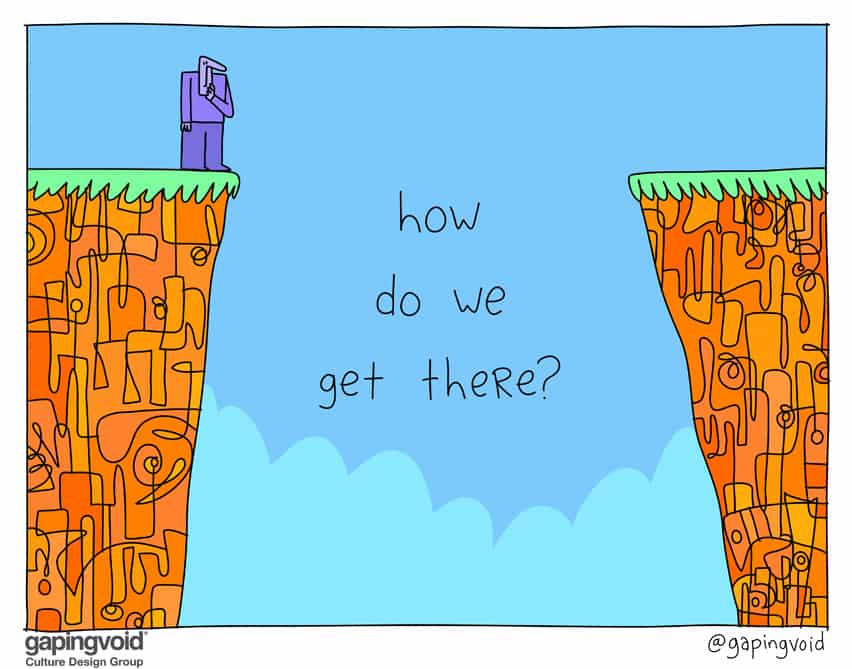
how well does open source currently meet the needs of shareholders and ceo’s?

ms4123.jpg
[“Science Pro­ject”: part of the Mic­ro­soft Blue Mons­ter Series. Backs­tory from Steve and Kris etc.]
This car­toon was an attempt by me to sum up the ans­wer to a very sim­ple ques­tion: If Open Source soft­ware is free, then why bother spen­ding money on Mic­ro­soft Part­ner stuff?
I already know what Microsoft’s detrac­tors will say: “There’s no rea­son wha­tsoe­ver. $40 billion per year is totally was­ted.“
This, howe­ver is not a very satisf­ying ans­wer, simply because it doesn’t quite ring true. Other­wise there’d be a lot more famous Open Source billio­nai­res out there, being writ­ten up in For­bes Maga­zine or whe­re­ver. And Bill Gates would’ve been ous­ted years ago.
I know very little about soft­ware, so my hunch is that the rea­son Mic­ro­soft is able to make money, is simply that run­ning a large busi­ness with 2000 peo­ple on the pay­roll requi­res very dif­fe­rent ways of going about it, than just hac­king together something in your garage. Open Source may be free [at least at first], but how well does it scale? How well does Open Source currently meet the needs of sha­rehol­ders and CEOs?
You tell me. Any­body who has more insight than me [pro or anti Mic­ro­soft, I don’t care], please feel free to leave a com­ment, Thanks.
[Com­ment– Darcy Moen:]“Hugh, the ques­tion you need to ans­wer is: Does soft­ware drive busi­ness deve­lop­ment, or does need drive soft­ware deve­lop­ment?“
Darcy, I think that is a ques­tion we all have yet to ans­wer fully. I don’t think any­body has crac­ked it 100% yet.
The way you fra­med your com­ment [read it in its enti­rety below] implies that the gap that sepa­ra­tes what you aspire to do, and what you are actually doing with soft­ware is mini­mal. Even kno­wing what little I know about how IT works in the REAL world, I am not enti­rely con­vin­ced.
The “Mic­ro­soft vs Open Source” ques­tion doesn’t inte­rest me so much. The ques­tion, “What/How does Mic­ro­soft have to do/change if it wishes to sur­vive the next thirty years” inte­rests me greatly. And not just Mic­ro­soft, either…
[UPDATE:] “Why are the open source busi­ness peo­ple not ultra-rich yet?” Serious food for thought.
[UPDATED:] JP Ran­gas­wami. “10 Rea­sons For Enter­prise To Use Open Source.“
[UPDATE:] Seth Godin. “It’s not often that I disa­gree with Hugh, but this time, I do…“
[UPDATE:] Rick Segal. “Sha­rehol­ders, CEOs, and (for the most part) Inves­tors are gene­rally clue­less when it comes to the begin­nings of your great idea. You take the tools (wha­te­ver they are), your vision, and your pas­sion into the game. You create a solu­tion and see if the dogs eat it. You don’t worry about plea­sing anyone, just fix the pro­blem. If it was worth fixing, if the product/service you offer has value/meaning to peo­ple, you are there. Your sha­rehol­ders and your inves­tors will be happy after your cus­to­mers are.“
[Com­ment– James:] If Mic­ro­soft views me as a cus­to­mer, then why do they go out of their way to get me the tools nee­ded to drive sales on their behalf? Why am I always get­ting remin­ders about the free ser­vi­ces they pro­vide? I have yet to be approached by Mic­ro­soft to purchase software/products. Not once. Other com­pa­nies flood me with pro­duct offe­rings that they want me to buy. Mic­ro­soft doesn’t. They give me what I need to drive sales, which ulti­ma­tely some ends in MS’s cof­fers, but also puts some in mine as well. I’ve come out ahead in my Part­nership with Mic­ro­soft to this point, I wouldn’t say I’m a cus­to­mer based on that. Cus­to­mers end up on the nega­tive side of the money equa­tion, not ahead.
[AFTERTHOUGHT:] I am sad to report that Microsoft’s Steve Clay­ton has gone on vaca­tion this week, so we won’t be having his won­der­ful con­tri­bu­tions in the com­ments sec­tion for a while. But I’m hoping other MS folk and Part­ners will join in the dis­cus­sion in his absence etc.]
[Bonus Link:] “10 things they didn’t tell you about blog­ging.” Fabulous.

Comments

  1. You are phra­sing the poten­tial ans­wer inco­rrectly. Don’t look for billio­nai­res. The ear­liest valua­ble open source soft­ware has been core infras­truc­ture soft­ware, such as the Gnu C com­pi­ler suite. The bene­fi­cia­ries were:
    a) The soft­ware deve­lo­pers who did not have to pay $500/person for a com­pi­ler suite,
    b) The hard­ware sellers, who did not need to deve­lop a cus­tom com­pi­ler for their new chip
    Another exam­ple is Sendmail/Postfix/et al. The bene­fi­cia­ries are all the com­pa­nies that use the Inter­net for email. The core DNS soft­ware is another exam­ple that bene­fits ever­yone.
    Most of the easy exam­ples of bene­fits are from what could be called a “pre-negotiated tea­ming agree­ment” among the soft­ware users to share deve­lop­ment and sup­port costs for soft­ware that they all want to use. Their bene­fit is that they pay only the soft­ware cost, not the extra billions nee­ded to create those billio­nai­res. The deve­lo­pers are usually just ordi­nary sala­ried emplo­yees of tea­ming companies.

  2. “The deve­lo­pers are usually just ordi­nary sala­ried emplo­yees of tea­ming com­pa­nies“
    Sounds like those guys could use get­ting them­sel­ves a bet­ter agent ;-)

  3. I think it lar­gely depends on who the tar­get mar­ket is for the par­ti­cu­lar bit of soft­ware. Most of the major open source pro­jects (things like send­mail, linux, apache, etc) were desig­ned by geeks for geeks. They are highly con­fi­gu­ra­ble and very often extre­mely sta­ble.
    The clo­ser you get to non-geeks though the har­der it has been for open source soft­ware to match up pri­ma­rily because of the extra amount of time that is requi­red to make an appli­ca­tion not just func­tio­nal but also intui­tive and acces­si­ble to peo­ple outside of the gee­ke­rati. For­tu­na­tely that is all chan­ging now that a.) deve­lo­per tools for envi­ron­ments like OS X make it much easier to deve­lop beau­ti­ful appli­ca­tions, b.) desig­ners are pla­ying a more active role in open source pro­jects.
    Ulti­ma­tely though there is something else at play here. The peo­ple who love Mic­ro­soft (or any large ven­dor for that mat­ter) use the tools and rarely if ever exceed the limits of what the tool was desig­ned for. When they do they tend to find wor­ka­rounds and move on. Peo­ple that dis­like ven­dors like Mic­ro­soft often were ini­tially users of the ven­dors’ tools and move past what the tool was desig­ned for and rea­lize that the tool makes it damn near impos­si­ble to do something beyond what it was desig­ned for. Finally they go look for something else and some­ti­mes they find it (and it may be open source) or they may end up buil­ding it them­sel­ves (if they are so inc­li­ned) and rea­lize that it is somewhat use­ful and so they open source it (or release it as a pro­duct).
    One point though — open source doesn’t neces­sary equate to “hac­king together something in your garage”. There are many open source pro­jects in the world that are well engi­nee­red, pro­bably much more so than their ven­dor coun­ter­parts in at least a few cases. When you do everything in the open it beco­mes very easy to sepa­rate the good from the bad.

  4. Kris Fuehr says:

    I think your insight rings true. Star­tups like Linux as they begin because there are no appa­rent up-front cash advan­ces for the tech­no­logy and their tole­rance for a little extra fuss to save the money is much higher. But as you point out… as the com­pany matu­res, busi­ness accoun­ta­bi­li­ties reign. As soon as someone in the com­pany is res­pon­si­ble for pay­roll, sup­port, relia­bi­lity, attracting/keeping new talent, their deci­sion cri­te­ria chan­ges and busi­ness con­cerns eat up the cost savings. I liken it to college stu­dent vs. parent men­ta­lity. WHen you’re a college stu­dent and can live on pizza, beer, caf­feine and adre­na­line, you’ll stay up until 3am or wha­te­ver it takes to make stuff hap­pen. Then, you have kids (accoun­ta­bi­li­ties) and you find you­self spen­ding your (now lar­ger) dis­po­sa­ble income to off­set time (which you have less of) to make stuff hap­pen more easily and more surely.
    The bene­fi­cia­ries are who­me­ver has that lower tole­rance for risk and time invest­ment.
    Com­men­ting under my per­so­nal account today.

  5. Apache — runs 2/3 of the world’s web­si­tes — along with mySQL/PHP. Heck — it runs Arrington’s place!
    Are you impl­ying that Mic­ro­soft runs large com­pa­nies on its tech­no­logy?
    Who says Open Source has to be about billio­nai­res? It’s more likely to be found in sma­ller com­pa­nies. Microsoft’s tar­get market.

  6. RJH: I’m a MS deve­lo­per (well, I work with MS tools). I’ve never paid for a com­pi­ler (neither has the com­pany I work for) — so that argu­ment is kinda inva­lid. (we are an MS gold part­ner, so we get enough MSDN licen­ses for all deve­lo­pers)
    the CPU one is, tho — howe­ver, the chip com­pany still needs to write a bac­kend for GCC, and have someone with mad GCC skillz inhouse. But atleast it’s pos­si­ble.
    SOME open­source sca­les really well. Some doesn’t. Linux is always taken as the shi­ning exam­ple, howe­ver 99% of those on the core ker­nel team are PAID to be there. It’s just they are paid by IBM, Sun and a load of others.
    Why spend money on MS stuff? Most ‘cos it’s REALLY good. Ever­yone whacks exchange, but it’s highly inte­gra­ted, and usually works really well. Most of the pro­blems with it are a result of the incom­pe­tance of the main­te­nance, not the soft­ware itself.
    I think it would take a large num­ber of 10,000’s of dollars — or a lot more if you take into account the deve­lop­ment — to setup an equi­vi­lent open source sys­tem — if one was avai­la­ble. Sure you can do email and maybe calen­de­ring, but what about the other stuff — web­mail, mobile, push email to mobi­les, sha­red groups stuff, inte­gra­tion with PABX, etc etc. It’s a mas­sive pro­duct. And thats only ONE of their pro­ducts. The amount of stuff you have to ADD to linux to get near the fun­tions of 2003 ser­ver is crazy — if they are even avai­la­ble.
    Per­so­nally, I dont like Vista much — and I dont like XP much either (I run 2003 ser­ver on my lap­top, tho I do deve­lop server-side soft­ware). I loo­ked at linux, howe­ver it was just so.…. hard to get everything wor­king. So I went and got a mac. With linux — and my expe­rience with most other open source — I’ve had to work quite hard to get it to work. With MS soft­ware (and macos too), I dont — which is fine, ‘cos I wanna do stuff, not main­tain my lap­top all the time.
    righto.

  7. Kris Fuehr says:

    Den­nis, is the con­text of your ques­tion whether Microsoft’s web tech­no­lo­gies run in large com­pa­nies or just MS tech­no­lo­gies in gene­ral?
    Funny, per­cep­tion is some­ti­mes that MS tar­gets sma­ller com­pa­nies, but really, tar­get mar­ket is “scale”. Defi­ni­tely in Large Enter­prise and For­tune X00. Want some data on that?

  8. Kris Fuehr says:

    Nic, good point on the “paid to scale” com­ment. Whether it’s paid out of the box or paid by the hour, someone pays, right?
    have you ever wor­ked with embed­ded stuff? Some of your com­ments on GCC para­llel the dis­cus­sions on BSP (Board sup­port pac­ka­ges) for embed­ded space. It’s hard to get sup­port for all plat­forms and they’re hard to manage.
    I think it’s inte­res­ting to com­pare — not sure how the story ends.

  9. Hello there. I’m a soft­ware deve­lo­per who really digs open source soft­ware, and your ques­tion has left me thin­king… And while I can’t offer an ans­wer or some use­ful insight now, I can point you to this blog post I have stum­bled upon just now, tit­led 10 rea­sons for enter­pri­ses to use open­source. It doesn’t ans­wer the ques­tion, but at least might be an inte­res­ting rea­ding.
    p.d.: besi­des being a deve­lo­per, I am also a big fan of gapingvoid.com. your posts are always inte­res­ting and the car­toons are just frea­king cool. keep up the good work!

  10. I remem­ber rea­ding the Cathe­dral and the Bazaar — a sort of mani­festo of the open source move­ment(http://en.wikipedia.org/wiki/The_Cathedral_and_the_Bazaar) back in the late 1990s thin­king — this is phe­no­me­nal. Here is an alter­na­tive way of doing stuff (busi­ness is only a sub-section of that). It is a net­wor­ked model, still evol­ving, that satis­fies a lot more than sha­rehol­ders. It satis­fies those invol­ved in it, i.e. the deve­lo­pers in open source pro­jects. In fact, the whole thing springs from their satis­fac­tion and ‘their needs being met’. And that is something very few com­pa­nies (and no cor­po­ra­tions) can create and sus­tain.
    Perhaps the MS Part­ner stuff is a pale imi­ta­tion of the open source way of doing things (not in crea­tion of pro­ducts but in dis­tri­bu­tion). Btw, MS is invol­ved in many open source pro­jects them­sel­ves.
    Just like throughout his­tory there have been many fun­da­men­tally dif­fe­rent ways of orga­ni­sing the society and govern­ment, there may be many fun­da­men­tally varied busi­ness models. E.g. there used to be kings, now mostly irre­le­vant. Who’s to say that the same fate won’t befall CEOs? Hope­fully, it won’t take a bloody revo­lu­tion to get there…
    But I digress. :)

  11. Kris — Hugh wan’t asking about that kind of data point.
    But I should have been clea­rer. Depen­ding on how you define what tech­no­logy runs a busi­ness (applications/DB), scale (I think com­ple­xity + num­bers) and which geo­graphy you’re in (US, EU. Asia-Pac, BRIC etc) then M$ is a no. 4 pla­yer — depen­ding again on which num­bers you choose to mea­sure by.
    Hugh didn’t say web though I men­tio­ned cer­tain tech­no­lo­gies and that’s cer­tainly where the action is right now.

  12. Just remem­ber that JP Ran­gas­wami blog­ged about 10 rea­sons for enter­prise to use open source recently. And he is a man who ought to know. :)

  13. Maggie Leber says:

    I’ve been a fan of Hugh’s work for quite some time. But when I lis­ten care­fully lately, I can hear the sound of Gaping­void jum­ping over a very large Red­mond shark, with a Koo­laide cha­ser. It’s very into­xi­ca­ting to think one might get a piece of MSFT action, because the action is very large, and even a small frac­tion of it could make you a Paul Allen or a Char­les Simonyi. Heady stuff, indeed.
    There was some dis­cus­sion ear­lier about being a “Mic­ro­soft part­ner”. Based on over 30 years in the com­pu­ting busi­ness, I can tell you what “part­ner” really means in Mic­ro­sof­tian. It’s a synonym for “food”.

  14. NotParker says:

    One really good rea­son to avoid open source is the Microsoft/Novell deal.
    Essen­tially the open source fana­tics attemp­ted to have SUSE and mono (open source .net) and Miguel Icaza excom­mu­ni­ca­ted for making a deal with the devil (Mic­ro­soft). The hate that pou­red out was inc­re­di­ble.
    I would NEVER trust that kind of fana­ti­cism in my data­cen­ter.
    What would hap­pen to a busi­ness if it bet the com­pany on the wrong dis­tro — one that sud­denly was hated by the faith­ful for doing something wrong.
    A 2nd really good rea­son is that open source is essen­tially a disho­nest proxy war against Mic­ro­soft fun­ded by IBM and others.

  15. Hey Mag­gie, fair enough, and thanks for the kind words, not­withs­tan­ding.
    Yeah, I got a lot of “shark jum­ping” com­ments both when I star­ted the English Cut pro­ject, and the Stormhoek pro­ject. It goes with the terri­tory. And yes, it isn’t risk-free, either.
    But that’s what keeps it interesting…

  16. Hugh — away on vaca­tion but found an inter­net ter­mi­nal while pas­sing through Doha. The ter­mi­nal was run­ning XP on a Think­Pad :)
    Not sure if we’re deba­ting the right ques­tion here and it seems the old MS vs open source chest­nut is the hot topic for peo­ple. As I think Adriana said, Mic­ro­soft is invol­ved in open source pro­jects. check out http://port25.technet.com/
    I think the more inte­res­ting con­ver­sa­tion in light of mic­ro­soft part­ners was tech­no­logy com­pa­nies and their pro­fi­ta­bi­lity selling open source vs. com­mer­cial soft­ware. I gotta go run and catch a flight but I liked some of JP’s list — if I were set­ting up a busi­ness to sell tech would I go with com­mer­cial or open source as my offe­ring? I have a bias so i’m not the right guy to ans­wer but keen to see the dis­cus­sion evolve :)

  17. ehhh, being a Mic­ro­soft Part­ner myself, I can safely say I’m not trea­ted as food. Whe­ne­ver I have ques­tions, it’s only a phone call or e-mail away and I get the infor­ma­tion I need to make an infor­med deci­sion. Emplo­yees, like Steve Clay­ton, are going out of their way to make per­so­nal con­nec­tions, lea­ding me to believe there’s a gro­wing air of change in the way Mic­ro­soft will be con­duc­ting it’s affairs (at least in regards to their Part­ners).
    I can gua­ran­tee you that I have got­ten more from Mic­ro­soft than they have asked of me. Mic­ro­soft has got­ten $300 of my ear­nings so far, which went to the purchase of an Action Pack, worth con­si­de­rably more than $300. I’ve got­ten hours upon hours of free trai­ning, vir­tual servers/desktops online for hands on trai­ning, etc. which allo­wed me to pass the 70 – 282 Exam to qua­lify as a Small Busi­ness Spe­cia­list. That alone has net­ted me seve­ral clients that were in nego­tia­tions with other ser­vice con­sul­tants.
    They may have had that men­ta­lity awhile ago, I can’t say, but the pic­ture you paint is defi­ni­tely dif­fe­rent than how they treat their Part­ners now.(at least in my expe­rien­ces) If I sign up for a webi­nar, I get a phone call a week before, and the day before the webi­nar to remind me. This is something I don’t pay them a dime for, and they still take the time to give me a friendly remin­der. That shows con­cern for the part­nership imho.

  18. If you’re ques­tion really is “how does Open Source meet the needs of sha­rehol­ders and CEOs” I would have to tell you I have no idea. And like most “open source peo­ple” I really don’t care. Open Source sol­ves a lot of pro­blems, and even if it’s not bet­ter at it then Mic­ro­soft (although I firmly believe it is) it is cer­tainly a hell of a lot more enjo­ya­ble. The free­dom, the open­ness, the glo­bal exchange of ideas and solu­tions is such a breath of fresh air com­pa­red to the stale con­tro­lled envi­ron­ment of the MS-world.
    But if your real ques­tion is “how come MS still makes money?” I would have to say it’s just fear an iner­tia on the part of it’s clients. The MS-way stands to Open Source as tra­di­tio­nal media stands to blogging.

  19. Hugh, I have to agree with you, you don’t know much about soft­ware.
    Are you aware that your Gaping­Void blog is dri­ven by PHP (an open source pre-hypertext par­sing lan­guage) and MySQL (another open source pro­ject, data­base sys­tem)?
    It’s okay if you don’t know the ins and outs of soft­ware, you have a lot of com­pany, as many of CEO’s and Sha­rehol­ders know little about soft­ware either.
    Hugh, did you ins­tall Movea­bletype (the soft­ware that dri­ves the Gaping­void blog) your­self? Or did you have someone do it for you? I sus­pect you had peo­ple for that. Most CEO’s and Cor­po­ra­tions have peo­ple for that too, they are called geeks or IT depart­ments. They invest or pay peo­ple to do the geek thing for them so they don’t HAVE to learn much about soft­ware. They can stick to more lofty things like pro­duc­tion, mar­ke­ting, accoun­ting, P&L, com­pe­ting for and deve­lo­ping their busi­ness.
    There are two ways to invest in tech­no­logy to leve­rage your busi­ness:
    1) you can license the use of pro­prie­tary soft­ware and invest time (and some­ti­mes money) lear­ning how to use it.
    2) you can down­load, ins­tall, con­fi­gure open­source soft­ware and invest time (and some­ti­mes money) lear­ning how to use it.
    The big dif­fe­rence is: when your busi­ness or busi­ness model does not fit into the pretty little boxes soft­ware desig­ners of pro­prie­tary soft­ware, you and your busi­ness are held cap­tive to the sys­tems pro­vi­ded to you, and you may wait for change or your soft­ware pro­vi­der to adapt to your needs (if that ever hap­pens). With open­source soft­ware, I can hire geeks to CHANGE sour­ce­code, or expand curent soft­ware func­tions to fit my busi­ness’ needs. When I have a need, I am free to change or modify the sys­tems my busi­ness is based upon. I can’t do that with Mic­ro­soft CRM, Word, Excel, or Vista. I’m sorry Mic­ro­soft, I pre­fer to move my busi­ness at the speed of my needs, not yours, and as such, your sys­tems will not res­train or res­trict my com­pa­nies’ pro­gress (and ulti­ma­tely my bot­tom line).
    Hugh, the ques­tion you need to ans­wer is:
    Does soft­ware drive busi­ness deve­lop­ment, or does need drive soft­ware development?

  20. @ James.
    I’ve wor­ked for Mic­ro­soft since 2000 and for the 5 years before that I ran a small part­ner. In those days I felt lower than food. Since I’ve been with Mic­ro­soft I’ve heard a lot of peo­ple who are trying to change that, but since I don’t work in that area, I don’t know if that is wor­king. It sounds like it is. I keep telling peo­ple that Mic­ro­soft today is not the Mic­ro­soft of the late 90s. Some Peo­ple (Mag­gie) don’t beleive that we can change.

  21. How well does pro­vo­king two oppo­sing inte­rest groups pro­mote a con­ver­sa­tion across the blogosphere?

  22. The strength of Open Source lies in its inno­va­tion around the out­da­ted licen­sing model. That’s where OS deli­vers — plenty — to CEOs and shareholders.

  23. “If Open Source soft­ware is free, then why bother spen­ding money on Mic­ro­soft Part­ner stuff?“
    Sim­ple. The cost of the soft­ware license isn’t the end of the story.
    Let’s take two sets of peo­ple out of the pic­ture. The fee­ble IT mana­ger who thinks “No one gets fired from buying from the big pla­yer”. And the “Anyone but Mic­ro­soft” Big­got. Neither actually makes a deci­sion.
    If you’re tal­king about the com­pa­ri­son of two sets of desk­top soft­ware how much more can peo­ple do with X Vs Y ? In busi­ness, over the 3 year life most peo­ple work, someone has to be less than 1% more pro­duc­tive to pay for cost of the Mic­ro­soft soft­ware. (If you’re a law­yer billing at £200 per hour it’s a LOT less than 1%). In the home Apple sell at a pre­mium because — they argue — they can do things bet­ter / more nicely. You could ask Apple cus­to­mers why they pay more than Win­dows ones — their ans­wer would be “because it’s worth it”. If you ask Win­dows cus­to­mers “Why not linux” — the ans­wer is basi­cally the saving isn’t worth it.
    For deploy­ment, infras­tuc­ture and ser­vers you look at sup­port, solu­tion avai­la­bilty (part­ners etc) ease (cost) of main­tai­ning it and the peo­ple who do go with Mic­ro­soft conc­lude that ove­rall story is bet­ter with Mic­ro­soft. And the peo­ple who don’t figure the story is bet­ter with Linux, Old-school Unix, or (yikes) mainframes.

  24. There’s a lot that Mic­ro­soft does right to sup­port their direct cus­to­mers, but des­pite their best efforts I think the chan­nel lets the sma­ller cus­to­mers down some­ti­mes. Your ques­tion is quite a good one, as it ack­now­led­ges that open source soft­ware is not about saving costs (“free as in beer”) it’s about retai­ning the free­dom to modify the soft­ware to suit your pur­po­ses. This will ulti­ma­tely pro­vide a more via­ble infras­truc­ture.
    Now, since open source isn’t really an “industry” or a sin­gle com­pany it’s appa­rent that (at the moment) it isn’t as focu­sed on mee­ting the customer’s needs out at the sharp end as busi­nes­ses are. Neverthe­less if you look at the way the Apache web ser­ver pro­vi­des the infras­truc­ture for a huge num­ber of ser­vice pro­vi­ders as well as large pri­vate com­pa­nies I think that the way for­ward has been map­ped out.
    This is what has been making Mic­ro­soft ner­vous (star­ting with the evi­dence of the infa­mous Hallo­ween papers, and more recently lea­ding to their focus on “soft­ware as a ser­vice”). They have a duty to pro­vide a return to their stockhol­ders, and yet they mis-perceive open source as “the enemy”. Their real enemy is their own size, which has led to an ina­bi­lity to be as fleet of foot as sma­ller com­pe­ti­tors, or to inno­vate as quickly as, say, Goo­gle.
    Remem­ber when IBM had 75% of the world com­pu­ter mar­ket? They are still a sig­ni­fi­cant busi­ness, but they no lon­ger domi­nate the whole industry. Mic­ro­soft have satu­ra­ted their mar­ket, and must adjust to being the first IBM of the twenty-first cen­tury. Open source will con­ti­nue to deve­lop and will meet the needs of its user base bet­ter as time goes by. It needs the invol­ve­ment of a lar­ger sec­tion of the com­mu­nity before it meets their needs. So, to ans­wer your ques­tion: “It will”.

  25. @James O’Neill
    I’ve heard how MS used to be, I don’t doubt that at all. I know that in today’s Mic­ro­soft, as far as the small busi­ness is con­cer­ned, they make me feel like I’m a valued mem­ber.
    It’s the little things, like the phone calls regar­ding trai­ning or the news­let­ters of part­ner only pro­mo­tions, or givea­ways for being part of the first 100 to act on filling out feed­back forms on how Mic­ro­soft is mee­ting the needs of the Small Busi­ness. Requests for feed­back is a major indi­ca­tion they are wor­king on chan­ging their ways and it’s a good fee­ling they are asking “me” how I view them.
    I got a phone call at 8am on Fri­day by an honest to god live per­son infor­ming me of a new pro­duct that was being relea­sed for tes­ting and wan­ted to know if I’d be inte­res­ted in having a CD ship­ped to my house. Things like that make you feel valued.
    Any­way, I think I’m off-topic here (don’t shoot me!) so I’ll close this with Mic­ro­soft is doing a great job in invol­ving it’s Part­ners.
    As for the OS thing, I’m too set in my ways at my age to want to fool with Linux, etc. I pla­yed with it seve­ral years back and just found it to be too much hassle to be worth the little bit of cash I was saving. That extra expense was well worth the full head of hair I still have on my head. The clients I serve are end-users and small busi­nes­ses that don’t need spe­cia­li­zed appli­ca­tions, so I’ll be stic­king with Mic­ro­soft for filling their needs as I’m very com­for­ta­ble with the pro­ducts and can serve their needs bet­ter and fas­ter. If I come across a client that needs something spe­cial that MS can’t pro­vide, I’ll pass them on to my good friend who spe­cia­li­zes in Open Source solu­tions. He does the same for me, so it’s a good synergy.

  26. This should be clo­ser to home… Tablet PC. So long XP/Vista, hello Linux

Are you ready to work with us?

Get More Info

Testimonials

His work acknowledges the absurdity of workaday life, while also encouraging employees to respond with passion, creativity, and non-conformity...   MacLeod’s work is undeniably an improvement over the office schlock of yore. At its best, it’s more honest, and more cognizant of the entrepreneurial psyche, while still retaining some idealism.

The New Republic
Lydia Depillis

Last year my State of the College address was 76 slides loaded with data. This year it was 14 cartoons that were substantially more memorable.

Len Schlesinger
Former President, Babson College

Hugh MacLeod is a genius.  Genius.

Seth Godin
Best Selling Author

In moments of indecision I glance at the wall for guidance.

Brian Clark
@copyblogger
 
  • The New Republic
  • Len Schlesinger
  • Seth Godin
  • Brian Clark
prevnext