August 15, 2004

the world is changing

zzzzazzdggg50.jpg
More thoughts on “How To Be Crea­tive”:

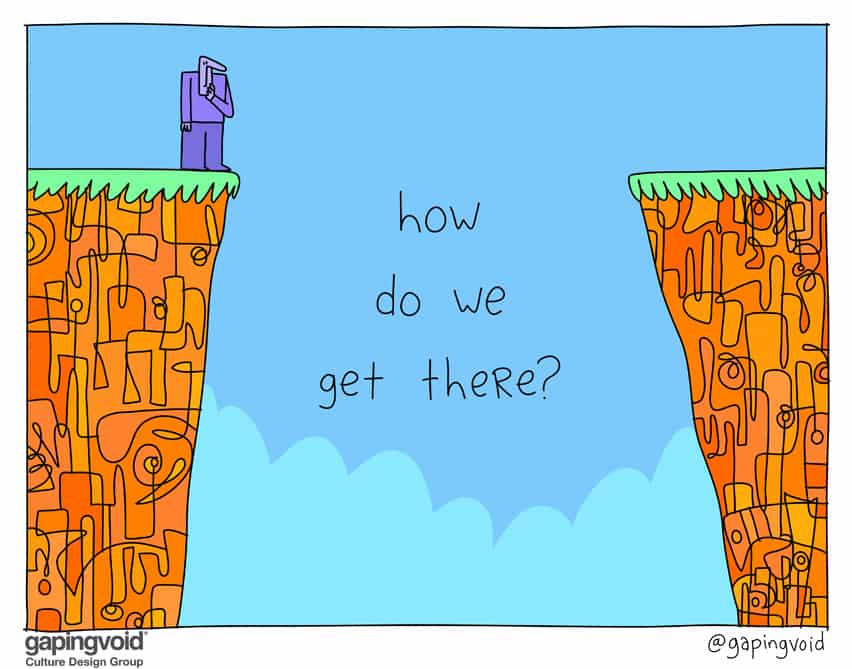
16. The world is changing.

Some peo­ple are hip to it, others are not. If you want to be able to afford gro­ce­ries in 5 years, I’d recom­mend lis­te­ning clo­sely to the for­mer and avoi­ding the lat­ter. Just my two cents.

Your job is pro­bably worth 50% what it was in real terms 10 years ago. And who knows? It may very well not exist in 5 – 10 years.
We all saw the tra­di­tio­nal biz model in my industry, adver­ti­sing, start going down the tubes 10 years or so ago. Our first reac­tion was “work har­der”.
It didn’t work. Peo­ple got shaf­ted in their thou­sands. It’s a cold world out there.
We thought being talen­ted would save our asses. We thought wor­king late and wee­kends would save our asses. Nope.
We thought the inter­net and all that Next Big Thing, new media and new tech­no­logy stuff would save our asses. We thought it would fill in the holes in our ever more inte­llec­tually ban­krupt solu­tions we were offe­ring our clients. Nope.
Wha­te­ver. Regard­less of how the world chan­ges, regard­less of what new tech­no­lo­gies, busi­ness models and social archi­tec­tu­res are coming down the pike, the one thing “The New Rea­li­ties” can­not take away from you is trust.
The peo­ple you trust and vice versa, this is what will feed you and pay for your kids’ college. Nothing else.
This is true if you’re an artist, wri­ter, doc­tor, techie, law­yer, ban­ker, or bar­ten­der.
i.e. Stop worr­ying about tech­no­logy. Start worr­ying about peo­ple who trust you.
In order to navi­gate The New Rea­li­ties you have to be crea­tive– not just within your par­ti­cu­lar pro­fes­sion, but in EVERYTHING. Your way of loo­king at the world will need to become ever more fer­tile and ori­gi­nal. And this isn’t just true for artists, wri­ters, techies, Crea­tive Direc­tors and CEOs; this is true for EVERYBODY. Jani­tors, recep­tio­nists and bus dri­vers, too. The game has just been ratche­ted up a notch.
The old ways are dead. And you need peo­ple around you who con­cur.
That means han­ging out more with the crea­tive peo­ple, the freaks, the real visio­na­ries, than you’re already doing. Thin­king more about what their needs are, and res­pon­ding accor­dingly. It doesn’t mat­ter what industry we’re tal­king about– archi­tec­ture, adver­ti­sing, petroche­mi­cals– they’re around, they’re easy enough to find if you make the effort, if you’ve got something worthwhile to offer in return. Avoid the dullards; avoid the folk who play it safe. They can’t help you any more. Their sta­bi­lity model no lon­ger offers that much sta­bi­lity. They are extinct, they are extinction.

"Hugh's Daily Cartoon" Newsletter. A new cartoon sent out every weekday morning to your inbox [RSS version here.]. A wee chuckle to start your day off right etc.

17 Responses to “the world is changing”

  1. Dutch Driver says:

    I cer­tainly do not favor beco­ming extinct or con­tri­bu­ting to the extinc­tion of others. So, while I don’t want to rein the crea­tive folks in, I would like to read more on the how nor­mal folks can learn to “hang” with the crea­ti­ves. In many cases, they are just a bit too threa­te­ning to lis­ten to for any length of time. ;o)

  2. hugh macleod says:

    Heh. Inte­res­ting point, Dutch. Let me think about it some more and I’ll post something later on.
    I guess my first ques­tion is, why are they threa­te­ning to “nor­mal folk”?

  3. Dutch Driver says:

    My guess is that a lack for prac­ti­ca­lity is not a requi­re­ment for two “crea­ti­ves” to talk with each other. Now, I love the idea­tion pro­cess to the point I wish I could get paid for it. It is a pure joy to spe­cu­late on pos­si­bi­li­ties. Yet, at the end of the ses­sions, something pro­bably goes on paper…perhaps that is why inno­va­tion is gro­wing in popu­la­rity in the busi­ness world. The crea­ti­ves I meet around Sili­con Valley tend to miss that salient point.

  4. Dutch Driver says:

    My guess is that a lack for prac­ti­ca­lity is not a requi­re­ment for two “crea­ti­ves” to talk with each other. Now, I love the idea­tion pro­cess to the point I wish I could get paid for it. It is a pure joy to spe­cu­late on pos­si­bi­li­ties. Yet, at the end of the ses­sions, something pro­bably goes on paper…perhaps that is why inno­va­tion is gro­wing in popu­la­rity in the busi­ness world. The crea­ti­ves I meet around Sili­con Valley tend to miss that salient point.

  5. john t unger says:

    I think there’s a link bet­ween the post about dying young and Dutch’s obser­va­tion that crea­ti­ves are too threa­te­ning for “nor­mal folk” to lis­ten to… I have a few “nor­mal folk” I use as soun­ding boards when I’m on a rant, to see how it might go over outside my circle of crea­ti­ves. And usually the crea­ti­ves get it and the nor­mal folk cower in fear. Even­tually they break in and ask, not for cla­ri­fi­ca­tion or details, but the same tired ques­tions, “why can’t you be like ever­yone else? Don’t you think that the mar­ket for things peo­ple unders­tand is big­ger than the mar­ket for things they don’t?” their last word is usually along the lines of, “I’ve never heard of anything like that, so it must be impos­si­ble.“
    What seems to dif­fe­ren­tiate the two groups, in my mind, is the willing­ness to accept risks. Nor­mal peo­ple get that way by avoi­ding risk at all cost. Risk is scary. Risk could get you killed, or home­less, or poor, or hungry, or hurt. Risk can break your heart…
    I think my youth among the Bukows­kis of the world was valua­ble because it taught me that risk isn’t as risky as it looks if you never let up. Either it kills you, or you learn something inte­res­ting (just like life in gene­ral, but fas­ter). I’ve always felt that the price of tuning everything out in the name of com­fort and secu­rity was too high, but most peo­ple would appa­rently take the oppo­site view.
    So they feel threa­te­ned on seve­ral counts:
    1. If they lis­ten to you, they have to con­ceed that their world­view *might* be wrong.
    2. By asking them to think about that pos­si­bi­lity cri­ti­cally, you’re asking them to work.
    3. If they accept your pre­mise, they might have to change the way the do things, which could be a *lot* of work.
    4. This is the big one: in order to feel com­for­ta­ble in embra­cing the new, it really helps to have some abi­lity to pro­ject into the future

  6. ah says:

    One ver­sion of the dis­tinc­tion is bet­ween folk who want pri­ma­rily to be flat­te­red or com­for­ted or “right;” and those larger-vision opti­mi­zers whose adre­na­line and self-esteem comes from some enter­prise beyond them­sel­ves: inc­rea­sing cla­rity, cons­truc­ting new things (mate­rial or con­cep­tual), sai­ling toward new hori­zons. These peo­ple have already been com­pe­lled by their nature to engage risks in large and small are­nas.
    It appears to be unpro­duc­tive for the lat­ter to engage mat­ters crea­tive with the for­mer, though there may be found crea­tive ways of dea­ling with or wor­king around when neces­sary.
    In my obser­va­tion, “nor­mals” can dance with the genui­nely crea­tive by brin­ging an eager-to-learn, play­ful, appre­cia­tive “don’t know mind” mode. Frigh­te­ned, or wan­ting atten­tion, sel­dom gains mea­ning­ful entree.
    I espe­cially enjo­yed the further point about buil­ding a bank or ark of trust. Who knows what storms will pound or other curren­cies fail? At a cer­tain point, busi­ness is ine­vi­tably per­so­nal. I’m pas­sing it on to my Authen­tic Pro­mo­tion group.

  7. Mary Beth says:

    Re John’s last points: Yes Yes Yes and Yes. Makes me think of this:
    http://www.apple.com/thinkdifferent/
    It’s very hard to over­come what has become ingrai­ned. Call it tra­di­tion, habit, or wha­te­ver. Often when you look at these things there is no rea­son for them being the cus­tom other than the fact that they are con­si­de­red the cus­tom. Some­ti­mes there’s a long-lost rea­son which may have been good at the time, but which could be recon­si­de­red given new ideas or tech­no­logy.
    So it’s just as hard for the “crea­tive” to talk to the “nor­mal” per­son. It’s hard to get slap­ped down, doub­ted, mini­ma­li­zed at every turn and still hold your head and your ideas up or to main­tain your energy for get­ting those ideas out there.
    I think what would help the “nor­mal” v “crea­tive” inte­rac­tion would be some of those problem-solving tech­ni­ques of sus­pen­ding jud­ge­ment and loo­king for the poten­tial in all things. Give ideas a chance and take it from there.

  8. Dutch Driver says:

    Hmmm…looks like the crea­ti­ves are swar­ming after the nor­mals with the same cliched advice.
    And, I don’t meet many crea­ti­ves that think critically…that skill is likely the antithe­sis of crea­tive.
    Why? because a pre­mise must be held stable/normal in order to be asses­sed cri­ti­cally. I love loo­king at all the facets of a con­cep­tual idea because it is a theory, a hypothe­sis that has yet to prove itself; and yet it must prove itself or mutate in order to sur­vive long enough to sus­tain itself.
    This is my per­so­nal strug­gle. Crea­ti­ves live com­for­tably with what de Bono calls “water logic.” Perhaps is it where art loses out to science?
    So what? I want to hang with crea­ti­ves because they are idea­lists and roman­ti­cists who have figu­red out how to get rewar­ded by taking the risks…This nor­mal sel­dom gets that kind of reinforcement…

  9. Katherine says:

    »And, I don’t meet many crea­ti­ves that think critically…that skill is likely the antithe­sis of crea­tive.> Perhaps is it where art loses out to science?<
    Done right, science is an enor­mously crea­tive pursuit.

  10. Katherine says:

    [Grrr. Stu­pid text win­dow. Let’s try this again.]
    “And, I don’t meet many crea­ti­ves that think critically…that skill is likely the antithe­sis of crea­tive.“
    Non­sense.
    In order to earn a living from your crea­ti­vity you abso­lu­tely must be able to think cri­ti­cally. Other­wise you spend your entire life trying (and fai­ling) to get peo­ple to buy dreck. And wallo­wing in angst when they won’t.
    In order to grow as an artist (in any medium), you have to be able to think cri­ti­cally, because there are long stretches when no one else unders­tands what you’re doing well enough to offer a mea­ning­ful cri­ti­que.
    As long as we’re thro­wing ste­reoty­pes around, I would argue that it’s “nor­mal” peo­ple who are una­ble to think cri­ti­cally. Con­si­der that many (most?) “nor­mal” cor­po­rate jobs punish peo­ple who ques­tion “the way we do things,” much of the mains­tream media (both con­tent and adver­ti­sing) is desig­ned for peo­ple who are willing to be spoon­fed, etc.
    “Perhaps is it where art loses out to science?“
    Done right, science is an enor­mously crea­tive pursuit.

  11. Wait a minute! I thought we were all born with cra­yons? So what’s with crea­tive and nor­mal sepa­ra­tion?
    Ah, you mean the kids that jum­ped up and down and hug­ged the cra­yons to their chest — no way, they’re mine — ver­sus the ones who relen­ted and finally exchan­ged them for the damn alge­bra books because that’s what they were sup­po­sed to do to be good boys and girls.
    Well, I went down the alge­bra route for a while and got the engi­nee­ring degree to boot. Lis­ten to your wee voice (read more of Hugh’s stuff) and stop being mas­ter to the stimulus-response spe­wing rep­ti­lian brain. Want to shake up your thin­king a bit? It’s not enti­rely accu­rate, but so what, the inten­tion is to give you pause and won­der if you really know jack — check out the new docu­men­tary, “What the Bleep Do We Know”.
    You know this dis­cus­sion has an eerie fami­lia­rity with the last dis­cus­sion I had with my ex when I rea­li­zed it was really over. I said I didn’t know the ans­wer to Einstein’s ques­tion: Is the Uni­verse friendly? But I was going to live as if it was.
    I was sad­de­ned by the res­ponse: That might work for you (in other words, I’m crazy enough to pull it off) but it’s outside my com­fort zone.
    I see peo­ple making that choice all the time…
    What exactly is there to be afraid of?

  12. john t unger says:

    I think the com­ments have gone off the rail here with the name calling. Maybe ’cause we’re using the wrong names. this isn’t so much about “crea­tive” Vs. “nor­mal” as it is about “fear­less” Vs “com­for­ta­ble.“
    note: Cri­ti­cal thought and some form of engi­nee­ring skill (whether social, mecha­ni­cal, wha­te­ver) is pretty much a pre­re­qui­site to crea­tive work. Anyone can dream up a solu­tion (“I know! We’ll just hang stuff from the sky!”) but imple­men­ting it, or even arti­cu­la­ting it clearly enough that someone else can imple­ment it, requi­res the abi­lity to think and com­mu­ni­cate and/or build. The crea­ti­ves who thrive are those who have tech­ni­cal abi­lity as well as vision.
    The irony of the ori­gi­nal post is that peo­ple who pre­fer the com­fort zone over the risk are the ones that now face extinc­tion. The way for­ward IS the risky way, but the alter­na­tive is to sit still and lose all the trap­pings of com­fort. Spooky, but if it makes you tense, then I guess you should do something about it…
    (hint) It’s easier to change your tac­tics, than to change the world.

  13. Scrimpy McNutJoin says:

    I like you, you make my squid­gets all squishy.

  14. hugh macleod says:

    Yay! Squishy squidgets!

  15. Jim Ewing says:

    Saw a bum­per stic­ker today -

  16. […] really tal­king about is the peo­ple you have a true affi­nity with – your real friends. As Hugh Mac­Leod says, “The peo­ple you trust and vice versa, this is what will feed you. Nothing […]